
Oil prices fell on Thursday as traders reduced the war premium in the market. WTI oil has dropped to $67.70 while Brent oil has dropped to $71.50. The US-Iran talks were positive development that alleviated concerns about the Strait of Hormuz. This Strait plays an important role in global energy supply. Therefore, when the risk of disruption decreases, the buyers become less aggressive.
The oil prices were also weighed down by the partial recovery in oil tanker traffic. As long as the Strait of Hormuz is open, more crude can flow into the market. This will take away the concern of supply shortages. Traders are now waiting to see whether Iran will maintain the stability of this route or take control of the strait. If there are any new strikes or shipping restrictions in this area, then the risk premium could return.
OPEC+ is also putting pressure on the oil market. The group could reach an agreement on further output hikes from August. This will increase supply in the current environment when prices are already falling. The reduction in crude stocks in the U.S. offered some support but not enough to affect the market sentiment. Oil prices are under pressure now as traders are facing more supply, less disruption risk and less buying for safe-haven energy.

WTI Oil Technical Analysis: Breakdown Below $69 Signals More Pressure
The long term monthly chart for WTI oil shows that prices have remained under pressure since the peak in March 2026 at $119.48. The price is now moving towards $55 to $60 which is the midline of the descending channel pattern, after producing a 20% drop in June 2026.
This bearish pressure comes after WTI oil failed to close above the $110 area on a monthly basis. This was the strong resistance seen by the descending channel pattern emerging from the July 2008 high.
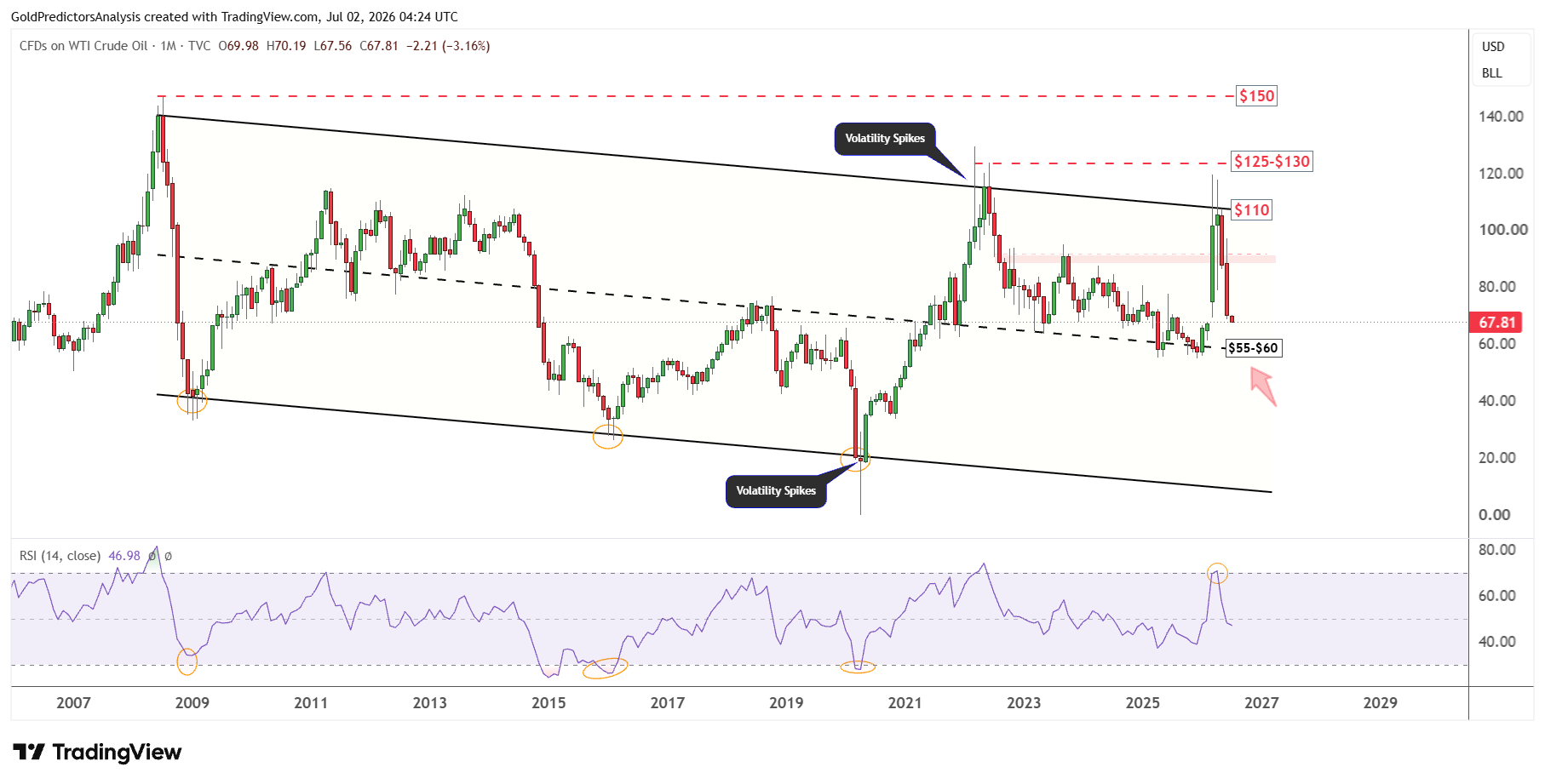
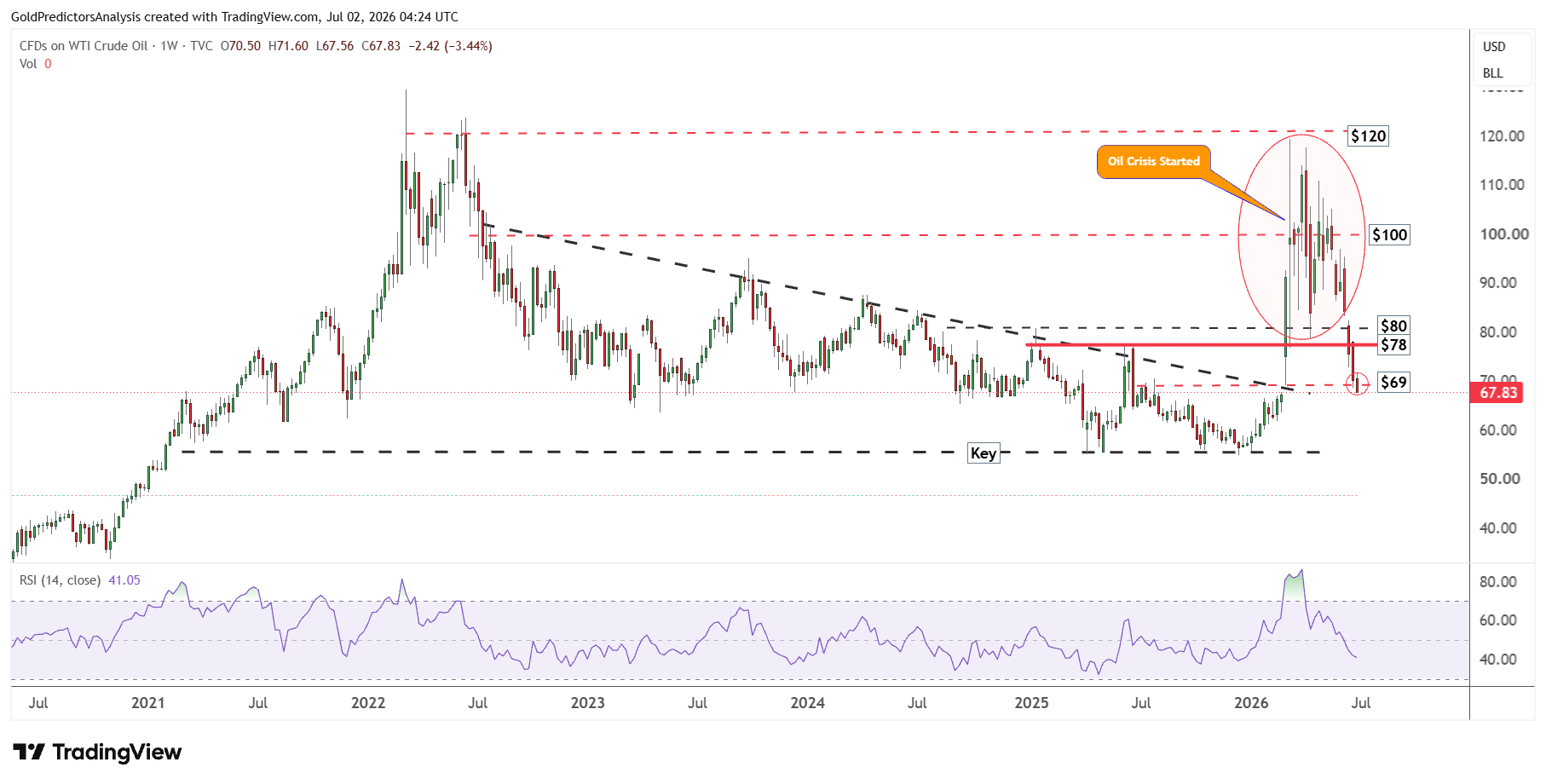
A break below $55 will indicate further downside and open the door for bigger drop to lower levels. The weekly chart also shows that the oil crisis started after the U.S.-Iran war when WTI crude oil surged quickly towards the long-term resistance of $120. But the correction from $120 has already broken the $80 area, which was strong support. Now, the breakdown below $69 indicates that the price remains under extreme bearish pressure.
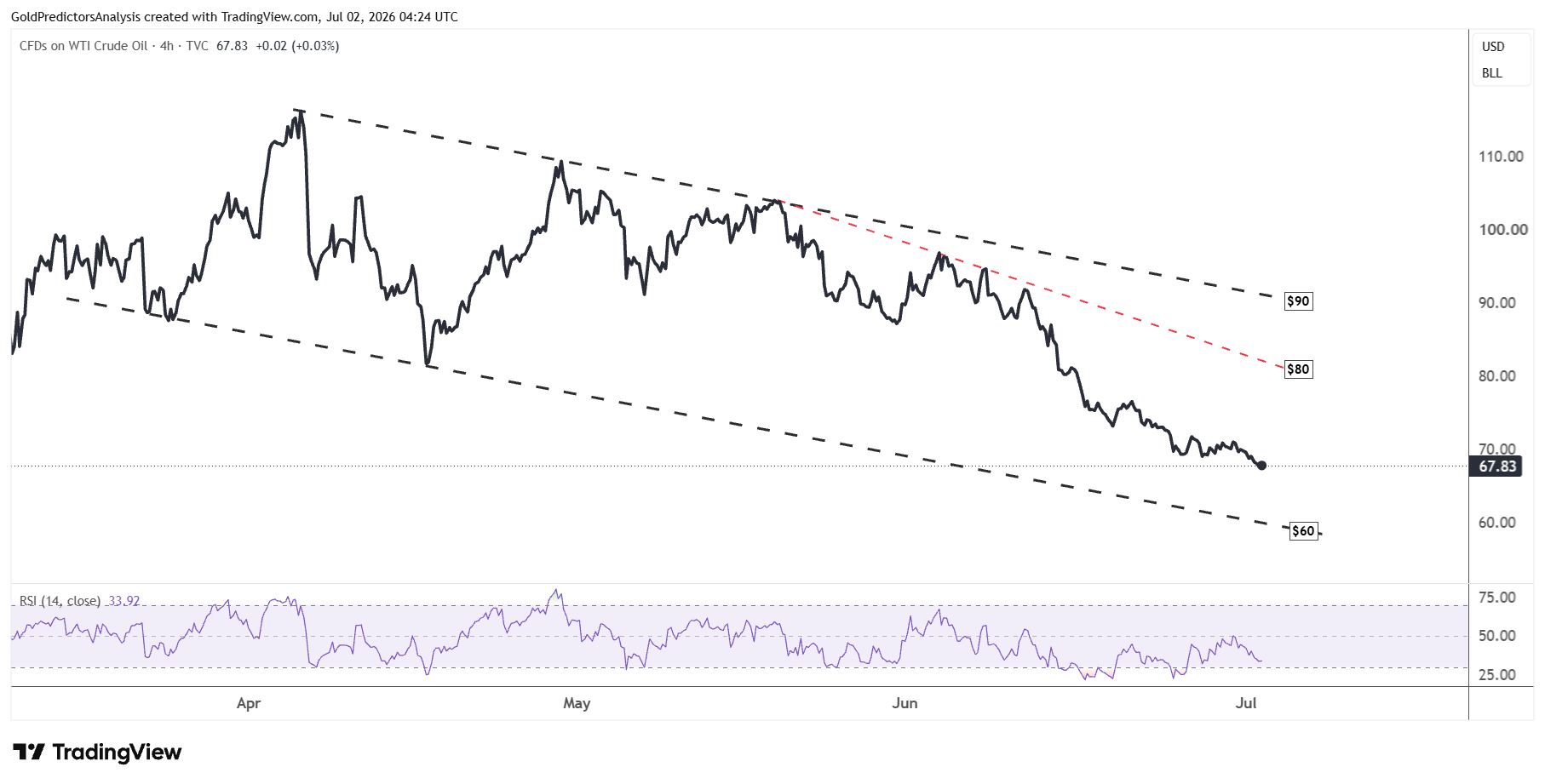
The 4-hour chart for WTI oil also indicates a descending channel, which shows that the immediate support could be $60 in the short term. However, the price must recover above $80 at the red descending trend line to open the door for a recovery to $90. A recovery above $90 will indicate further upside in oil prices.
Brent Oil Price Forecast
Every new Brent Oil analysis as it publishes, today's technical signal and key levels, live price — on one page.
See all Brent Oil forecastsBrent Oil Technical Analysis: $70 Support Faces Heavy Selling Pressure
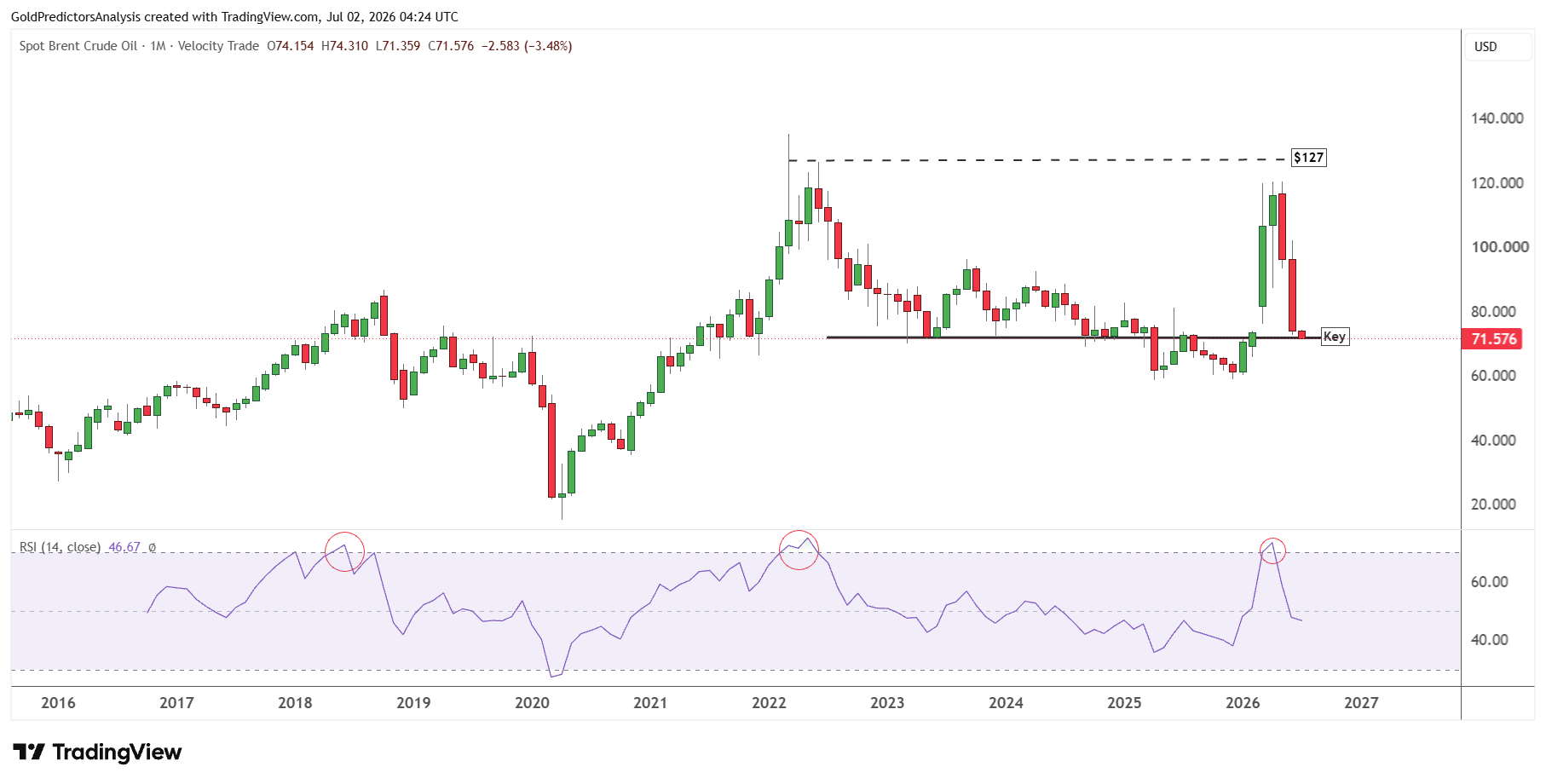
Brent crude oil has also faced extreme bearish pressure in oil prices since April 2026. The price also broke the $80 region, which was the strong support seen by the dotted support line. Now, the price is breaking the $70 area and remains weak in the short term. But the RSI indicator shows extremely oversold market conditions. However, there is still no sign of a rebound from current levels as the price has broken $72.
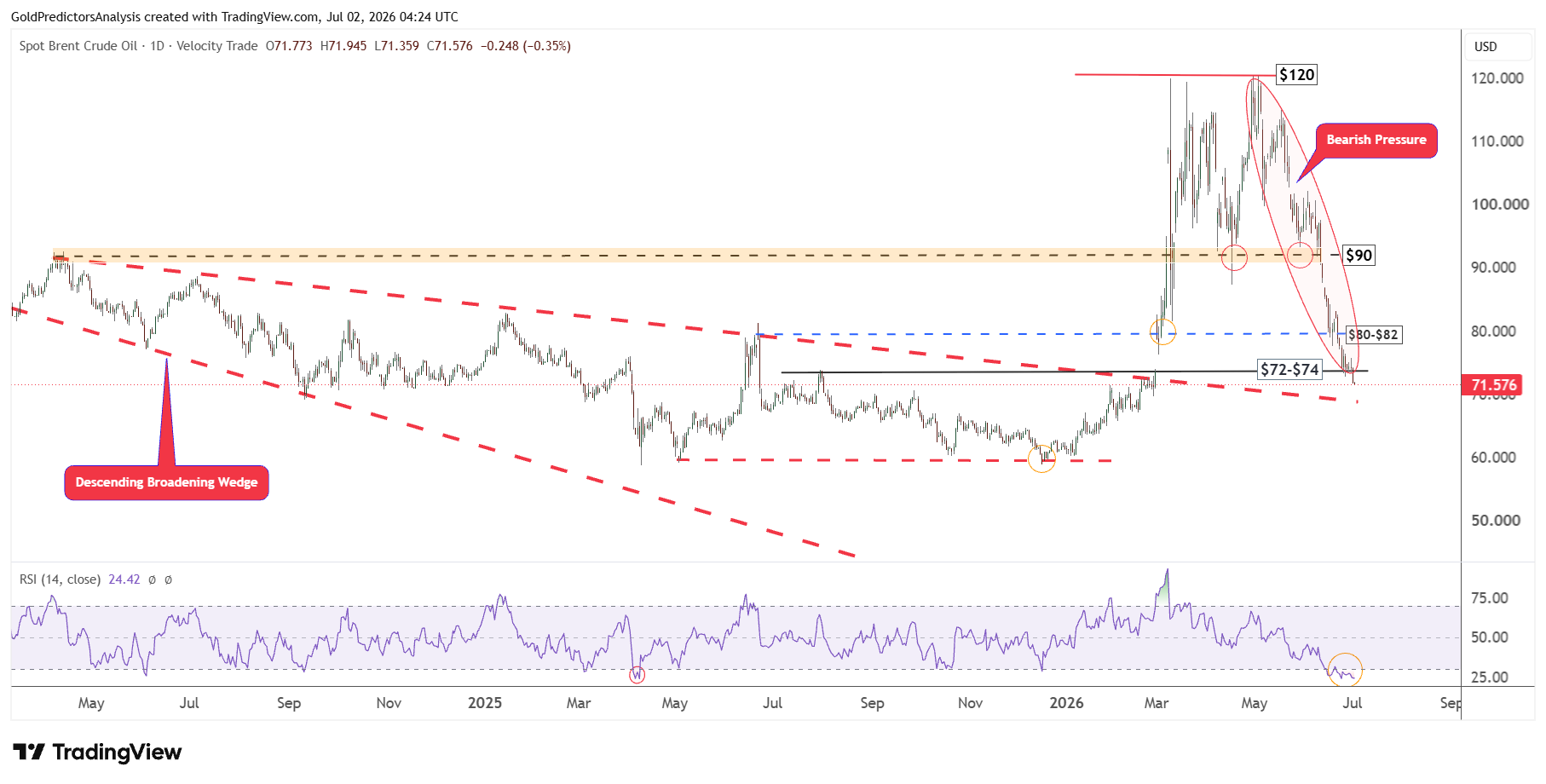
If the price remains under pressure without any recovery above $80, then the price may continue to accelerate towards $55 to $60.
The long term outlook for Brent crude also shows that the price has already reached the key level of $70, which is near the pre-war levels. The chart highlights the importance of $120 using the RSI. The RSI indicator reached the 70 level in 2018 and 2022 when prices dropped strongly. The recent correction is already testing the key level which suggests that prices may face further pressure.
Bottom Line
Oil prices remain under strong bearish pressure as the war premium subsides, tanker traffic improves and OPEC+ is ready to release additional supplies. WTI oil has already cracked some major support at $69, and Brent oil is currently approaching the important $70 level. This indicates that the sellers are still in charge of the short-term trend. Both markets are oversold, so there is still a possibility of a short-term rebound if prices consolidate further around current levels. WTI oil needs to break the $80 to ease the bearish pressure. If the prices fail to bounce from the current levels, the next major downside target will be the $55 to $60 area.