
In my view, the current setup points to a consolidation phase above the 69 dollar area, with upside risk if supply fears escalate. Below, I outline the latest news drivers, the broader macro context, and the key technical levels shaping the near term path.

News
The latest headlines around crude oil continue to highlight a market caught between competing forces. Recent reports pointing to ongoing US Iran discussions have helped maintain a geopolitical risk premium, preventing a deeper pullback in prices.
At the same time, the EIA has reiterated expectations for relatively softer oil prices over the forward horizon, reflecting concerns about supply balance and demand resilience. Despite this mixed backdrop, Brent and WTI have remained relatively well supported, suggesting that traders are not yet ready to aggressively price in a bearish scenario.
The recent price action shows Brent oil stabilizing above key technical zones rather than breaking down, reinforcing the view that the market is currently in a consolidation regime rather than the start of a broader downtrend.
Context
Stepping back, the current behavior in oil prices fits within a broader pattern of range bound trading that has characterized much of the recent cycle. Supply side uncertainty, particularly in the Middle East, continues to provide a floor under the market even as demand signals remain mixed.
Brent Oil Price Forecast
Every new Brent Oil analysis as it publishes, today's technical signal and key levels, live price — on one page.
See all Brent Oil forecastsFrom a macro perspective, the interaction between geopolitical risk, inventory dynamics, and forward demand expectations remains the dominant driver. While the EIA outlook introduces a mildly bearish medium term narrative, the absence of a clear demand shock has so far limited downside momentum.
This tension between structural support and forward caution is typical of late cycle commodity phases, where markets often compress before choosing a clearer directional path.
Financial Analysis
Supply Risk and Inventory Dynamics
From a fundamental standpoint, the oil market continues to receive intermittent support from geopolitical uncertainty. Ongoing Middle East developments, including the evolving US Iran dialogue, are enough to keep a residual risk premium embedded in prices.
In addition, tanker rate strength and shipping signals suggest that physical flows remain tight enough to avoid a rapid inventory rebuild. Historically, similar environments have tended to favor price stabilization rather than immediate trend reversals.
However, the EIA medium term projections act as a counterweight. If confirmed by incoming data, they could gradually cap upside momentum unless accompanied by a fresh supply disruption.
Technical Structure and Key Levels
From a technical perspective, the Brent crude Renko structure highlights the importance of the 69 dollar zone, which has recently acted as a key breakout and support area.
As long as prices hold above this region, the short term structure remains constructive. The recent sequence of higher lows on the Renko chart suggests that sellers are not yet in full control of the tape.
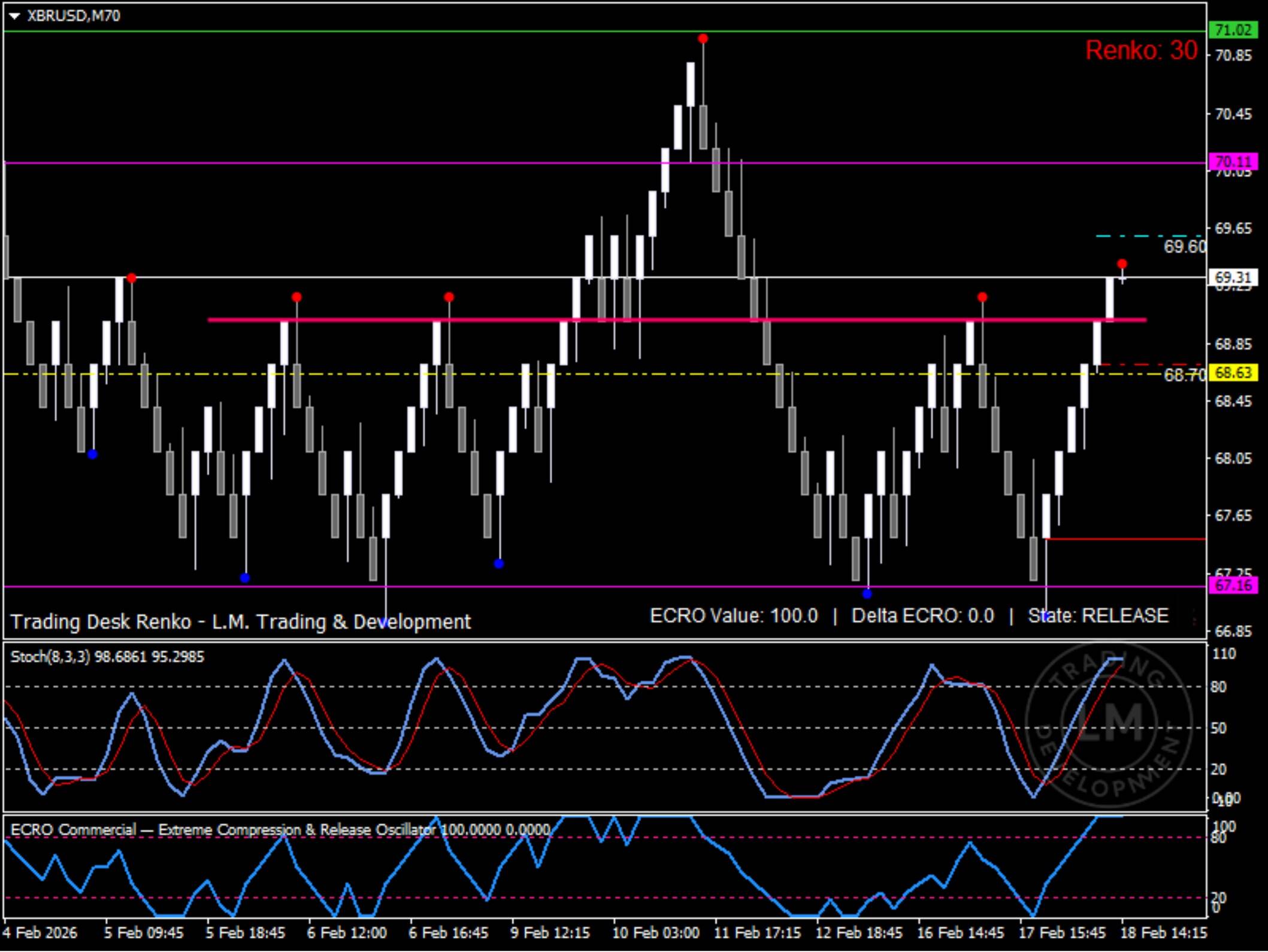
On the upside, a sustained move toward the 74 to 76 dollar region would likely require either a renewed geopolitical catalyst or a clear improvement in demand expectations. Conversely, a decisive break back below 69 dollars would weaken the current consolidation thesis and expose the market to a deeper retracement.
Position and Risk
In my view, the current crude oil setup favors a base case of continued consolidation with a mild upside bias in the short term. The market is showing resilience despite bearish forward narratives, which typically signals underlying support from positioning or risk premium dynamics.
The base case scenario is for Brent to remain broadly supported above 69 dollars over the coming weeks, with potential tests of the mid 70s area if geopolitical tensions remain elevated.
The main downside risk would come from a combination of stronger than expected supply growth and clear evidence of demand softening. A confirmed break below the 69 dollar support zone would be an early signal that the balance is shifting toward a more bearish regime.
Volatility should also be monitored closely, as compression phases in oil prices often precede sharper directional moves once a catalyst emerges.
Conclusion
Overall, oil remains in a delicate equilibrium between geopolitical support and softer forward expectations. The price structure above the 69 dollar zone suggests that the market is still in consolidation mode rather than entering a sustained downtrend.
My base case remains cautiously constructive in the short term, with range trading likely to persist unless a major demand shock or supply disruption forces a decisive breakout.
Looking ahead, traders should closely monitor Middle East developments, EIA updates, and broader risk sentiment, as these factors are likely to determine whether the next meaningful move in crude oil is higher toward the mid 70s or back below key support.