



U.S. Dollar Is Moving Higher As Traders Prepare For FOMC Minutes
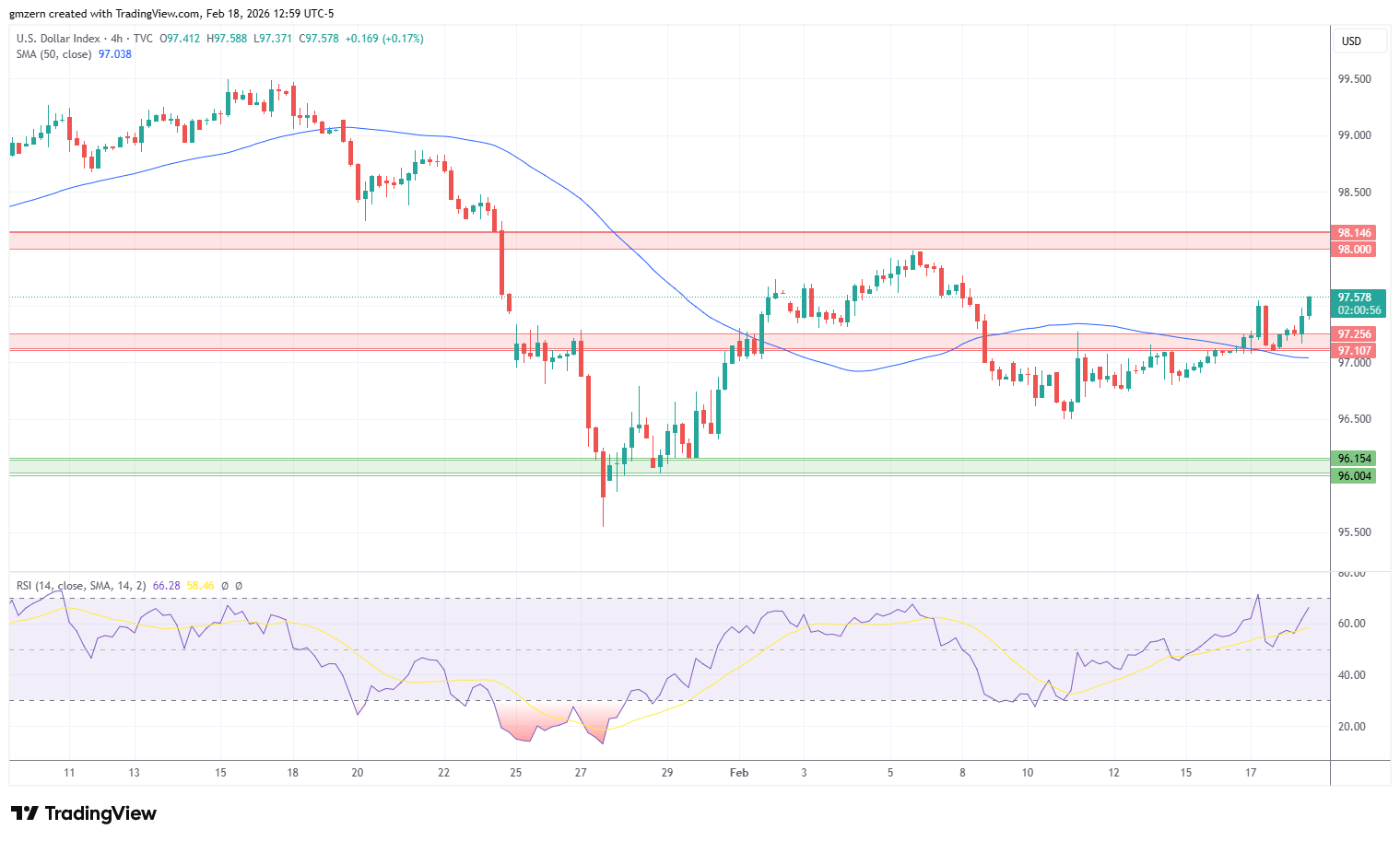
U.S. Dollar Index gains ground as traders react to economic reports and prepare for the release of FOMC Minutes.
The data moving the greenback so far:
Housing Starts increased by +6.2 % month-over-month in December, compared to analyst consensus of -4.4%.
Building Permits grew by +4.3% in December, compared to analyst forecast of -0.2%. The better-than-expected housing market reports provided material support to the American currency.
Today, traders also had a chance to take a look at the Durable Goods Orders report for December. The report showed that Durable Goods Orders declined by -1.4% on a month-over-month basis, compared to analyst forecast of -0.2%.
Durable Goods Orders Ex Transp increased by +0.9%, compared to analyst consensus of +0.3%.
Industrial Production increased by +0.7% month-over-month in January, while analysts expected that it would grow by +0.4%. Rising Industrial Production provided additional support to the American currency.
U.S. Dollar Index managed to settle above the previous resistance at 97.10 – 97.25 and is trying to settle above the 97.50 level. In case this attempt is successful, U.S. Dollar Index will move towards the next resistance level, which is located in the 98.00 – 98.15 range.
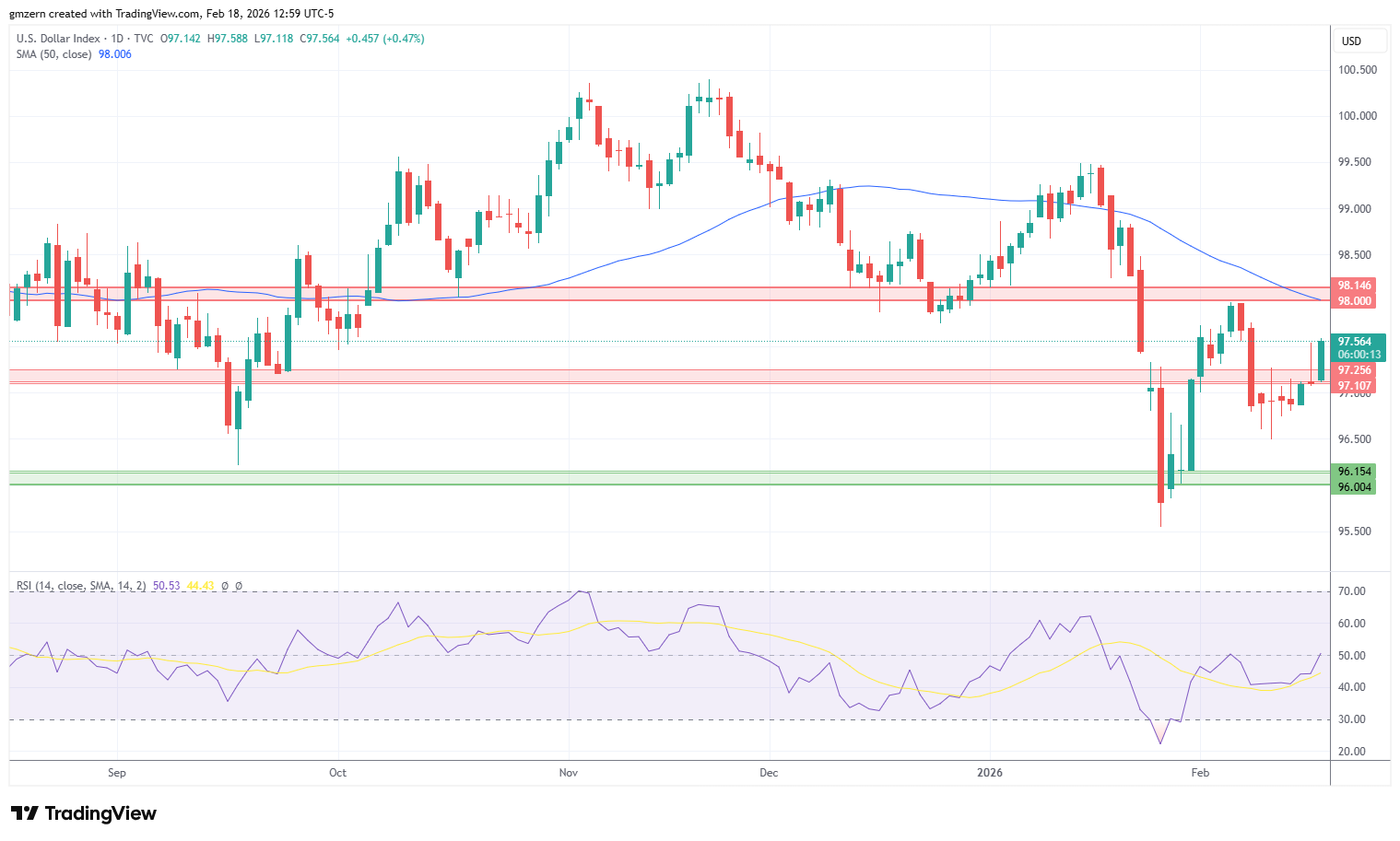
Taking a look at the daily chart, we can see that U.S. Dollar Index continues to move away from yearly lows. Geopolitical worries, which were triggered by Trump’s attempt to acquire Greenland, have calmed down.
Some traders believe that U.S. dollar is oversold and are ready to bet on a rebound. In the near term, the American currency may get additional support from the release of FOMC Minutes.
Fed Chair Powell may be hawkish until the end of his term to secure his legacy and push inflation towards lower levels. In case FOMC Minutes show that Fed members were mostly hawkish at the last meeting, U.S. Dollar Index will move towards the 98.00 level.
EUR/USD Price Forecast
Every new EUR/USD analysis as it publishes, today's technical signal and key levels, live price — on one page.
See all EUR/USD forecastsEUR/USD Tests New Lows
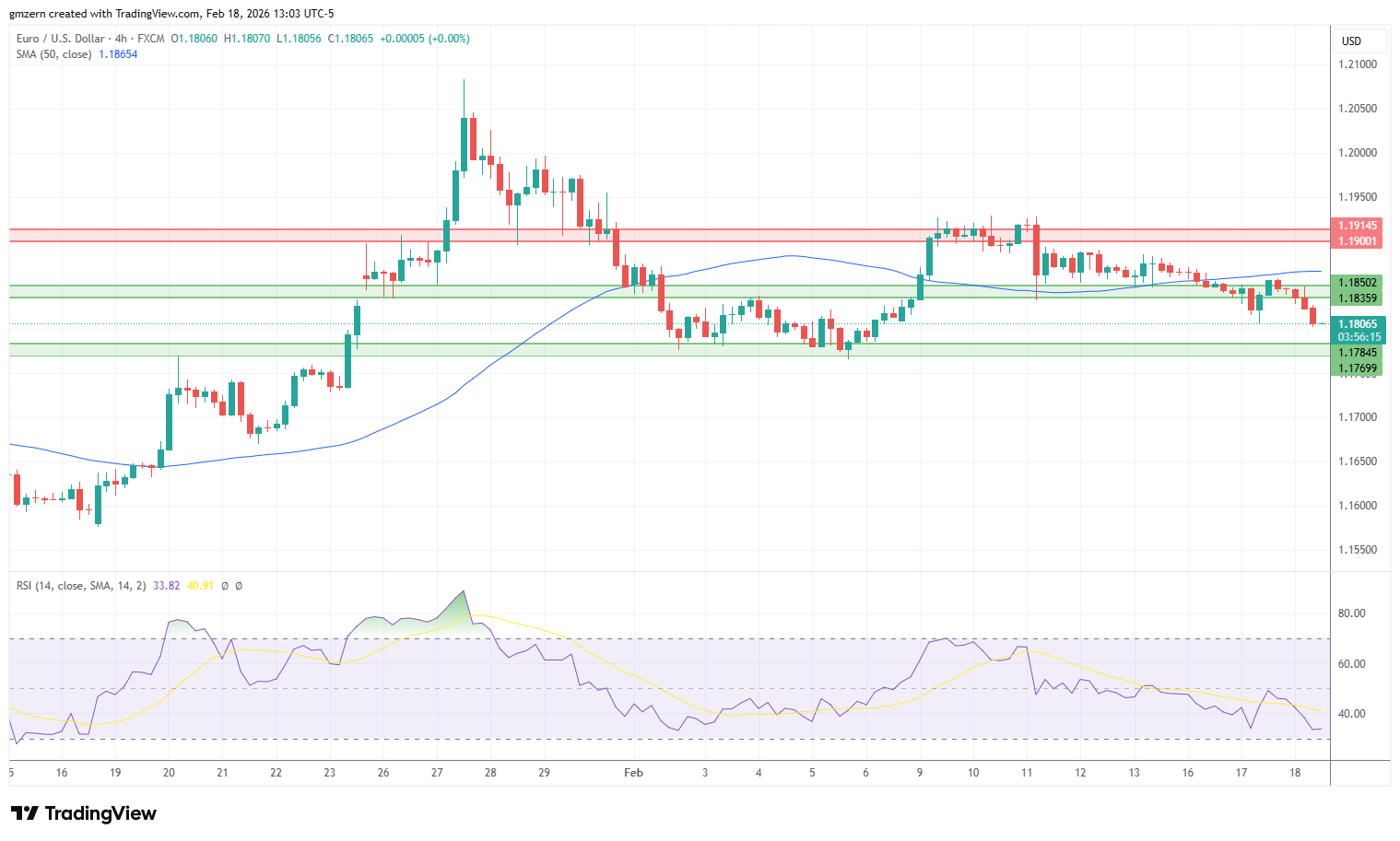
EUR/USD is moving lower as traders focus on economic reports from the U.S. From a big picture point of view, EUR/USD lacks significant positive catalysts in the near term.
Euro Area inflation has stabilized, and the market does not expect major moves from the ECB in the near term. In this environment, traders are mostly focused on the changes in Fed policy outlook.
EUR/USD has recently settled below the support at 1.1835 – 1.1850 and is trying to settle below the 1.1800 level. If EUR/USD settles below 1.1800, it will head towards the next support at 1.1770 – 1.1785.
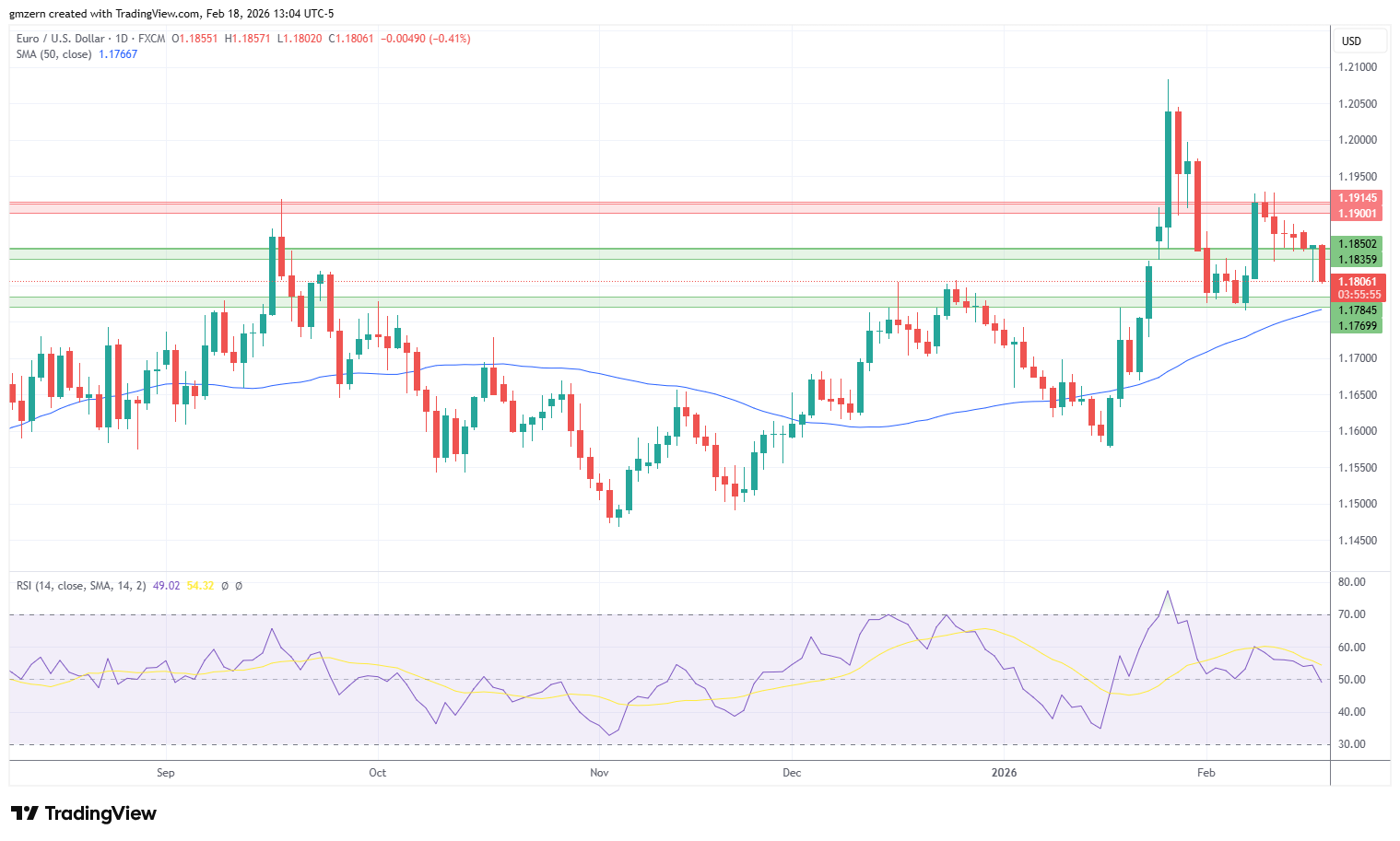
Taking a look at the daily chart, EUR/USD continues to pull back after the strong rally, which was triggered by geopolitical tensions.
It remains to be seen whether EUR/USD bulls will find additional geopolitical catalysts that could push the euro higher in the near term.
Oil bulls are worried that U.S. may strike Iran, which could be a major geopolitical development. However, this move may have little impact on the forex market as it has no influence on U.S. – EU relations.
GBP/USD Retreats As UK Inflation Rate Meets Estimates
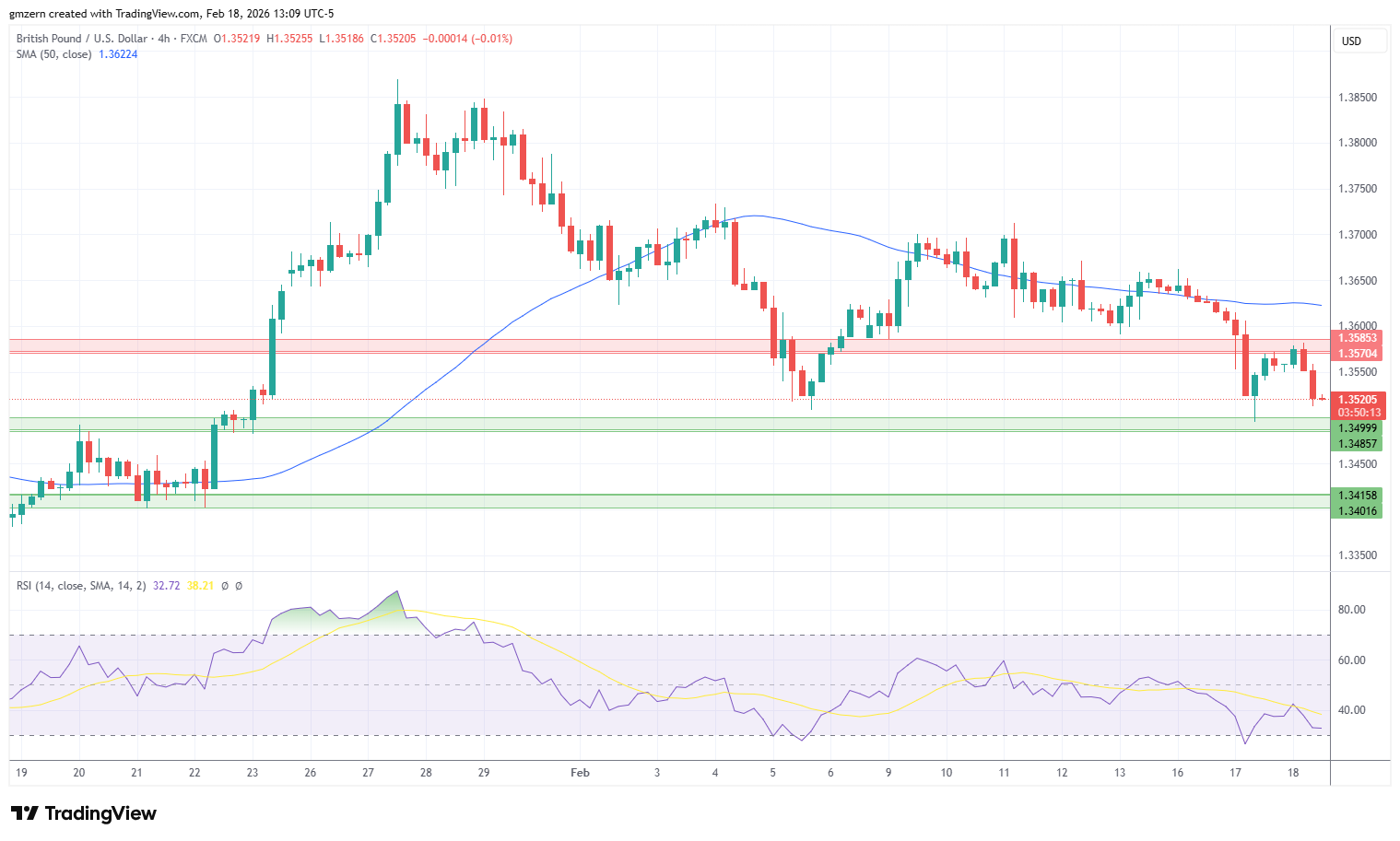
GBP/USD pulls back as traders focus on inflation data from the UK. Inflation Rate declined from 3.4% in December to 3% in January, in line with analyst estimates.
Core Inflation Rate decreased from 3.2% to 3.1%. The report has also met analyst expectations.
Most likely, traders will stay focused on the recent UK Unemployment Rate report, which indicated that UK Unemployment Rate increased from 5.1% in November to 5.2% in December.
The weakness of the job market may force the BoE to cut rates, which is bearish for the British pound. Falling inflation rate also points to the slowdown of the British economy.
The nearest support level for GBP/USD is located in the 1.3485 – 1.3500 range. If GBP/USD pulls back below the 1.3485 level, it will head towards the next support at 1.3400 – 1.3415. RSI is in the moderate territory, and there is plenty of room to gain additional momentum in the near term.
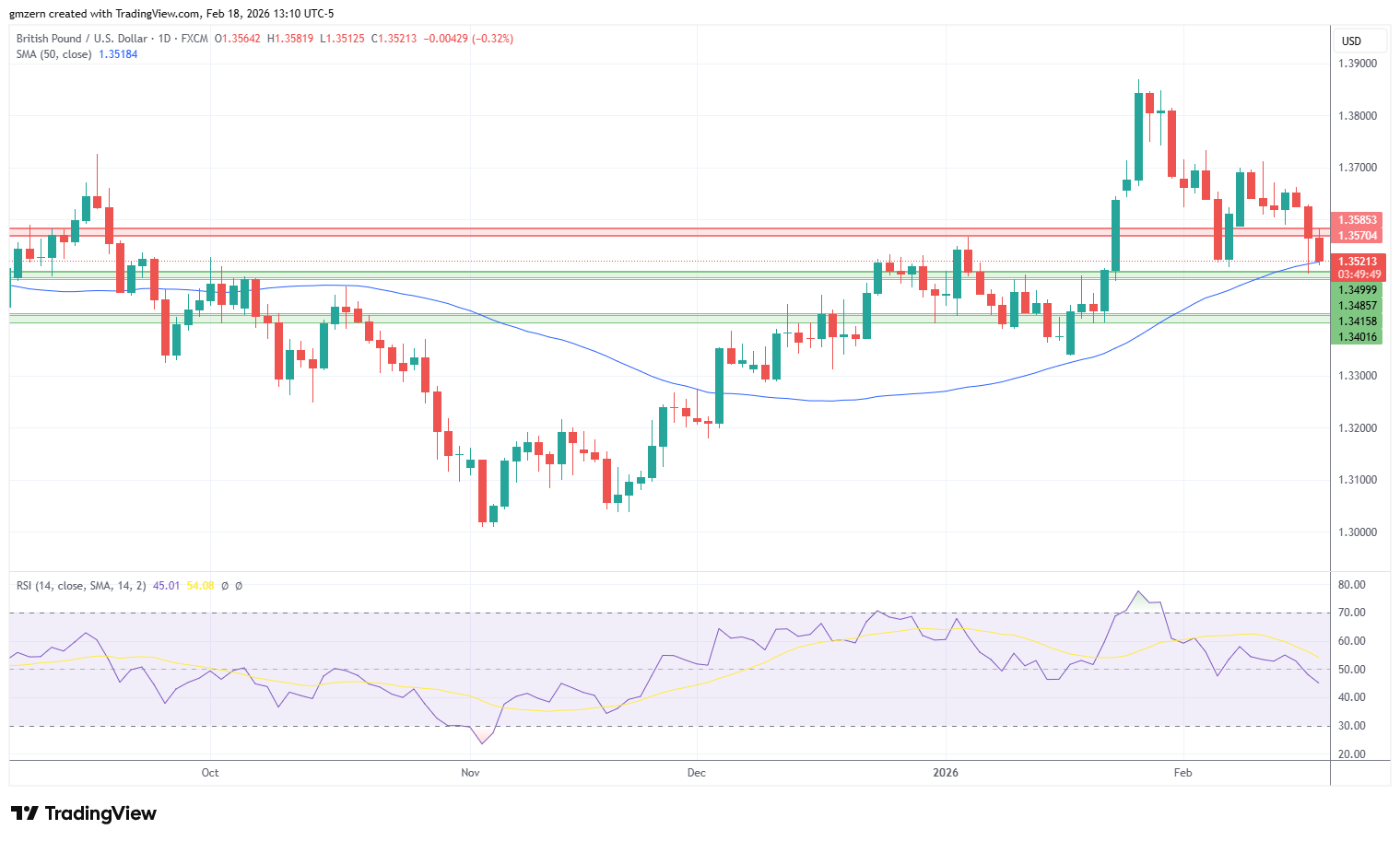
From a big picture point of view, GBP/USD daily chart is similar to EUR/USD daily chart. British pound benefited from rising tensions between the U.S. and the EU.
When tensions calmed down, GBP/USD has started to move lower. In case traders focus on the slowdown of the UK economy, GBP/USD will move towards 2026 lows.
USD/CAD Gains Ground Despite Commodity Market Rally
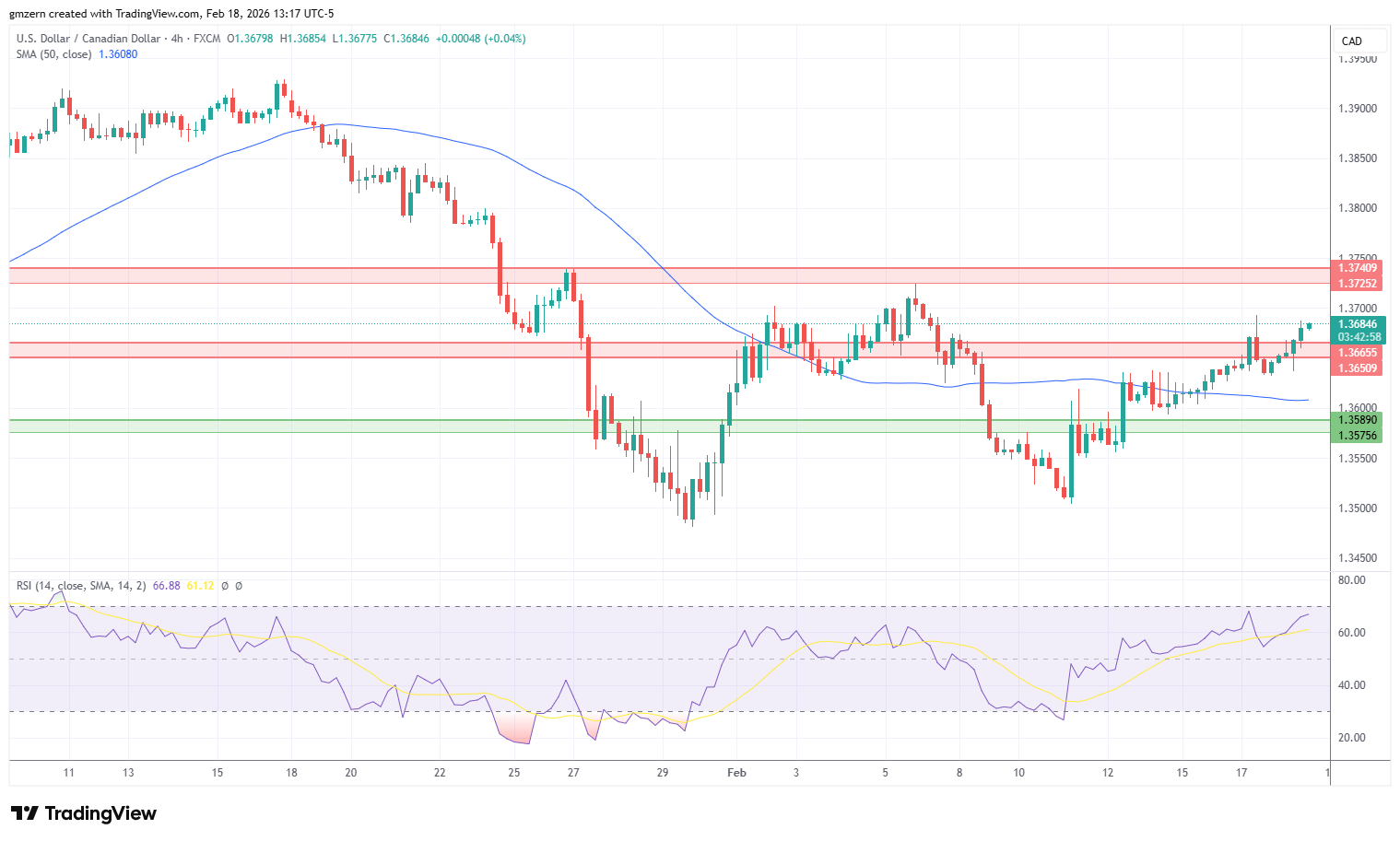
USD/CAD is moving higher despite the strong rally in commodity markets. Oil prices are up by 4.5% as traders worry that U.S. may strike Iran and focus on disappointing negotiations between Russia and Ukraine.
Gold tests the $5000 level as geopolitical risks increase, while silver is trying to settle above the $78.00 level. Interestingly, these developments did not provide any support to the Canadian dollar. Other commodity-related currencies have also found themselves under pressure in today’s trading session.
Currently, USD/CAD is trying to settle above the resistance level at 1.3650 – 1.3665. A successful test of this level will open the way to the test of the next resistance at 1.3725 – 1.3740. RSI is close to the overbought territory, but there is enough room to gain momentum in the near term.
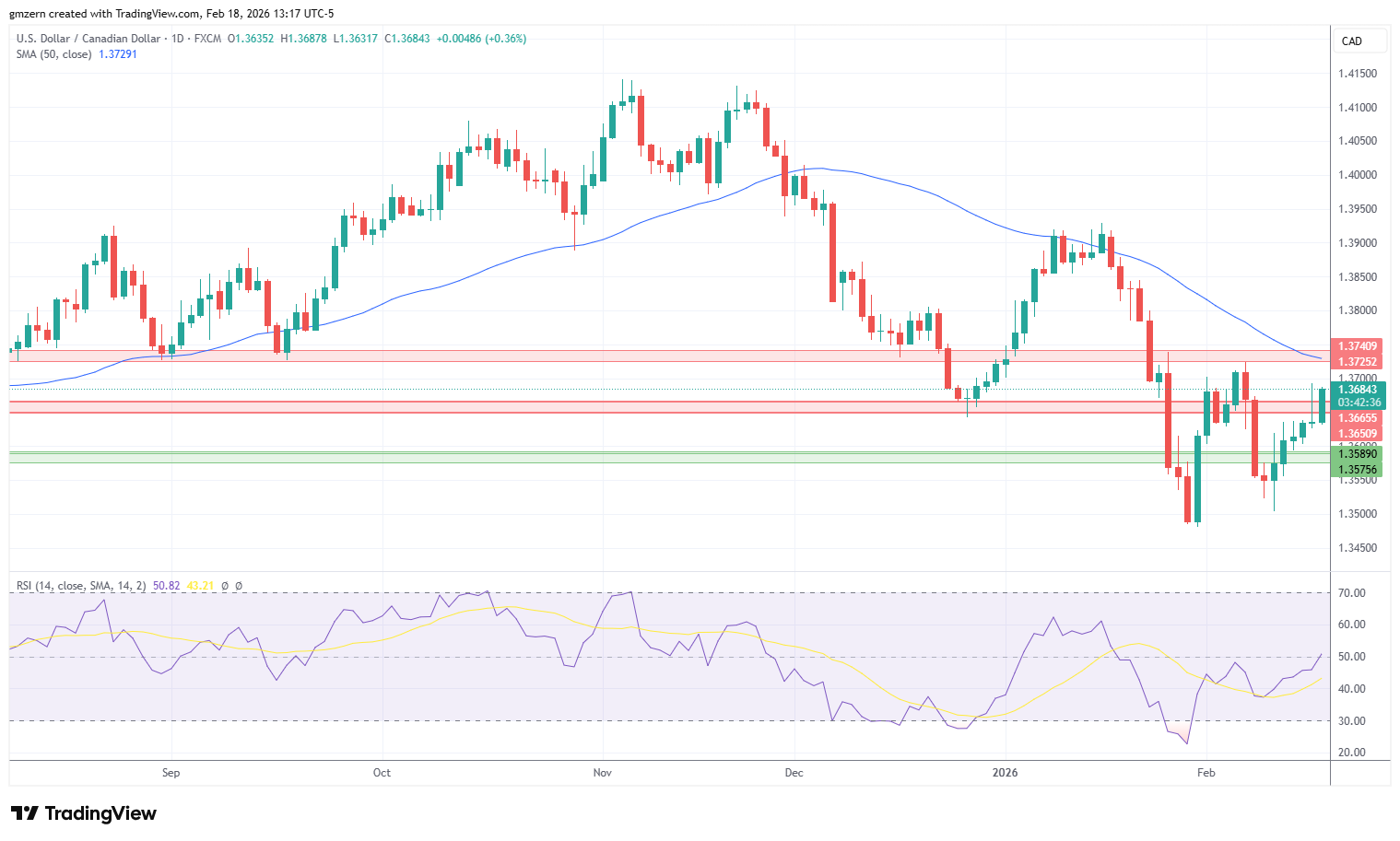
From the technical point of view, USD/CAD continues to rebound from yearly lows. Traders ignore the strength of commodity markets, which is a bearish sign for the Canadian dollar.
USD/JPY Tests Resistance At 154.50 – 155.00
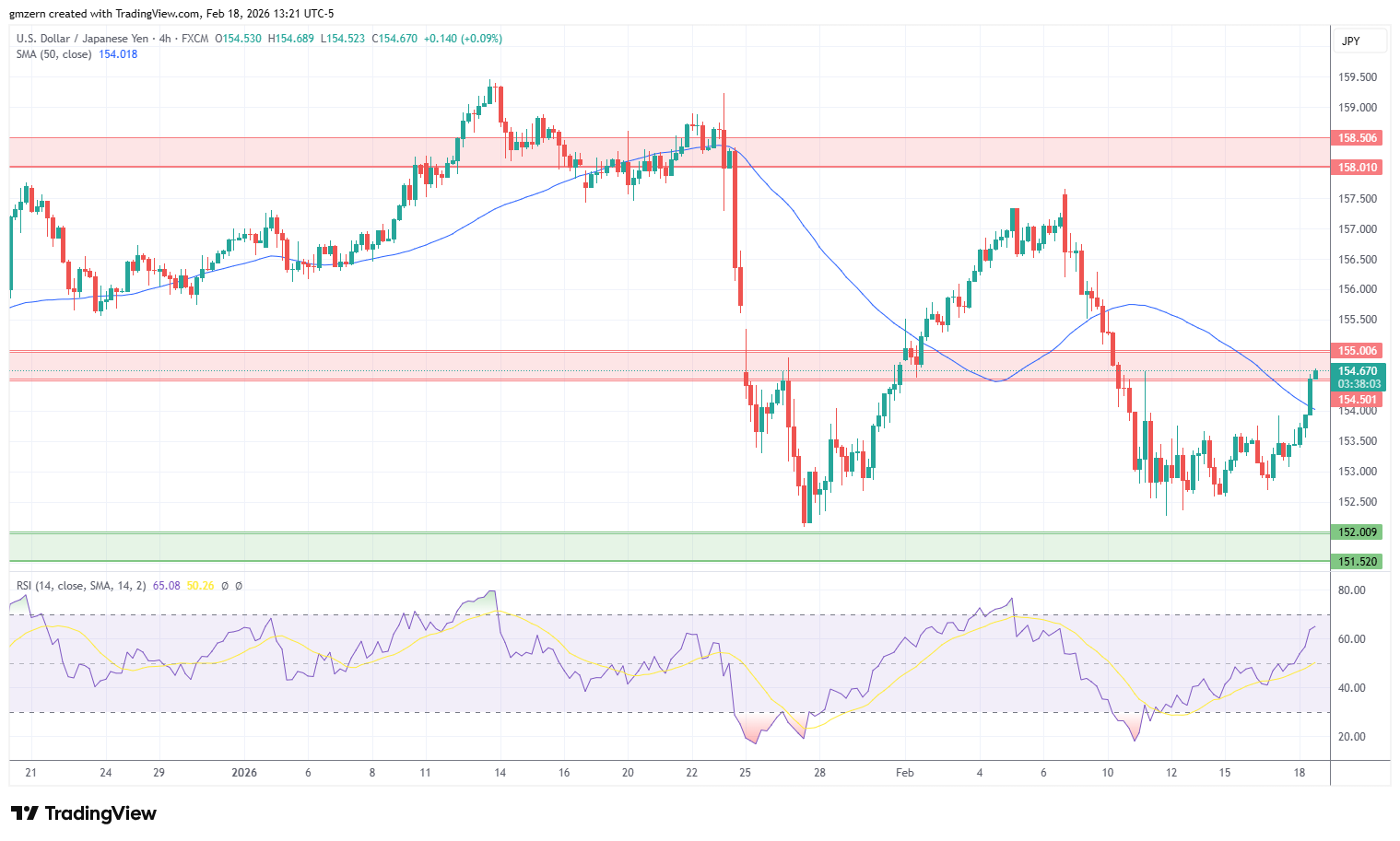
USD/JPY is moving higher as traders focus on rising Treasury yields and react to Japan’s Exports data.
Exports increased by +16.8% year-over-year in January, compared to analyst forecast of +12%. The better-than-expected Exports report did not provide support to the Japanese yen as traders have mostly focused on the dynamics of Treasury yields.
USD/JPY attempts to settle above the resistance at 154.50 – 155.00. If USD/JPY manages to settle above the 155.00 level, it will move towards the next resistance at 158.00 – 158.50.
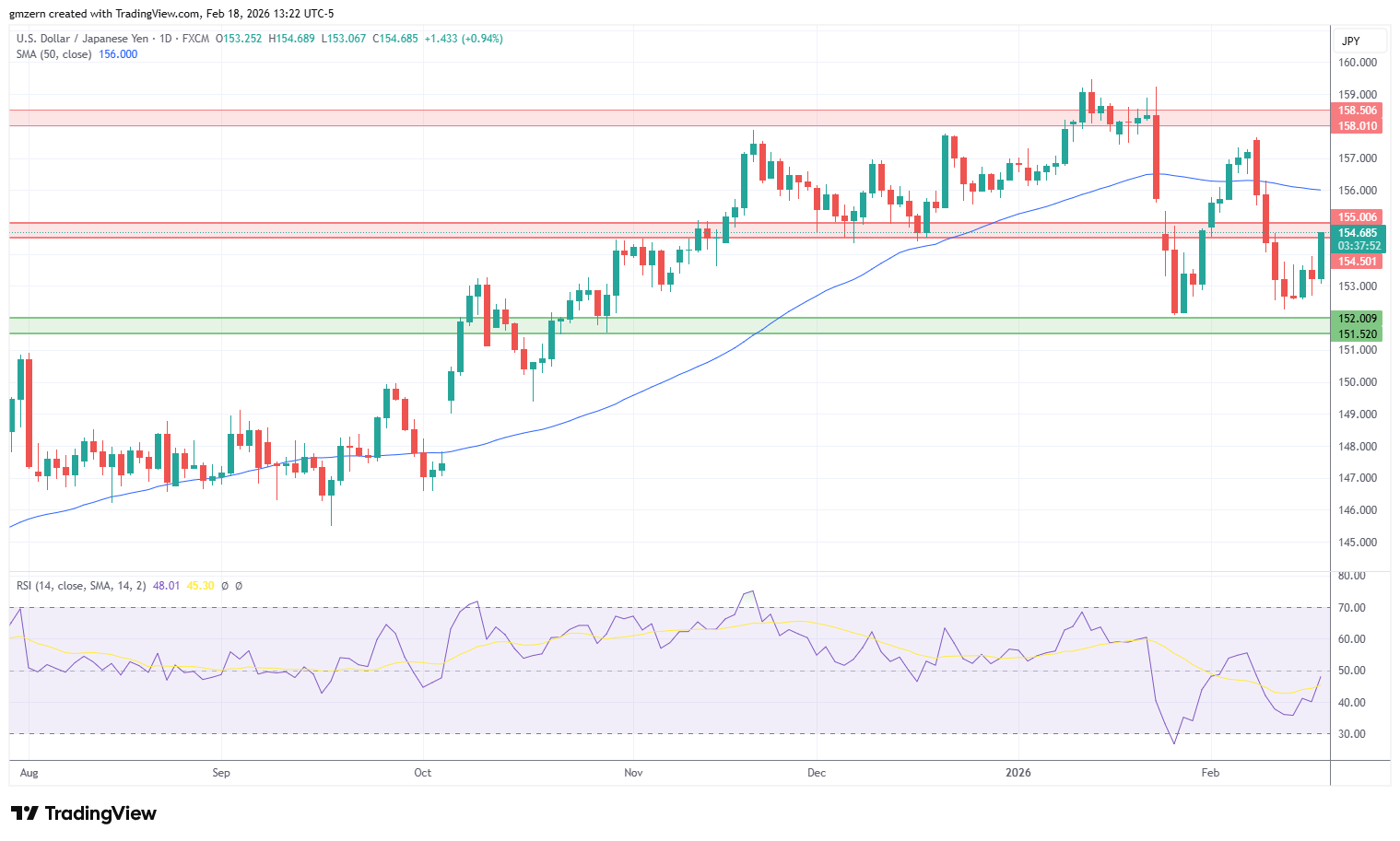
From the technical point of view, USD/JPY settled in a wide trading range between the support level at 151.50 – 152.00 and the strong resistance level at 158.00 – 158.50.
USD/JPY is moving back and forth between these key levels. These moves have a major impact on global markets due to the role of the Japanese yen in global carry trade.
The key question is whether BoJ is ready to defend the yen in case USD/JPY attempts to settle above the 158.50 level. At this point, forex traders are ready to bet on a rebound from recent lows, but resistance will grow when USD/JPY approaches the 158.00 – 158.50 area.
If you’d like to know more about how to trade forex, please visit our educational area.