Recovery Strength Builds Near Channel Support
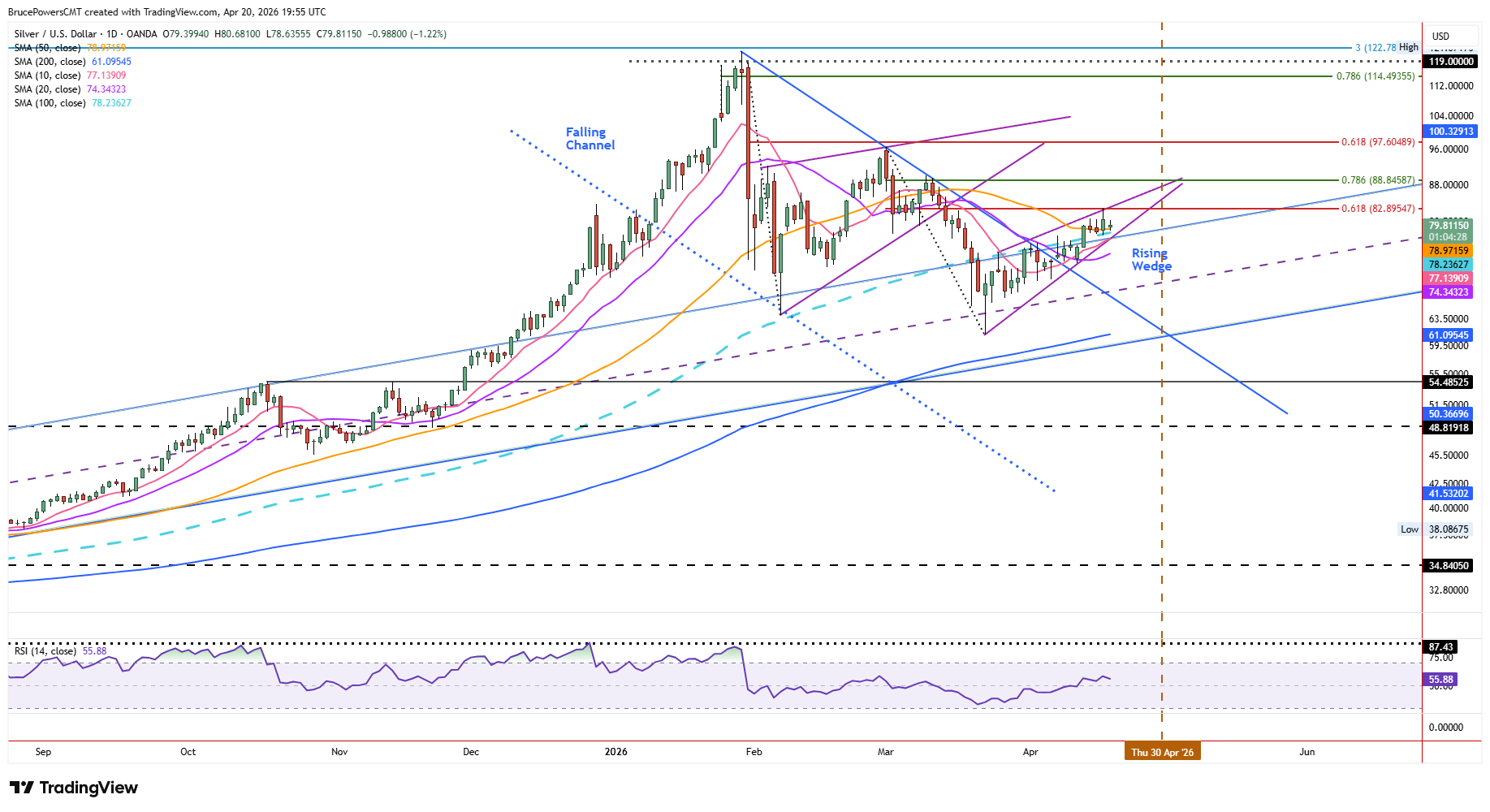
Silver reached a high of $83.06 on Friday and completed a 61.8% Fibonacci retracement of the prior downswing. On Monday, a pullback and consolidation occurred within Friday’s range, and support was further tested near both the 50-day and 100-day moving averages. The more significant 100-day average was reclaimed last Tuesday and has been shown as an area of support since then.
A successful recovery of the 100-day average is a sign of strengthening, especially since it corresponds closely with the top boundary line of a rising trend channel. Each line represents a longer-term timeframe, suggesting that further strengthening in the near term is possible, reinforcing the broader recovery context highlighted at the start of this analysis.

Rising Wedge Defines Near-Term Structure
A small rising wedge pattern has formed on the daily chart for silver, with the top of the pattern corresponding to potential resistance near the 78.6% Fibonacci retracement at $88.85. Notably, silver could continue to strengthen towards that higher target while remaining within the boundaries of the wedge formation.
Bullish Signals vs. Bearish Setup
There is also an interesting timing element that might play out. The previous rally that followed the February swing low of $64.06 formed a rising bearish wedge pattern, which triggered a breakdown on a drop below the lower boundary line. That correction occurred over 27 days when measured from the swing low. A potential symmetry in time between the current and prior corrections may emerge around April 30, which is marked with a vertical line on the chart.
Trigger Levels to Watch Closely
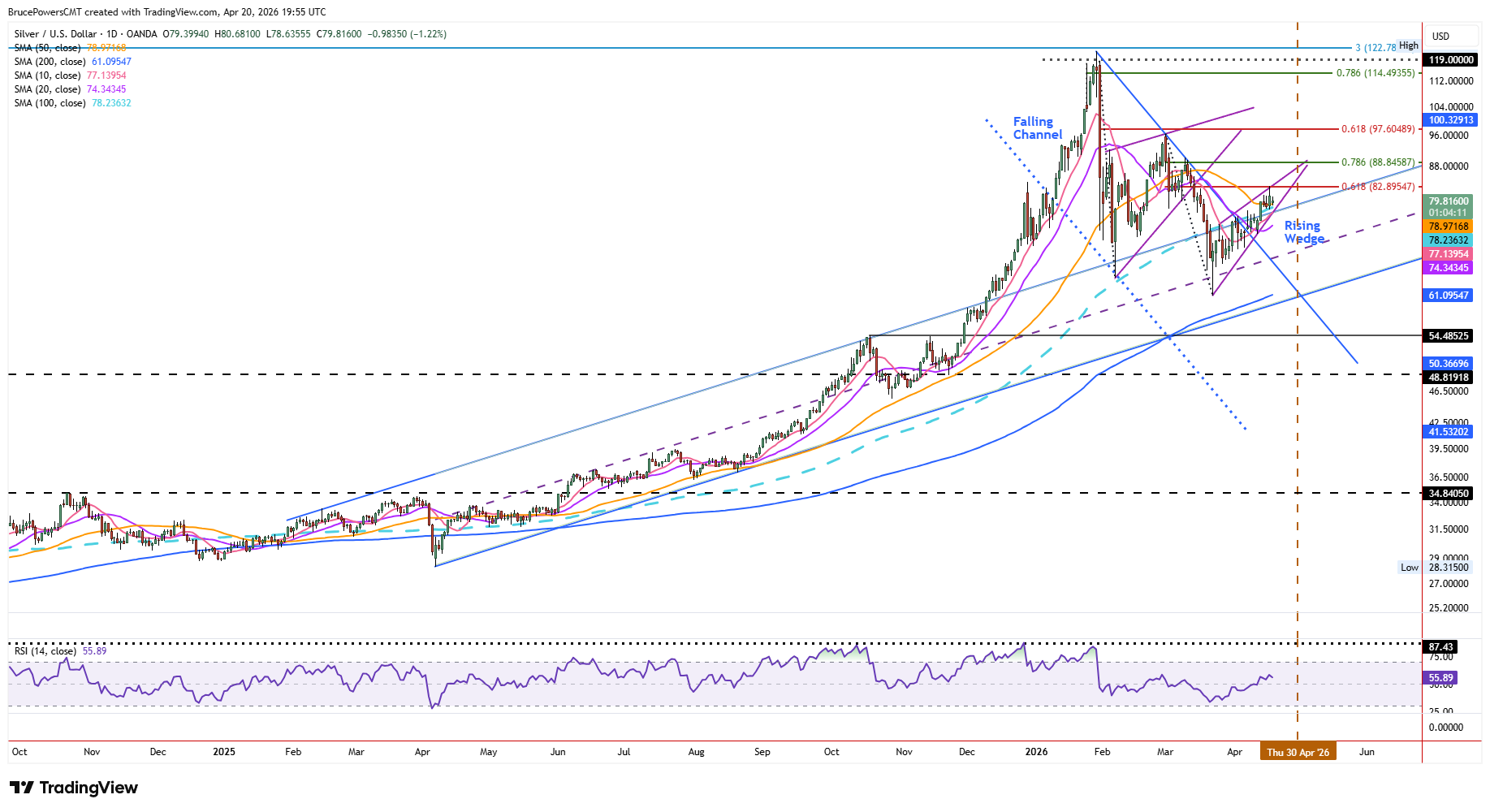
The current rising wedge provides only a guide, since the pattern is not confirmed unless there is a downside trigger. Until then, the pattern can evolve into a larger or different formation. Although the wedge is potentially bearish, the recent recovery of long-term indicators is bullish. This is particularly true for the 100-day average, since it covers a longer timeframe and is aligned with the channel boundary. Also, an initial downtrend line defining prior dynamic resistance was recovered during the current advance, further supporting the possibility of continued strength despite the developing wedge structure.
Trigger Levels to Watch Closely
A bearish trigger for the wedge will occur on a decisive decline below the 10-day average, now around $77.13, as it corresponds to the lower boundary line of the pattern. Last Tuesday’s low of $75.39 provides another price level of note as a drop below it would further confirm a wedge breakdown.
Silver Price Forecast
Every new Silver analysis as it publishes, today's technical signal and key levels, live price — on one page.
See all Silver forecastsIf you’d like to know more about how to trade gold and silver, please visit our educational area.