


British monthly GDP for November 2025, released on 15 January, was 0.3%, somewhat higher than expected, but the initial appreciation of the pound was retraced fairly quickly. Traders are now looking ahead to several important British releases from 20 January, primarily the job report and inflation. This article summarises recent data from Britain, then looks briefly at the charts of GBPUSD and GBPJPY.
November 2025’s monthly GDP at 0.3% was significantly better than the consensus of 0.1% and the highest since June 2025:
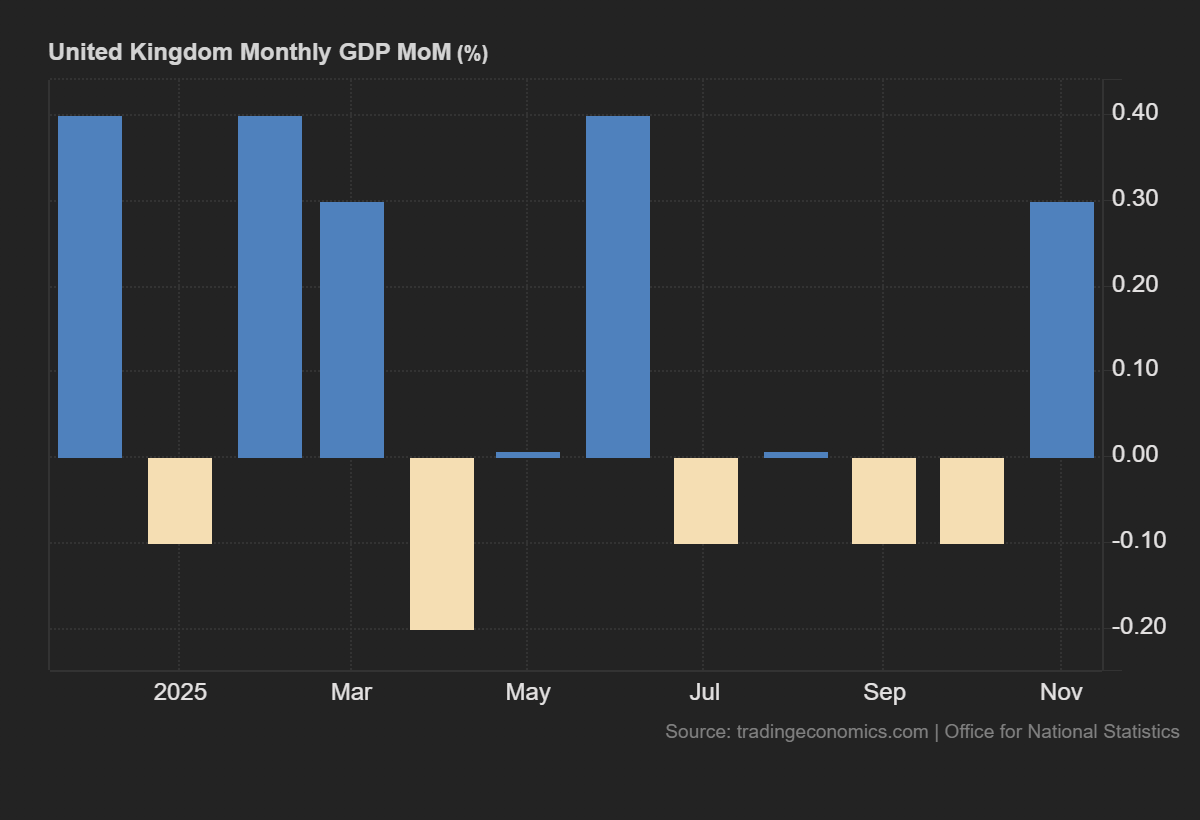
Services were among the key positive contributors with a significant rebound from October’s contraction, but manufacturing was also important as production of cars continued to recover after incidents in August last year. On balance, though, GDP growth in Britain last year was at best lukewarm, with 0.2% and 0.1% for Q2 and Q3 respectively.
Meanwhile, annual headline inflation in Britain has been declining for the last two months:
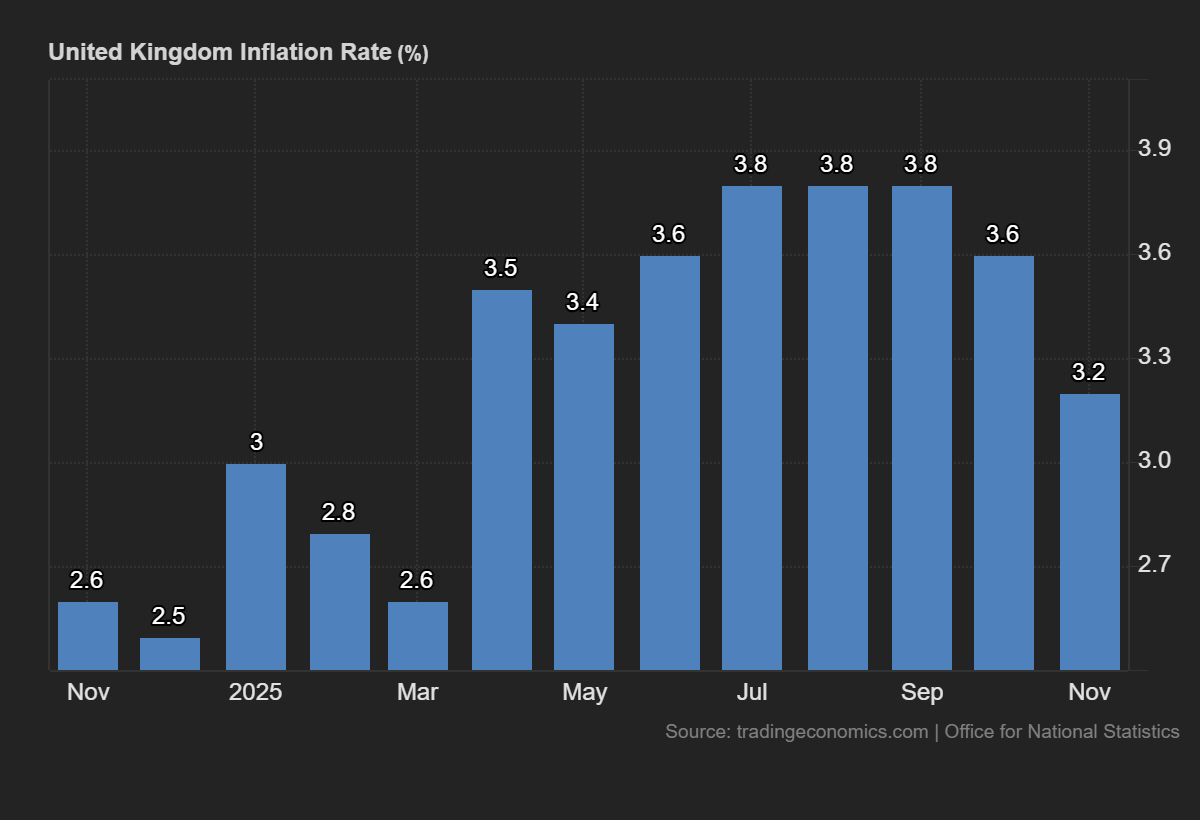
3.2% for November, released on 17 December, was surprising because the consensus had been 3.5%. Although inflation is still significantly above target, there’s now some evidence that it’s declining. Expectations for the Bank of England’s policy in 2026 have become generally less dovish in recent months, with the first cut possible in March but not very likely until April or June; a second cut this year is likely in December.
Cable Declines Within the Range
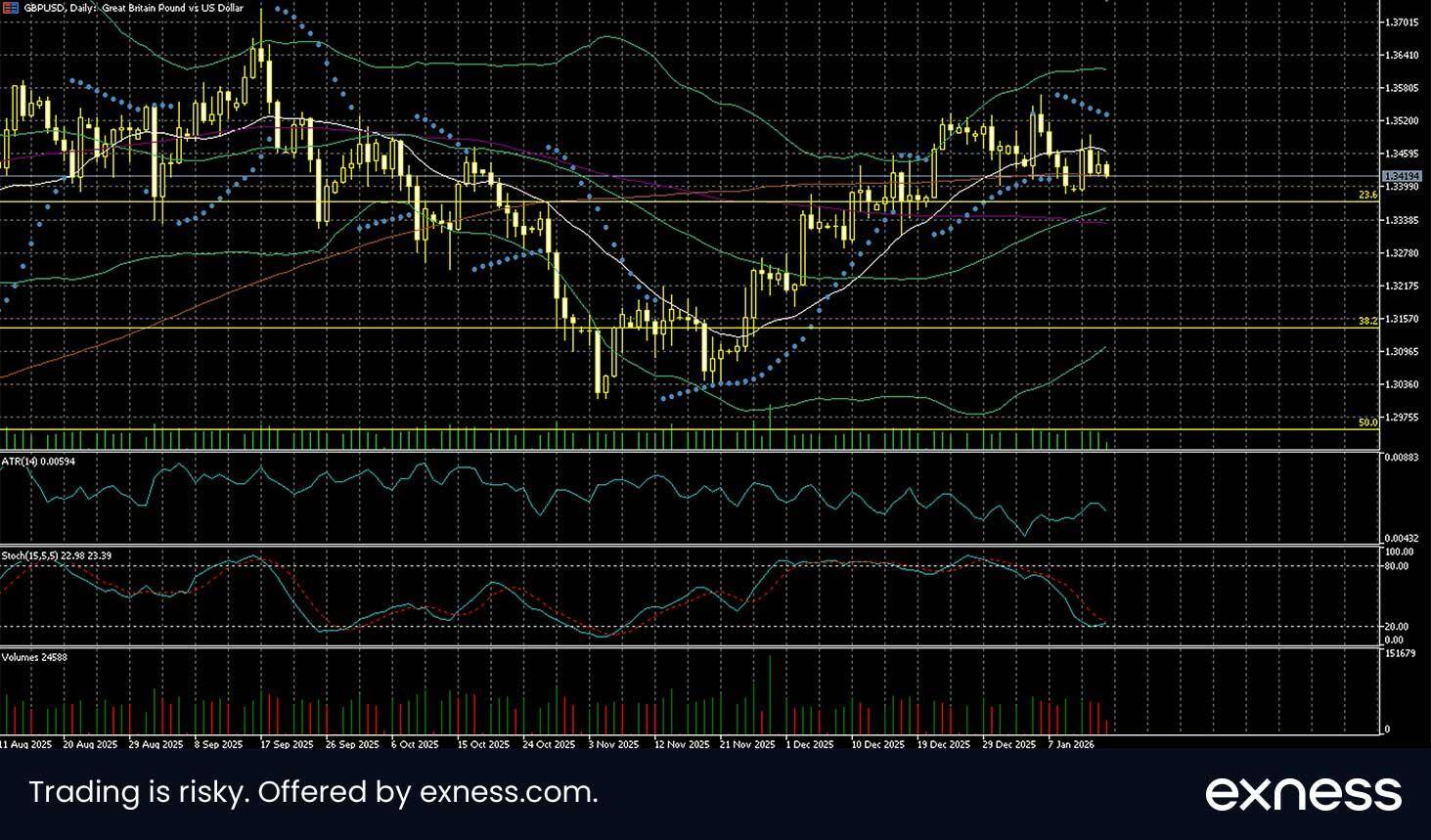
British monetary policy moved into greater focus for cable around the middle of January after a positive monthly GDP for November, with the majority of participants expecting the BoE to cut twice in 2026. Recent data from the USA were generally positive, and legal threats against Jerome Powell by the government have moved out of focus for now.
The 23.6% weekly Fibonacci retracement around $1.337 is an obvious potential support that the price is currently testing. There’s no clear evidence of a directional trend on the daily chart, so if the price can break below this potential support, it might settle into the value area between the 50 SMA from Bands and the 100 SMA. However, the slow stochastic is close to oversold.
A breakout above $1.35 seems unlikely for now in the absence of strong demand for buying. With the price below the 20 SMA, this might function as a short-term dynamic resistance. The British job report and inflation coming up on 20 and 21 January respectively might give more clues on the medium-term direction, or if unsurprising, confirm sideways movement ahead of the Fed’s meeting.
Pound-yen Retreats from 17-year Highs
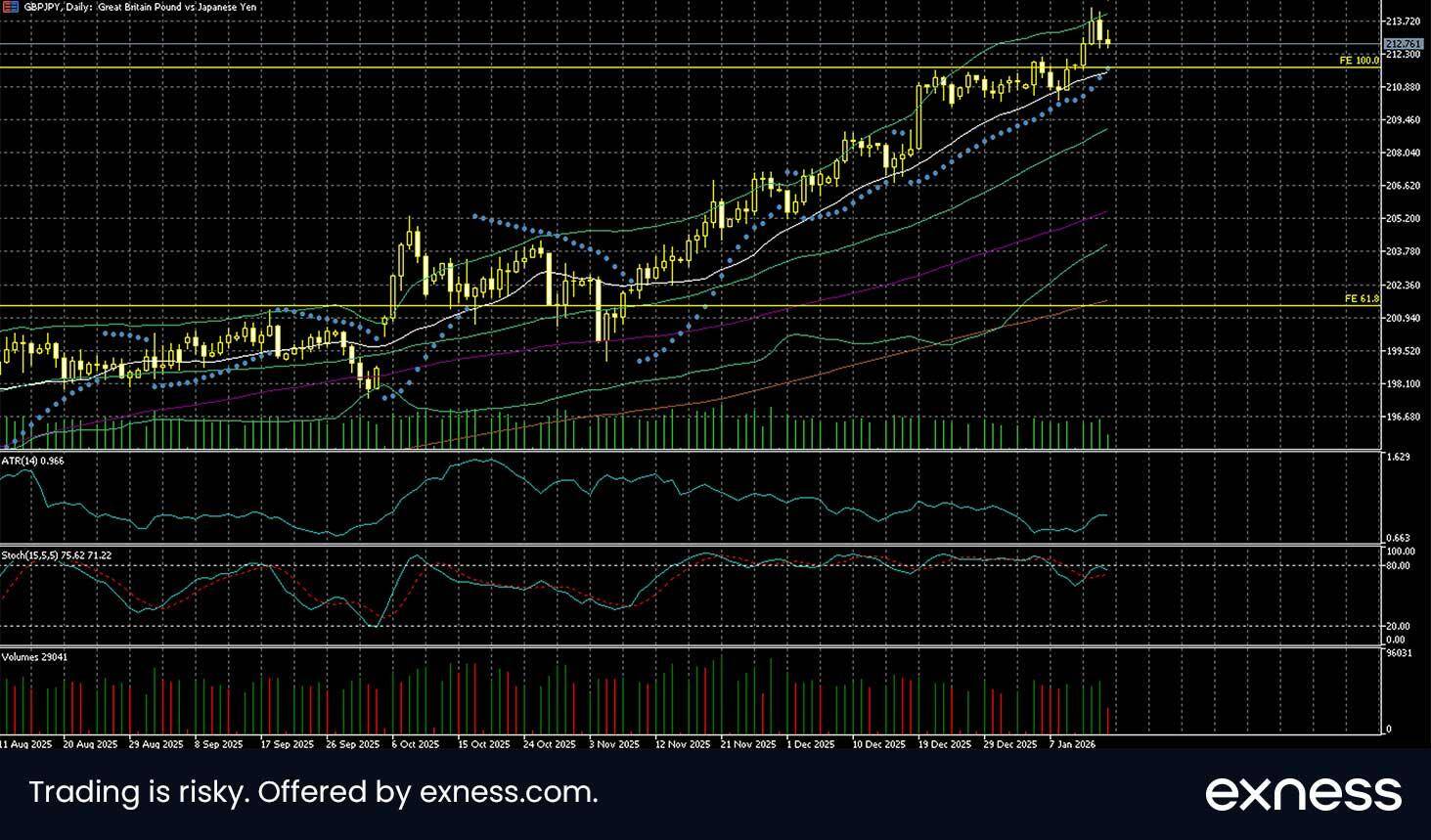
13 January saw the pound-yen reach its highest since the Global Financial Crisis in 2008, around ¥214.29, only to decline over the following two days as senior Japanese officials ramped up signals of intervention. Rumours of a potential snap election in Japan, which could lead to a stronger government ramping up fiscal stimulus, have weighed on the yen recently, while British data have been broadly decent in January so far.
The 100% weekly Fibonacci extension around ¥211.75 hasn’t definitely been broken yet, so it is still in focus as a resistance. With ATR having risen recently, the slow stochastic no longer signalling buying saturation, and volume of buying not having declined significantly, the uptrend seems likely to continue based on technical analysis.
However, potential intervention is a wildcard that might invalidate a TA-based approach if dollar-yen breaks above the supposed red line of ¥160. The last intervention in summer 2024 saw the pound-yen decline more than 10% in a month, so such an event poses a large risk to new buyers. The 50 SMA from Bands is an obvious potential dynamic support around ¥209. Major British data and the BoJ’s meeting on 20-22 January could bring higher volatility.
This article was submitted by Michael Stark, an analyst at Exness.
For the latest analysis, ideas for trading and more, follow Michael on X: @MStarkExness.
The opinions in this article are personal to the writer; they do not represent those of Exness. This is not a recommendation to trade.