Chips Lost 5% on the Week and Healthcare Took the Other Side
The S&P 500 slipped 0.05% to close at 7,354.02 Friday, settling below the 50-day moving average. The Nasdaq Composite lost 0.24% for its fifth straight losing session. The Dow edged down 0.09%.
For the week the S&P 500 fell about 2% and the Nasdaq dropped nearly 5%. The Dow hit an all-time high at 52,655.66 the prior session and barely pulled back. Three indexes telling three different stories and the split comes down to how much technology each one carries.
The Philadelphia Semiconductor Index tumbled more than 5% Friday and posted its worst weekly performance since early April. That is the weight dragging the Nasdaq and the S&P. The Dow’s limited tech exposure is the reason it is sitting near a record while the other two are fighting their 50-day moving averages.

Stock Index Technical Analysis
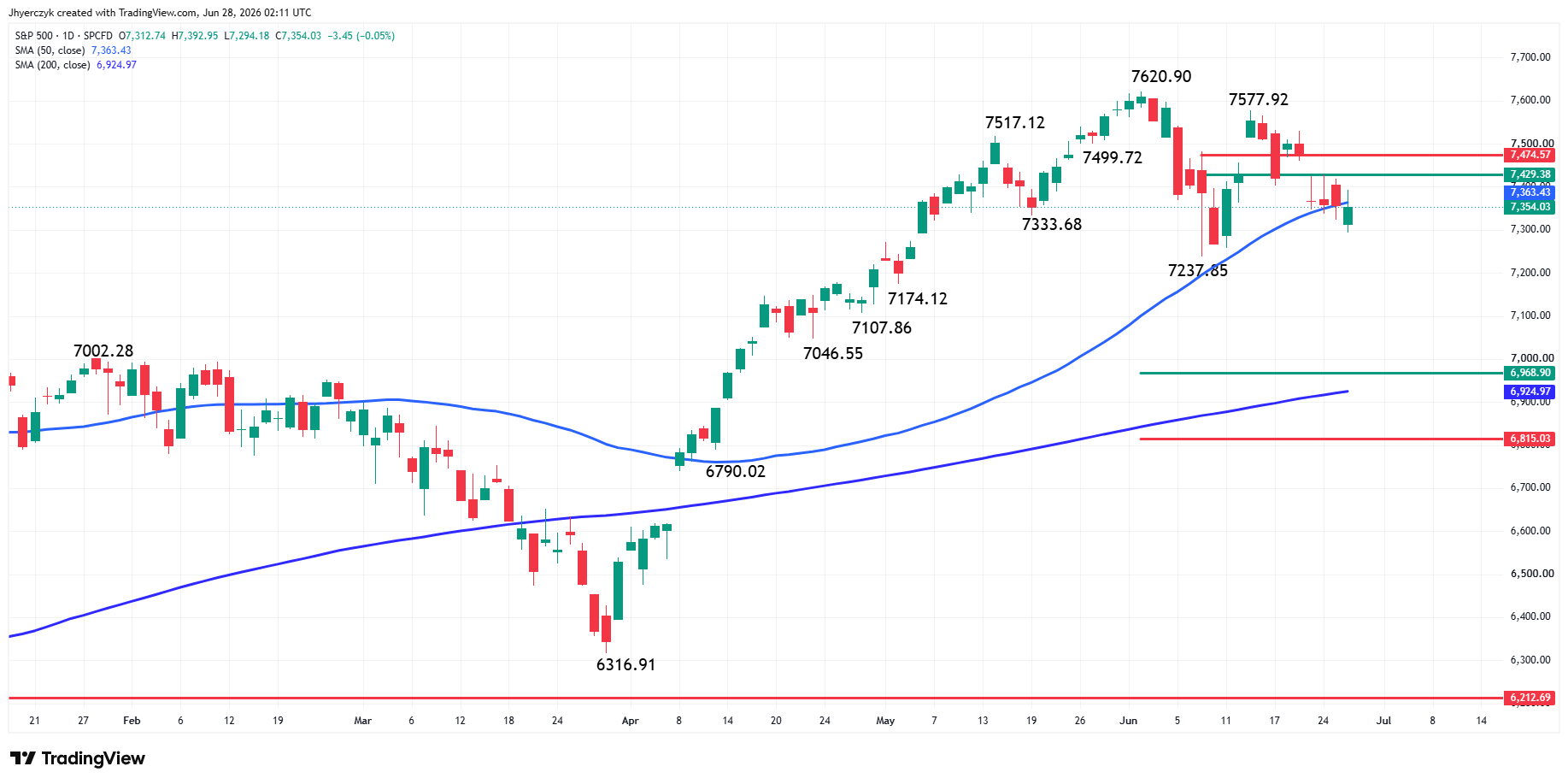
The benchmark S&P 500 Index (SPX) settled on the weak side of the 50-day moving average at 7363.43, opening the door to further weakness on Monday. The first downside target is the June 9 swing bottom at 7237.85. A trade through this level will reaffirm the downtrend.
The long-term range is 6316.91 to 7620.90. Its retracement zone is 6968.90 to 6815.03. An acceleration through 7237.85 will target this zone. Another target inside this zone is the 200-day moving average at 6924.97.
On the upside, overcoming the 50-day MA is likely to lead to a retest of the short-term retracement zone at 7429.38 to 7474.57. A close over this zone will put the index in a position to test the tops at 7577.92 and 7620.90.
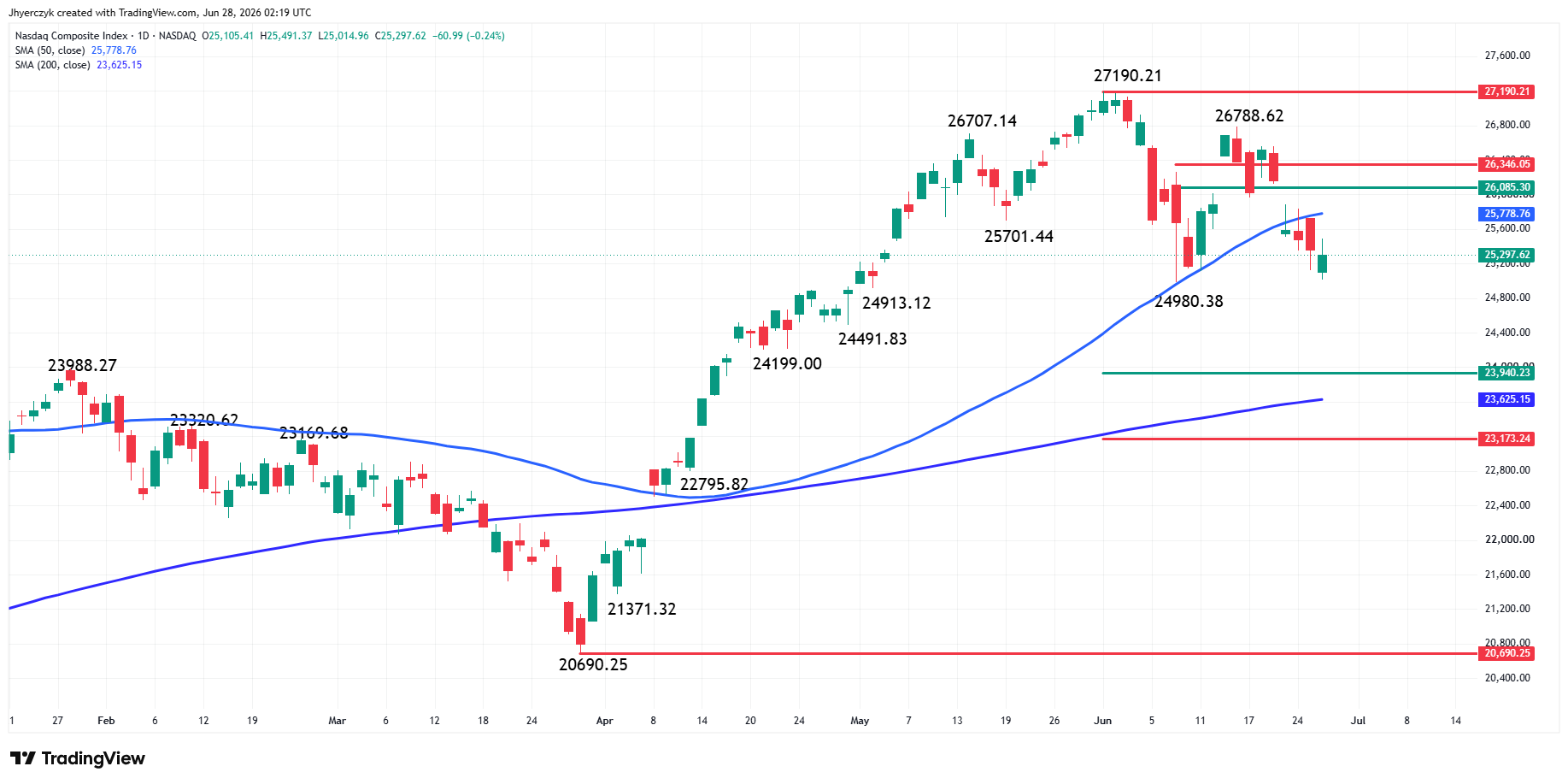
The tech-heavy Nasdaq Composite also closed below the 50-day moving average at 25778.76 and in a position to challenge its main bottom at 24980.38. This level is a potential trigger point for an acceleration to the downside.
The long-term retracement zone target is 23940.23 to 23173.24. Inside this zone is the 200-day MA at 23625.15.
Overtaking the 50-day MA will indicate the return of buyers. However, the key area buyers would have to overcome is 26085.30 to 26346.05 to have any shot a new high.
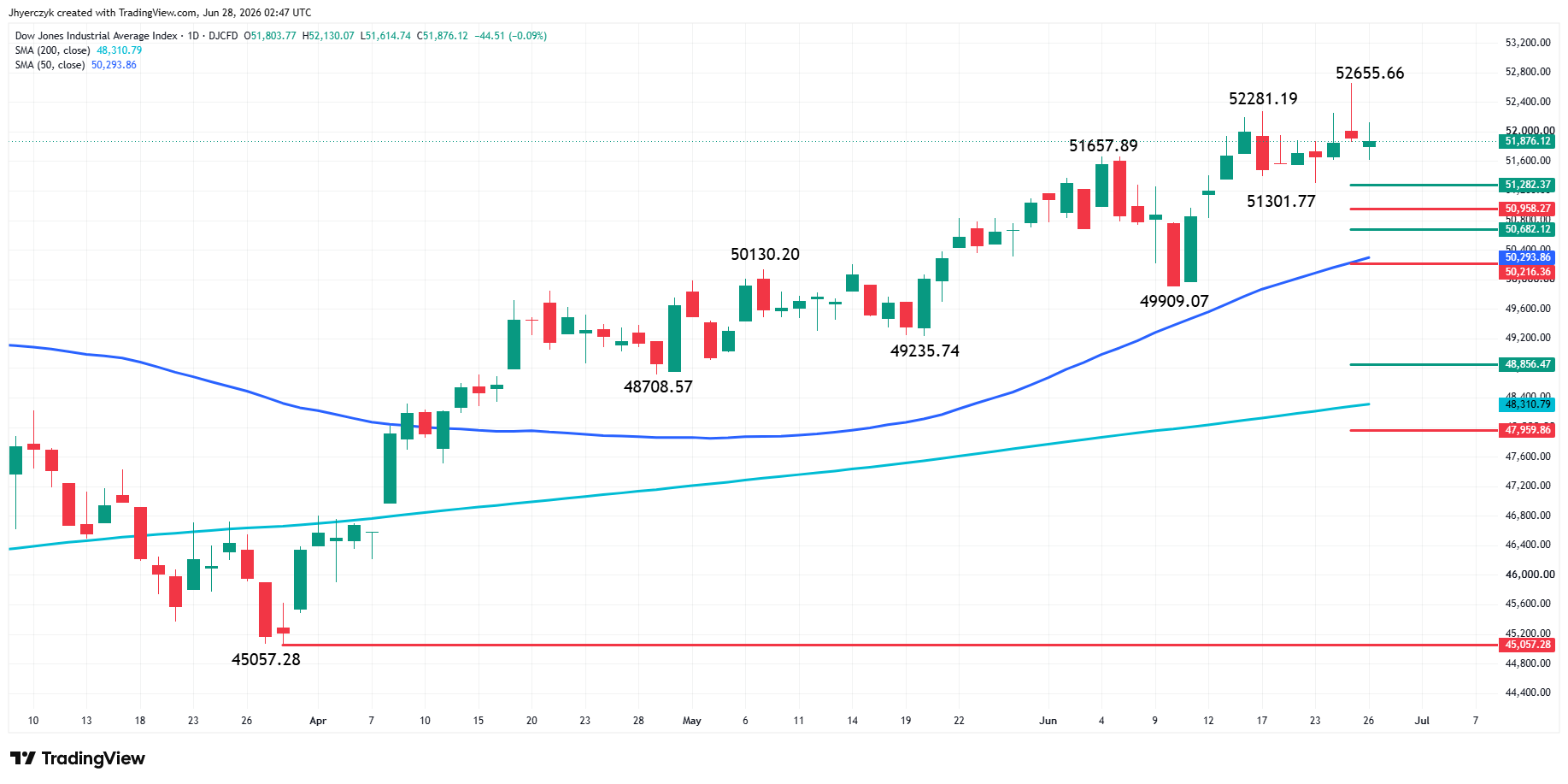
The blue chip Dow Jones Industrial Average is in a much stronger position than the other two indexes because of its lower exposure to technology. The Dow is in a strong uptrend, having hit an all-time high at 52655.66 the previous session. A trade through the swing bottom at 51301.77 could weaken the trend, but the series of retracement levels at 51282.37, 50958.27, 50682.12 and 50216.36 should make it a labored event.
Like the S&P 500 Index and the Nasdaq Composite, the key indicator to watch is the 50-day moving average. For the Dow, it comes in at 50293.86. Crossing to the weak side of this indicator will put it in a position to challenge the swing bottom at 49909.07.
The swing bottom is a potential trigger point for an acceleration to the downside with the long-term retracement zone at 48856.47 to 47959.86 the primary downside target area. Inside this zone is the 200-day MA at 48310.79. This makes the area a value zone.
S&P 500 Price Forecast
Every new S&P 500 analysis as it publishes, today's technical signal and key levels, live price — on one page.
See all S&P 500 forecastsHealthcare Led and Tech Paid for the AI Spending Question
Healthcare was the strongest sector on the board Friday and it was not close. Consumer staples, financials and utilities all finished higher as well. Seven sectors closed in the green. The four that closed red were technology, industrials, materials and energy.
Technology fell more than 1% and the damage was concentrated in semiconductors. The selling started after a report that OpenAI may delay its IPO until next year. The concern is not about one company’s timing. Billions have gone into AI chips, servers and data centers over the past two years on the assumption that the spending accelerates. If the company at the center of that cycle is pulling back from the capital markets, traders start asking whether the infrastructure buildout can sustain its pace without fresh funding.
The rotation from growth into defensive names has been orderly. Healthcare is absorbing the capital leaving chips. Consumer staples and financials are picking up the rest. When the majority of the market is green and only the tech-heavy sectors are red, the selling is targeted, not broad.
Stocks in the News
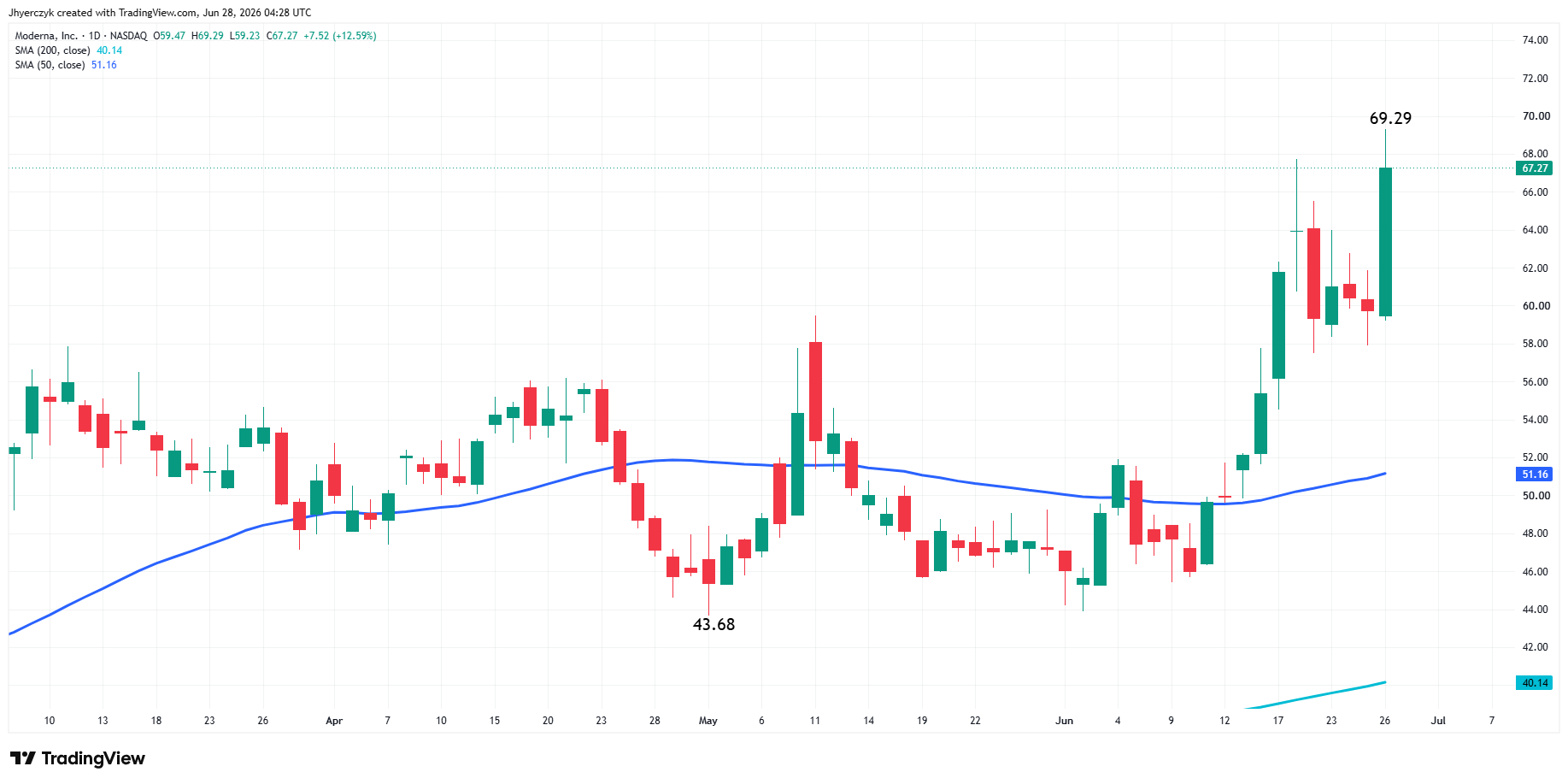
Moderna surged nearly 13% after an investor event highlighted the strength of its drug pipeline, pushing the stock to its highest level since 2024. Eli Lilly, Johnson & Johnson and AbbVie all gained and extended the healthcare buying that has been building for three consecutive sessions.
Apple recovered more than 3% Friday after Thursday’s nearly 5% drop on MacBook and iPad price increases tied to rising chip costs. The bounce was a relief trade but the margin question Apple raised by blaming component costs has not gone away.
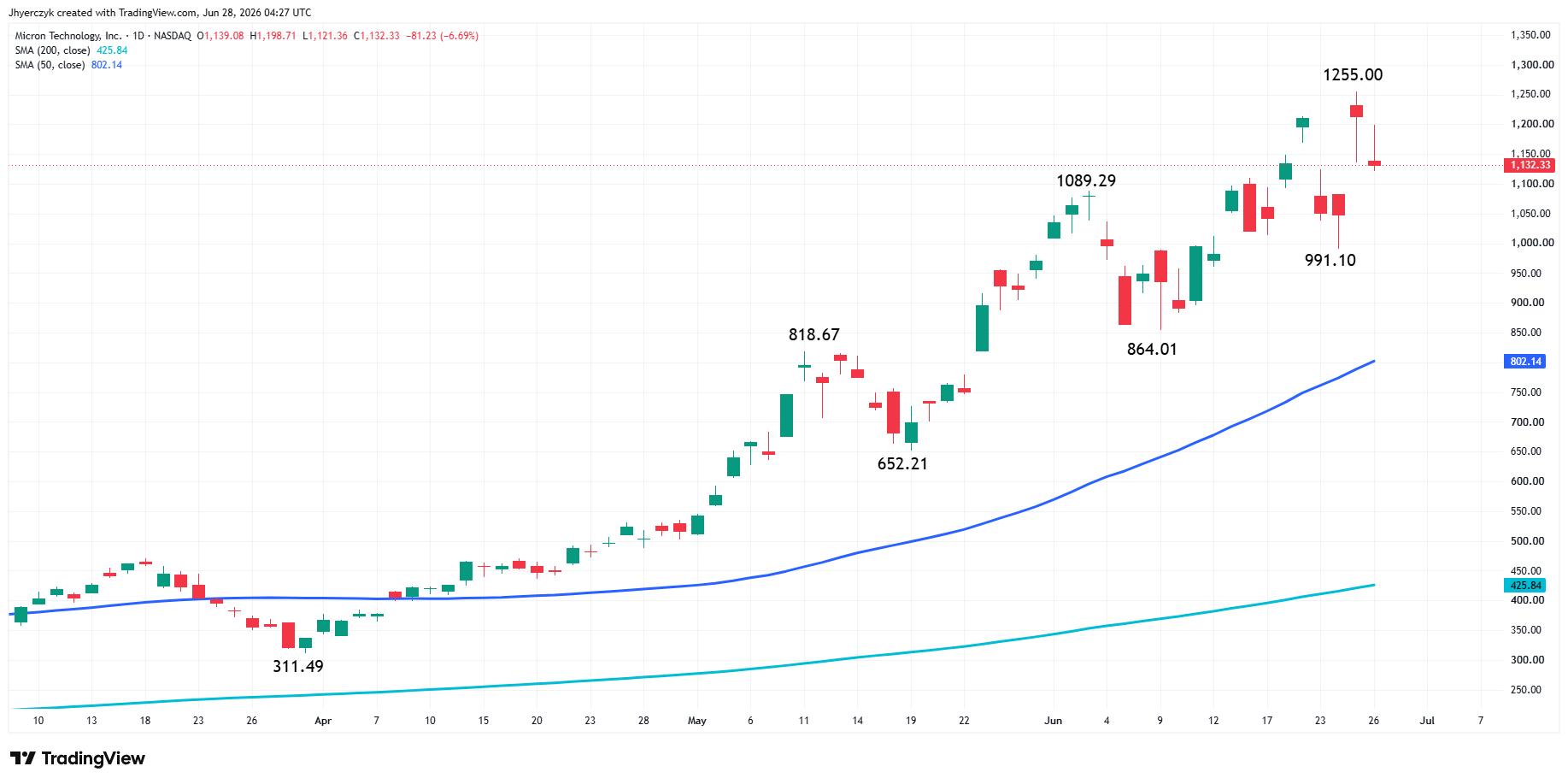
Micron dropped more than 6%, giving back a chunk of Thursday’s 15% earnings-driven surge. AMD and Intel also posted sizable losses.
ON Semiconductor fell almost 24% after announcing an all-stock deal to acquire Synaptics for roughly $7 billion. Synaptics also finished lower. When both sides of a deal sell off, the market is rejecting the terms.
SpaceX edged slightly higher ahead of its addition to the Russell indexes as index funds prepared to purchase shares.
Kashkari Wants a Hike and the Dots Already Pointed There
Minneapolis Fed President Neel Kashkari said Friday he expects one rate hike will likely be needed this year. That aligns with the dot plot from last week’s meeting where nine of eighteen policymakers projected higher rates in 2026. Kashkari adding his voice to that camp gives the market another confirmation that the tightening cycle is not finished.
May consumer prices came in above 4% and even with crude oil falling on the Middle East peace process, inflation in other parts of the economy is not easing.
Consumer Sentiment Improved but the Bar Was Low
The University of Michigan consumer sentiment survey improved in June after hitting record lows earlier in the month. Households still reported concerns about rising costs of living but the direction changed for the first time in months.
Five-year inflation expectations dropped to 3.3% and one-year expectations fell to 4.6%. Lower inflation expectations matter for the Fed because if consumers stop expecting prices to keep climbing, the self-reinforcing cycle of higher wages chasing higher prices starts to slow. That does not solve the inflation problem immediately but it gives policymakers one less reason to accelerate the tightening.
Concerns about the Iran conflict also eased in the survey, improving business condition expectations over the next five years. The sentiment data gave the broader market a reason to hold Friday even while chips were selling. An improving consumer alongside a weakening tech sector is what keeps the S&P range-bound instead of breaking down.
What to Watch
Kashkari calling for a hike on the same week OpenAI delays its IPO gives the bears two arguments that reinforce each other. Higher rates pressure growth valuations. Slower AI capital formation pressures the earnings story underneath those valuations. Healthcare and consumer staples are catching the rotation but they cannot carry the S&P to new highs on their own. The chip names have to find a floor first. Micron giving back 6% after a blowout quarter tells you the market is not ready to buy the AI story on earnings alone. It wants to see the spending question answered and right now OpenAI just told it to wait until next year.
The S&P 500 closed below the 50-day and the Nasdaq posted its fifth straight loss. The Dow is near a record. Monday’s session determines whether the S&P reclaims the 50-day or whether sellers push through the June 9 swing bottom and open the path to the 200-day.
More Information in our Economic Calendar.