The American consumer refuses to roll over. We just watched retail sales breeze past expectations with a 1.7% jump in March, and while a massive 15.5% spike at the gas pump certainly padded the headline, the core control figure grew by a vigorous 0.7%. I think this resilience is the primary reason Wall Street hasn’t collapsed under the weight of $100 oil. Households are leaning on tax refunds and savings to absorb the latest price shock. It’s a paradox, a world teetering on a ceasefire’s edge while shoppers keep the lights on. We also saw pending home sales triple economist projections. The housing market is finding a bid despite elevated mortgage rates.

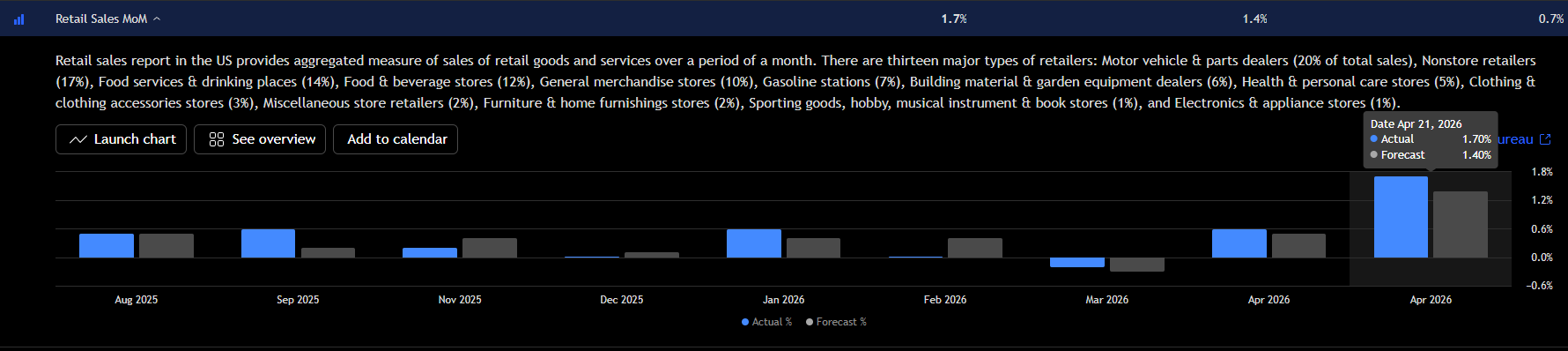
Bar chart showing U.S. Retail Sales for March 2026 at 1.7% actual versus a 1.4% forecast. Source: TradingView
Islamabad Stalemate and the Warsh Factor
Relief rallies are hitting a wall. The global markets are currently navigating a dense geopolitical fog as the world waits for Iran to confirm its delegation for talks in Pakistan, a delay that’s effectively neutralizing early-session optimism. President Trump isn’t mincing words, telling CNBC he has no intention of extending the ceasefire past Wednesday. This tough talk has caused PolyMarket peace odds to plummet from 60% to below 30% in just a few days. We’re also parsing comments from Fed nominee Kevin Warsh. His call for a Fed regime change and a hawkish stance on the balance sheet has supported the dollar’s rebound. If the leadership vacuum at the central bank isn’t settled soon, any hope for a June rate cut might evaporate into the ether.
Weekly Anchor Holds the Line
The weekly chart is our masterclass in structural resilience. After a nasty flush that initially tested the 6,300 level, we’ve seen price action reclaim the short-term Supertrend floor. Buyers stepped back in aggressively. The medium-term trend remains firmly constructive because the recent correction didn’t break the broader advancing structure. Bulls own the bigger picture. We’re currently staring at all-time high resistance near 7,150. A clean weekly close above this zone would mathematically open the door to a move toward 7,300.
S&P 500 Price Forecast
Every new S&P 500 analysis as it publishes, today's technical signal and key levels, live price — on one page.
See all S&P 500 forecasts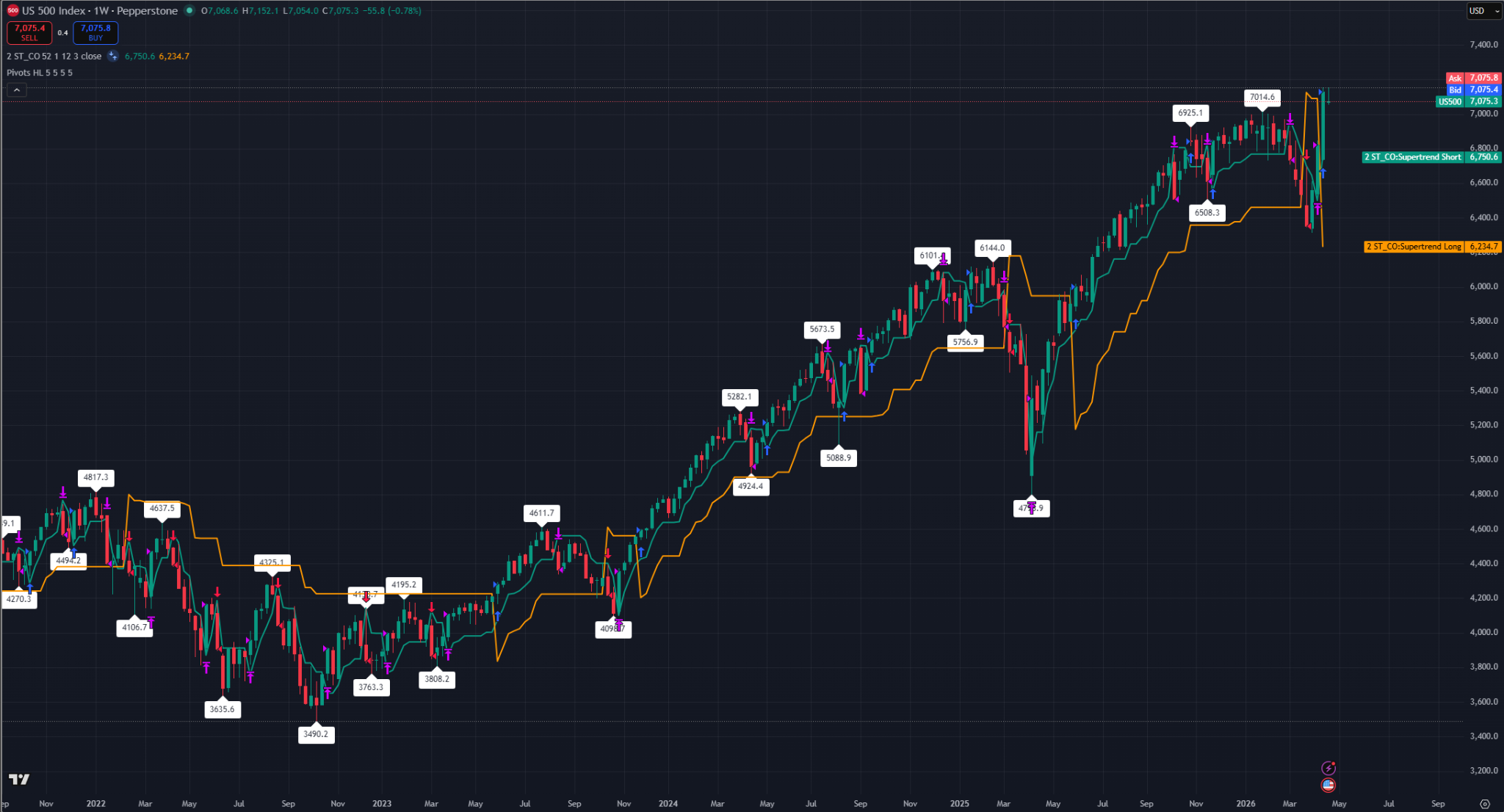
Weekly S&P 500 candlestick chart showing a V-shaped recovery above Supertrend support with resistance noted near 7,150. Source: TradingView
Daily V-Bottom Reclaims the Mean
Buyers took the wheel and they’re driving up the hill. The dip was bought aggressively, momentum has turned back up, and the move into the current week looks like a continuation phase rather than a failed rebound. The daily chart carved out a sharp recovery directly off the 6,311 structural pivot, forcefully dragging price action back above the 21-EMA. That 21-EMA is now acting as a dynamic floor. The RSI is firm and rising, which fits a market with positive momentum, even if it is getting somewhat warm in the short run. It has surged past 50, wiping out the previous bearish divergence. I wouldn’t overreact to a modest pullback from here. In a strong trend, those pauses tend to reset momentum rather than end the move.
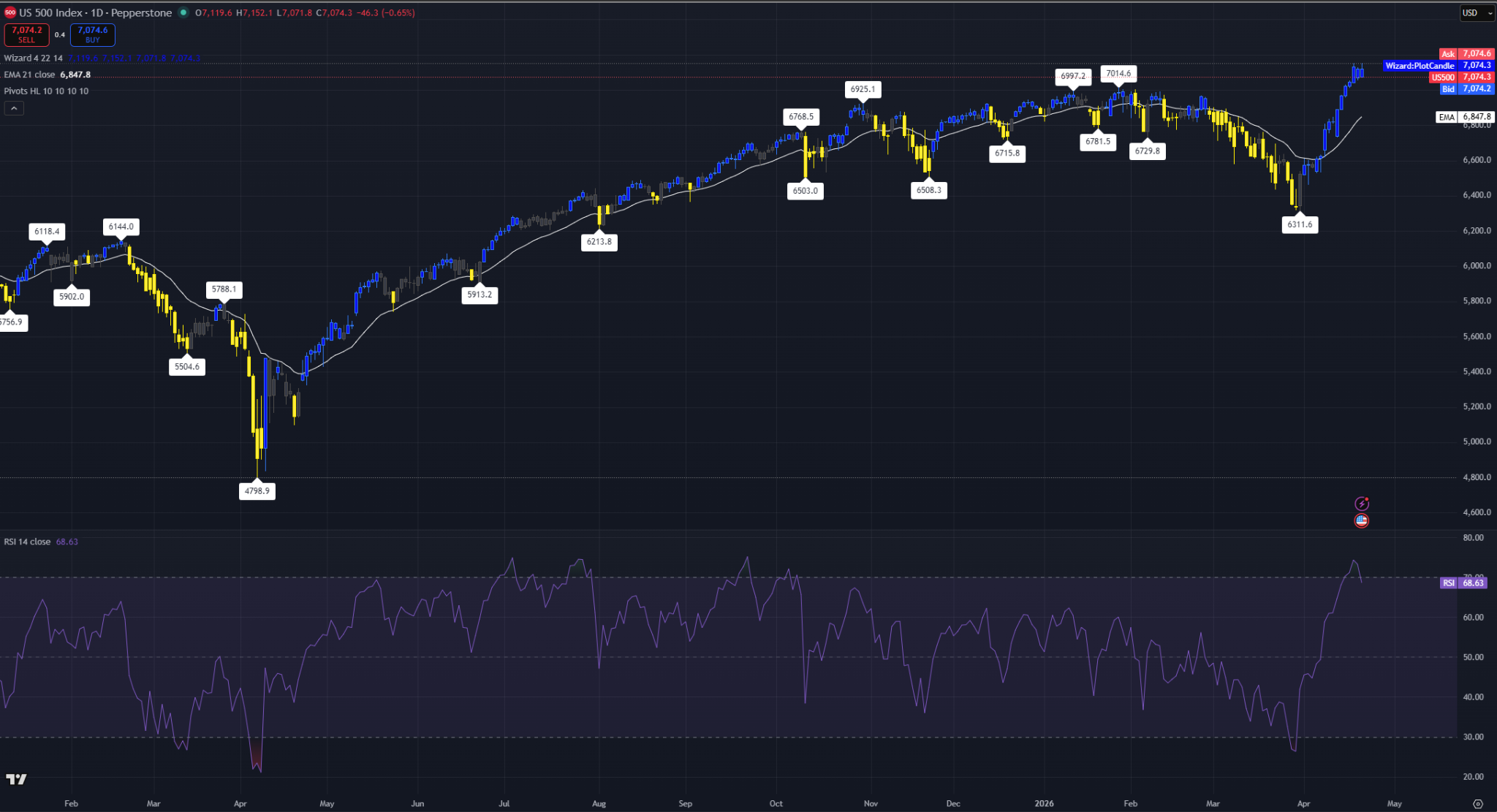
Daily S&P 500 chart showing price crossing back above the 21-period EMA with the RSI trending higher from previous divergence lows. Source: TradingView
Renko Consolidates
The short-term Renko view also favors the upside although there is some consolidation on the short term. Support is seen around 7,040 and if broken can take the Index towards the 6,940, a bit of a retracement. Nonetheless, dip-buying is still active under the surface. The Z-Score SMA is still showing bearish divergence so the pullback seems imminent. So we might really see a minor back-test before the next leg higher.
Renko Consolidates
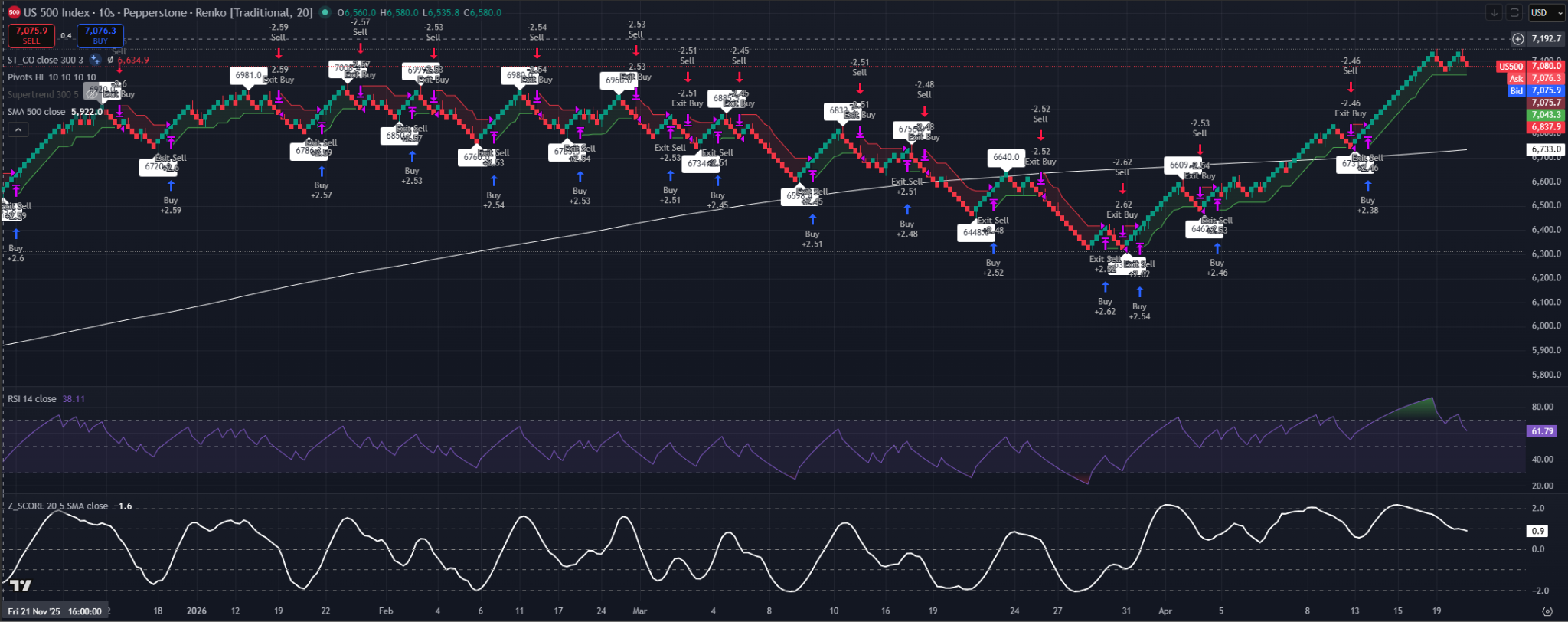
Key Resistance Levels: 7,200, 7,300
Medium Term Path: I expect the S&P 500 to continue its grind toward new record highs, eventually. But there seems to be some consolidation needed first. As the Islamabad headlines create erratic volatility, the underlying macro data is too strong to ignore. We’re in an uptrend that is currently absorbing geopolitical stress, not a market starting a deeper reversal. Buy the dips until the structural support breaks.