Stocks Slide as Oil Surges and Peace Talks Stall
The major U.S. stock index futures are down shortly after the mid-session on Thursday as uncertainty returned to the markets in the form of higher oil prices and an unclear path toward peace in the Middle East.
At 17:56 GMT, the blue chip Dow Jones Industrial Average is trading 45,978.89, down 450.60 or -0.97%. The benchmark S&P 500 Index is at 6,494.85, down 97.05 or -1.47% and the tech-heavy Nasdaq Composite is trading 21,486.628, down 443.197 or -2.02%.
Oil Is Up, Stocks Are Down and Yields Are Rising
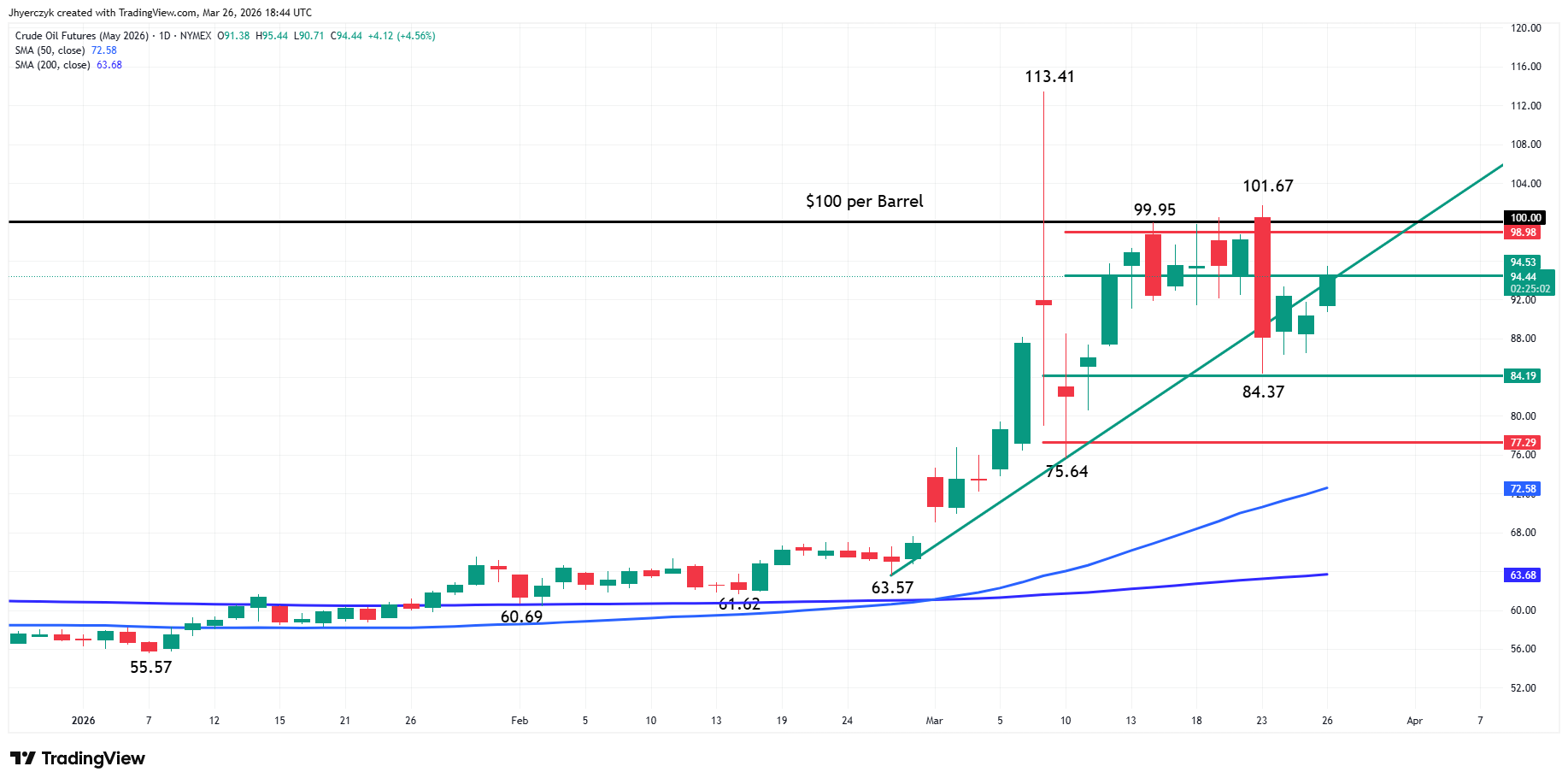
All eyes seem to be on crude oil prices, which rose sharply on Thursday. High prices brought back memories of inflation and delayed Fed rate cuts, and stocks sold off accordingly. International benchmark Brent crude oil increased about 5% to over $108 per barrel, while U.S. benchmark West Texas Intermediate (WTI) also climbed 5% to above $94 a barrel. As oil prices went up, stocks fell and Treasury yields rose, with both the 10-year and 2-year yields moving higher.
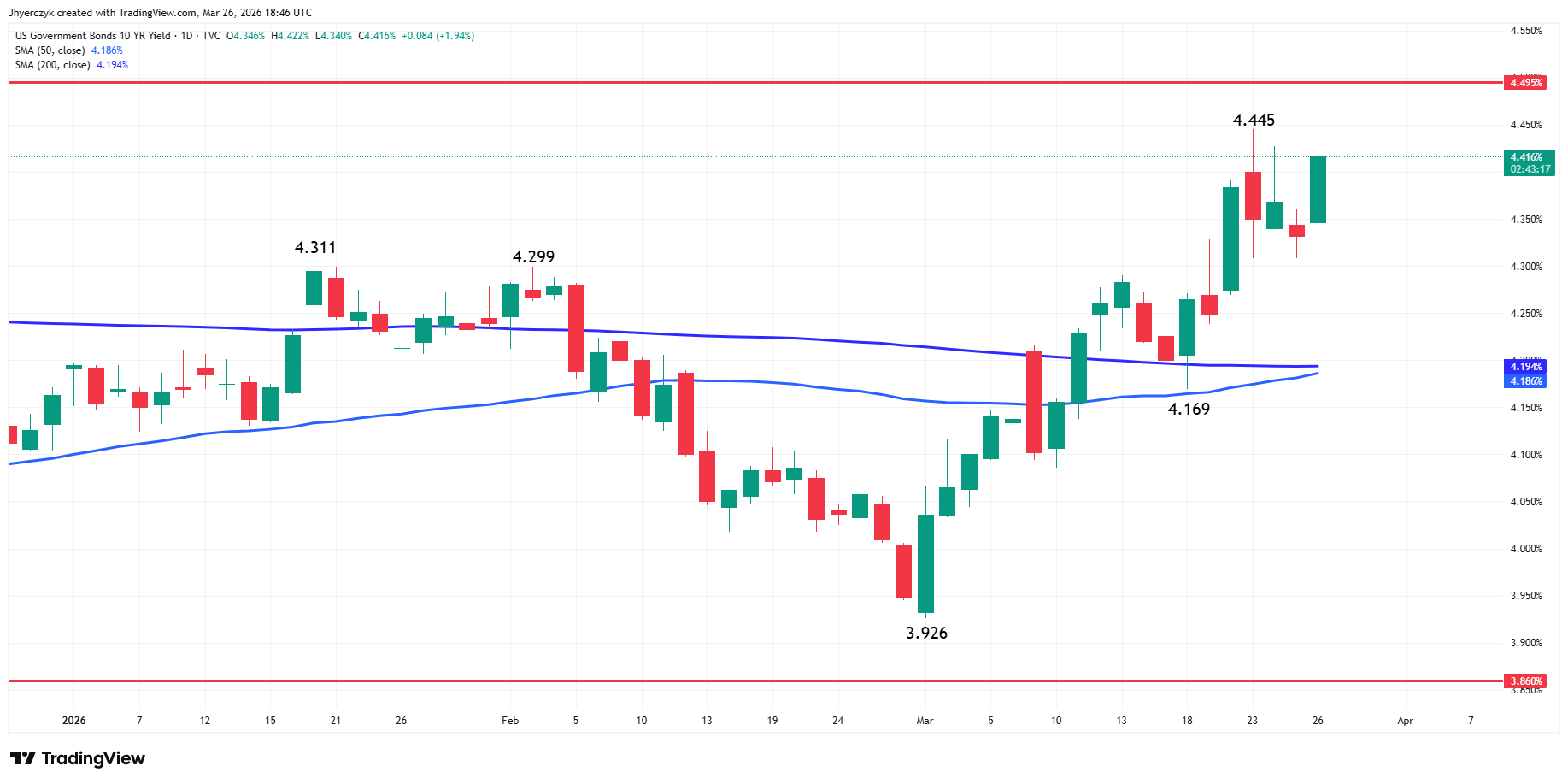
Stripping out all the current events, I think the rise in yields is the major influence since Treasurys are a competing asset with stocks. As the 10-year yield moves closer to 5%, professional money managers are eyeing the move closely because in a heartbeat, they may decide to allocate fewer funds to stocks and more to guaranteed Treasury yields. This is especially true in the current investing environment, which has the major indexes poised to extend their losses for the year.
What the Professionals Are Really Watching
Professional investors don’t care about the minutia discussed on Twitter. The comments about nearly every swing in the market. The focus should be on the overall return at the end of the year, and if the market is saying allocate less to equities and more to fixed income instruments then so be it.
Nonetheless, we cannot ignore the influence of oil prices that are moving lock-step with the growing tensions between the United States and Iran. President Trump did not help quell volatility when he said earlier today that he believed oil prices and market weakness are not as bad as expected. He also predicted prices will eventually fall. Well, that’s just a statement and investors showed little reaction to it. I could buy what he said if there was enough certainty that professional investors could hedge away. But even they are having trouble trying to figure out how long this war is going to last or if Trump is going to escalate it with another aggressive bombing campaign.
S&P 500 Price Forecast
Every new S&P 500 analysis as it publishes, today's technical signal and key levels, live price — on one page.
See all S&P 500 forecastsIran Isn’t Ready to Talk and the Market Knows It
Iran has been no help either. Currently, the narrative is Iran has the peace proposal from the U.S. and it’s reviewing it. But they’ve also said they are not ready to hold direct talks. So I think this means we are a long way from ending the war.
How Bad Could This Get?
We’ve seen the major indexes stretched to their 200-day moving averages. That has happened before so it’s no sign of a panic. We’ve seen position-trimming and profit-taking, again that’s a normal response. But conditions could change quickly if the war escalates, Middle East infrastructure continues to get damaged and Brent crude remains over $100 a barrel. We may not see slower growth in the U.S. over the short run. It’s probably going to start in the Middle East then spread to Asia and Europe before it hits the U.S. Inflation will be constantly monitored, but it will likely become a concern when a major central bank raises interest rates.
Technical Outlook
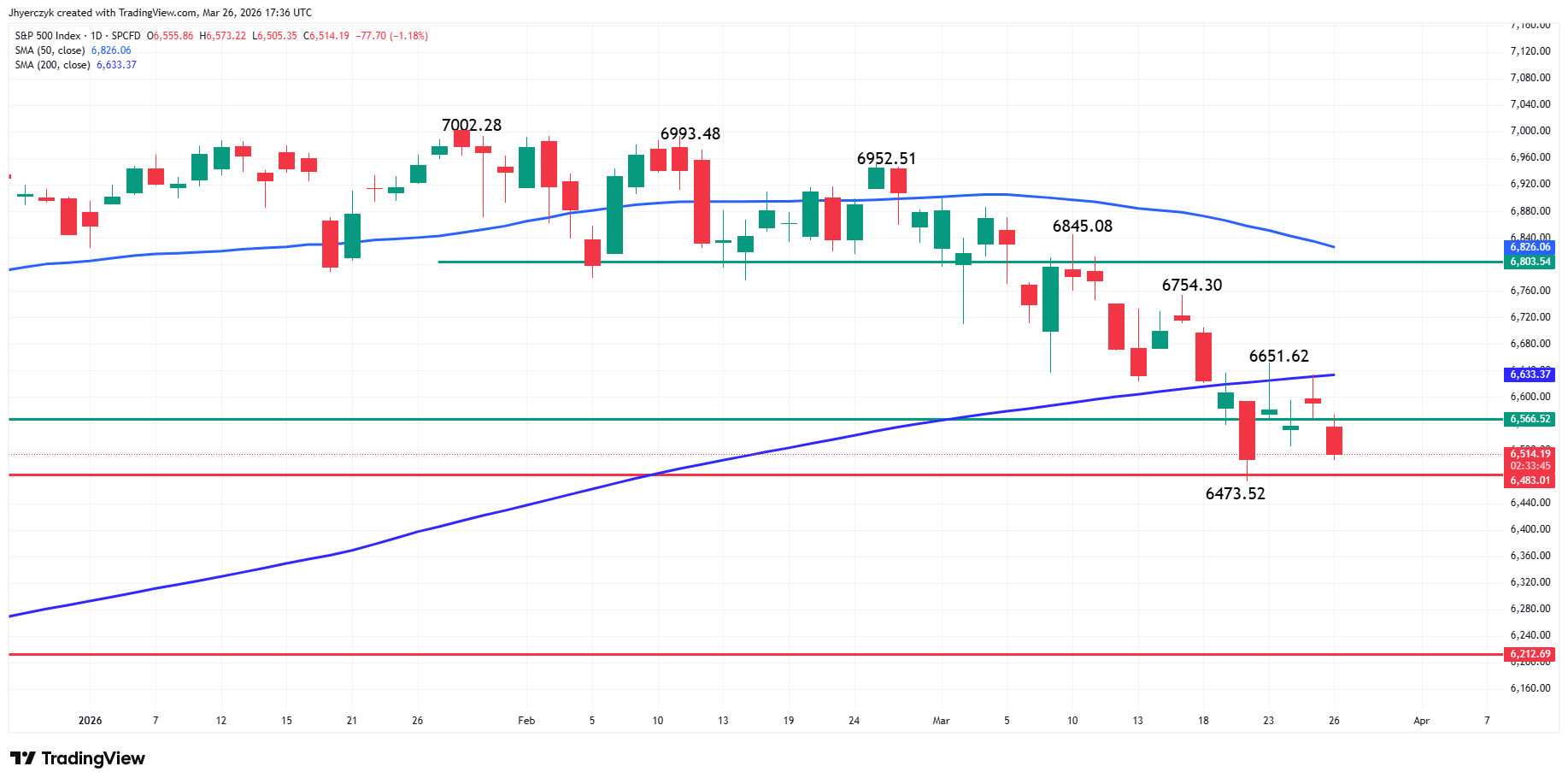
Technically, with the S&P 500 Index (SPX) under its 200-day moving average at 6633.28, the market is in sell the rally mode. This is why the recent rally stalled at 6651.62. Continued pressure could lead to a breakdown under a long-term bottom at 6483.01. This could trigger an acceleration to the downside with a lot of real estate down to the next support at 6212.69.
More Information in our Economic Calendar.