U.S. Dollar Index Reverses Higher Into the Close After Early Selloff
The U.S. Dollar Index sold off hard Friday after Iran confirmed the Strait of Hormuz was open to commercial shipping for the remainder of the ceasefire. That headline pulled the geopolitical premium out of the dollar fast. The index dropped to 97.632, its lowest level since late February, and extended a two-week decline of about 2.5%. Then something changed late in the session and the dollar closed higher.

Technical Outlook
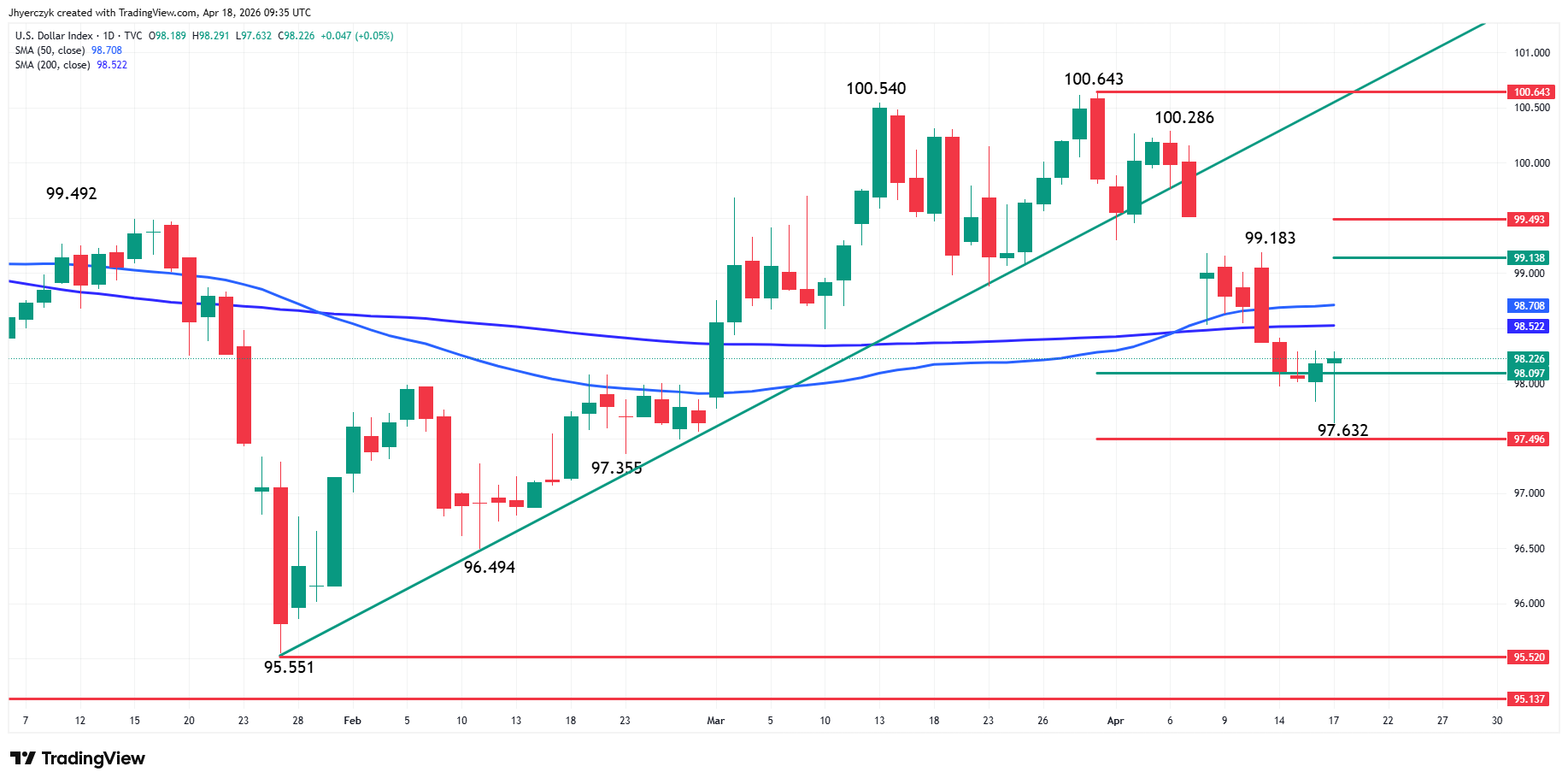
Technically, the main trend is down according to the daily swing chart. However, Friday’s closing price reversal bottom at 97.632 may have signaled exhaustion in an oversold market. A trade through 98.291 on Monday will confirm the chart pattern. This could trigger the start of a 2 to 3 day counter-trend rally.
The main range is 95.551 to 100.643. Yesterday’s low was 97.632. It fell inside the retracement zone. If 97.496 is taken out then the chart pattern has failed and prices could plunge.
The first upside target is the 200-day moving average at 98.522 and the 50-day moving average at 98.708. The new short-term range is 100.643 to 97.632, making its retracement zone at 99.138 to 99.493 a valid target. Traders should also watch the reaction at the 99.183 swing top.
On Monday we should find out if the reversal on the close was short-covering or real buying.
EUR/USD Price Forecast
Every new EUR/USD analysis as it publishes, today's technical signal and key levels, live price — on one page.
See all EUR/USD forecastsYields Drop, But Fed Pricing Fails to Support Follow-Through Selling
The early move made sense. Lower oil prices knocked inflation expectations down and Treasury yields followed. The 10-Year U.S. Treasury yield fell from 4.315% to 4.226% before bouncing back to 4.248%. When yields dropped the dollar dropped with them. That’s the standard playbook and traders ran it hard.
What stopped it was the Fed. Markets were pricing about a 26% chance of a December rate cut going into Friday. That number didn’t move enough to justify keep selling the dollar aggressively. Without a clear shift toward easier policy the selling ran out of conviction.
The Currencies Told the Real Story
I think what happened late in the session was real repositioning, not just short-covering ahead of the weekend. The tell was in the currencies. The euro had reached its highest level since February and the yen gained on narrowing rate differentials. Both reversed by the close. Sterling was already under pressure after mixed Bank of England signals. When the dollar strengthened and every major currency weakened at the same time, that’s not a technical bounce. That’s flows moving back into the dollar.
The geopolitical story isn’t fully resolved either. Iran opened the Strait of Hormuz but nobody is treating that as permanent. As long as that uncertainty stays in the market, buyers are willing to step in on dollar dips.
More Information in our Economic Calendar.