
Dollar Catches a Bid as Peace Talk Hopes Fade
The U.S. Dollar is higher late Tuesday on safe-haven buying tied to uncertainty over whether the Middle East war would end quickly. On Monday, the greenback fell sharply after comments from President Trump suggested possible peace talks between the U.S. and Iran, but these hopes faded when Iran denied negotiations. The news shifted sentiment and the dollar rose due to renewed safe-haven demand.
The price action suggests the financial markets could become rangebound until investors receive more clarity about the war and its possible resolution.

Slowing Economy, Rising Costs and a Dollar-Positive Setup
The dollar got a boost from the March U.S. Purchasing Managers’ Index report. Business activity slowed to its lowest level in nearly a year. Input costs are rising, driven mostly by higher energy prices tied to the war. When costs keep climbing like that, the Fed has less room to cut rates. It may even raise them. Higher rates attract capital and that’s dollar-positive. Slowing growth would normally hurt the dollar but rising inflation expectations are winning that argument right now.
Euro, Pound and Yen All Losing Ground
The pound and the euro both gave back Monday’s gains as optimism faded. Europe and the UK are already feeling the war’s impact. Business activity is dropping and that makes their currencies a harder sell against the dollar. The yen slipped too. When global economies start showing cracks investors move toward the dollar. That’s the trade right now and it’s working.
War Disrupts Energy Supply and Keeps Inflation Hot
The war has cut off energy shipments through a key route, affecting about one-fifth of global oil and gas supply. Oil prices are climbing again and inflation concerns are rising with them. Central banks can’t cut rates when inflation is moving higher. In the U.S., Treasury yields jumped, especially the two-year, which tracks Fed policy expectations. Higher yields pull capital in and that supports the dollar. Global uncertainty is doing the rest. Investors want stability and the dollar is where they’re finding it.
Technical Outlook
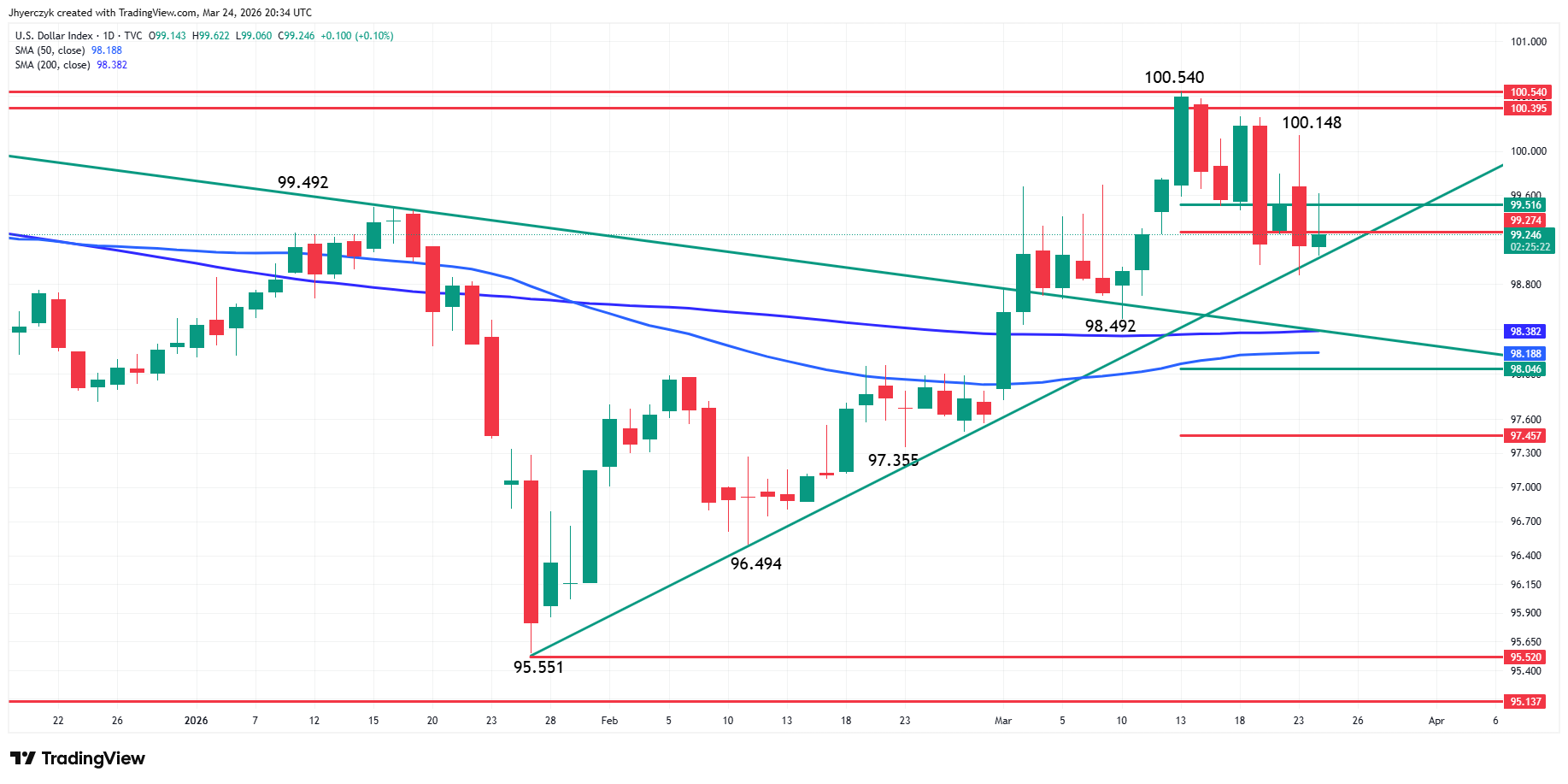
Looking at the U.S. Dollar Index (DX) daily chart, we can see the struggles it’s been facing since last week’s hawkish commentary from the ECB, BOE and BOJ. The volatility in the oil market is also dampening its impact as a safe-haven asset.
EUR/USD Price Forecast
Every new EUR/USD analysis as it publishes, today's technical signal and key levels, live price — on one page.
See all EUR/USD forecastsThe trend is up according to the swing chart and the moving averages, but momentum is trending lower. Standing in the way of a retest of the major top at 100.540 is the retracement zone at 99.274 to 99.516.
But I think traders should pay close attention to the trend line at 99.049. If this fails, prices could plunge over the near-term to the zone formed by the 200-day moving average at 98.382 and the 50-day moving average at 98.188.
More Information in our Economic Calendar.