



Dollar Sellers Take Full Control as Policy Risks Stack Up
The U.S. Dollar Index extended its slide on Thursday, deepening the downside momentum sparked by Wednesday’s failure at the 50-day moving average at 99.122, which now serves as the decisive barrier for any bullish attempt. Traders accelerated outflows as expectations hardened for a Fed rate cut next week and as speculation intensified around a more dovish successor to Jerome Powell.
With the index pressing toward key swing bottoms at 98.565 and 98.030, and with an intermediate retracement zone at 98.307–97.814, bearish conviction is firm. Until the 50-day moving average is reclaimed, buyers remain sidelined.
At 14:45 GMT, DXY is trading 98.865, down 0.003 or 0.00%. This is up from an intraday low at 98.772.
Fed Policy Outlook: Why the Dollar Can’t Find Its Footing
Soft U.S. data reinforced expectations for a quarter-point cut, with traders assigning an 85% probability. The focus has shifted toward guidance for future meetings, as the market gauges whether the Fed may be preparing a broader easing cycle.
Reports that White House adviser Kevin Hassett could replace Powell have amplified that concern, since bond investors fear he could support deeper, politically aligned cuts. Lower expected returns on U.S. assets pull the dollar lower as global investors reduce dollar-heavy exposure.
Weekly jobless claims dropped to 191,000, the lowest since September 2022, but that improvement was overshadowed by a 32,000 decline in private payrolls. The combination keeps rate-cut expectations anchored, assisted by the ISM Services PMI at 52.6%, which signals steady—though not forceful—economic momentum.
Cross-Currency Pressure Builds as Global Flows Tilt Away from the Dollar
The yen pushed to 154.56 as markets priced in a December BOJ rate hike, encouraged by three officials signaling confidence that tightening is near. The euro extended gains to $1.1678, supported by stronger business activity and its best annual performance since 2017. Sterling hovered at $1.3359. These flows compounds dollar selling as traders rotate into currencies backed by improving domestic fundamentals.
EUR/USD Price Forecast
Every new EUR/USD analysis as it publishes, today's technical signal and key levels, live price — on one page.
See all EUR/USD forecastsYields Firm, but Dollar Bulls Stay Absent
Treasury yields edged higher—10-year at 4.087%, 2-year at 3.512%—but the uptick failed to lift the dollar, as markets remain anchored to next week’s cut expectations. Traders continue monitoring upcoming data, though none so far has challenged the easing outlook.
Breakdown Intensifies as Sellers Eye Deeper Levels
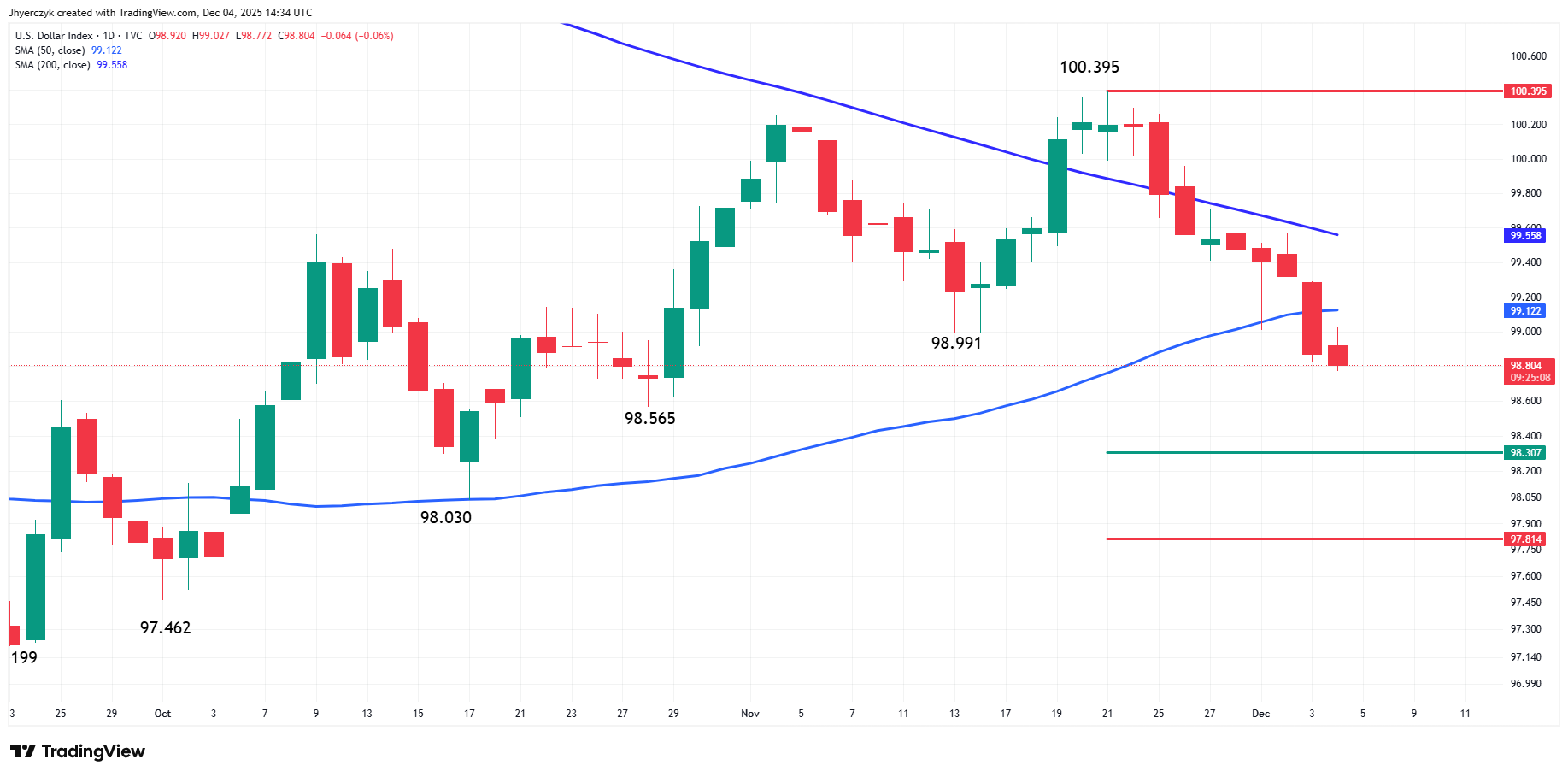
The decisive move below the 50-day moving average at 99.122 confirms a loss of bullish structure and solidifies that level as resistance. Price action now points toward the next swing bottoms at 98.565 and 98.030, which represent the nearest downside reference points for sellers.
Additionally, the intermediate retracement zone at 98.307–97.814 remains a key area of interest, where momentum traders may test conviction on deeper extension. No long-side setups are valid unless the index recovers 99.122, restoring upward bias.
Sellers Maintain the Advantage
The dollar remains under heavy pressure as markets brace for a dovish Fed, potential leadership changes, and persistent strength in major counterpart currencies.
With the index still pinned below the 50-day moving average and sellers pressing toward deeper levels, the short-term outlook remains firmly bearish, with any rebound attempt likely to fade unless the 50-day moving average is recovered.
More Information in our Economic Calendar.