


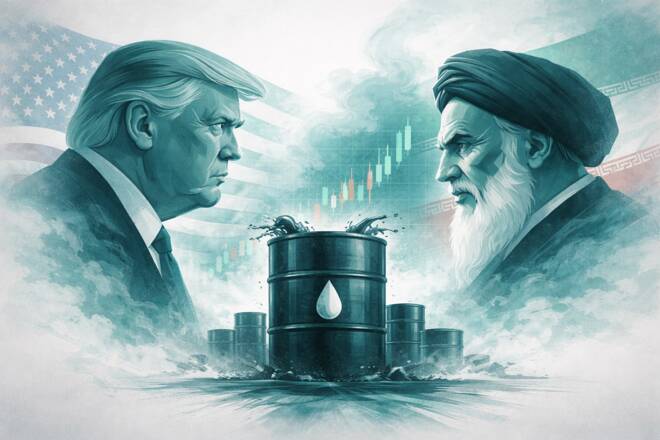
The United States and Iran are holding new nuclear talks in Geneva today. Both countries would prefer not to have a military confrontation. However risk of conflict is still high. A massive U.S. military build-up in the Middle East keeps investors jittery. Markets are now moving on every headline coming from these negotiations. Diplomacy can calm markets, but risk off move can be triggered by failure. This makes the talks an important global macro catalyst this week.
Gold and Silver React to Safe-Haven Demand
Gold (XAU) remains highly sensitive to these tensions. The rise in geopolitical tensions leads to greater safe haven flows. Investors purchase gold when there is a threat of war which pushes prices higher.
Silver (XAG) also follows the gold rally during geopolitical stress. Investors diversify into precious metals during high fear. Therefore, any bad news coming out of Geneva can add to the next rally in both gold and silver.
If talks run smoothly, safe-haven demand may cool in the short term. That can result in short-term pullbacks in precious metals. But the overall trend remains supported as long as geopolitical risk persists.
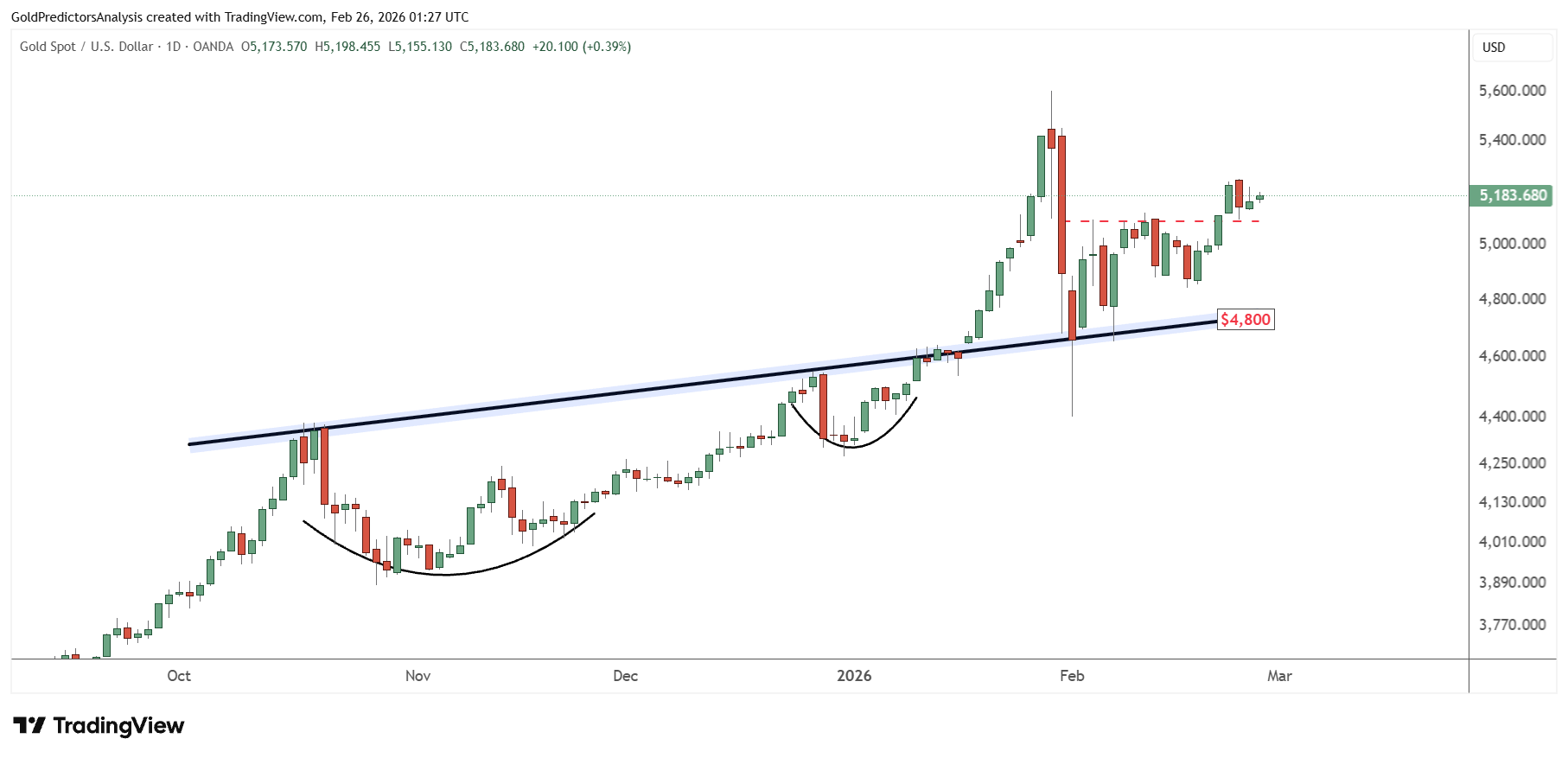
This bullish trend is also evident on the daily gold chart below, which shows the price is constructing bullish price action around $4,800. Since the price has already broken $5,100, the next move in the gold market is likely higher.
Gold Price Forecast
Every new Gold analysis as it publishes, today's technical signal and key levels, live price — on one page.
See all Gold forecastsOil Prices Hold a Geopolitical Risk Premium
Crude oil is one of the most significant assets that are associated with the Iran tensions. The Middle East is an important supply region in the world. Any threat to supply routes such as the Strait of Hormuz has an immediate impact on oil prices.
The current military buildup already places risk premium on oil. Traders are worried that a strike on Iran may disrupt exports and shipping flows. This helps to keep Brent crude oil (BCO) and WTI crude oil (CL) propped up even in quiet trading sessions.
However, effective diplomacy could eliminate some portion of this premium. In that case, oil prices may correct lower as supply fears ease.
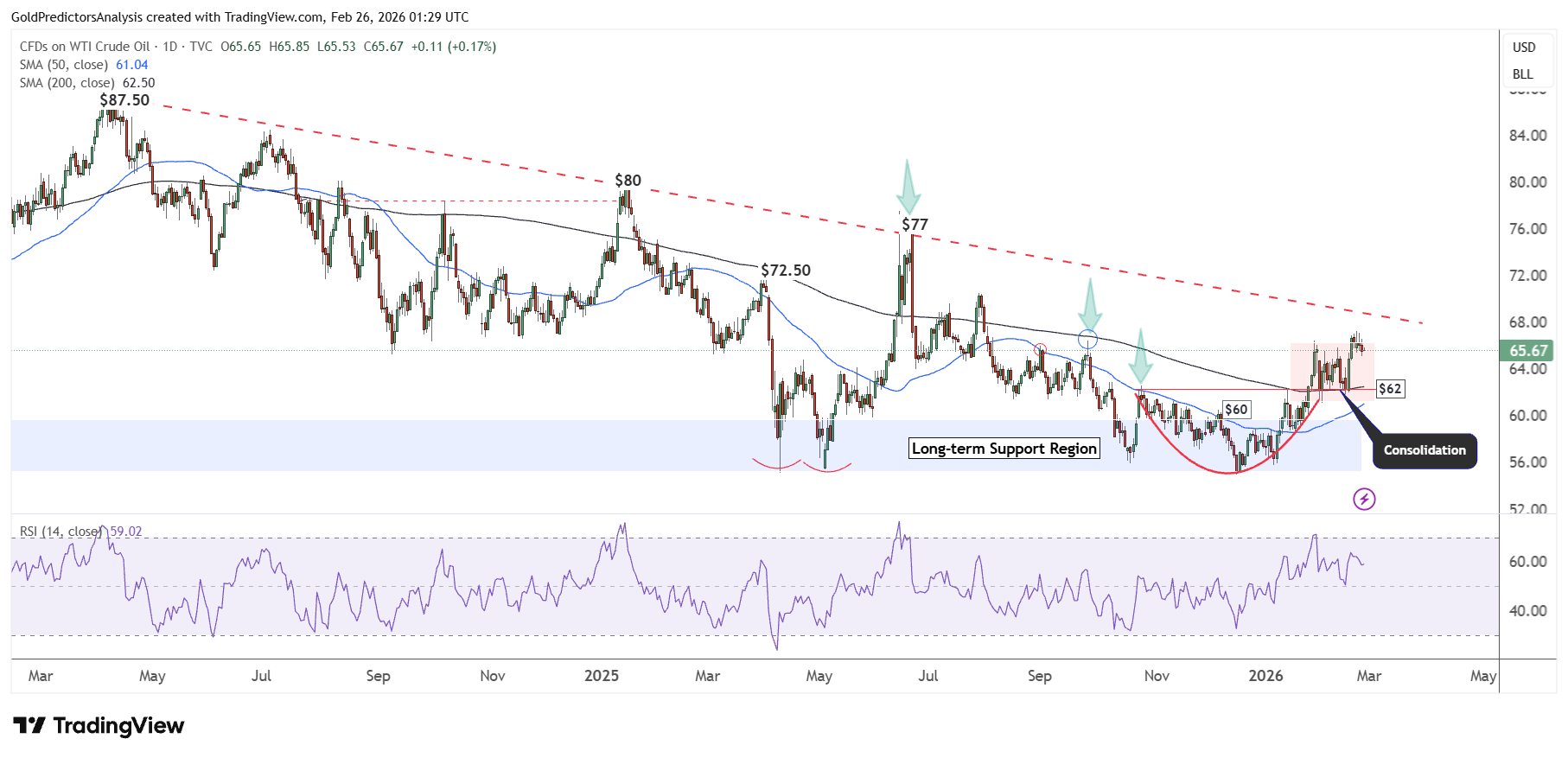
The reaction in the oil market is also evident on the daily chart below, where the price has rebounded from strong support at $62 towards the resistance of $68.
The prices are consolidating in the short term and waiting for the U.S.-Iran talks to define the next move. The immediate resistance remains $69. However, the strong support remains at $62. A break of these levels will define the next move in the WTI crude oil.
US Dollar Moves with Global Risk Sentiment
The US dollar responds to this situation in two ways. In times of extreme fear, the dollar begins to go up as a global safe haven currency. Investors are looking for liquidity and stability in USD assets.
But once the tension is reduced and diplomacy moves forward, then risk appetite returns. This causes the dollar to drop and helps risk assets and commodities.
Therefore, the direction of DXY is dependent upon whether the headlines indicate escalation or compromise.
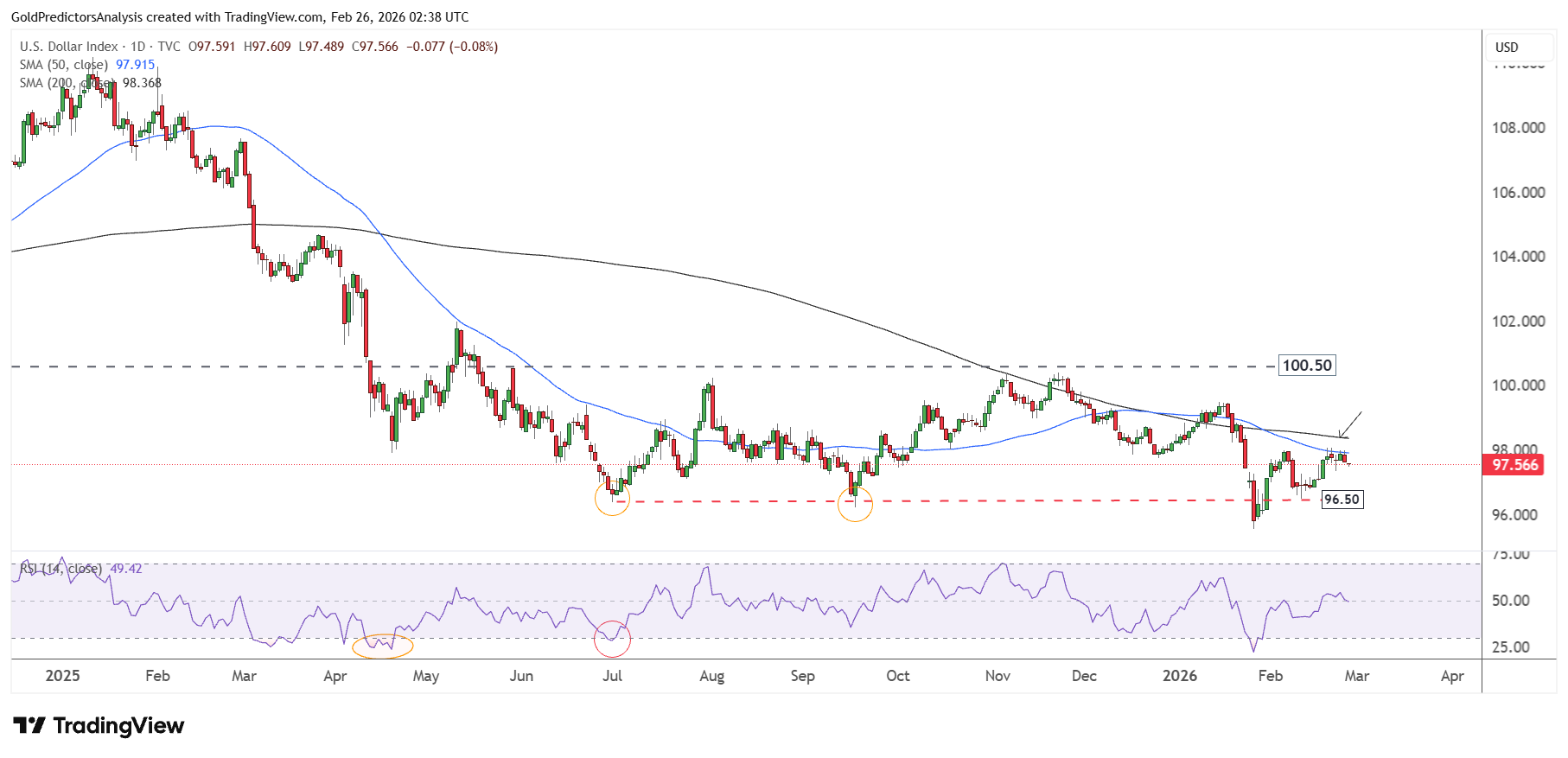
Despite these U.S.-Iran talks, the U.S. Dollar Index shows a strong bearish price action on technical charts. The index is consolidating below 50 and 200-day SMA whereby the overall price structure and trend remain bearish. A break below 96.50 will signal further downside to 90.
S&P 500 Faces Headline-Driven Volatility
Equity markets do not like the geopolitical tensions. The fear of war makes it volatile and decreases the risk appetite. This can pressure S&P 500 (SPX) in the short run.
But higher oil prices may worsen inflationary issues which is an additional headwind to stocks. Energy prices impact on corporate margins and consumer expenditure.
Equities can recover fast in case of the success of diplomacy. Markets are interested in the stability and the low risk of global conflict.
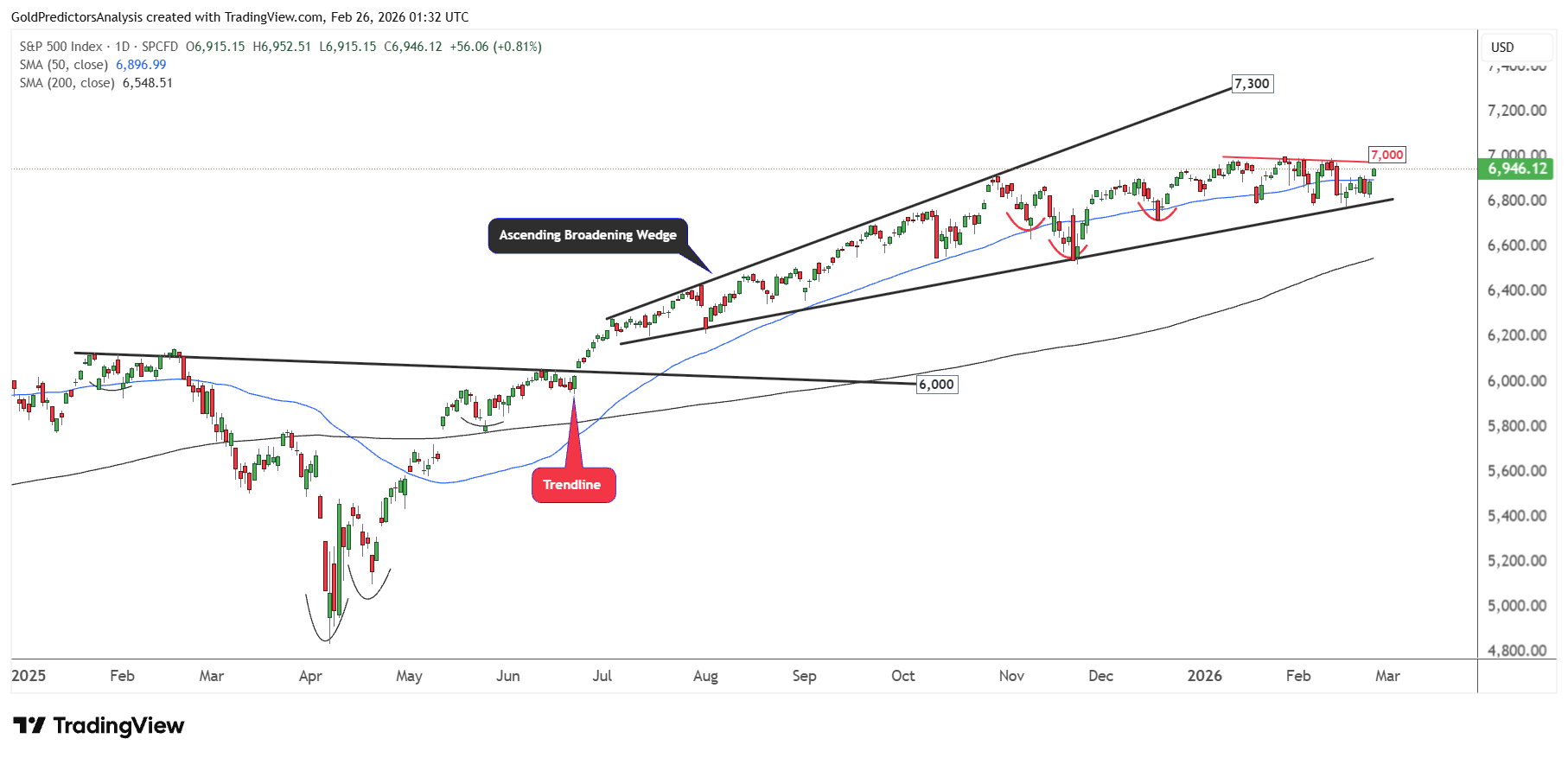
From technical perspective, the S&P 500 has rebounded from the strong support of the ascending broadening wedge pattern and is approaching the 7,000 level again.
A break above 7,000 will indicate a strong surge in S&P 500 towards 7,300. Overall, the emergence of an inverted head and shoulders pattern and the breakout above 6,000 have opened the door to much higher levels in S&P 500.
Treasury Yields Signal Flight to Safety
Geopolitical crises cause US Treasury yields to decline. The investment is introduced into safe government bonds which increases demand and pushes yields to downside.
However, if tensions subside, yields may rise again. Reduced risk lures investors to move back into equities and growth assets.
Thus, bond markets will also react directly to the outcome of these Geneva negotiations.
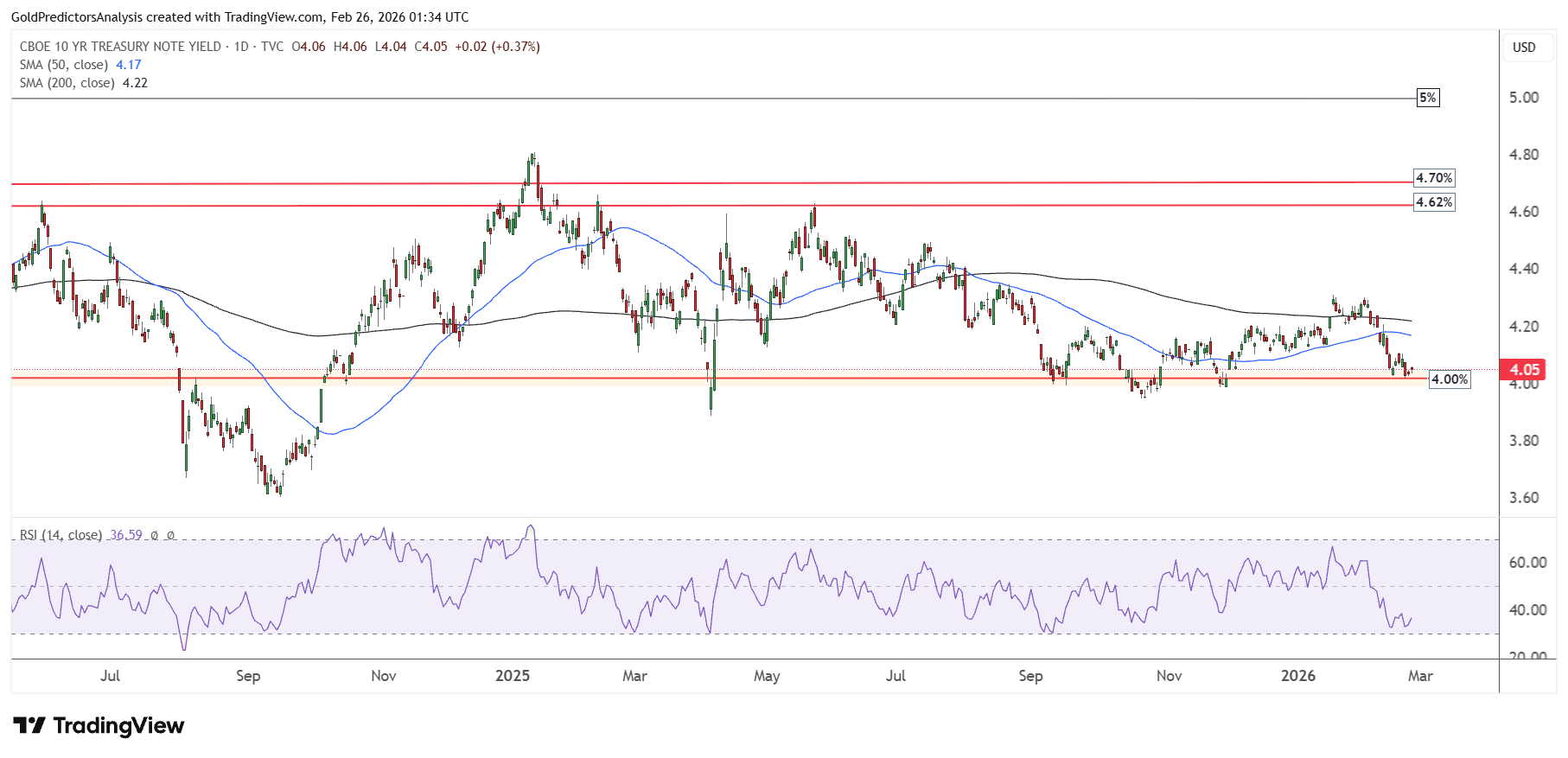
From technical perspective, the U.S. Treasury yield is also consolidating around the key level of 4%. A break below 4% will signal a drop towards 3.60%. However, a recovery above 4.30% will indicate another rally towards 4.50%.
Overall, the Treasury yield is consolidating within ranges and is looking for next direction.
What Markets Expect Next
There are now two scenarios in the markets. The diplomatic breakthrough would decrease safe-haven demand, lower the price of oil, and boost equities.
Alternatively, failed negotiations or military buildup would give rise to a sharp risk-off response. It would imply that gold and oil would tend to skyrocket. The US dollar might gain strength on the safety flows. There would be downward pressure on equities.
To traders, it is a news-based environment. The volatility will persist until there is a clear improvement or collapse of the Geneva talks