Silver (XAG) price broke the pivotal level of $30 in 2025 and received a 147.89% gain for the year as macro forces and technical structure aligned. In my opinion, this breakout marks the beginning of long overdue revaluation with silver entering a powerful period of monetary and industrial-led momentum. This article presents the macro catalysts, shifts in investor behavior and technical patterns driving this explosive rally.
Why Silver Is Finally Breaking Free From Decades of Underperformance
The silver price has underperformed in multiple cycles for the past several years. However this gap is now closed as the price pushed higher and continues to lead the gold (XAU) market.
Silver has gained 147.89% in 2025 while the gold price gained 64.72%. The chart below shows the leading behaviour for silver over the past few months.
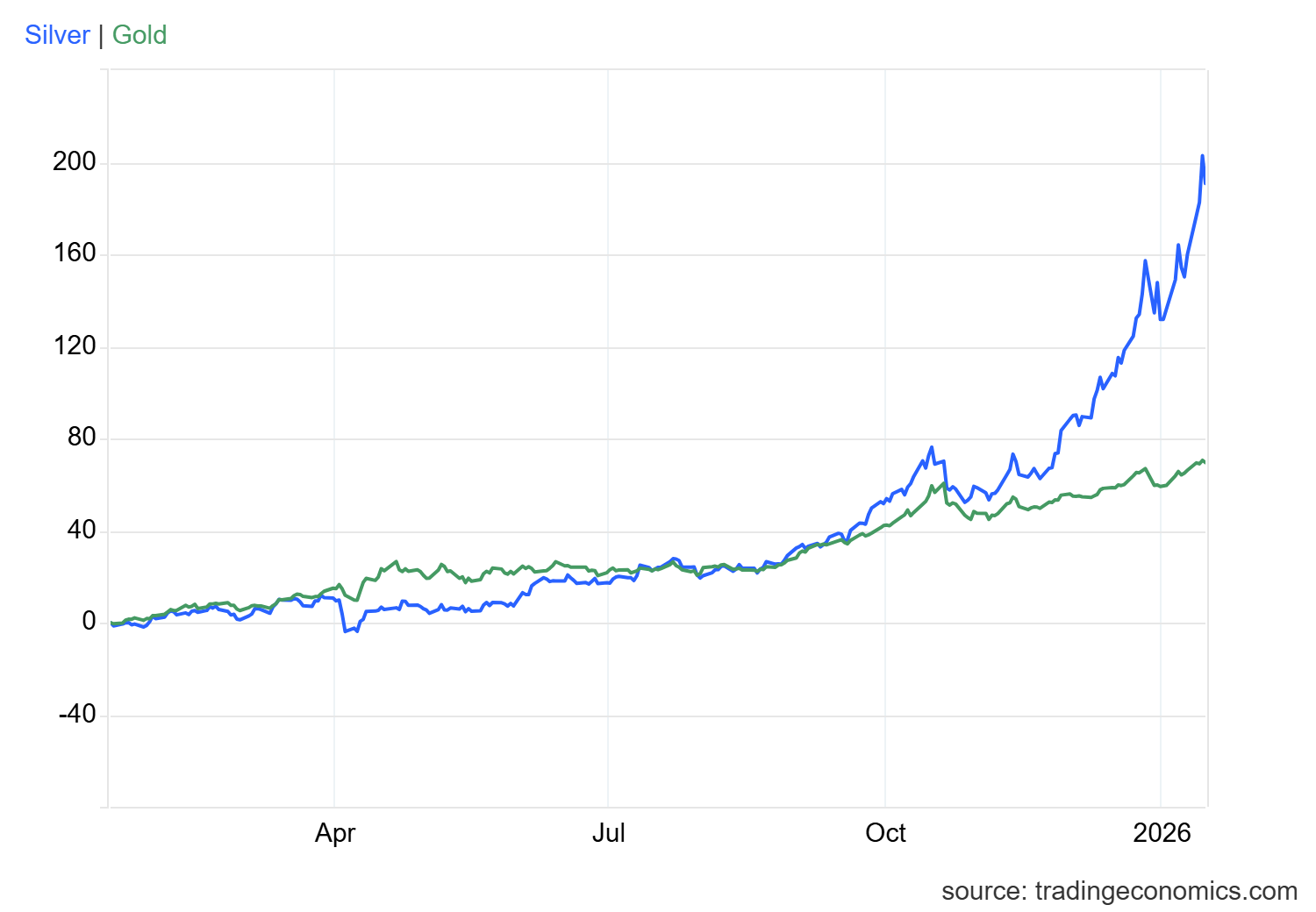
Historically, the price of silver has lagged behind the broader cycle during the early periods. It tracks the momentum of gold and once gold breaks higher, it continues to outperform the gold market. This indicates the reputation of silver as a “high-beta” version of gold.
When the capital flows into gold as a safe-haven currency, the silver does so with great speed and intensity because of the smaller size of the silver market and the fact that silver is demanded in both the monetary and industrial sectors.
Silver Price Forecast
Every new Silver analysis as it publishes, today's technical signal and key levels, live price — on one page.
See all Silver forecastsFutures Positioning and Technical Breakout Confirm the Shift
There is one additional important development in the COMEX silver exchange that supports this story. According to data provided on January 7, 2026, investors are rolling back their futures positions from the normal delivery month of March and into months such as January and February. Open interest grew by 1431 contracts in January and 1564 in February. At the same time, the amount of open interest in March dropped by a similar amount. Each contract is 5000 ounces which is a significant shift.
However, traders want delivery now and January is not a traditional delivery month. This implies an increase in a rush to own physical silver, not just paper exposure. It is a sign of tightening supply and increasing demand.
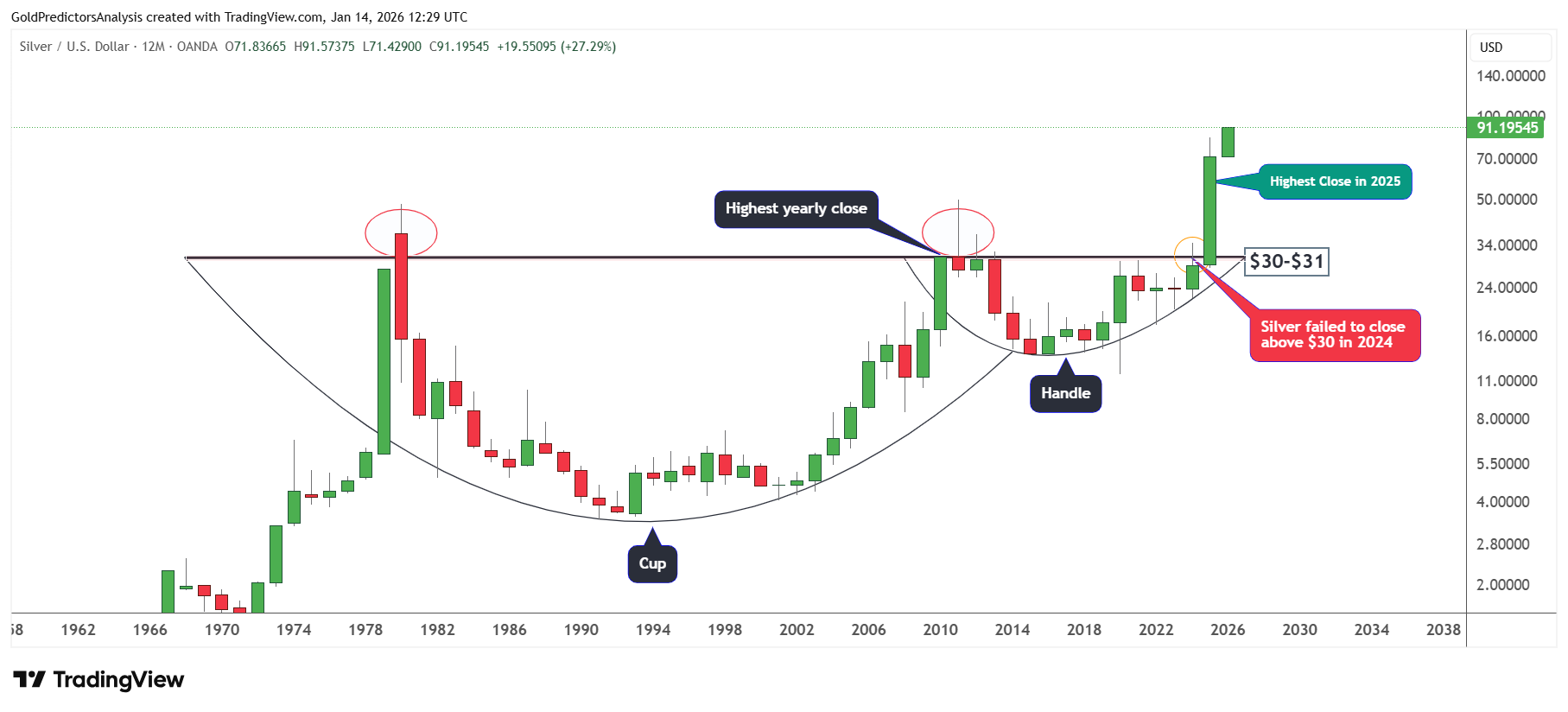
From the technical point of view, the silver price exploded from the historical pivotal level of $30 in 2025 following the formation of the cup and handle pattern. This generational breakout indicates the potential explosion in the silver market in the next couple of years.
Macro Tailwinds Are Building Behind Silver’s Breakout
The silver rally is playing out in the context of a weakening labor market, sticky inflation and a move towards stimulative monetary policy. The structural cracks in the US economy are widening which provides investors with good reason to turn to precious metals.
Cracks in the Labor Market Make Silver a Defensive Bet
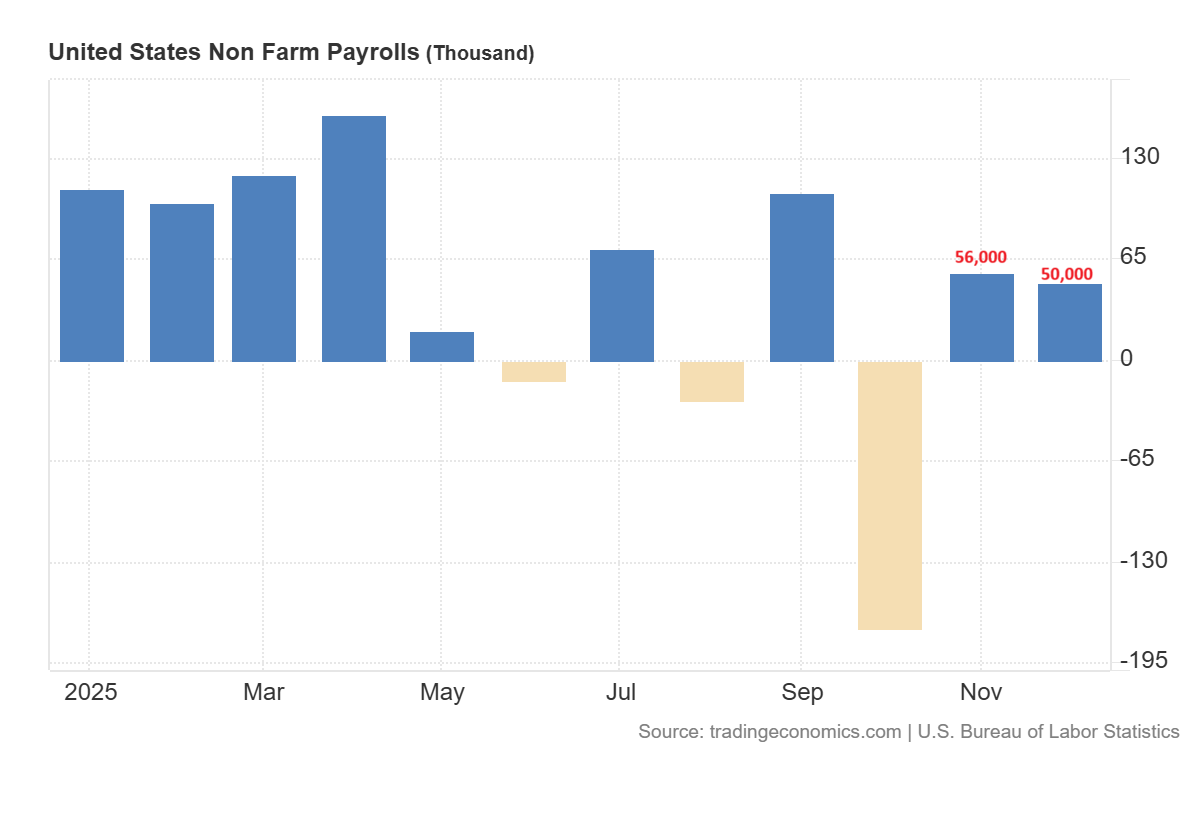
The US only added 50,000 jobs last December as shown in the chart below. This is the eighth consecutive month of poor nonfarm payroll results. This weakness is further illustrated when shedding government and healthcare jobs.
Moreover, the private-sector employment outside of healthcare has increased by just 15,900, which is extremely low number. On the other hand, the cyclical sectors are losing jobs as illustrated in the chart below.
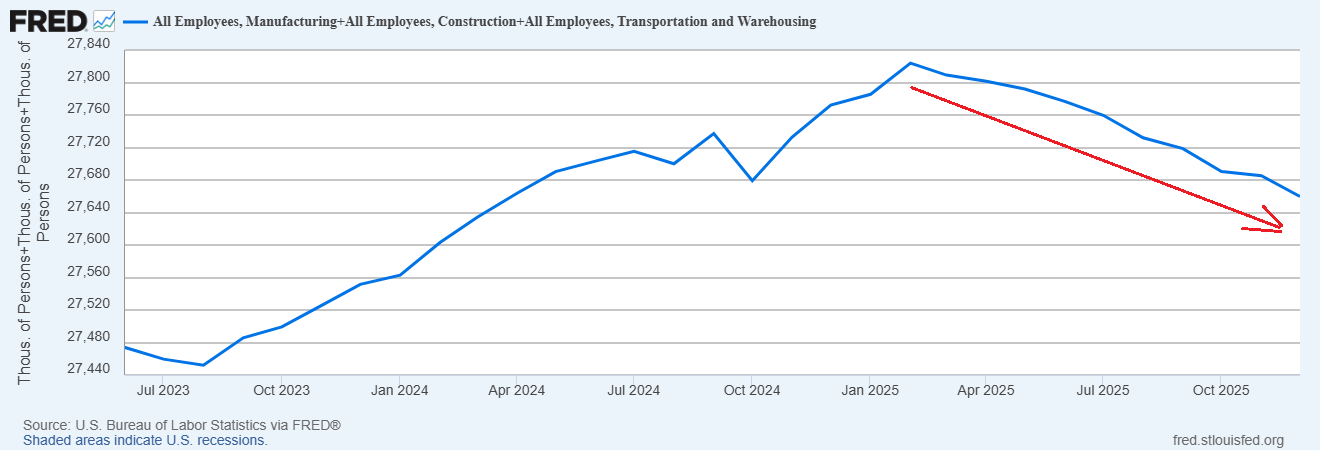
It is observed that the employment in the cyclical sectors has lost more than 150,000 positions since the peak in February 2025. If these losses reach 300,000, this will increase the probability of the recession.
On the other hand, the rate of unemployment declined to 4.4%, but the average weekly hours worked also declined to 34.2. This level is normally followed by wider layoffs.
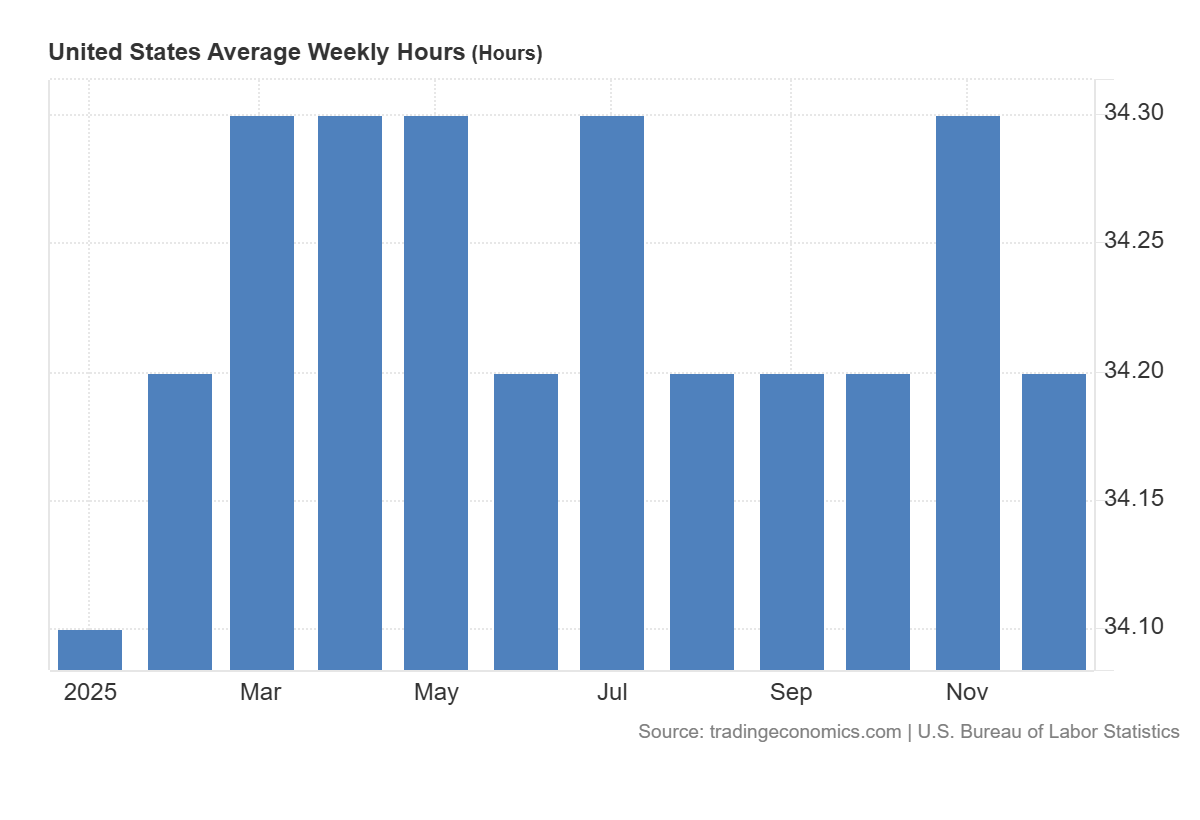
This ongoing labor market weakness increases the likelihood of recession and strengthens the case for silver as a defensive asset.
Wage-Rate Mismatch Keeps Inflation Risks Alive
According to the latest data from the BLS, inflation is cooling. However, the pressure of inflation is still rising under the surface. The chart below shows that the average hourly earnings increased at a higher pace than the Fed’s current target. This increment indicates that the inflationary pressure is building.
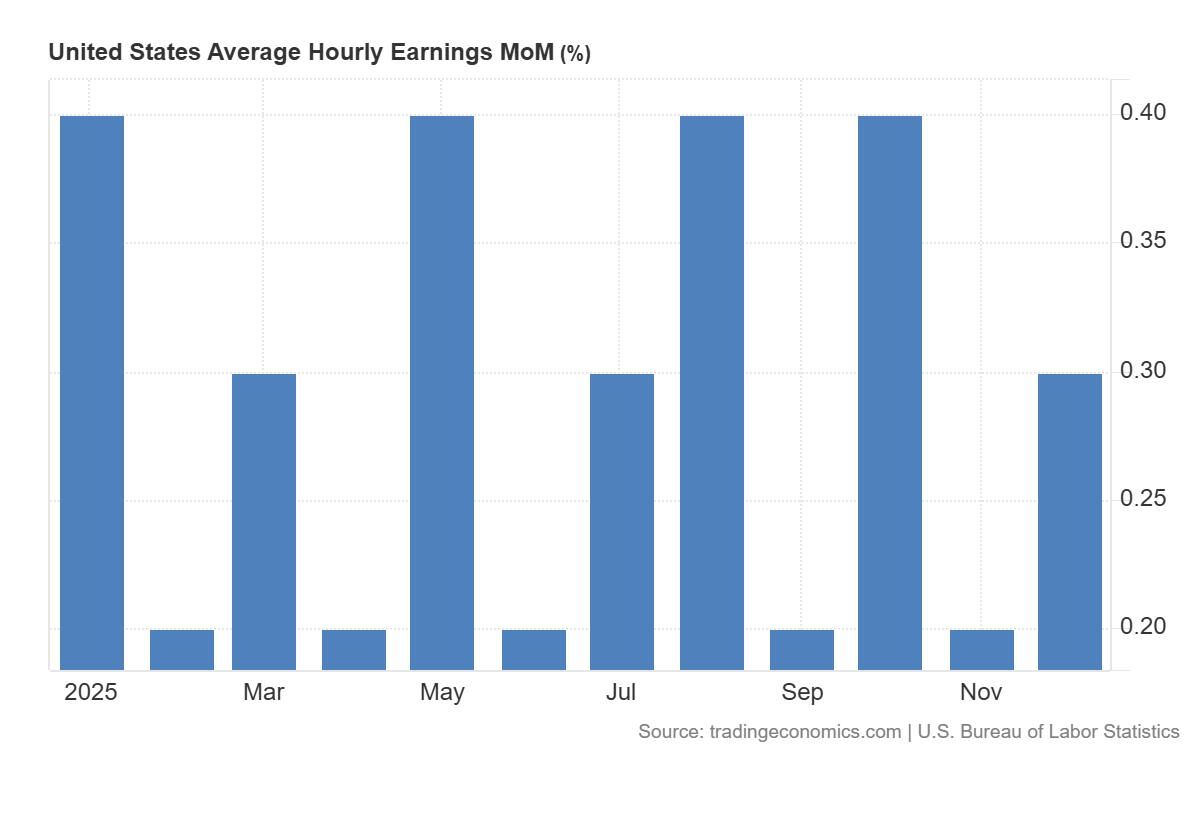
When the rate of wage increases outpaces the Fed Funds rate, monetary policy is stimulative in real terms. This misalignment means that the Fed is behind the curve. If inflation is not offset by a collapsing economy and there is not a complete collapse yet, the silver is a natural hedge.
Consumer Weakness Adds Fuel to Silver’s Momentum
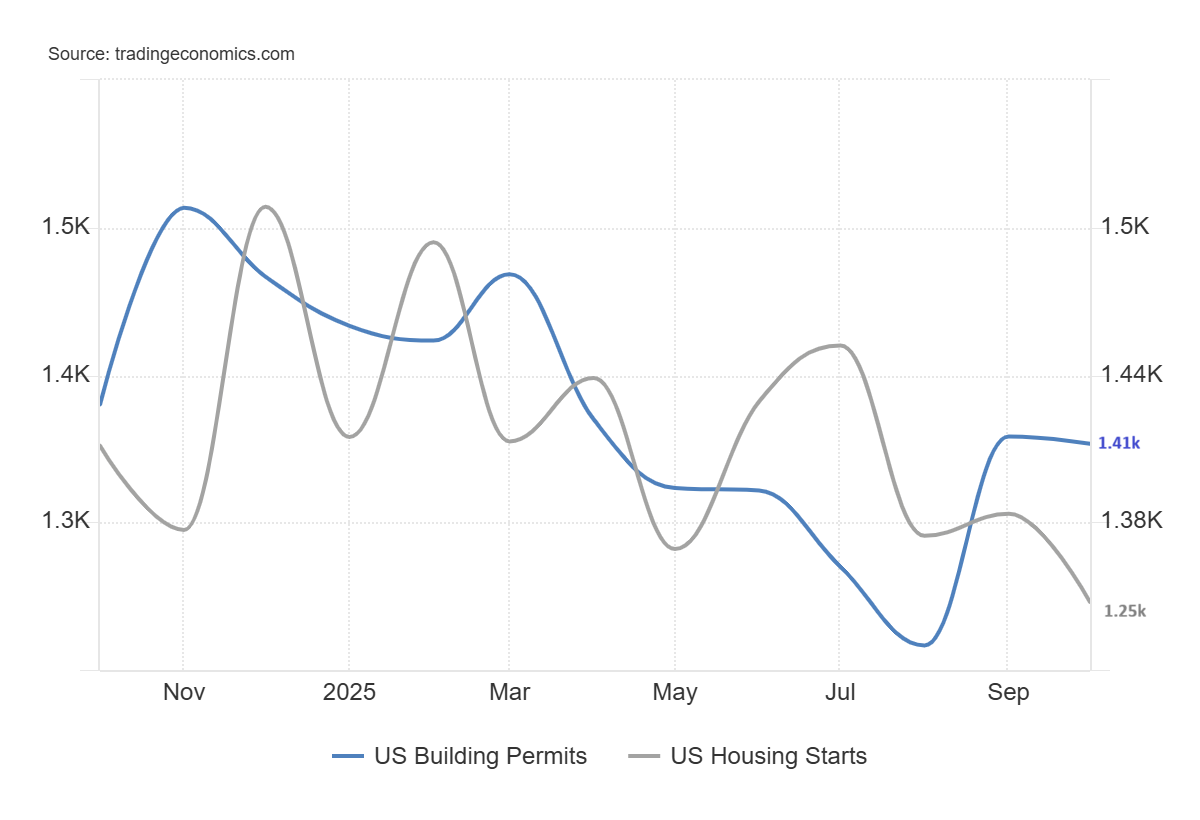
On the other hand, the consumer data is bleak. Residential housing activity plays a major role in cyclical employment which is slowing. Moreover, the permits and new housing starts continue to decrease as shown in the chart below.
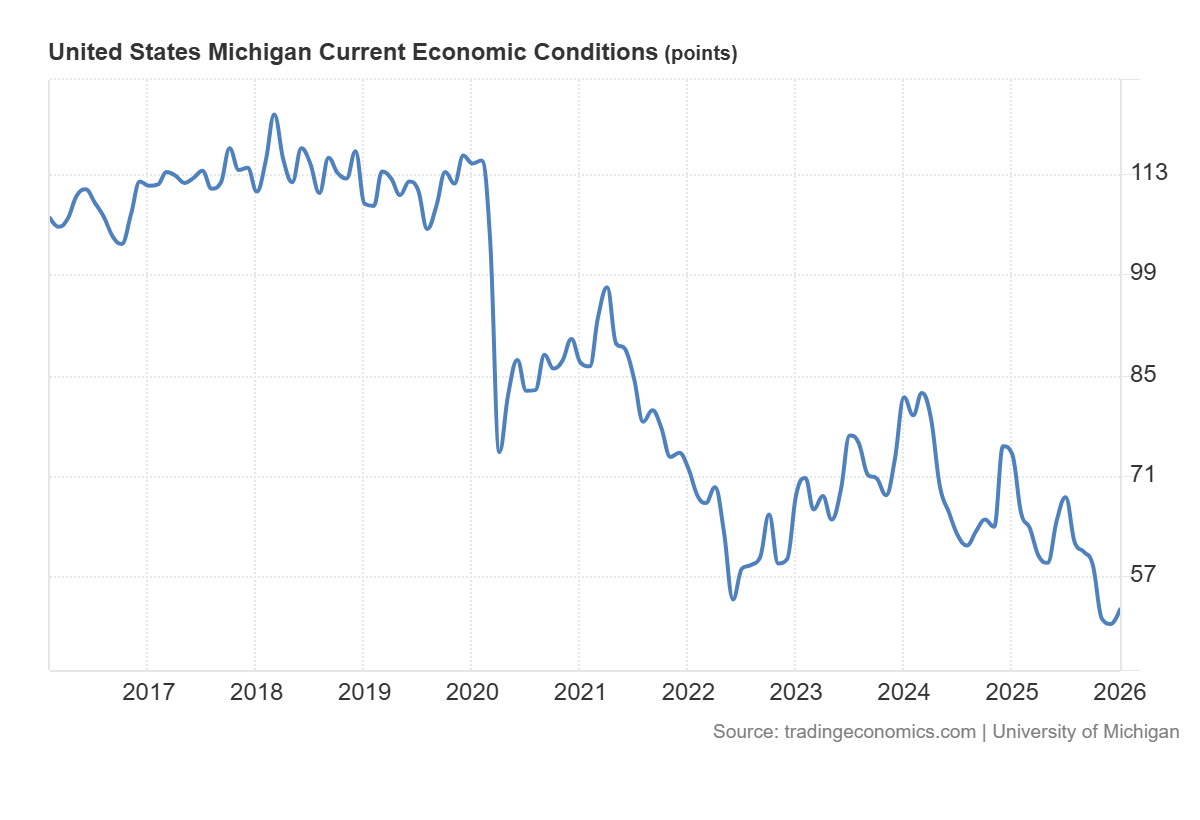
The University of Michigan’s Index of Consumer Sentiment has dropped to its lowest 3-month average since 1960. Meanwhile, the Index of Current Economic Conditions also reached a 65-year low. These weaknesses are indications of a severe loss of confidence.
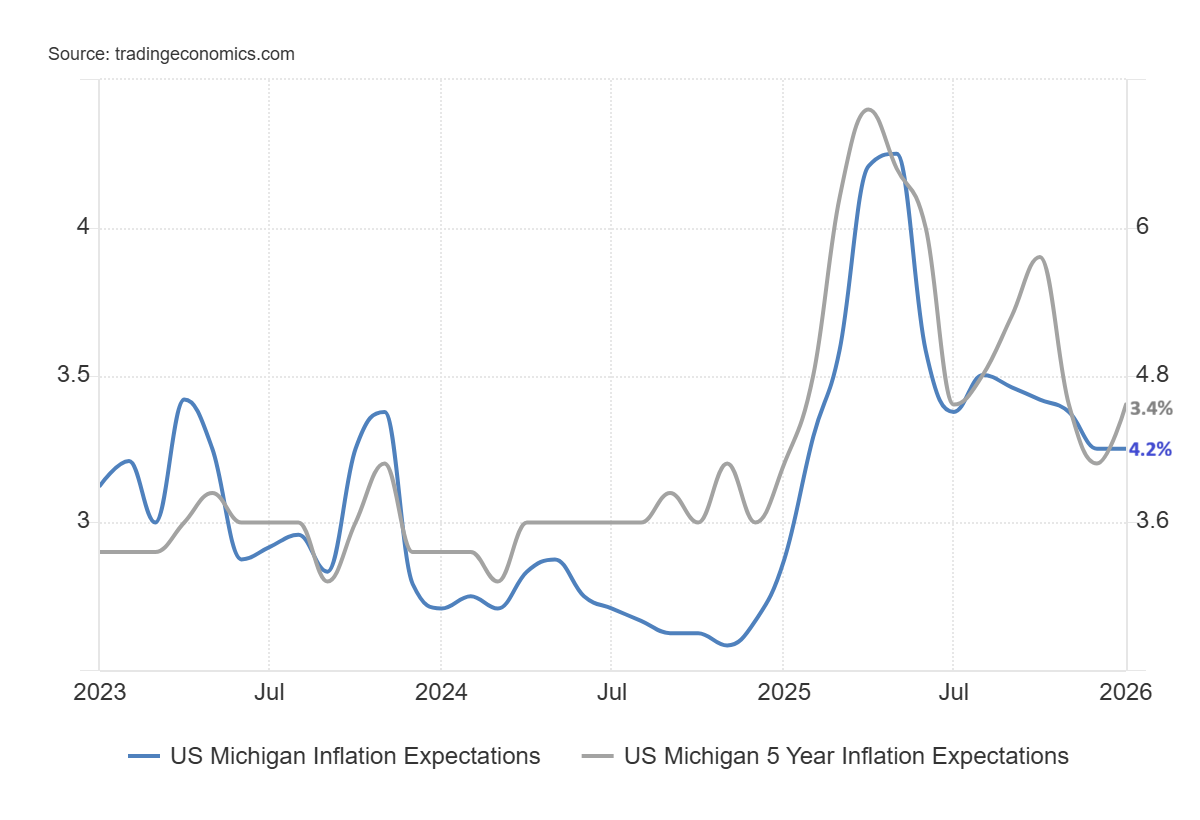
Meanwhile the inflation expectations from consumers are also high as observed in the chart below. The current expectations are over double the target of the Fed. Consumers are expecting higher prices whereby precious metals tend to do better and silver’s affordability gives it an edge over gold.
Growth Indicators Confirm a Slowing U.S. Economy
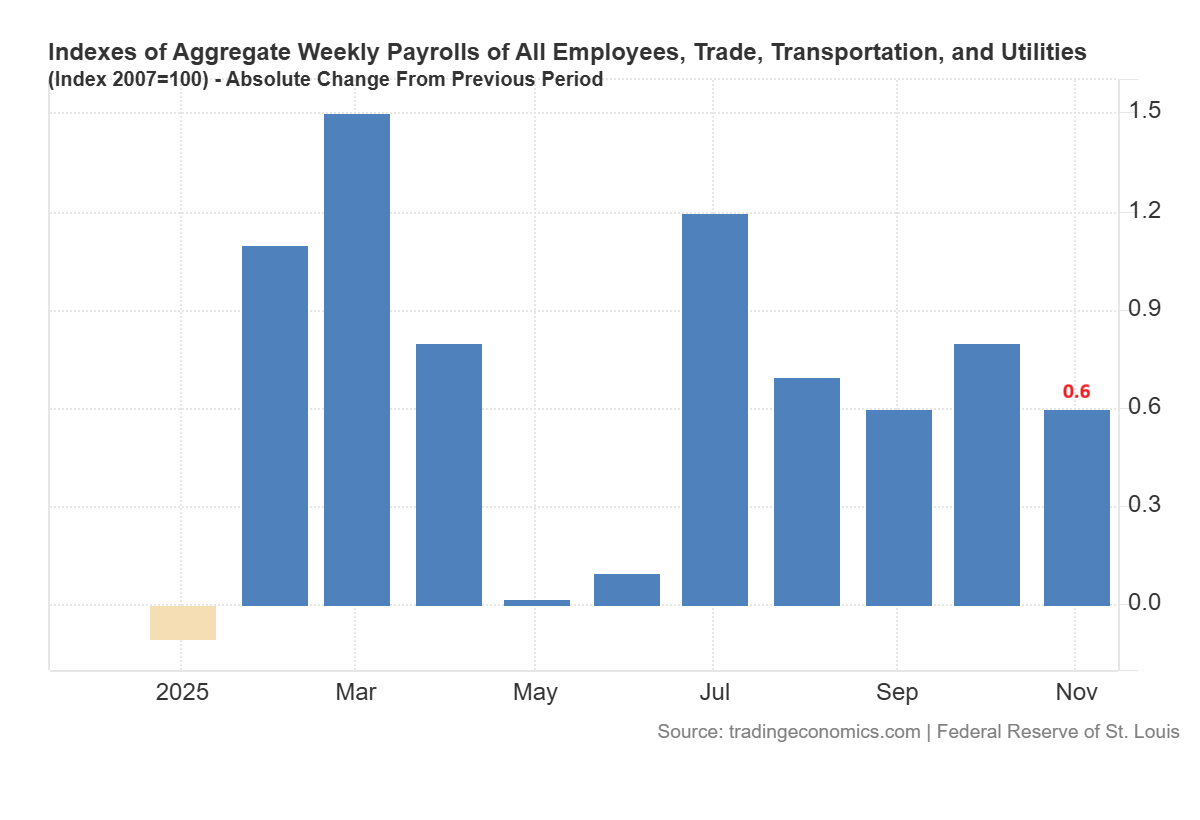
The chart below illustrates that the aggregate of the weekly hours worked increased by a very small amount, only 0.6%, in 2025. That low reading implies a fall in the real GDP growth rate from the 2.3% recorded in Q3 2025.
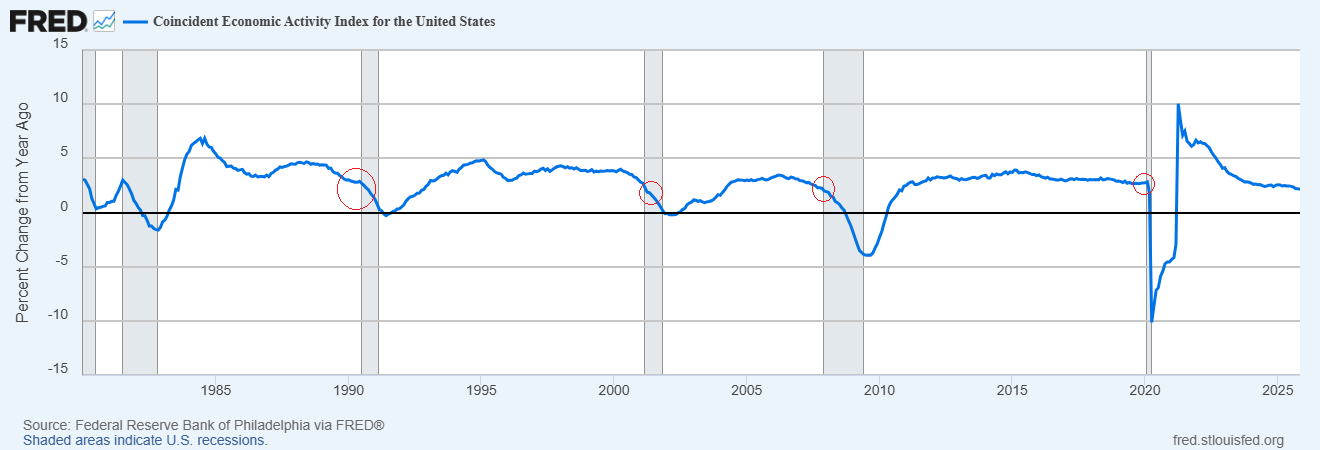
On the other hand, the Philadelphia Fed’s Coincident Index has grown more than 2% in the past year. As long as this is below the 2.5%, this is associated with the recessionary conditions as marked by the red circles in the chart below.
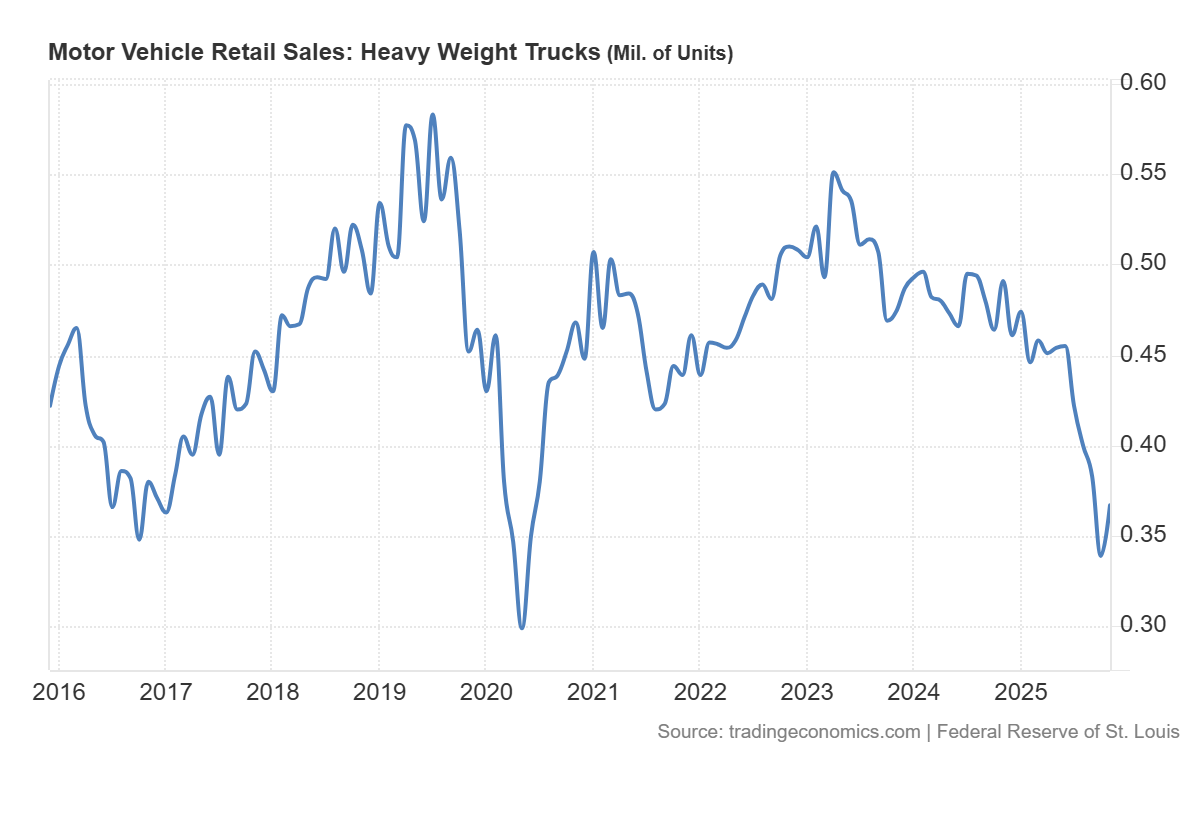
Moreover, the industrial activity is also falling as the heavy truck sales are down more than 10% from the October 2023 high. This sort of decline is not usually a soft landing. It sends a clear message that economic momentum is breaking down.
Fed Is Quietly Injecting Liquidity
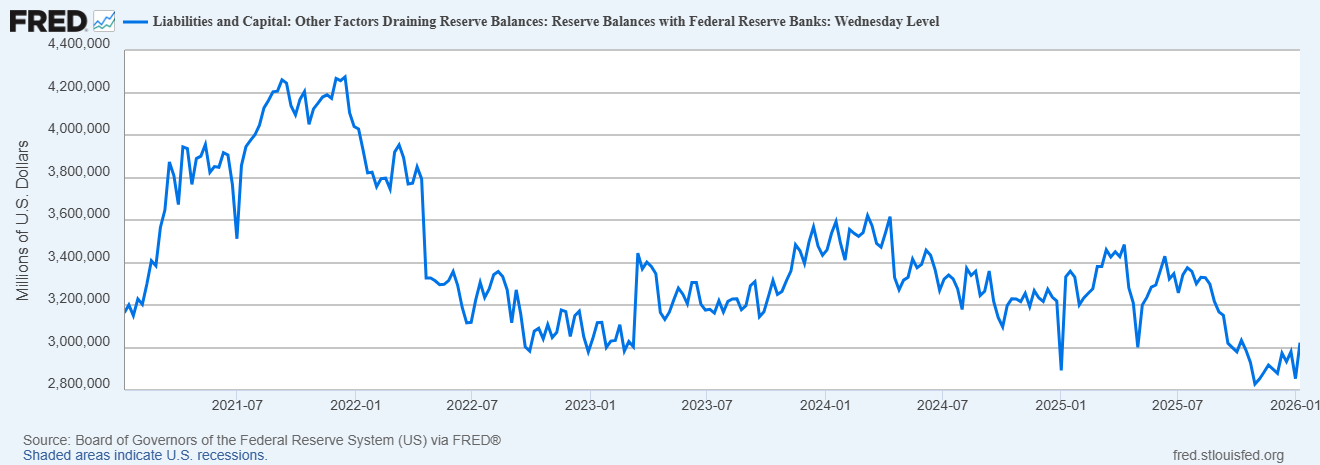
Financial markets are getting more liquidity. The chart below shows that the commercial bank reserves have grown to $3.0 trillion. This is largely the result of a new Reserve Management Purchases program by the Fed that pumped in $40 billion between December 12 and January 12.
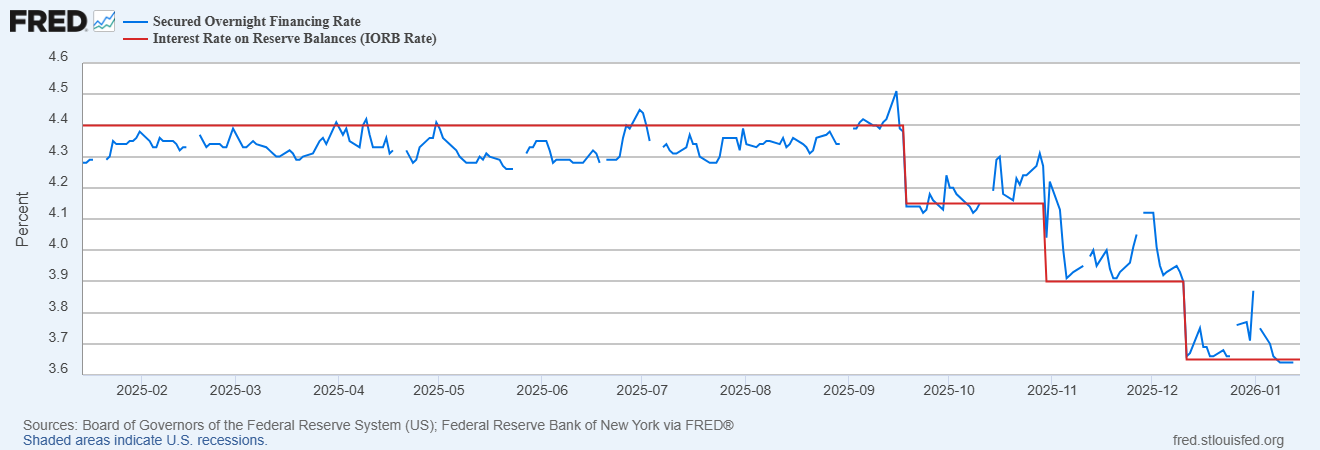
More Reserve Management Purchases announcements are expected as April’s tax season near which is a known stress point for bank liquidity. The Fed’s balance sheet has increased for the first time since 2023. The Secured Overnight Financing Rate (SOFR) is still elevated above the Fed’s Interest on Reserve Balances (IORB) which suggests the banks are still being paid premiums to obtain short-term cash.
Why Industrial Demand Is Now a Catalyst—Not a Drag
One of the main reasons for the silver rush is industrial demand. Historicaly the silver reliance on the industrial use was considered as a weakness in times of recession. However, the demand for the sectors such as solar energy, electric vehicles and advanced electronics is increasing exponentially. These surges are not short term surges but the long term global transitions. The unique properties of the silver like high conductivity make it irreplaceable in these technologies.
The chart below illustrates that the global manufacturing outlook is changing. According to Persistence Market Research, the global manufacturing market is expected to grow from $14.8 trillion in 2025 to $20.7 trillion by 2032 at a compound annual growth rate of 4.9%. This growth is more than double the 2.2% growth recorded from 2019 to 2024. As industries grow and become more modern, so will the demand for silver.
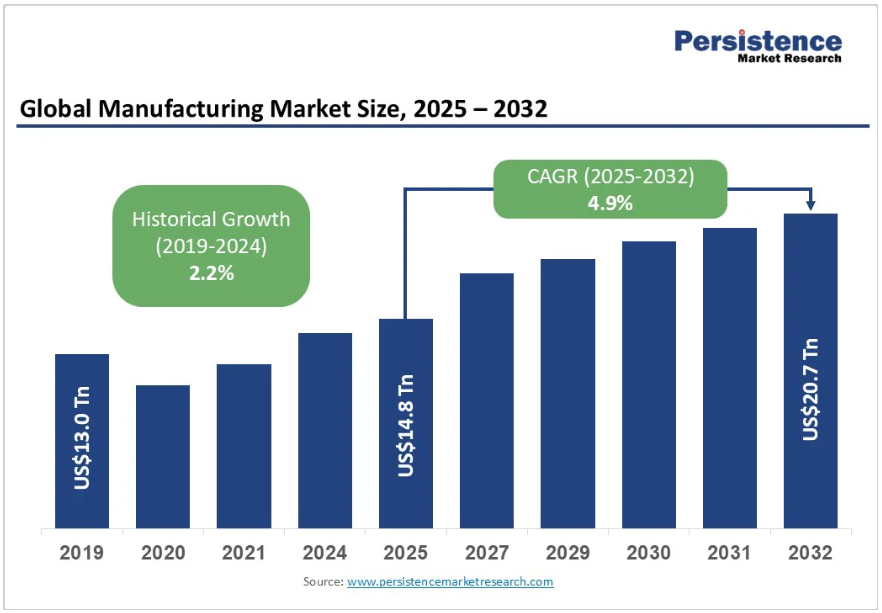
Chart Pattern Breakout Confirms Structural Repricing
The technical structure for silver price shows a strong historical breakout. This breakout in 2025 has paved the way for a strong pick-up in the silver market for the next couple of years. The chart shows the formation of a cup and handle pattern. It is observed that the cup pattern is formed from the 1980s high to the 2011 high. Then, the handle is formed from the 2011 to 2024.
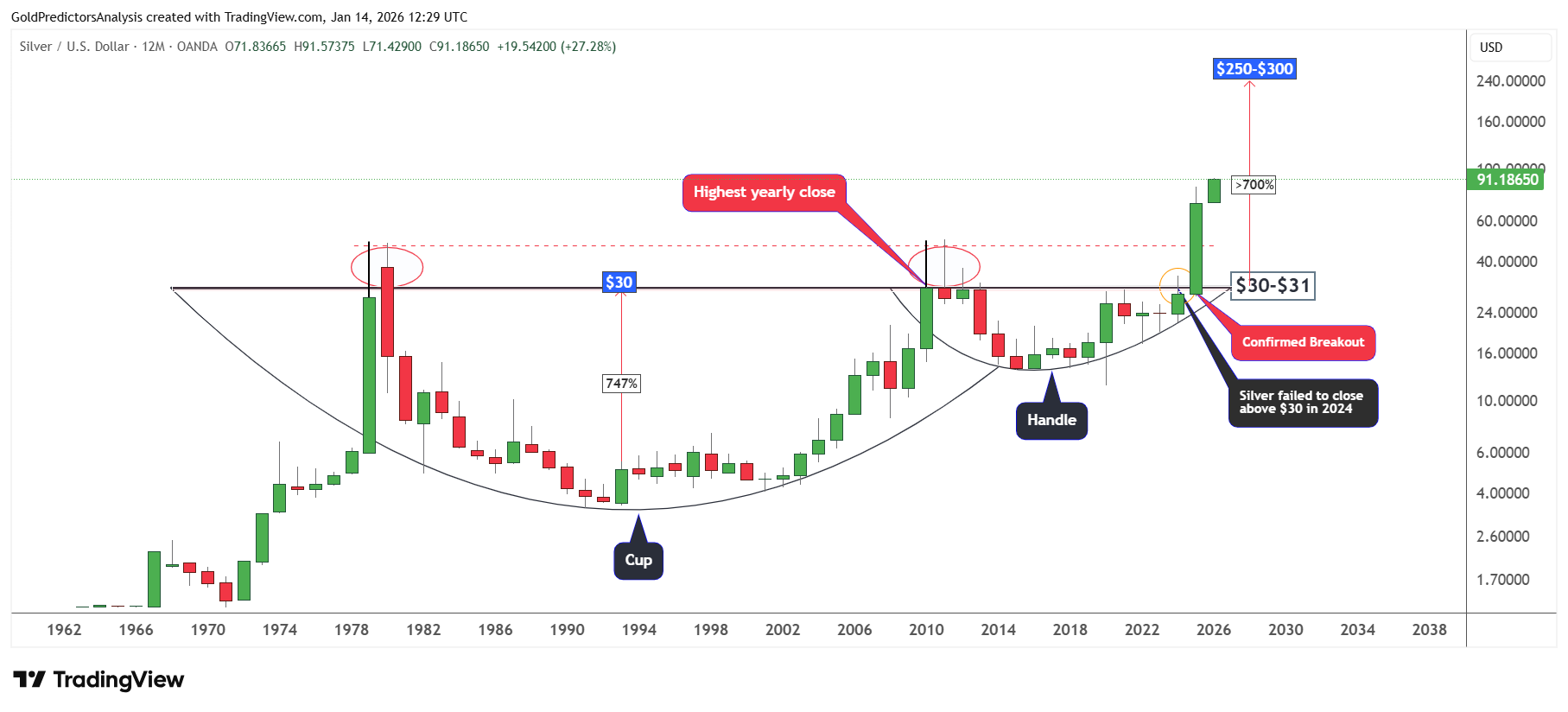
The price has been trading below the $30 level over the last four decades. It is seen that when the price touches the $30, it is unable to go above it and reverses lower. However, the price of silver closed above the $30 level for the first time in history in 2025. This means that the cup and handle pattern has been broken and silver has opened the door for much higher levels.
The chart shows that the price rally from the 1993 low towards the $30 is a 747% move. If this move is measured from the breakout of the $30 level then the price may reach towards the $250 to $300 level within the next few quarters. The current momentum in the silver market also shows the same as the price is showing exponential growth.
Risks & What Could Slow the Rally
The silver market may be exposed to several risks that may restrain its exponential growth. A sharp rebound in the U.S. Dollar Index from the long-term support at 96 could cap further upside. The index must break below 96 to continue its downward trend. Moreover, if financial conditions tighten unexpectedly, the parabolic move in silver may pause.
Additionally, the price is in the overbought area which implies that a short-term correction could form. Any failure to hold $30 could test the long-term bullish nature of silver.
Another major risk is the changing macro uncertainty. If the labor market stabilizes or the Federal Reserve hesitates to cut rates as anticipated, the tailwind of monetary policy for silver may be diminished. However, these risks are part of the bigger picture and do not negate the long-term breakout. Investors should expect volatility, but as long as structural demand and macro catalysts remain, then any dips may be buying opportunity rather than the end of the trend.
Final Thoughts – Why Silver’s Bull Market Is Just Beginning
In my opinion, the silver rally is just beginning and there is more room to surge higher. The breakout above the $30 level represents a generational change in the technical structure of silver with the support of macro and structural forces. The combination of sticky inflation, weakening economic data and a more accommodative Federal Reserve backdrop has pushed investors to hard assets. On the other hand, silver plays a dual role as a monetary and industrial metal and is emerging as a top beneficiary.
The consumer sentiment and physical delivery on COMEX points to increasing demand against constrained supply. The cup and handle breakout is much higher and the current bullish momentum proves the move is gaining strength. The breakout from the $30 in 2025 has opened the door for a price surge to $250-$300 in next few quarters. However, the price must hold above $30 to remain in bullish trend.
If you’d like to know more about what drives gold and silver prices, please visit our educational area.