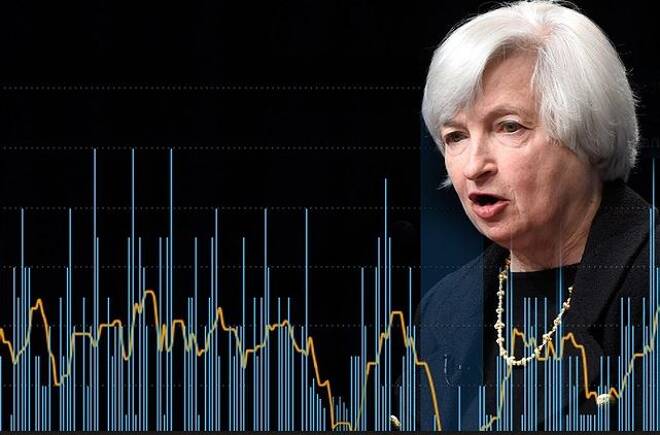
As widely expected, the U.S. Federal Reserve raised interest rates for the second time this year even though it knows that inflation is running well below its target.
In addition to the rate hike, the Fed revealed more detail on how it will trim its $4.5 trillion balance sheet, or its portfolio of Treasury instruments, mortgage-backed securities and government agency debt.
The Federal Open Market Committee raised its benchmark target a quarter point. The new range will be 1 percent to 1.25 percent for a rate that currently stands at 0.91 percent.
Additionally, the Fed now believes inflation will fall well short of its mandated 2 percent target in 2017. The post-meeting statement said inflation “has declined recently” even as household spending has “picked up in recent months,” the latter is an upgrade from the previous statement from May that said spending had “rose only modestly.” The statement also noted that inflation in the next 12 months, “is expected to remain somewhat below 2 percent in the near term” but to stabilize.
The FOMC also said it will begin the process this year of letting some of the balance sheet portfolio run off. In its May minutes, the Fed said it had begun discussion about setting a limit each month for the amount it would let run off as it conducts its policy of reinvesting proceeds. However, this month’s statement made no mention of such a move which suggests Fed Chair Janet Yellen will address it in her press conference.
“The committee currently expects to begin implementing a balance sheet normalization process this year, provided the economy evolves broadly as anticipated,” the post-meeting statement said.

Market Response
U.S. equities posted a mixed trade after the Federal Reserve raised interest rates. The Dow Jones move about 25 points higher after reaching a record high earlier in the session.
The S&P 500 Index was down, but this move was likely pressured by lower energy stock prices. The Fed news likely offset the earlier weakness.
Gold prices jumped earlier in the session before settling lower, following the Fed’s rate hike and monetary policy statement.