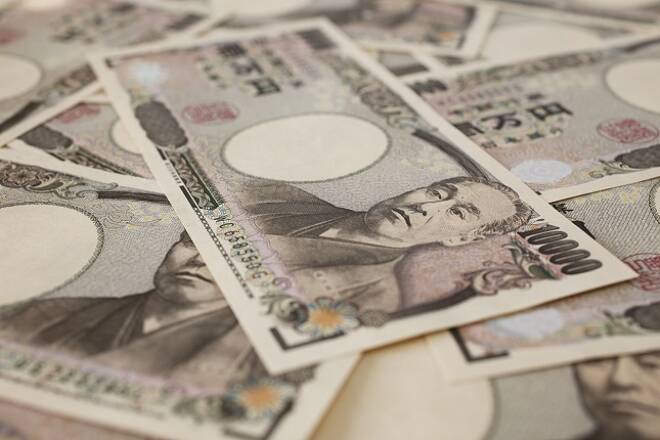
The appetite in the US dollar took a hit in the aftermath of the Federal Reserve’s (Fed) dovish rate hike at the March meeting. The Fed raised the Fed funds rate by 25 basis points as expected and fully priced in. The markets sold off the possibility of steeper rate normalization.
The Fed hasn’t turned dovish, in contrary, sounded confident in the economic recovery and looked nonchalant vis-à-vis President Trump’s expansive fiscal plans.
This being said, FOMC Chair Janet Yellen preferred to wait and see before stepping harder on the gas. The FOMC has already increased rates two times, by 50 basis points, since Donald Trump became President of the United States. The fact is; despite last week’s ‘dovish hike’, the Fed remains fairly hawkish in comparison to the world’s leading central banks.

The BoJ is certainly one of them
The BoJ held a monetary policy meeting during the same week as the Fed, yet Governor Kuroda’s message was clear: Japan’s monetary policy is and will remain accommodative as long as needed. Although the recent decrease in BoJ’s bond purchases brought out speculations that the BoJ could slow down the pace of its Quantitative Easing (QQE), the BoJ reaffirmed that it will continue buying 80 trillion yen worth of bonds annually. Hence, the variations in weekly purchases are due to the yield control policy. The BoJ aims to keep the JGB 10-year yield at around zero percent.
Quid for USD/JPY?
It appears that the recent reversal in the US dollar trajectory also hindered the positive trend in the USD/JPY.
As the market shifted toward steeper Fed rate normalization expectations into the FOMC meeting, the US Treasury curve steepened. The US yields improved and encouraged the US dollar purchases against the yen.
Then, the post-Fed correction in the US yield curve reversed this short-term cash flow trend. Hawkish investors cleared out the excess long positions in the US dollar.
On Monday, the USD/JPY retreated below 112.50 for the first time in March. The MACD (Moving Average Convergence Divergence) indicator stepped in the bearish zone, suggesting that the sell-off is gaining momentum toward 111.60 (February support).
Below 111.60, the USDJPY will face important mid-term technical levels. The Fibonacci’s 50% level on post-Trump reflation rally, 110.55, is seen as the critical support before the 110.00 psychological mark.
Further down, the 61.8% retracement at 108.65 would be the final level to defend the mid-term positive trend in USDJPY.
Despite the actual retracement in the USDJPY, the mid-term USDJPY view is positive in the light of the divergence between the Fed and the BoJ.
Therefore, the broad based pullback in the US dollar could be an interesting window for mid-term US dollar bulls, and/or, JPY-bears, that have been cut in their swings toward the 115.00/118.00 area before Fed’s March policy announcement.
This article is written by Ipek Ozkardeskaya, a senior market analyst at LCG