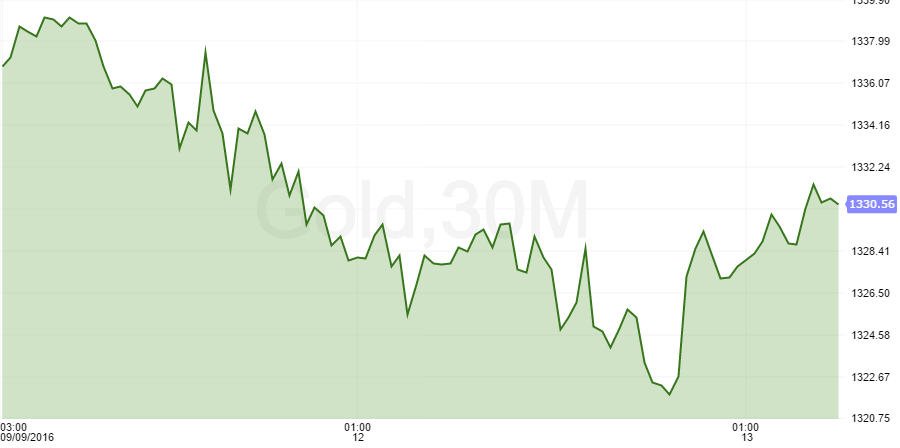
Gold reversed Monday’s losses to trade higher Tuesday morning in response to a lower chance that the Federal Reserve will raise interest rates at its meeting next week. Gold added almost $8 to trade at 1333.35 recovering from its close on Friday at 1331. The last Federal Reserve member to address the public before the members go into their period of silence ahead of next week’s meeting was move dovish than expected. In a speech delivered Monday, Federal Reserve Governor Lael Brainard cautioned against calls to raise US interest rates prematurely. Markets are so focused on the Bank of Japan and the US Federal Reserve that there was an instant response to Ms. Brainard’s comments.
Wall Street climbed, the dollar fell and gold turned positive. Traders are way to focused on the central banks possible decisions. By contrast, on Friday Boston Fed President Eric Rosengren spoke of the potential need for “gradual tightening” of rates, which caused stock markets to tumble two per cent.
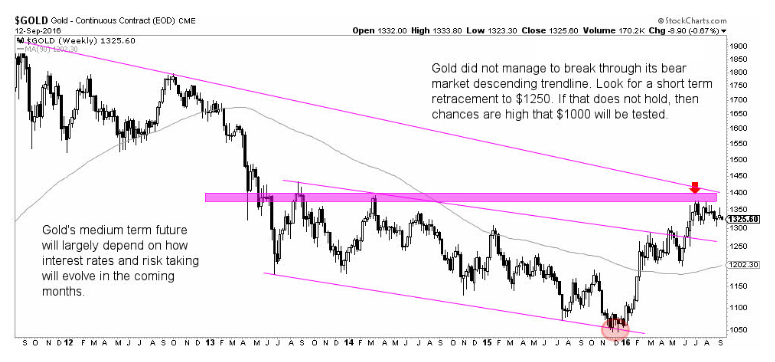
Traders seem to not be looking past next week’s decision, but with the Fed most likely to take a pass on a rate increase, how will be market response. This should be the question, what other fundamental and technical factors will affect the price. The most important price point is $1400. As seen on the chart, it represents a secular resistance line, the one representing gold’s bear market which started in September of 2011 and which connects the peaks since then.
Gold has been struggling once it got near that price point. The fact that it did not test that price point is telling, and it forecasts that bulls were not sufficiently confident. In other words, the rally since January of this year was already too strong, so a retracement would be coming. There are two possible scenarios facing us in the short term and gold could soar to $1400 or retreat to $1250.
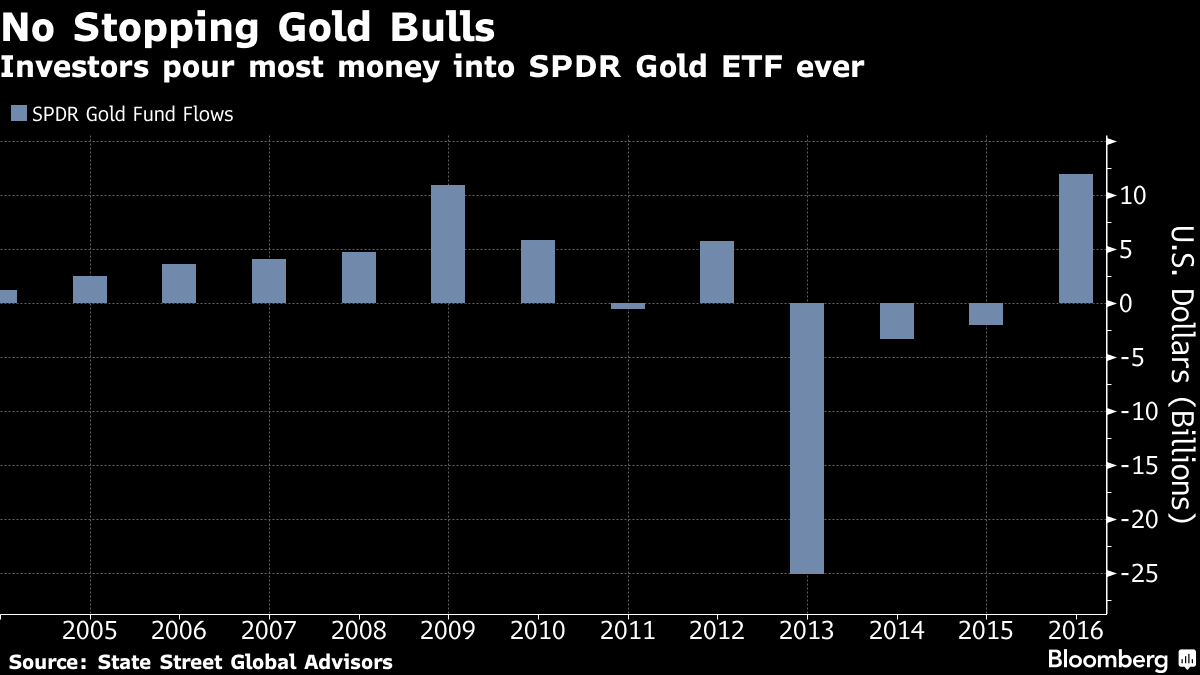
Analysts at SPDR Gold Shares, the largest exchange-traded fund backed by the metal, not even a surprise increase in borrowing costs this month would be enough to damp investors’ appetite for gold. Almost $12 billion has poured into SPDR Gold this year, poised for the biggest annual inflow since its inception in 2004. While a Fed hike this month could trigger a broad-based selloff in markets, it wouldn’t cause gold to slide into a bear market because rates would still be near historic lows.
The investment of choice among gold investors appears to be gold-backed exchange-traded products and according to analysts from Societe Generale this market has considerable impact on the overall market.
US Dollar Index Price Forecast
Every new US Dollar Index analysis as it publishes, today's technical signal and key levels, live price — on one page.
See all US Dollar Index forecastsIn a recent report that for every 10% rise or fall in EFP holdings the gold price can rally or drop by 3%, or about $41 per ounce. ETF flows are incredibly volatile when compared with other fundamentals.
The analysts also note that if ETF holdings fall back to January 2016 levels the price could drop by 13% to $1,168 an ounce, only $102 off” the metal’s 6-year lows of the previous month.

Gold traders should not forget that the Bank of Japan will be reporting the same day as the Fed, but it is not a rate setting meeting for the BoJ but a conference where they are expected to layout future plans for rate hikes and stimulus and explain the bank’s current situation. This could have an effect on precious metal prices earlier the same day.