
This article examines the demand forces, policy environment, and corporate performance driving this growth — and how durable it may prove to be.

A Demand Shock Driven By Artificial Intelligence
The most immediate catalyst behind the surge in Chinese semiconductor revenues is the global expansion of artificial intelligence. AI workloads require significant computing power, particularly in data centres, where demand for processors, memory, and specialised chips has risen sharply.
While leading-edge AI chips remain dominated by US firms, Chinese companies are benefiting from robust demand across a broader range of components.
Domestic demand has intensified as Chinese technology firms scale up their AI capabilities. Even without access to the most advanced processors, the need for large volumes of semiconductors used in servers, networking infrastructure, and consumer devices has supported strong revenue growth across the sector. Memory chips have seen a particularly notable boost, as global supply constraints and rising prices have amplified earnings for producers exposed to this segment.
Restrictions on exports of high-end chips from companies such as Nvidia have simultaneously created a supply gap within China. This has encouraged local firms to adopt domestically produced alternatives, even where performance lags behind global leaders. As a result, demand has broadened beyond cutting-edge nodes to encompass a wide range of chips capable of supporting AI deployment at scale.
Policy-Driven Substitution
US export controls — progressively tightened since 2020 — were designed to slow China’s technological progress in advanced semiconductors. In practice, they have also functioned as an accelerant for domestic investment. Beijing responded by channeling capital into domestic semiconductor companies and encouraging end-users to prioritize local sourcing, a shift that has had a direct effect on revenues as Chinese firms capture market share previously held by international competitors.
This dynamic is best characterized as demand reallocation rather than purely organic growth. As access to foreign technology becomes more constrained, domestic suppliers are filling the gap — most visibly in data center hardware and industrial applications, where performance requirements can often be met with less advanced chips.
However, this policy-driven growth introduces distortions. Demand is being shaped in part by geopolitical constraints rather than purely by market efficiency, which raises legitimate questions about the durability of current growth rates, particularly if the external environment were to shift.
Electric Vehicles and Industrial Demand
Beyond AI, the rapid expansion of China’s electric vehicle ecosystem represents a significant structural driver. EVs require substantially more semiconductors than conventional internal combustion vehicles, spanning power management, battery systems, autonomous driving, and infotainment. China’s position as the world’s largest EV market has created a powerful domestic demand engine, particularly for mature-node chips where Chinese manufacturers are most competitive.
This industrial demand extends beyond vehicle production to include charging infrastructure, grid upgrades, and related systems. Each layer of the ecosystem adds incremental semiconductor consumption, and this demand profile is structurally less volatile than consumer electronics — providing a more stable foundation for revenue growth that aligns closely with China’s broader industrial policy objectives.
Supply Constraints and Pricing Power
Another factor supporting the current boom is the imbalance between supply and demand in certain semiconductor segments. Memory chips, for example, have experienced tight global supply, leading to higher prices and improved margins for Chinese firms with exposure to this area. This dynamic reinforces the cyclical dimension of the industry, where periods of shortage can significantly amplify profitability — though it also introduces the risk of future corrections if supply capacity catches up with demand.
Chinese Semiconductors’ Corporate Performance Reflects These Tailwinds
SMIC (Semiconductor Manufacturing International), the country’s largest foundry, reported a 16% increase in revenue in 2025, reaching $9.3 billion. Analyst expectations point to further growth in 2026. The company has expanded manufacturing capacity significantly, surpassing one million 8-inch equivalent wafers per month, while maintaining high utilization rates and improving margins despite rising depreciation costs.
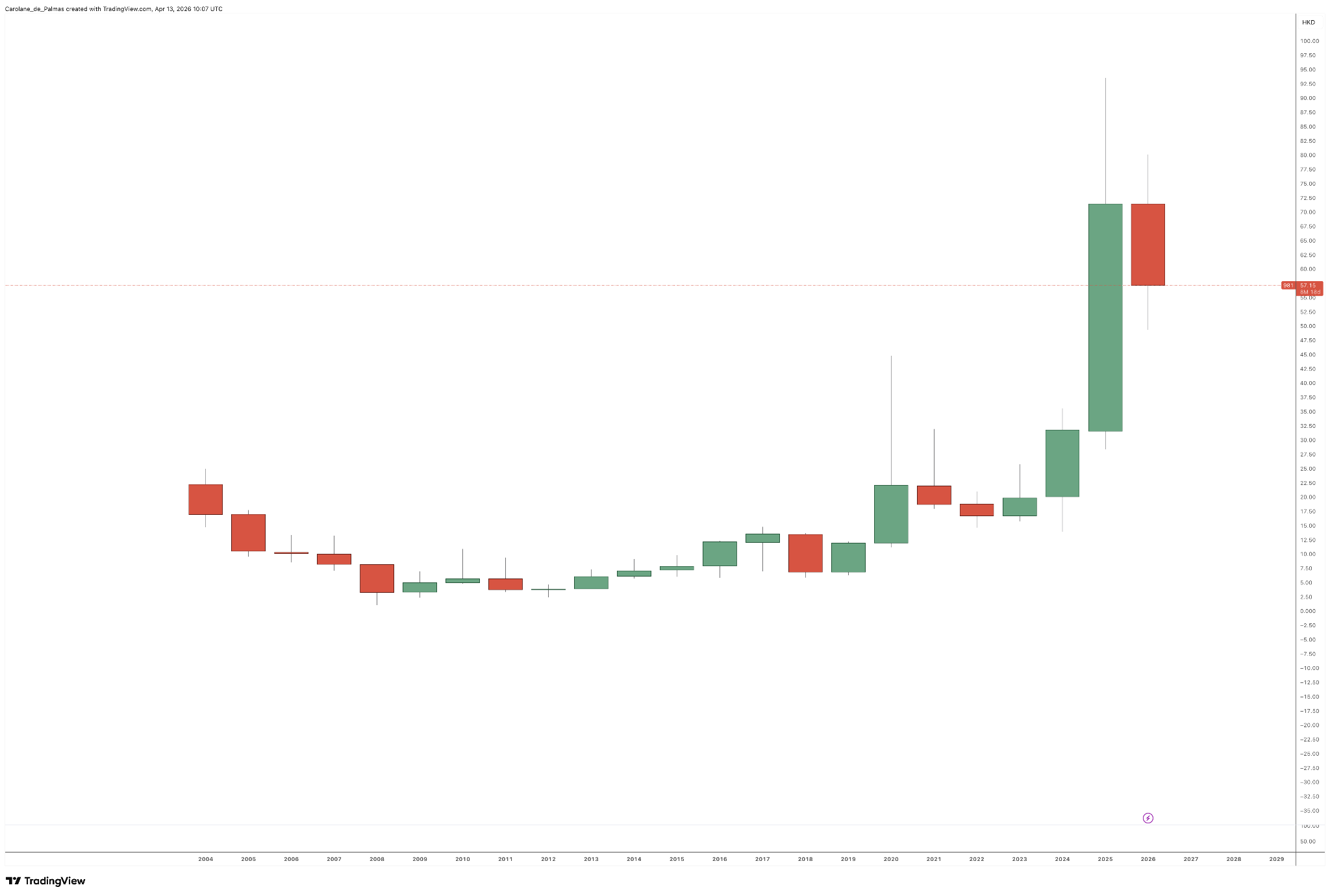
Hua Hong Semiconductor has also delivered record results, with annual revenue rising to over $2.4 billion and profitability improving as margins expanded. Its performance highlights the strength of demand in mature-node segments, where it has established a competitive position.
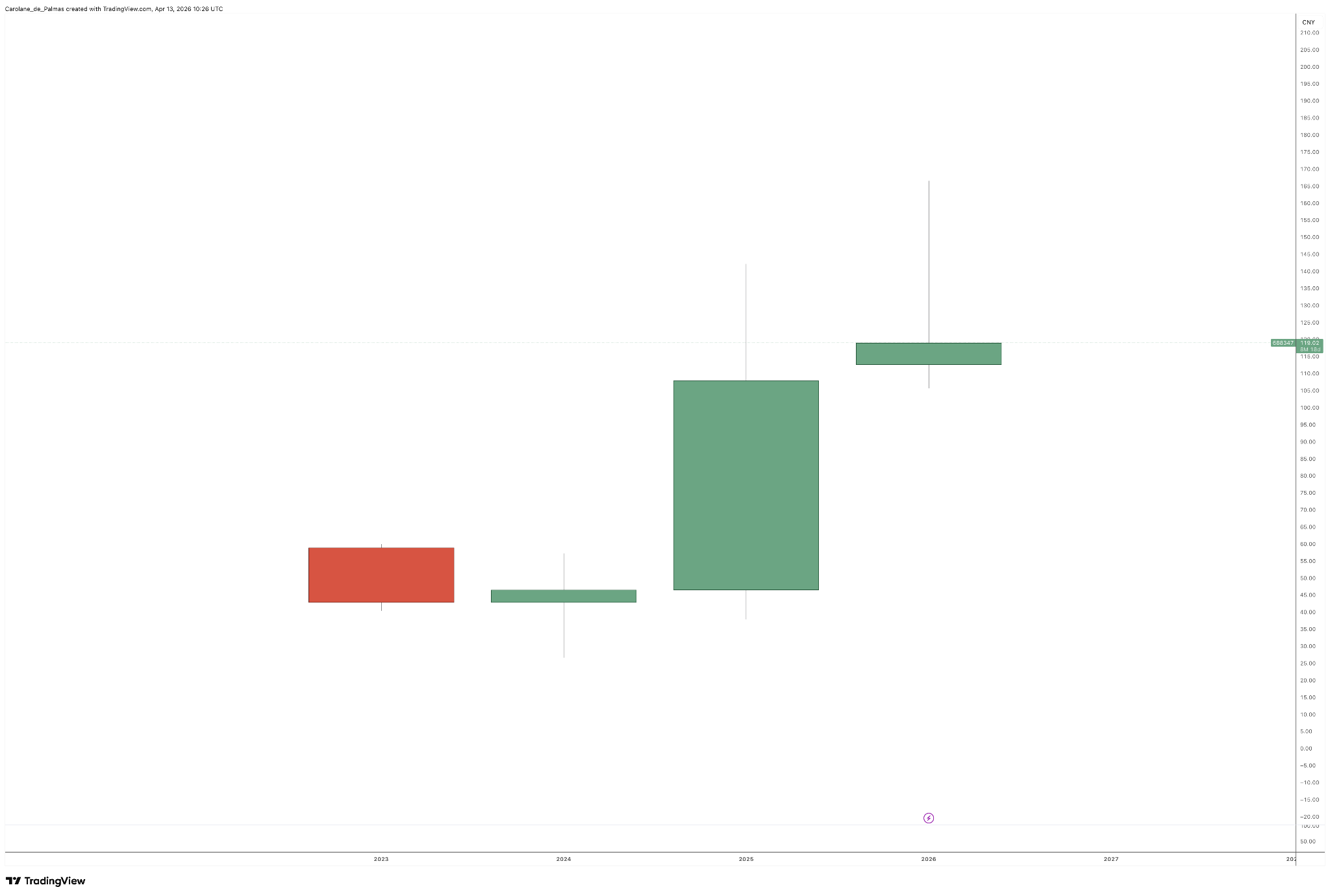
Moore Threads, positioning itself as a domestic alternative in the GPU market, has guided for revenue growth exceeding 200% year-on-year, reflecting the rapid scaling of local AI-related demand. While still at an earlier stage of development, its trajectory illustrates how quickly domestic players can grow when supported by favorable policy and market conditions.
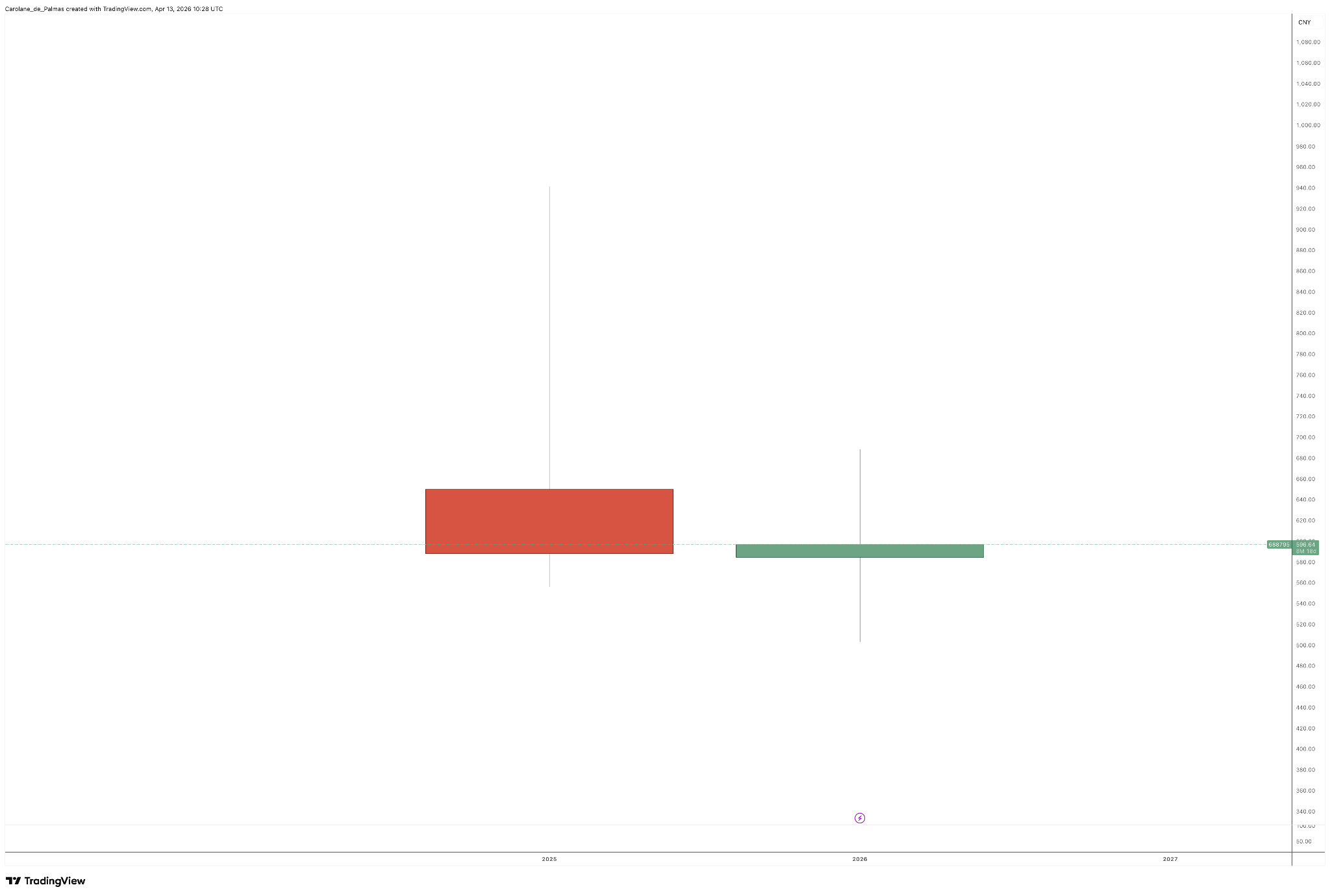
Bottom Line: A Boom Strongly Shaped By Constraint
What makes the current expansion distinctive is that it is driven not only by demand but by constraint. US export controls have reshaped the competitive landscape, limiting China’s access to advanced technology while simultaneously creating a protected domestic space for local firms to grow.
Chinese companies are scaling rapidly within the segments they can access, while investing heavily to move up the value chain over time. Yet this model has clear limits: growth driven by substitution and policy support does not automatically translate into global competitiveness, particularly in advanced nodes where access to critical manufacturing equipment remains restricted.
The current boom could therefore be understood as a transitional phase — one in which strong demand from AI, electric vehicles, and industrial applications, combined with policy-driven import substitution, is driving rapid revenue expansion.
The structural limitations underpinning that transition are the subject of the following article.
Sources: CNBC, SMIC, Hua Hong Semiconductor