Oil. Gas. Fertilizer. Food. Metals. Energy.
These are no longer ordinary markets. They are becoming the fault lines of a new global order where access to supply is becoming more important than the price of supply. For traders who understand what is unfolding, this may be the rare moment when crisis, scarcity and capital flows combine to create one of the most explosive Commodity opportunities of a generation.
The world is still behaving as though this is another temporary disruption. Another geopolitical headline. Another spike that fades. Another crisis that policymakers can talk down.
But physical markets are sending a very different message.
Inventories are tightening. Freight routes are under pressure. Energy flows are being weaponized. Fertilizer costs are rising. Farmers are being squeezed. Food inflation is building beneath the surface. Strategic buyers are moving early. And the broader investment crowd is still dangerously asleep.
“The biggest danger for traders is not volatility,” says Lars Hansen, Head of Research at The Gold & Silver Club. “The biggest danger is waiting for confirmation. By the time the supply shock becomes obvious, the most profitable opportunities may already be gone.”
This is no longer just an Oil story. It is an Energy security story. A food security story. A metals security story. A global supply-chain story. And potentially, the opening chapter of the biggest Commodity squeeze in modern history.
The Strait of Hormuz Could Light the Fuse
The closure of the Strait of Hormuz has pushed global markets into a danger zone few traders and investors fully understand.
Before the crisis, the Strait was one of the most important arteries in the global economy, carrying a major share of Crude Oil, Liquefied Natural Gas and Fertilizer flows. Now, with tanker traffic heavily restricted, traders are being forced to reassess the risk of a prolonged disruption stretching through summer and potentially into Q4 2026.
That is not a minor market inconvenience. That is a structural supply shock.
“The market is still trying to price this as temporary,” says Hansen. “That is the mistake. This is not simply about Oil moving higher. It is about availability, logistics, strategic reserves and the rising cost of securing essential resources in a fractured world.”
If the Strait of Hormuz remains restricted into the next critical demand window, the shock will not stay confined to Crude Oil.
Diesel, Gasoline, Jet Fuel, Freight, Aviation, Petrochemicals, Manufacturing and Agriculture all sit downstream from Energy. When Energy tightens, the entire global economy feels it.
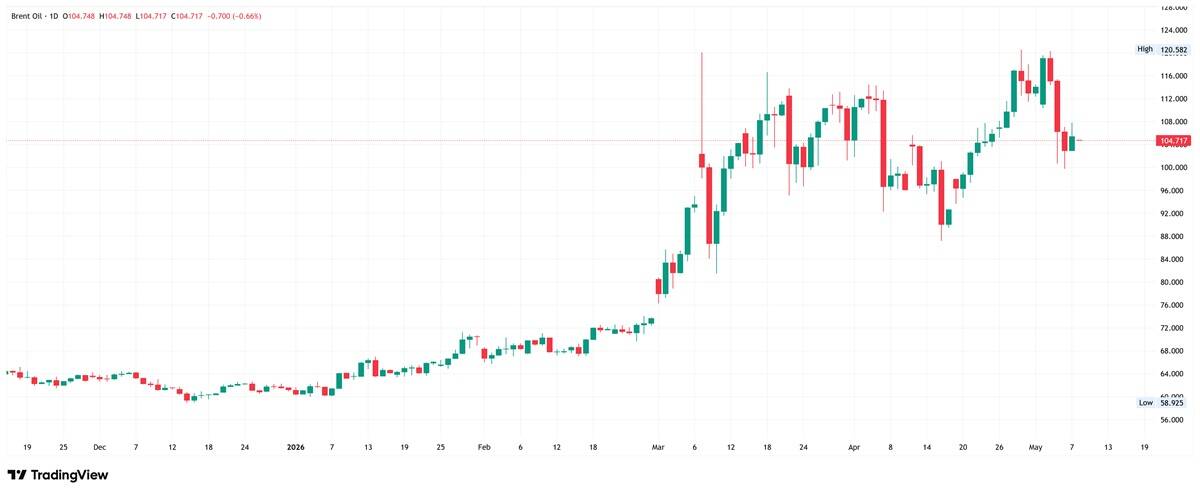
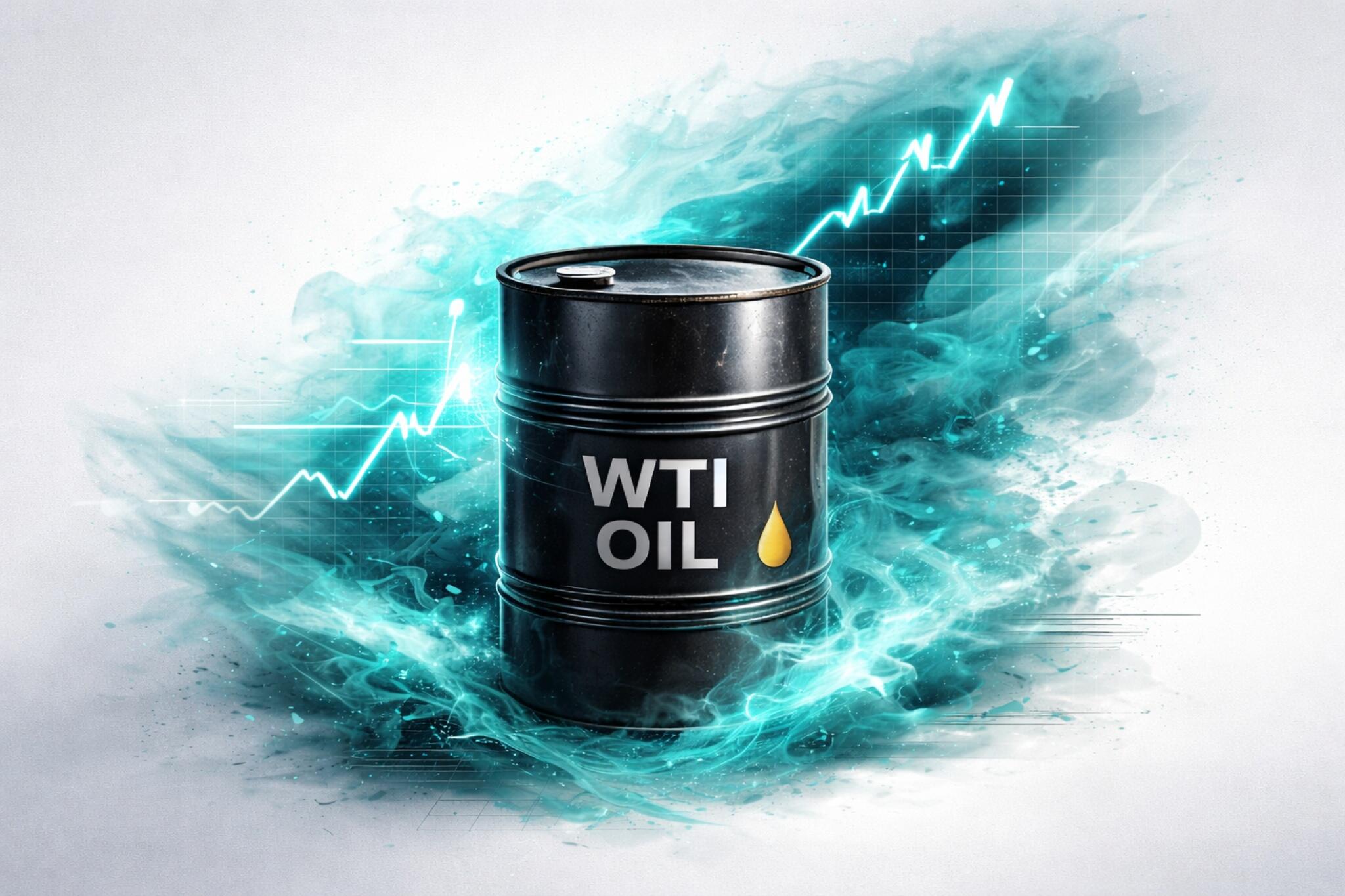
If Oil breaks into a new higher range before consensus accepts the scale of the crisis, the move could be violent. In a sustained supply squeeze, a move toward $150 a barrel becomes increasingly plausible. In a severe escalation, $200 Oil can no longer be dismissed as impossible.
Brent Oil Price Forecast
Every new Brent Oil analysis as it publishes, today's technical signal and key levels, live price — on one page.
See all Brent Oil forecastsThe Food Shock Is the Market’s Blind Spot
The most dangerous part of this crisis may not be what happens at the petrol pump. It may be what happens at the supermarket.
A major share of global Fertilizer trade has historically passed through the Strait of Hormuz. Any prolonged disruption therefore threatens not only Energy markets, but the agricultural supply chain that feeds the world.
This is where the real inflation risk begins.
Higher Fertilizer prices do not hit food prices overnight. They move slowly through planting decisions, crop margins, farm financing, freight costs and wholesale markets. Then, suddenly, they appear in food inflation data after the opportunity to position has already passed.
“Energy scarcity can become food scarcity faster than most traders realise,” says Hansen. “Higher fuel and Fertilizer costs pressure farmers, reduce output incentives and ultimately raise the cost of feeding the world. Markets almost always underestimate that chain reaction.”
That chain reaction is already building.
Farmers are under pressure from elevated operating costs. Climate risks are increasing. El Nino uncertainty threatens hotter and drier weather across key agricultural regions. Soft Commodities are attracting aggressive institutional attention. Wheat, Corn, Soybean, Sugar, Coffee and Cocoa are no longer quiet corners of the market. They are becoming pressure valves for a much larger global squeeze.
This is how Commodity Supercycles begin: slowly, quietly, then suddenly all at once.
Wall Street’s TACO Trade Has Become NACHO
The politics of the crisis are also changing.
During earlier tariff disputes, Wall Street popularised the acronym TACO – “Trump Always Chickens Out” – to describe the view that aggressive threats would eventually be softened, delayed or reversed.
But Hormuz has created a new phrase on trading desks: NACHO – “Not A Chance Hormuz Opens.”
The acronym may sound playful, but the message is deadly serious. Traders are beginning to doubt that Washington can quickly resolve the confrontation with Iran, reopen one of the world’s most important energy arteries and restore normal supply flows before the damage spreads through inventories, fuel markets, food prices and global trade.
“If traders conclude Hormuz will not reopen quickly, then Oil is not priced correctly and neither is the broader Commodity complex,” says Hansen. “Once that psychology shifts, capital will not wait. It will move aggressively.”
That is the danger for anyone still sitting in cash, waiting for perfect clarity.
Markets do not ring a bell before a regime change. They reprice first. The crowd understands later.
Scarcity Is the Most Powerful Bullish Force in Commodities
The strongest Commodity bull markets are not driven by optimism. They are driven by scarcity.
And scarcity is now becoming the defining theme of the global economy.
Governments are stockpiling strategic resources. Export restrictions are increasing. Trade routes are being weaponized. Energy security has become national security. Food security has become political security. Metals security has become industrial security.
Oil, Gold, Silver, Copper, Natural Gas, Uranium, Wheat, Soybean, Corn, Coffee, Cocoa and Sugar are no longer just raw materials. They are strategic Hard Assets in a world where supply is harder to secure, more expensive to transport and increasingly controlled by governments rather than markets.
“The biggest moves in Commodities happen when the crowd realises too late that scarcity is not temporary,” Hansen says. “By then, early capital is already positioned and late money is forced to chase.”
That is exactly the setup now forming.
This is not about one war, one blockade or one inventory report. It is about a new world where the resources that power economies, feed populations and build infrastructure are becoming harder to access at scale.
That is not a temporary trade. That is a regime change.
The Greatest Wealth Transfer Since 2008 and 2020?
History does not repeat perfectly, but it does rhyme.
In 2008, millions missed the opportunity created by the Global Financial Crisis because they were paralysed by fear. In 2020, millions missed the Pandemic-driven Commodity boom because they waited for certainty.
Those who recognised the shift early had the opportunity to capture life-changing wealth. Those who waited for the headlines to confirm what was already happening were left chasing.
Now, the world may be standing at the edge of the third great wealth transfer of our lifetime.
Crisis is stacking on top of crisis: war risk, Energy disruption, Fertilizer shortages, food inflation, climate stress, supply-chain fragmentation, strategic stockpiling and government competition for Hard Assets.
For most people, that sounds like danger.
For disciplined traders, it is something very different: opportunity on top of opportunity.
At The Gold & Silver Club, our view is clear. This is not the time to sit passively on the sidelines. This is not the time to wait for mainstream confirmation. This is not the time to assume the old world of cheap Energy, smooth trade and abundant supply is coming back.
This is the time to recognise the pattern, understand the regime shift and position before consensus wakes up.
Because once scarcity becomes obvious, capital will move fast. It will move aggressively. It will chase Oil, Gold, Silver, Copper, Natural Gas and Agricultural Commodities with the same urgency that defined the great inflation trades of the past.
The window is open now. But it will not stay open forever.
There are moments in markets when fortunes are not built by those who wait for comfort, but by those who act before the crowd understands what is happening.
This may be one of those moments.
For traders who missed 2008, missed 2020 and refuse to miss the next generational opportunity, the message could not be clearer.
The biggest Commodity squeeze in modern history may already be underway.
The only question now is whether you position yourself before this wealth transfer accelerates or look back from the sidelines as the greatest hard asset trade of the decade unfolded without you.