
Bitcoin (BTC) drops below $90,000 as crypto-related legislative developments and rising geopolitical tensions trigger BTC-spot ETF outflows.
Last week, President Trump threatened a 10% tariff on eight European members of NATO, triggering a flight to safety. BTC plunged to a January 21 low of $87,215. BTC remained below $90,000 despite Trump withdrawing the tariff threats following an agreement on Greenland.
Delays to Senate Committee markup votes on the draft text for the Market Structure Bill and heavy US BTC-spot ETF market outflows weighed on buying interest in BTC.
Despite this week’s pullback, expectations of a June Fed rate cut, easing geopolitical tensions, and progress toward crypto-friendly legislation support a bullish medium-term outlook.
Below, I consider the key drivers behind recent price trends, the medium-term trajectory, and the key technical levels traders should watch.

US BTC-Spot ETF Market Sees Heavy Outflows
The US BTC-spot ETF market saw $1.32 billion in net outflows in the reporting week ending January 23, taking year-to-date outflows to $117.1 million. According to Farside Investors, key flow trends for the week included:
- iShares Bitcoin Trust (IBIT) had net outflows of $537.5 million.
- Fidelity Wise Origin Bitcoin Fund (FBTC) reported net outflows of $451.5 million.
- In total, eight of the 11 ETF issuers reported weekly outflows, while the remaining three saw zero net flows for the week.
US BTC-spot ETF flow trends remain key for Bitcoin’s supply-demand balance. Outflows sent BTC 4.89% lower for the current week ending January 25.
Despite the weekly outflows, robust longer-term inflows support the bullish short- to medium-term price outlook for BTC.
Bitcoin Price Forecast
Every new Bitcoin analysis as it publishes, today's technical signal and key levels, live price — on one page.
See all Bitcoin forecasts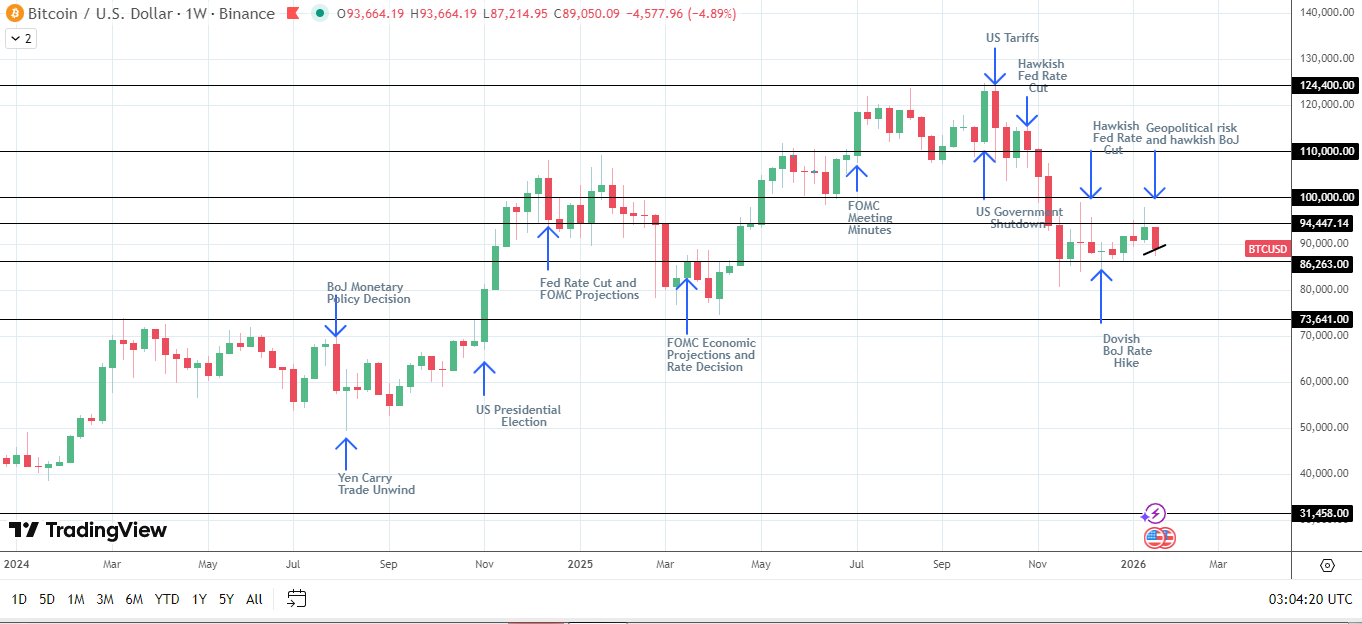
10-Year JGB Yields Influence BTC Price Trends
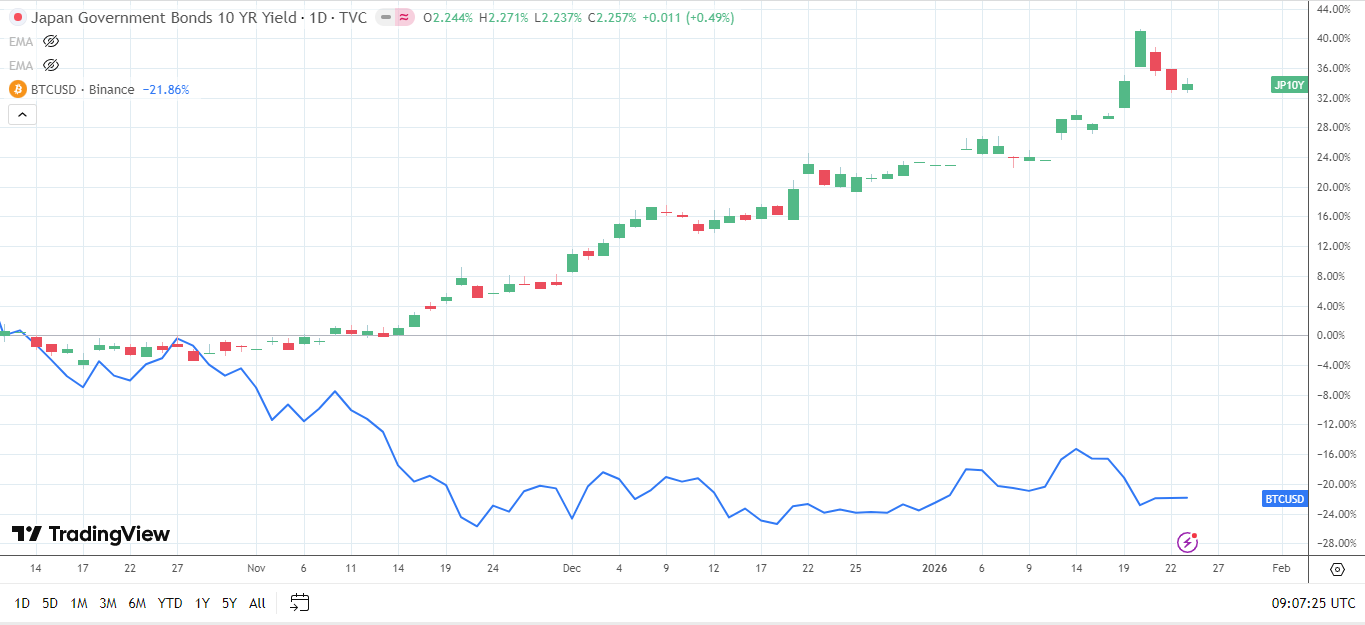
While geopolitical tensions influenced demand for BTC-spot ETFs, rising 10-year Japanese Government Bond (JGB) yields weighed on demand for BTC.
Concerns about Japanese Prime Minister Sanae Takaichi’s fiscal spending plans and Japan’s 240% debt-to-GDP ratio sent the risk premium for holding JGBs higher. Typically, rising yields dry liquidity, weighing on risk assets. On January 23, a hawkish Bank of Japan monetary policy outlook added to the bearish sentiment.
For context, Bitcoin’s inverse correlation with 10-year JGBs remained firmly intact in the current week. Higher 10-year JGB yields and a stronger yen increased the risk of a yen carry trade unwind, as seen in mid-2024.
While the BoJ’s economic forecasts signaled higher interest rates, the neutral rate remains key to yen, JGB yields, and risk sentiment. The BoJ previously indicated that the neutral rate was in the range of 1% and 2.5%.
With an interest rate of 0.75%, a lower neutral rate, neither restrictive nor accommodative, would signal a wider-than-expected US-Japan rate differential, driving yen carry trades. Conversely, a higher neutral rate, potentially between 1.5% and 2.5%, would indicate multiple rate hikes, indicating a narrower-than-expected rate differential.
Yen Carry Trade Unwind Risks
Typically, rate differentials dictate whether yen carry trades are profitable or unprofitable. The wider the rate differential, the more profitable the carry trade into risk assets. BTC’s inverse correlation with 10-year JGB yields underpinned the significance of yen carry trades on market liquidity and demand for Bitcoin.
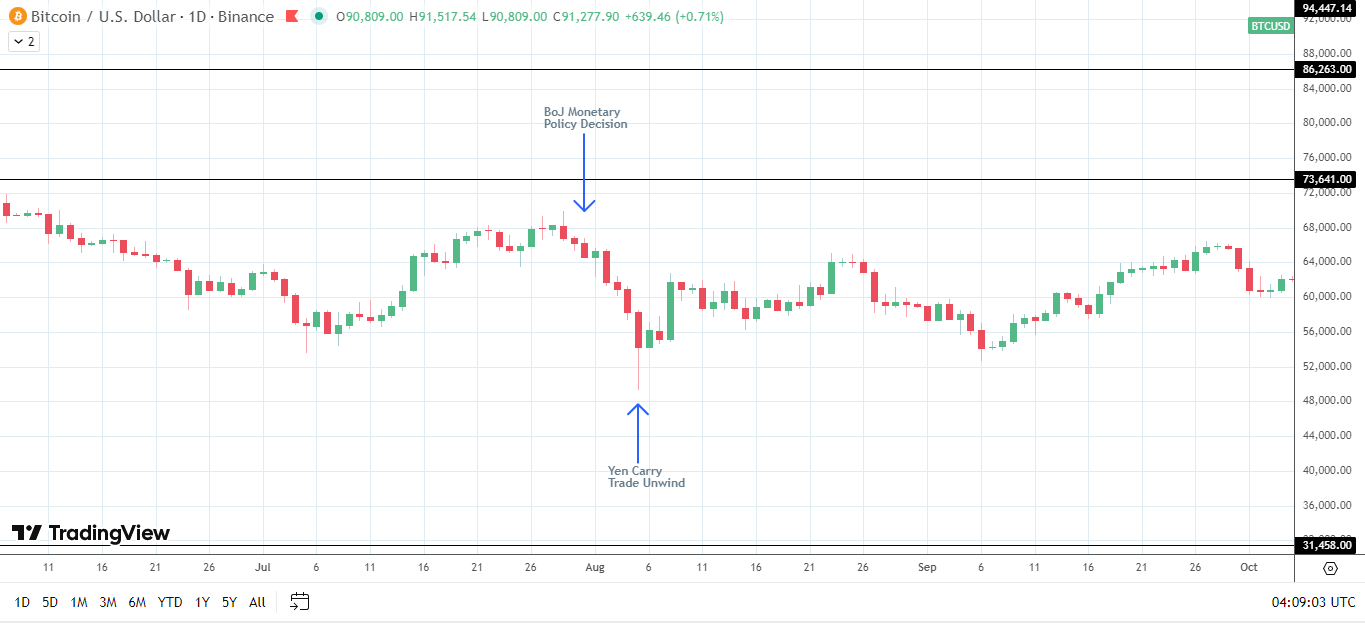
The last yen carry trade unwind followed the BoJ’s July 31, 2024, monetary policy decision. BTC tumbled 26% between July 31, 2024, and August 5, 2024. The BoJ cut JGB purchases and unexpectedly raised interest rates, triggering a yen carry trade unwind. USD/JPY dropped below 140 before reclaiming 158 in January 2025.
Bitcoin Fear & Greed Index in Extreme Fear
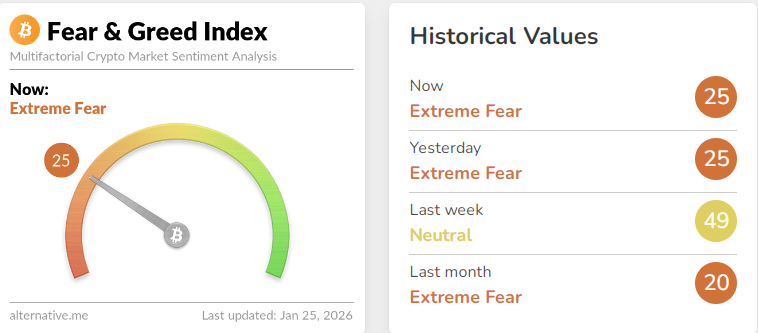
Weakening demand for BTC sent the Bitcoin Fear & Greed Index into the Extreme Fear zone in the week, signaling oversold conditions.
Notably, the Index fell from 49 (Neutral) on Sunday, January 18, to 25 on Sunday, January 25. The drop into the Extreme Fear zone indicates a potential bullish trend reversal, given the oversold conditions.
US economic data, the Fed’s policy outlook, progress toward crypto-friendly legislation, and inflows into BTC-spot ETFs would boost BTC demand and affirm the positive price outlook.
Downside Risks: Central Banks, US Data, Regulatory Headlines, and ETF Outflows
While fundamentals suggest a bullish trend reversal, downside risks remain, including:
- The BoJ declares a higher neutral interest rate range of between 1.5% and 2.5%, triggering a yen carry trade unwind.
- The Fed and US data cool bets on an H1 2026 rate cut.
- BTC-spot ETFs see extended outflows.
These factors would likely send BTC toward the November 21 low of $80,523.
In summary, the short-term outlook remains cautiously bullish as fundamentals counter the technicals. The medium- to longer-term outlook is constructive.
Technical Analysis
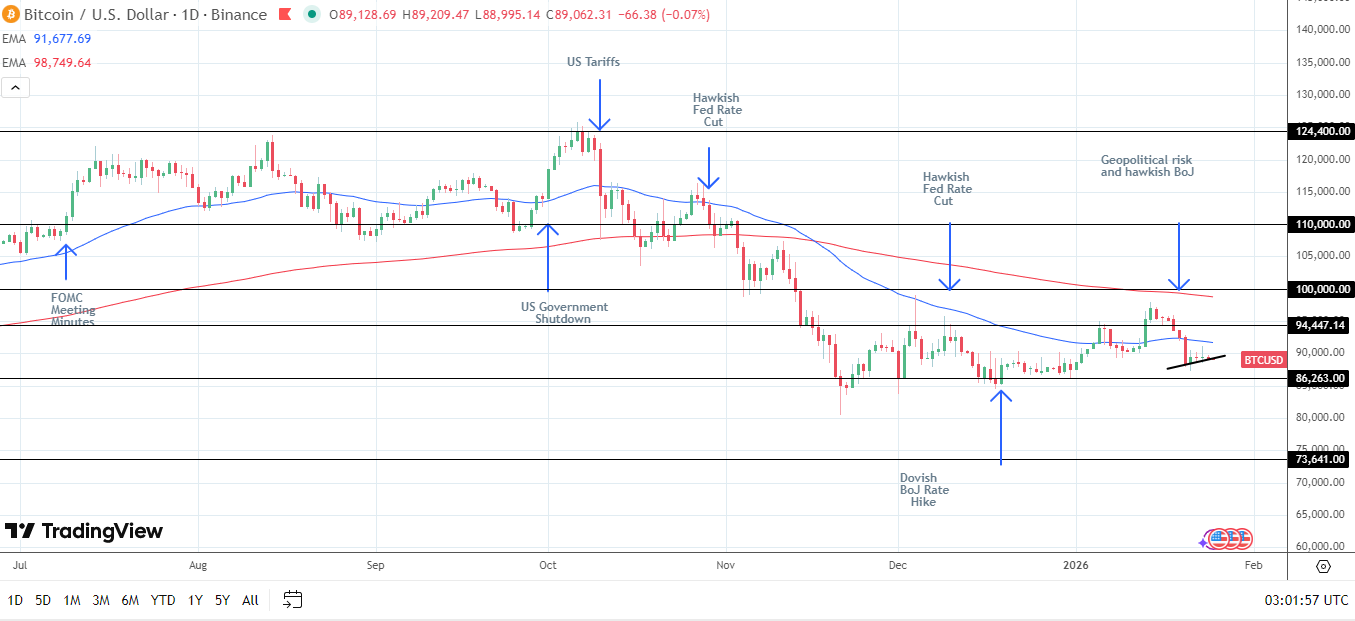
This week’s pullback left BTC below its 50-day and 200-day Exponential Moving Averages (EMAs), signaling a bearish bias. However, fundamentals are countering the technical indicators, indicating an upswing.
A breakout above the 50-day EMA would pave the way toward the $94,447 resistance level. Crucially, a sustained move through the 50-day EMA would signal a near-term bullish trend reversal. A near-term bullish trend reversal would support a move toward the 200-day EMA and the $100,000 psychological resistance level. A break above the EMAs and reclaiming $100,000 would reaffirm the bullish short- to medium-term price outlook.
Bullish Structure Formation: What Happens if BTC Breaks $92,500?
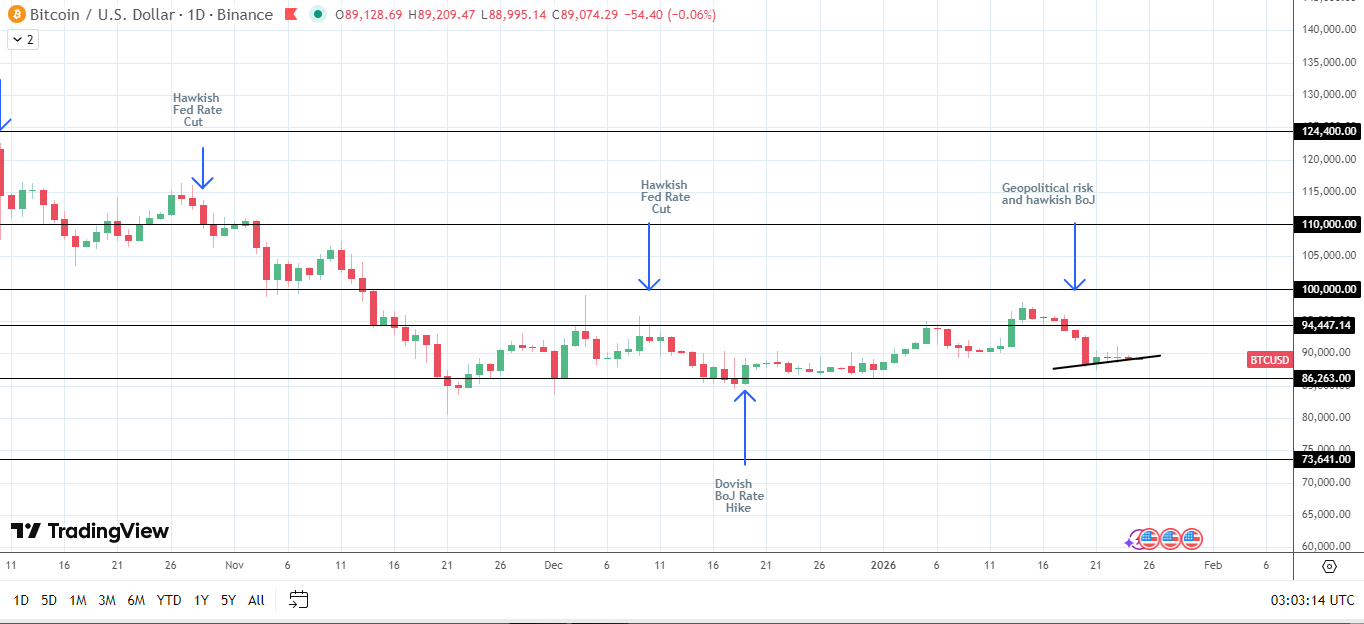
Reclaiming $92,500 would support a move toward the $95,000 level, affirming the bullish short-term (1-4 weeks) target of $100,000 and the medium-term (4-8 weeks) target of $115,000.
However, a sustained fall below the trendline would bring the November low of $80,523 into play, invalidating the bullish structure.
Track BTC market trends with our real-time data and insights here.
Outlook: Reclaiming $92,500 Key to Bullish Outlook
Geopolitics, US economic data, central banks, and the US BTC-spot ETF market flows will influence sentiment in the week ahead. However, the Fed’s interest rate decision and press conference on January 28 will be the main event. Rising optimism toward inflation cooling could revive bets on a March Fed rate cut, boosting demand for risk assets.
Considering the current market dynamics, the outlook remains bullish, with a 6-12 month price target of $150,000. The US Senate’s passing the Market Structure Bill would support the 6-12 month price target.
Stay informed on BTC trends by monitoring macroeconomic developments, ETF flows, and technical indicators here.