



Bitcoin (BTC) has dropped by more than 5% in the past 7 days alone, and it is currently retesting a key trend line support, as the prospect of higher inflation prompted a risk-off move across the market.
Earlier this week, a report from the U.S. Bureau of Economic Analysis indicated that the annual PCE Price Index rose to 3.8%.

Although this was the consensus estimate on Wall Street, it implied a 30 basis point increase compared to the previous month.
Inflation is clearly accelerating in the United States, primarily as a result of higher energy prices. The war with Iran has kept the price of crude above $100 for a while now, and that is starting to take a toll on the U.S. economy.
Higher inflation lowers the market’s expectations of a rate cut. The baseline scenario for this year already shifted after the war started, as participants no longer believe that the Fed, even with a new leader, will cut rates in 2026.
That notion is further confirmed by this week’s rising PCE Price Index, as Kevin Warsh, the new Chairman of the Fed, will have a tough time pitching a cut to his peers when inflation is nearing 4%, which is twice the central bank’s target.
BTC Shows “Early-Bull-Market” Signs as Whales Keep Accumulating
Even though Bitcoin has dropped lately, volumes remain quite thin. This indicates a slow-paced decline prompted primarily by a lack of demand for the token at a point when the market has spent months in consolidation mode.
However, we still believe that we are in the early stages of BTC’s bull market, based on a powerful buy signal in the weekly chart that has yielded impressive results in the past.
As we have explained in previous Bitcoin price predictions, this buy signal popped up when the weekly Relative Strength Index (RSI) dropped below 30. The last three times this has happened, BTC has rallied to a new all-time high 12 to 18 months later.
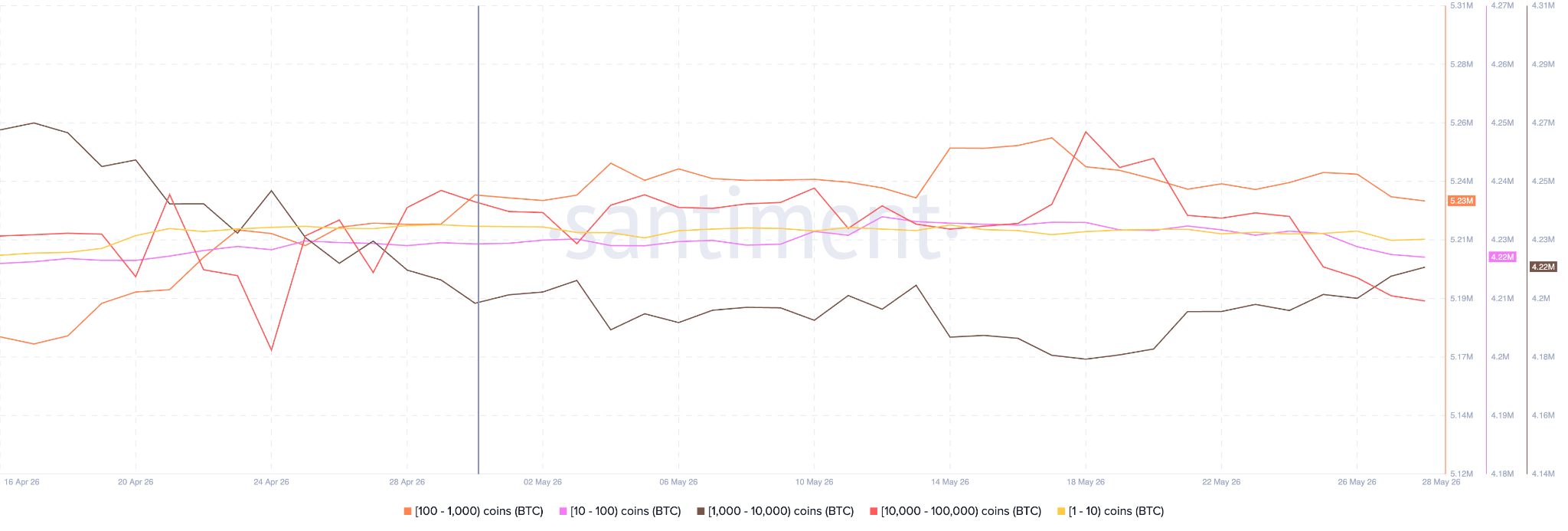
Meanwhile, we are also seeing strong accumulation from whales in the past couple of months. In April, deep-pocketed players bought nearly $4 billion worth of the top crypto. In May, on-chain data from Santiment confirms that these high-value addresses have added 20,000 more tokens to their stash.
This ongoing accumulation is consistent with early bull cycle trends, as the smart money is once again positioning for a strong recovery. The FOMO is fully over, late buyers who scooped up BTC at peak prices have been flushed out, and the market seems to have found a floor at $60,000.
Bitcoin Price Forecast
Every new Bitcoin analysis as it publishes, today's technical signal and key levels, live price — on one page.
See all Bitcoin forecastsBTC Retests Key Trend Line Support – This Could Happen If It Breaks It
As we predicted recently, if BTC failed to recapture the $80,000 level, the most likely target would be its trend line support.
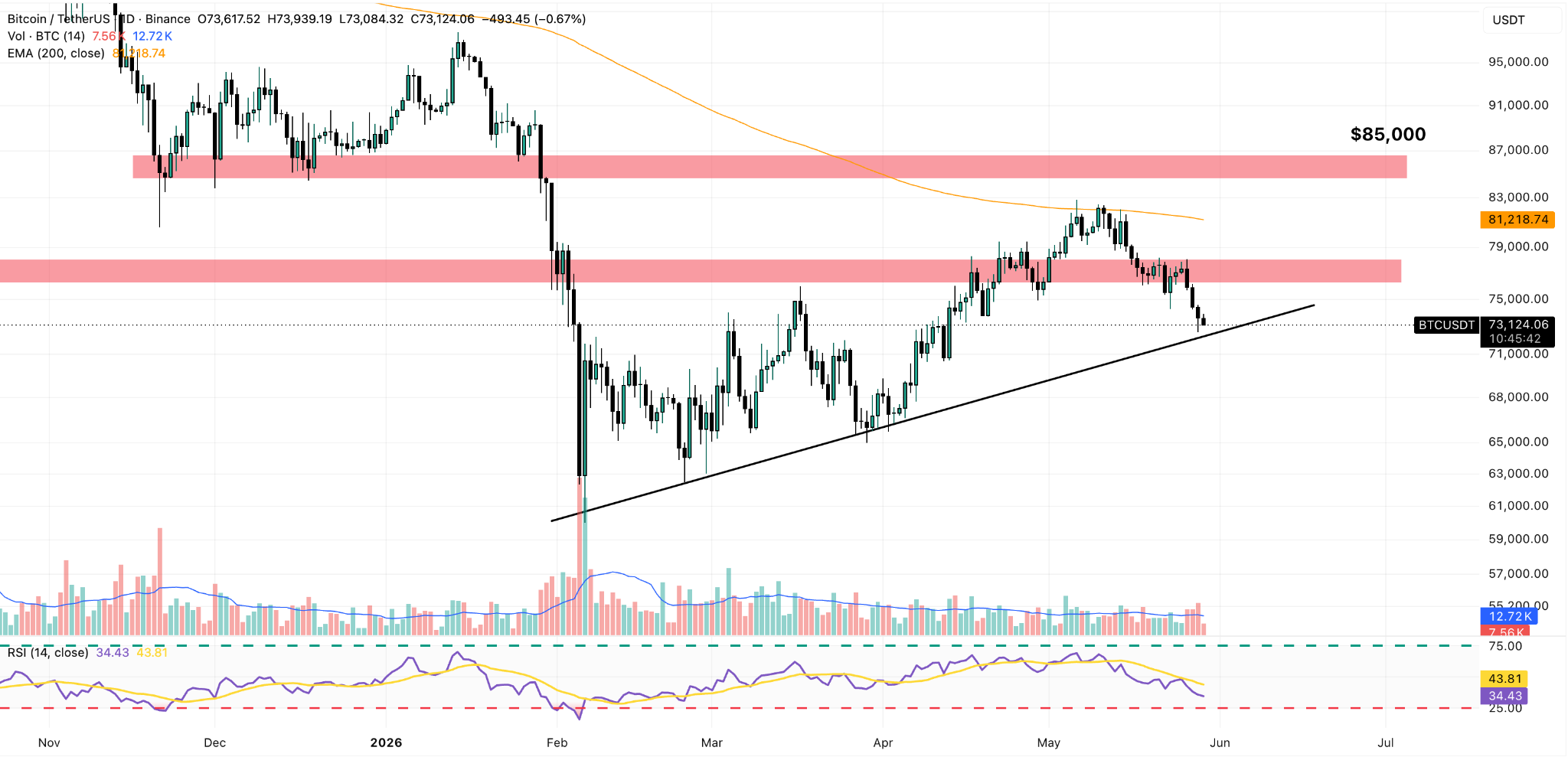
This line held up quite well the last time Bitcoin pulled back, but it won’t necessarily contain this recent decline as the price action just rejected a move above the 200-day exponential moving average (EMA).
We also anticipated that the selling pressure would increase after hitting that line, as bears still have significant influence over market dynamics. Moreover, hundreds of millions in wiped-out longs have sparked a cascade of liquidations.
If we get a strong bounce off this trend line support, BTC will likely retest the $77,000 area shortly. However, if we break below it, we will likely see the top crypto hitting $60,000 once again.
This would not invalidate our bullish view for the token based on the weekly RSI signal we mentioned earlier, as this retest of the previous cycle low has also happened in previous instances.