



US-China relations faced an early test after the US captured Venezuelan President Nicolas Maduro.
Mainland China’s indices advanced for a second consecutive year in 2025 as US-China trade tensions eased and Beijing’s 5% GDP growth target remained intact.
Geopolitical developments at the start of 2026 had no impact on buyer demand for Mainland China-listed stocks. The CSI 300 climbed to a four-year high, while the Shanghai Composite Index reached its highest level since July 2015.
China’s advancements in AI have been a key driver for Mainland and Hong Kong-listed stocks.
Meanwhile, Beijing’s continued pledges to deliver monetary and fiscal policy support overshadowed concerns about profit margin squeezes and waning domestic demand, adding to positive sentiment.
Monetary and fiscal policy support will likely be crucial in the near term, given recent economic data and rising geopolitical risks. Given the current market dynamic, fundamentals and technicals aligned, the outlook remains bullish.
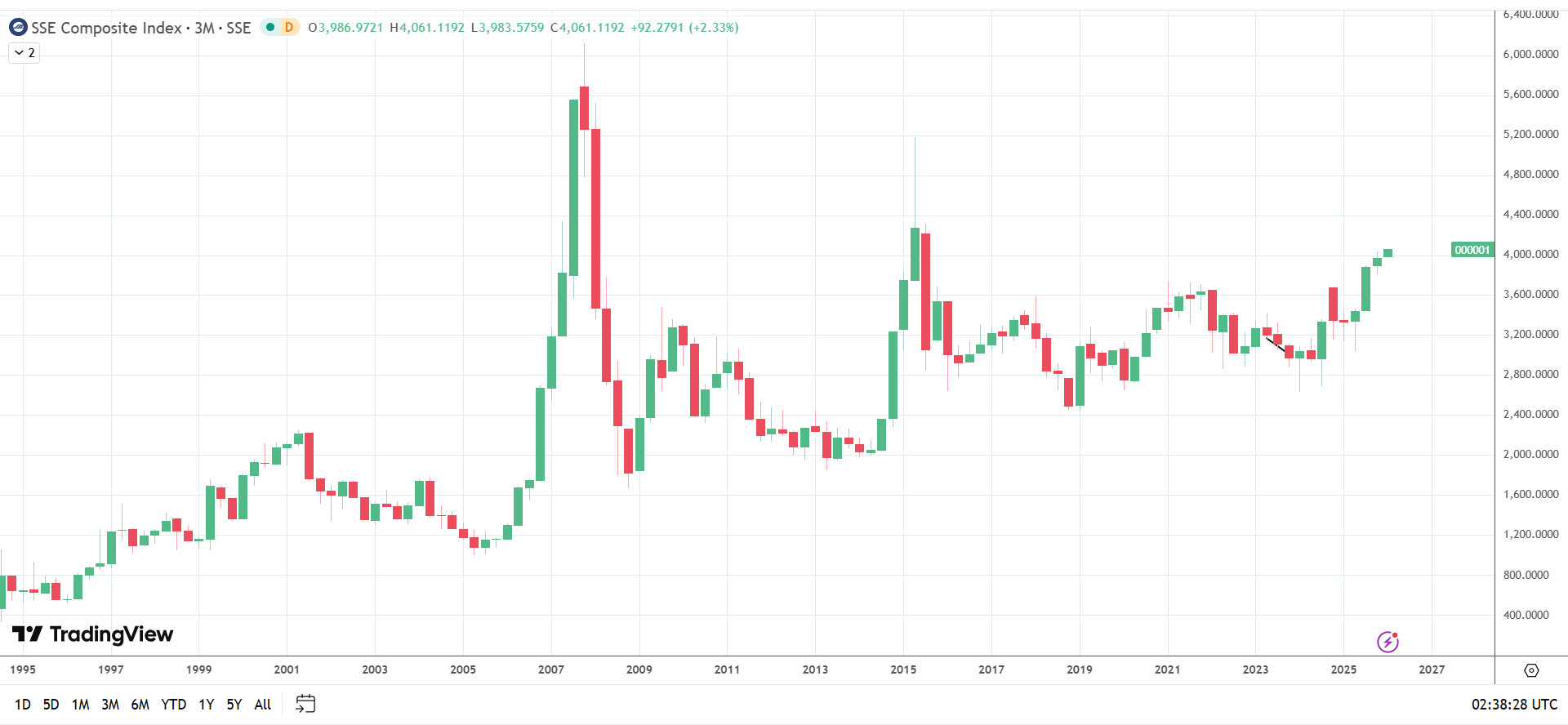
Below, I will explore the key drivers behind recent gains, the medium-term (3-6 months) market outlook, and the key technical levels traders should watch.
Geopolitics Tests US-China Relations
Over the weekend, the US captured Venezuelan President Nicolas Maduro, seizing control of the country and its assets. President Trump also threatened further military action if newly sworn-in President Delcy Rodriguez failed to comply with US demands.
Crucially, the US capture of Maduro has fueled speculation about further regime changes, with Iran a potential target. US-imposed changes to Venezuelan and Iranian regimes would likely strain US-China relations, given China’s close ties with both countries.
China’s Foreign Ministry reacted to Maduro’s capture, reportedly calling on the US to ensure that Maduro and his wife are immediately released and resolve issues through dialogue. President Trump downplayed any concerns about US-China relations, stating that he has a good relationship with Chinese President Xi Jinping and that China wouldn’t have a problem with the US operation.
Notably, China is the largest importer of Venezuelan crude oil, fueling speculation about the US using Venezuela’s oil as a political bargaining chip. The Kobeissi Letter reported that Trump stated China would continue to get oil during the weekend’s post-military action debrief.
Mainland China equity markets showed no signs of concern over the operation. The CSI 300 and the SSE Composite Index rallied 1.90% and 1.38%, respectively, on Monday, January 5, and extended their gains on Tuesday, January 6. Market trends at the start of 2026 affirmed the bullish short- to medium-term outlook for Mainland China’s indices.
Hong Kong Hang Seng Price Forecast
Every new Hong Kong Hang Seng analysis as it publishes, today's technical signal and key levels, live price — on one page.
See all Hong Kong Hang Seng forecasts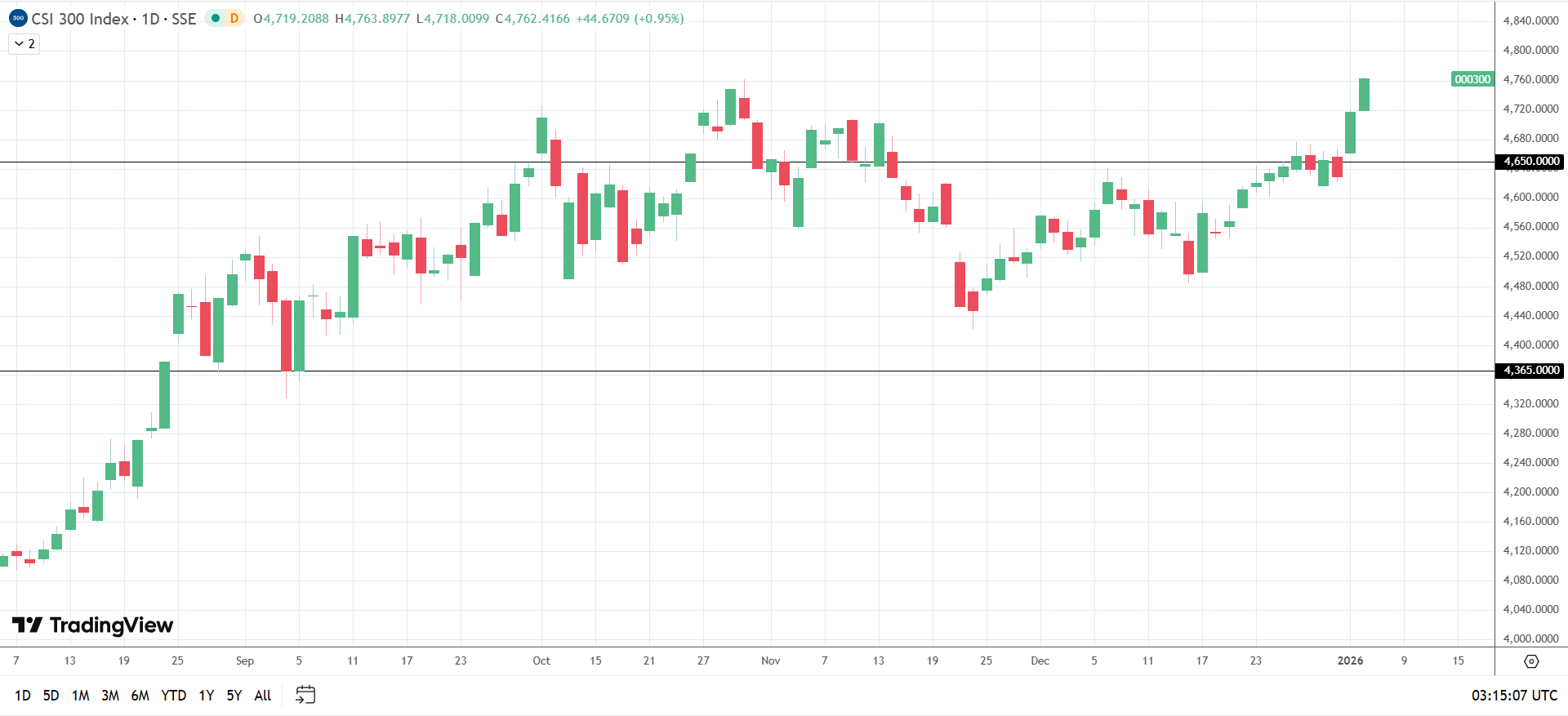
China’s Private Sector PMIs Signal a Pickup in Economic Momentum
China’s manufacturing and services sector PMI figures indicated a pickup in activity at the end of the fourth quarter. The RatingDog China General Service PMI slipped from 52.1 in November to 52.0 in December, while the Manufacturing PMI rose to 50.1 in December (November: 49.9). The RatingDog China General Composite PMI increased from 51.2 in November to 51.3 in December, boosted by the upswing in manufacturing sector activity.
However, several PMI sub-components raised expectations of further monetary and fiscal policy support from Beijing, including:
- Job cuts across the private sector. Manufacturers reduced staffing levels for a second consecutive month, while service providers cut jobs for a fifth month.
- Weaker external demand across the private sector.
- Rising input prices and lower output prices signaled intensifying margin squeezes.
Goods producers and service providers cut output prices despite increased cost burdens, citing increased competition. The December PMIs followed November’s industrial profit numbers, which painted a grim picture for the sector. China’s industrial profits fell 13.1% year-on-year in November, after rising 5.5% in October, aligning with survey-based price trends.
Crucially, margin squeezes suggest further job cuts, given that private sector companies reduced staffing levels to manage costs. Rising unemployment would weigh on consumer sentiment and curb spending, challenging Beijing’s efforts to boost domestic consumption.
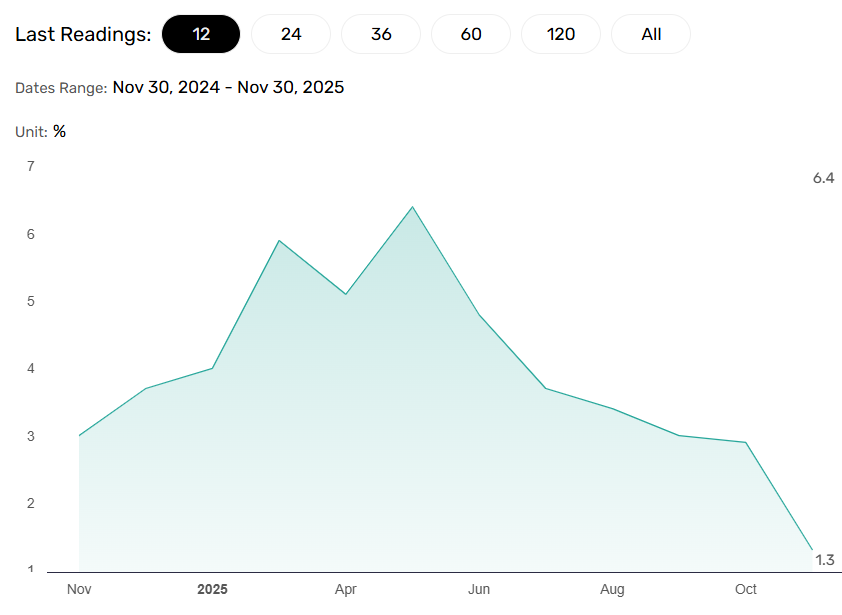
Retail sales increased 1.3% year-on-year in November, down from 2.9% in October, and sharply lower than an increase of 6.4% in May. Weakening domestic demand may increase competition among manufacturers and service providers, potentially squeezing margins further and leading to more job cuts.
Beijing Announces New Measures to Drive Tech Self-Reliance
In late December, China announced new measures to foster innovation and tech self-reliance. CN Wire reported:
“China’s Tariff Commission announced a series of measures effective January 1, 2026, aimed at promoting domestic innovation and tech self-reliance. The changes include lowering import tariffs on key spare parts, adding domestic categories for smart bionic robots and bio aviation fuel, and applying below-MFN import tariffs to 935 items, alongside adjustments to import tariff rates and headings.”
Crucially, the tariff adjustments would ease input cost pressures, easing margin squeezes and boosting job creation.
Policy measures targeting price wars, the labor market, and consumer sentiment will be key for market trends in 2026.
Key Downside Risks to the Bullish Outlook
However, downside risks remain, potentially challenging the positive outlook. These include:
- Deteriorating US-China relations and a break in the trade war truce.
- Increased non-US tariffs on Chinese shipments.
- Beijing delays rate cuts and rolls out ineffective fiscal stimulus.
- Weakening demand for Chinese goods and services would narrow margins, curbing wage growth and fueling job cuts.
- Chinese housing market crisis escalates.
Despite these downside risks, China’s competitiveness in the AI race and increased self-reliance on chip manufacturing support the constructive short- to medium-term bias for Mainland Indices.
Additionally, markets remain confident that Beijing will lift domestic demand through subsidies and lower borrowing costs, while addressing deflation.
Medium-Term Outlook: Bullish, Hinged on Policy Support
Recent private sector PMIs supported improving sentiment toward China’s GDP growth prospects for 2026. Stimulus and improved external demand continue to counter weak domestic consumption. Further policy measures, targeting domestic consumption, would boost economic growth in 2026.
Given the current market dynamics and Beijing’s recent pledges, the outlook for Mainland China’s indices remains bullish.
CSI 300 Technical Outlook: Resistance Levels in Focus
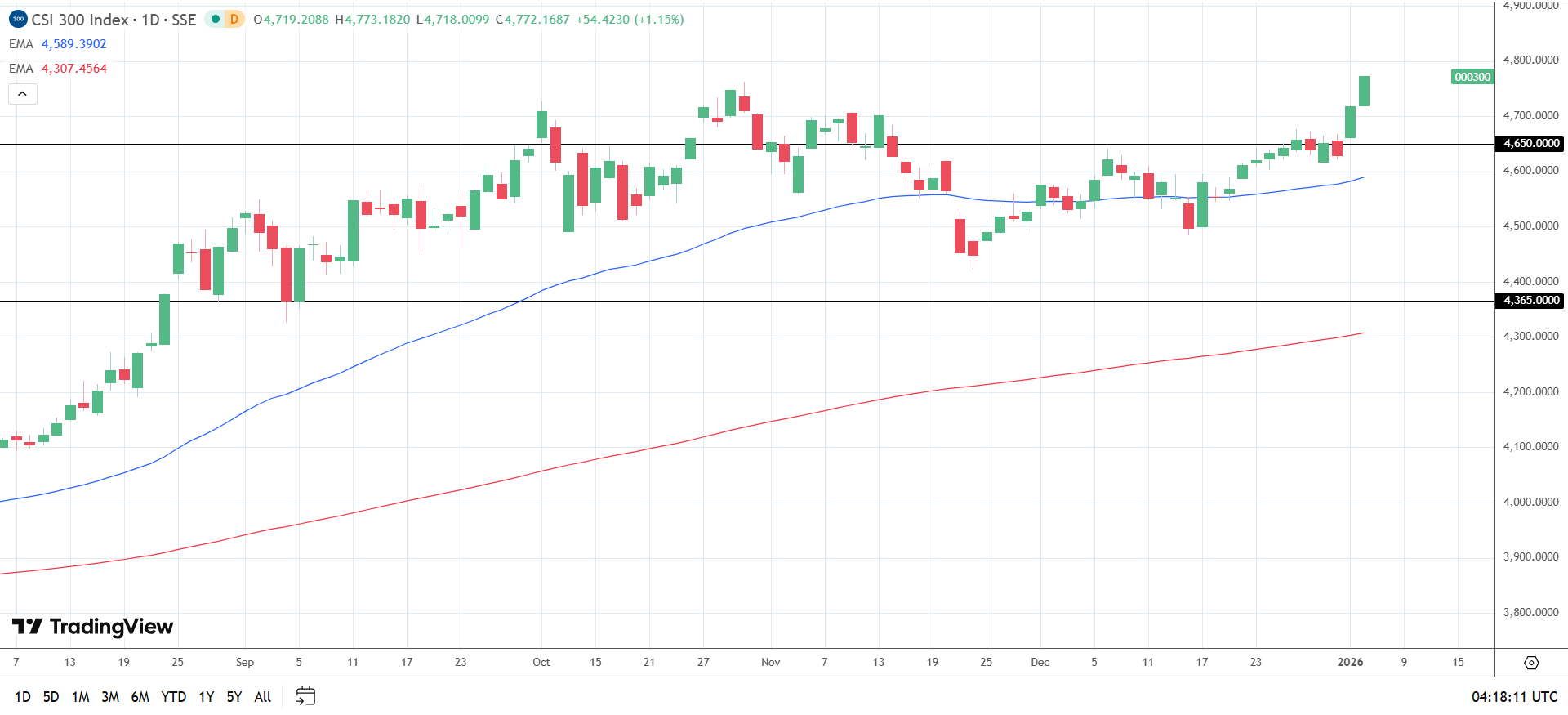
Fundamentals aligned with bullish technicals in early trading on Tuesday, January 6. Viewing the daily chart, the CSI 300 traded well above its 50-day and 200-day EMAs, signaling a bullish bias.
A breakout above 4,800 would bring 5,000 into play for the first time since 2021. A sustained move through 5,000 would enable the bulls to target 2021’s all-time high of 5,931.
Hang Seng Index Forecast: Longer-Term Bullish Bias Intact
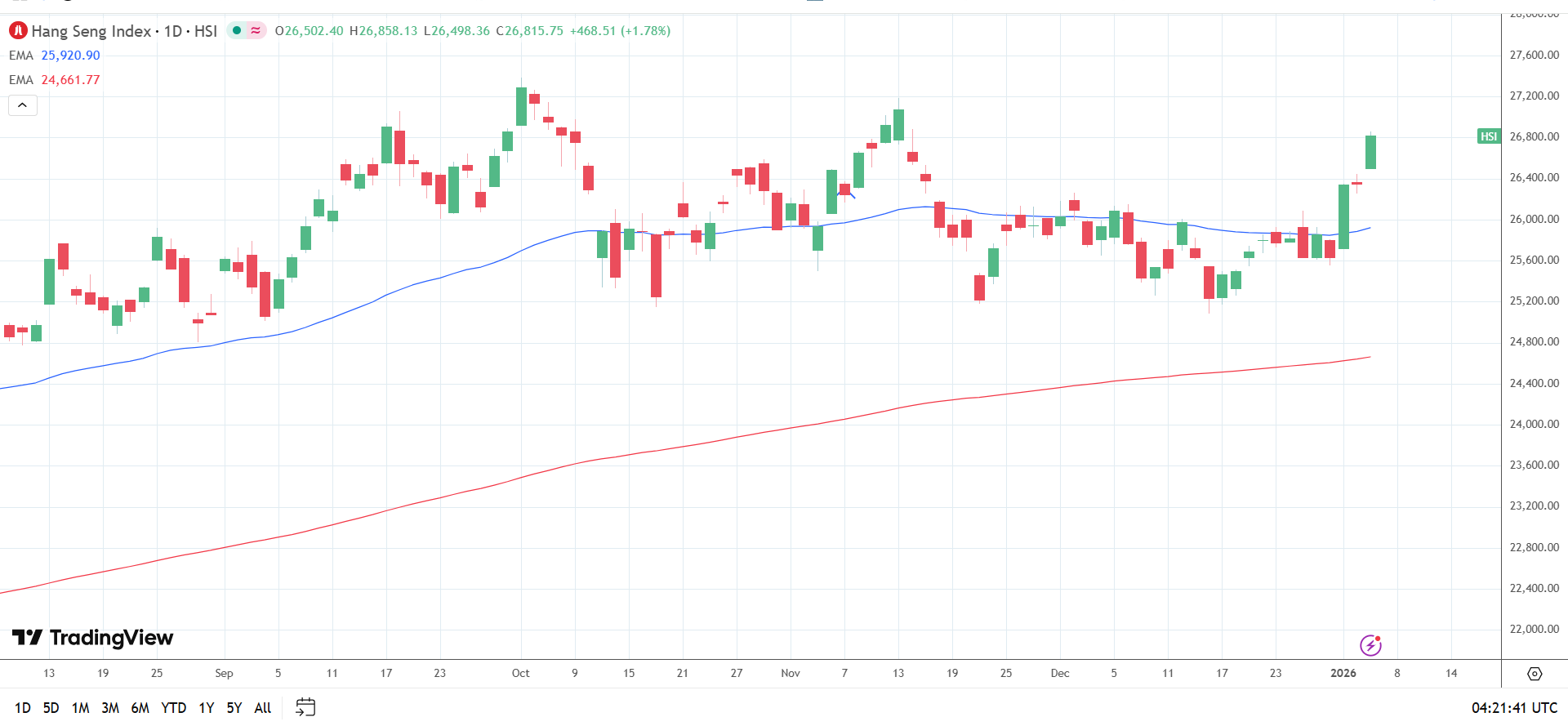
Improved market sentiment, fueled by gains across Mainland equity markets, increased demand for Hong Kong-listed stocks. The Hang Seng Index broke above its 50-day EMA on January 2, signaling a bullish near- and longer-term outlook, aligning with positive fundamentals.
A break above October’s 2025 calendar year high of 27,382 would open the door to testing 28,000. A sustained move through 28,000 would bring 30,000 into play for the first time since 2021.
Conclusion: Can Stimulus Reboot Domestic Demand?
To summarize, the short- and medium-term outlook remains constructive. China’s AI advancements, improved US-China relations, and Beijing’s policy pledges will likely boost investor appetite for Mainland China and Hong Kong-listed stocks.
However, addressing the housing sector crisis, global trade relations, and deflation remain key to boosting consumer sentiment and domestic demand. Effective policy measures would likely send the CSI 300 to its 2021 all-time high of 5,931.
Discover strategies to navigate this week’s market trends here.