
Mainland China’s indices are on target for their second consecutive yearly gains. The CSI 300 and the Shanghai Composite Index are eying their strongest rally since 2020 and 2019, respectively.
The US-China race for AI dominance boosted demand for Mainland and Hong Kong-listed stocks, overshadowing concerns about domestic consumption.
Beijing’s pledges for monetary and fiscal policy support countered fears of wider tariffs on Chinese shipments, adding to positive sentiment. Monetary and fiscal policy support are likely to be crucial in the near term, given plunging industrial profits and waning domestic demand.
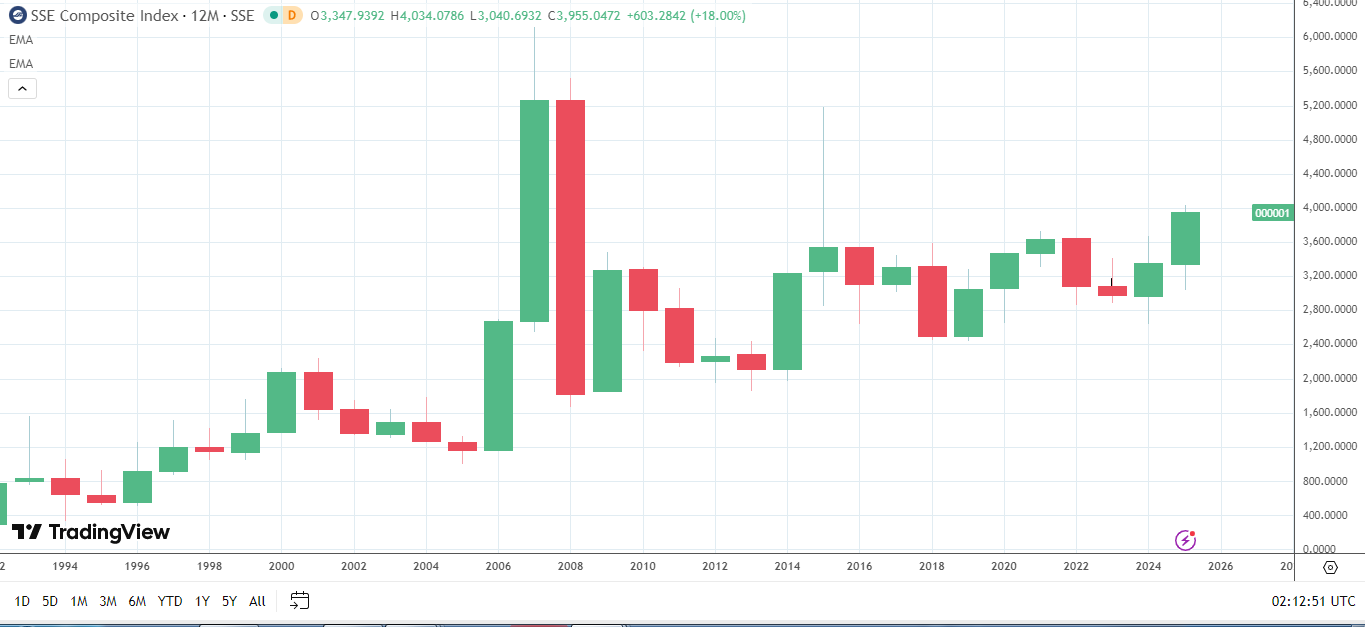
Below, I will explore the key drivers behind recent gains, the medium-term (3-6 months) market outlook, and the key technical levels traders should watch.

Policy Signals: Beijing Flags Rate Cuts and Fiscal Support
Last week, the People’s Bank of China (PBoC) kept the one-year and five-year loan prime rates (LPRs) at 3.0% and 3.5%, respectively. Typically, Mainland Indices retreat on PBoC decisions to hold rates steady. However, recent pledges to cut interest rates and roll out measures to boost consumption have sent equities higher.
This month, Chinese officials announced plans to cut interest rates and reserve requirements to maintain a loose monetary policy stance and bolster liquidity. Additionally, policymakers reportedly pledged to tackle deflation and seek a reasonable recovery in prices amid weak domestic demand.
Hong Kong Hang Seng Price Forecast
Every new Hong Kong Hang Seng analysis as it publishes, today's technical signal and key levels, live price — on one page.
See all Hong Kong Hang Seng forecastsDomestic Demand Weakness Keeps Pressure on Policymakers
Consumer spending slowed sharply in the second half of 2025 as US tariffs and price wars squeezed profit margins, impacting wage growth and the labor market. Industrial profits rose 0.1% year-on-year from January to November, down sharply from 1.9% in October.
Notably, weak domestic demand overshadowed strong external demand, signaling a loss of economic momentum in the fourth quarter. November’s sharp drop in industrial profits coincided with gloomy housing, retail sales, and industrial production numbers, pressuring Beijing to deliver fresh stimulus.
Retail sales increased 1.3% year-on-year in November, down from 2.9% in October, extending a downward trend since May’s 6.4% rise in sales.
Housing Sector and Consumption: Key Challenges for 2026
Ongoing housing sector woes and sliding industrial profits have weighed on consumer sentiment, dampening domestic demand. Policy measures targeting the housing sector, the labor market, and domestic consumption will likely be key for 2026 amid optimism that Beijing will achieve its 5% GDP growth target for 2025.
Given Beijing’s recent pledge, the short- to medium-term outlook remains bullish for Mainland China indices and the Hang Seng Index.
Key Downside Risks to the Bullish Scenario
However, downside risks linger, potentially derailing the positive outlook. These include:
- An escalation in the US-China trade war.
- EU tariffs on Chinese shipments.
- Beijing delays rate cuts and introduces ineffective fiscal stimulus.
- External demand for Chinese goods weakens, squeezing markets, leading to slower wage growth and job cuts.
- Chinese housing market crisis intensifies.
Despite the downside risks, AI developments and China’s increased self-reliance on chip manufacturing support the bullish short- to medium-term outlook for Mainland Indices. Furthermore, markets remain confident about Beijing boosting domestic demand and tackling deflation.
Medium-Term Outlook: Cautiously Bullish on Policy Support
Recent upward revisions to China’s GDP growth forecasts have bolstered demand for Mainland and Hong Kong-listed stocks in Q4. Goldman Sachs and the International Monetary Fund (IMF) raised their 2025 growth forecasts to 5%, matching Beijing’s target. Macroeconomic stimulus and improving external demand, stemming from easing US-China trade tensions, have countered weak domestic consumption.
Resilient external demand and Beijing’s policy measures targeting consumption would support the economy in 2026.
Given the current market dynamics and Beijing’s recent pledges, the outlook for Mainland China’s indices remains cautiously bullish.
CSI 300 Technical Outlook: Resistance Levels in Focus
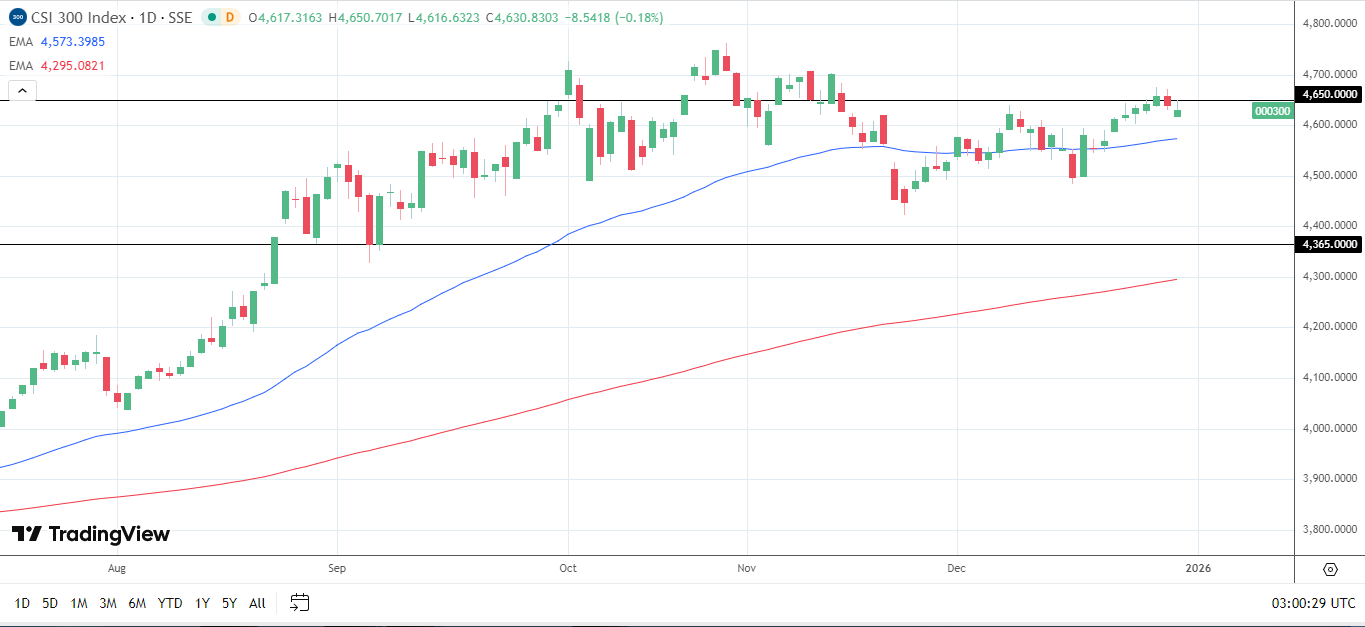
Improving fundamentals aligned with bullish technical indicators in early trading on Tuesday, December 30. Looking at the daily chart, the CSI 300 remained above its 50-day and 200-day EMAs, indicating a bullish bias.
A breakout above 4,650 would open the door to testing the October 30 calendar year high of 4,762. A sustained move through 4,762 would enable the bulls to target 5,000 for the first time since 2021.
Hang Seng Index Forecast: Longer-Term Bullish Bias Intact
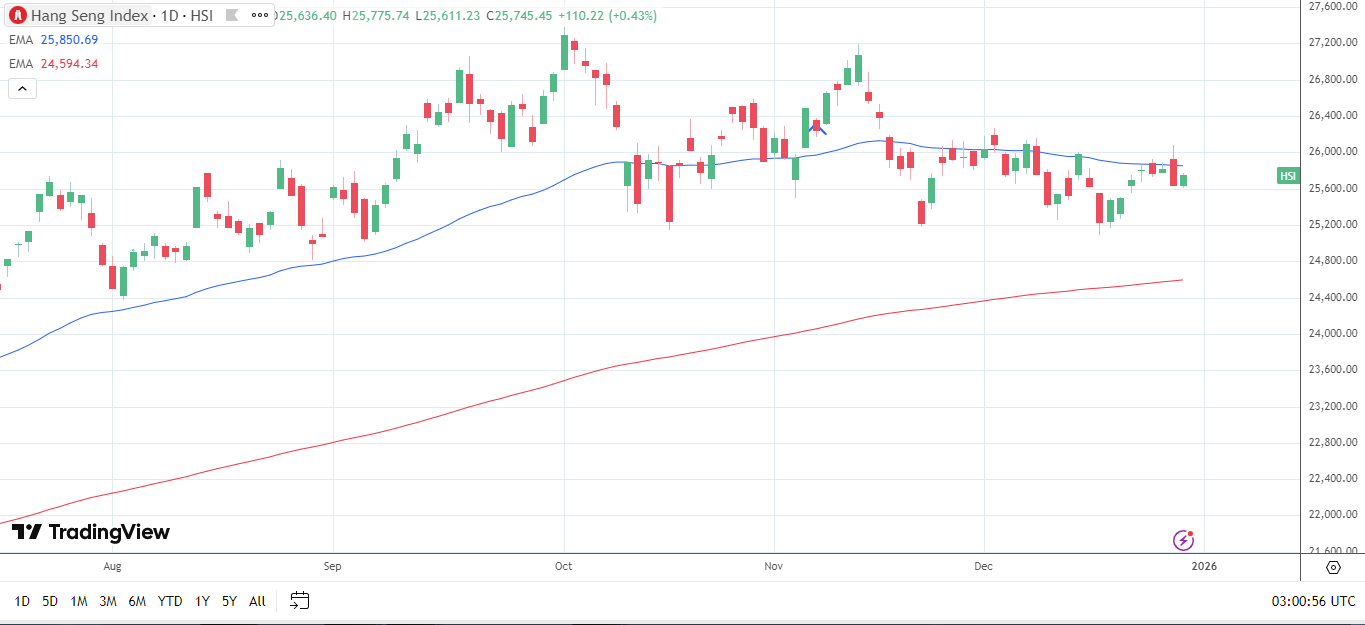
While technicals remained bullish for the CSI 300, the Hang Seng Index has struggled to break out above its 50-day EMA. Nevertheless, the Index remained above its 200-day EMA, indicating a positive longer-term outlook.
A break above the 50-day EMA would bring 26,000 into play. A sustained move through 26,000 would pave the way toward 27,000, opening the door to testing the calendar year high of 27,382.
Conclusion: Can Beijing Reignite Domestic Demand?
To summarize, the short-term outlook remains cautiously bullish, while the medium-term outlook remains constructive.
The US-China trade war truce, China’s progress in the AI space, and Beijing’s policy support are likely to lift demand for Mainland China-listed stocks.
However, Beijing will need to manage the housing sector crisis and trade relations to lift consumer sentiment and domestic demand. Effective policy measures would likely drive the CSI 300 to its 2021 all-time high of 5,931.
Discover strategies to navigate this week’s market trends here.