



Crude oil prices closed higher on Wednesday following a volatile session in world markets. Escalating military strikes by the United States and Israel against Iran have raised geopolitical tensions in the Middle East to alarming levels. Shipping through the Strait of Hormuz has been closed for a fifth day in a row which is affecting oil and gas flows from the region. Brent Oil (BCO) trades above $83 a barrel which is the highest level since January 2025. Meanwhile, WTI Oil (CL) trades above $75.
Middle East Conflict Raises Supply Risks and Supports Oil Prices
The continuing conflict has become the primary cause of surge in oil prices. The energy markets are currently pricing in the risk of long-term supply disruption. If war spreads throughout the region crude prices could rise far higher than current levels. The nearest target for oil remains $100 as the conflict goes on and supply routes remain blocked.
These supply risks are also increasing because of disruptions within the region itself. Iran has made retaliatory strikes on the energy infrastructure and Iraq has already cut output by nearly 1.5 million barrels per day due to constrained exports. According to the reports, if export routes are kept closed Iraq may be forced to cut nearly 3 million barrels per day of production.
Although global supply levels are still relatively comfortable, there are presently huge amounts of oil sitting on tankers waiting for safe delivery routes. This situation is likely to continue to keep oil markets volatile in the near term with geopolitical headlines driving the next major move in prices.
Oil Market Structure Points to $100
The long-term trend for the oil market remains strongly bullish, as seen on the weekly chart for Brent oil below. Brent crude oil has broken the $80 level, as discussed previously. The breakout from $80 has opened the door for a surge to $100. However, the RSI is indicating short-term overbought conditions. Despite these conditions, the physical disruptions in the oil market will likely continue to take oil prices towards $100.
Brent Oil Price Forecast
Every new Brent Oil analysis as it publishes, today's technical signal and key levels, live price — on one page.
See all Brent Oil forecasts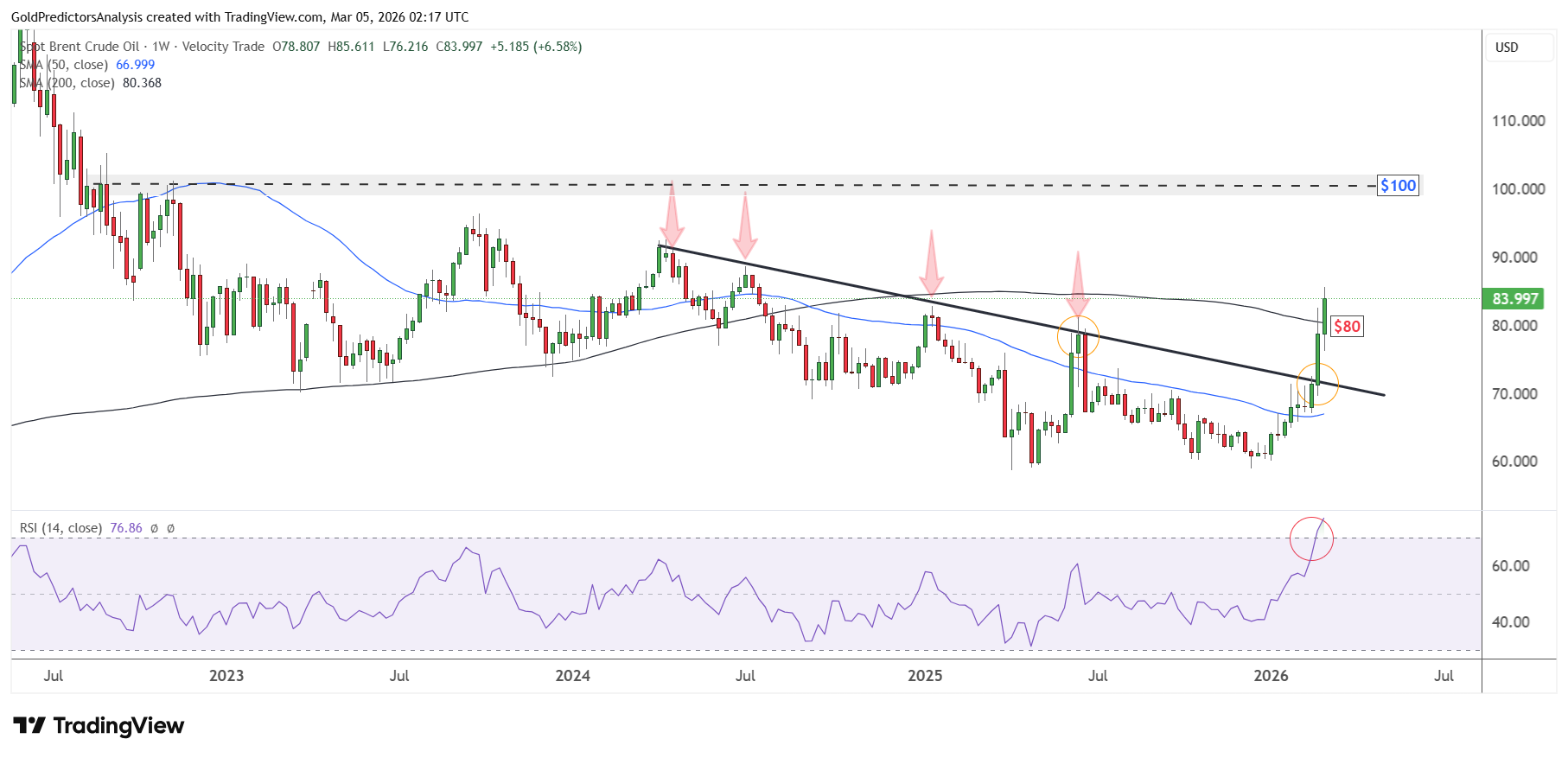
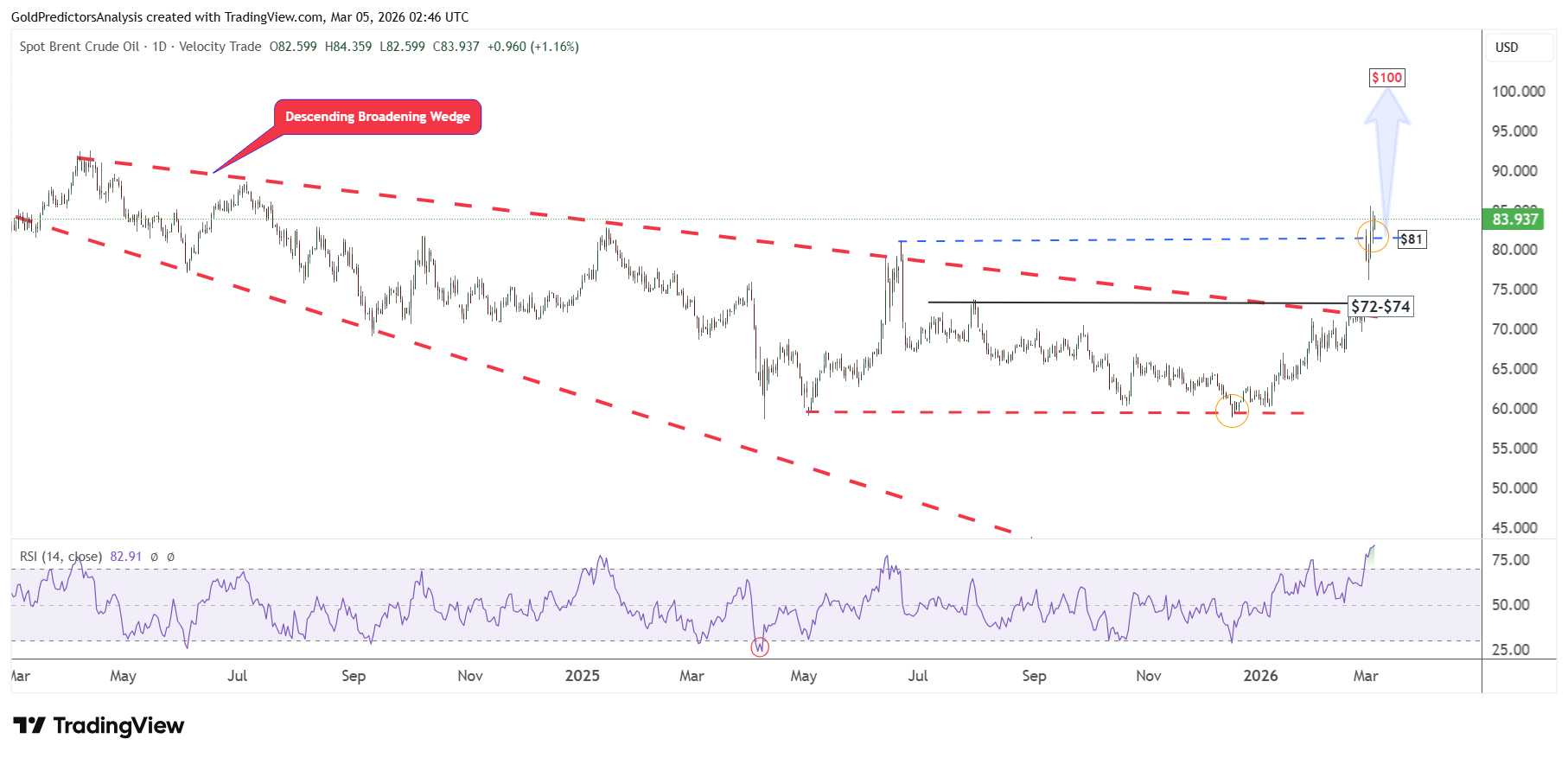
This bullish picture also aligns with the daily chart below, which shows the breakout from the descending broadening wedge pattern. This breakout presents a strongly bullish outlook, which indicates a sustained move towards the $100 level as the target of this wedge pattern. However, the RSI shows overbought conditions. Any correction back towards the $80 level will indicate continued upside towards the $100 level.
Short-Term Oil Trend Remains Strong After Breakout
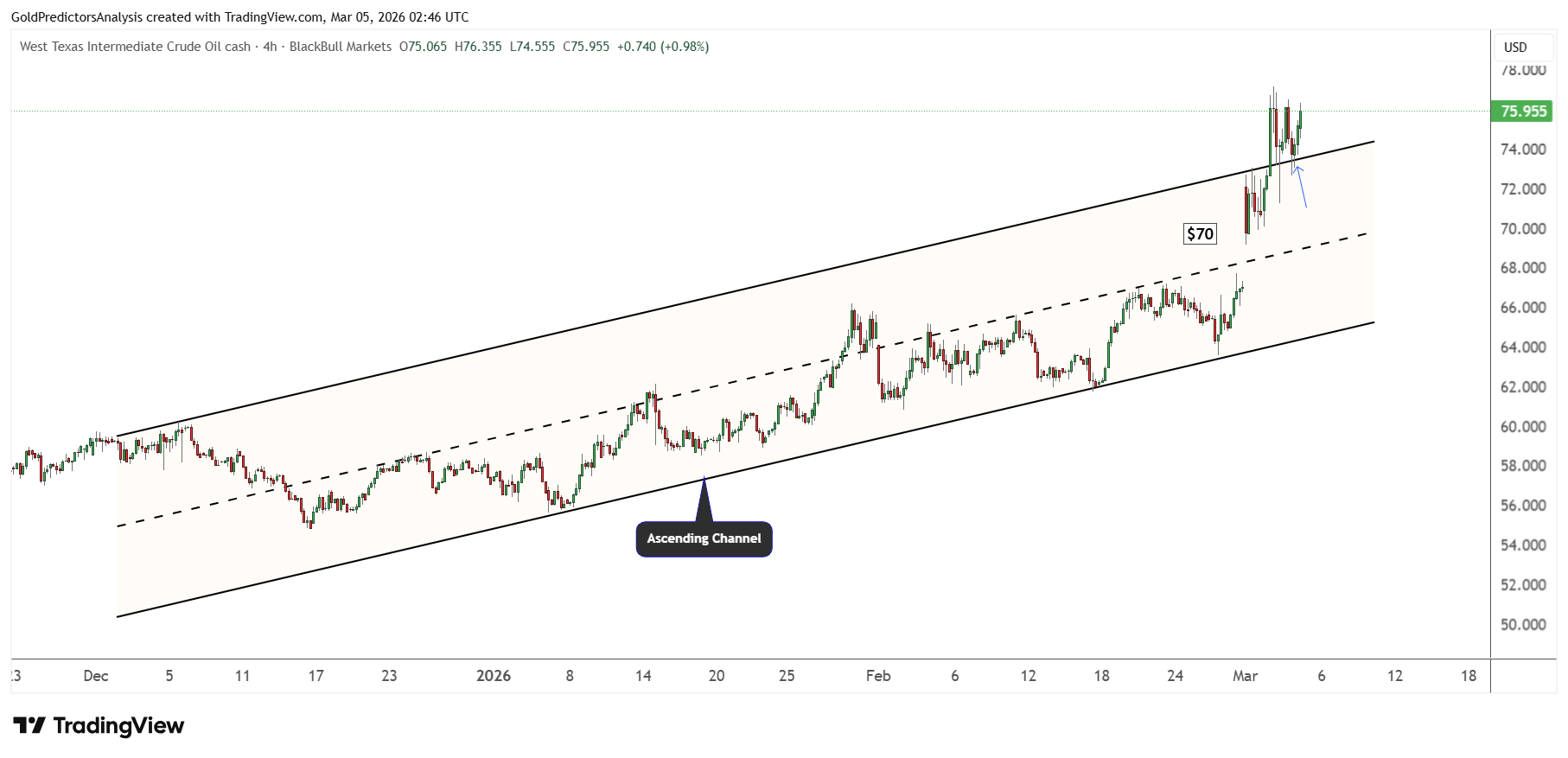
The short-term price structure for oil remains strongly bullish, as seen by the 4-hour chart below. WTI oil broke ascending channel pattern at the $73 level on 3rd March 2026. After the breakout, WTI crude oil has retested this level, and the price is ready to surge higher during the next few days. The breakout from the ascending channel indicates positive momentum will be favoured in the short term.
Bottom Line
Oil markets are very sensitive to developments in the Middle East. Supply risks are increasing with continued disruption of the Strait of Hormuz and pressure on regional production. Strong technical breakouts also support bullish outlook for crude prices. Oil could experience some short term volatility while traders react to geopolitical headlines and overbought signals. However, if supply routes are uncertain and demand is steady, the larger trend remains positive with $100 a realistic target in the coming days.
If you’d like to know more about discussed previously, please visit our educational area.