



Bitcoin Stalls Below $90K as Bearish Signals Accumulate
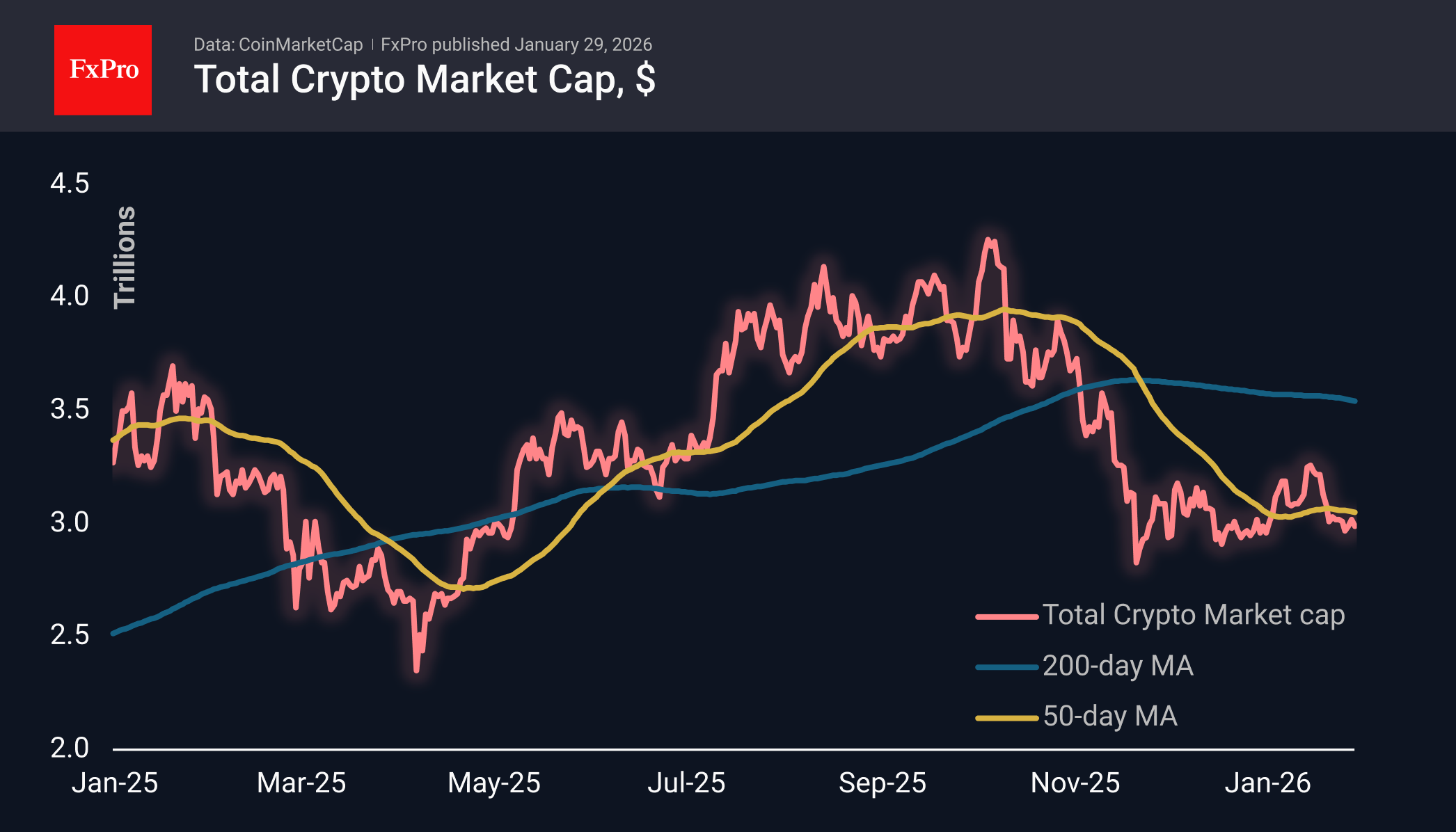
The cryptocurrency market continues to lag, unable to keep pace with the growing stock and metal markets. Suddenly, cryptocurrencies no longer appear to be an alternative to fiat money and a hedge against the not-so-responsible financial policies of major countries. The weak performance of cryptocurrencies has been accompanied by a sharp surge in interest in precious metals.
As a result, cryptos temporarily appear to be a source of funds for strengthening positions in gold and silver. At the same time, they are not giving up important local support levels, both in terms of market capitalisation as a whole and individual coins – Bitcoin, Ethereum, XRP, and Solana.
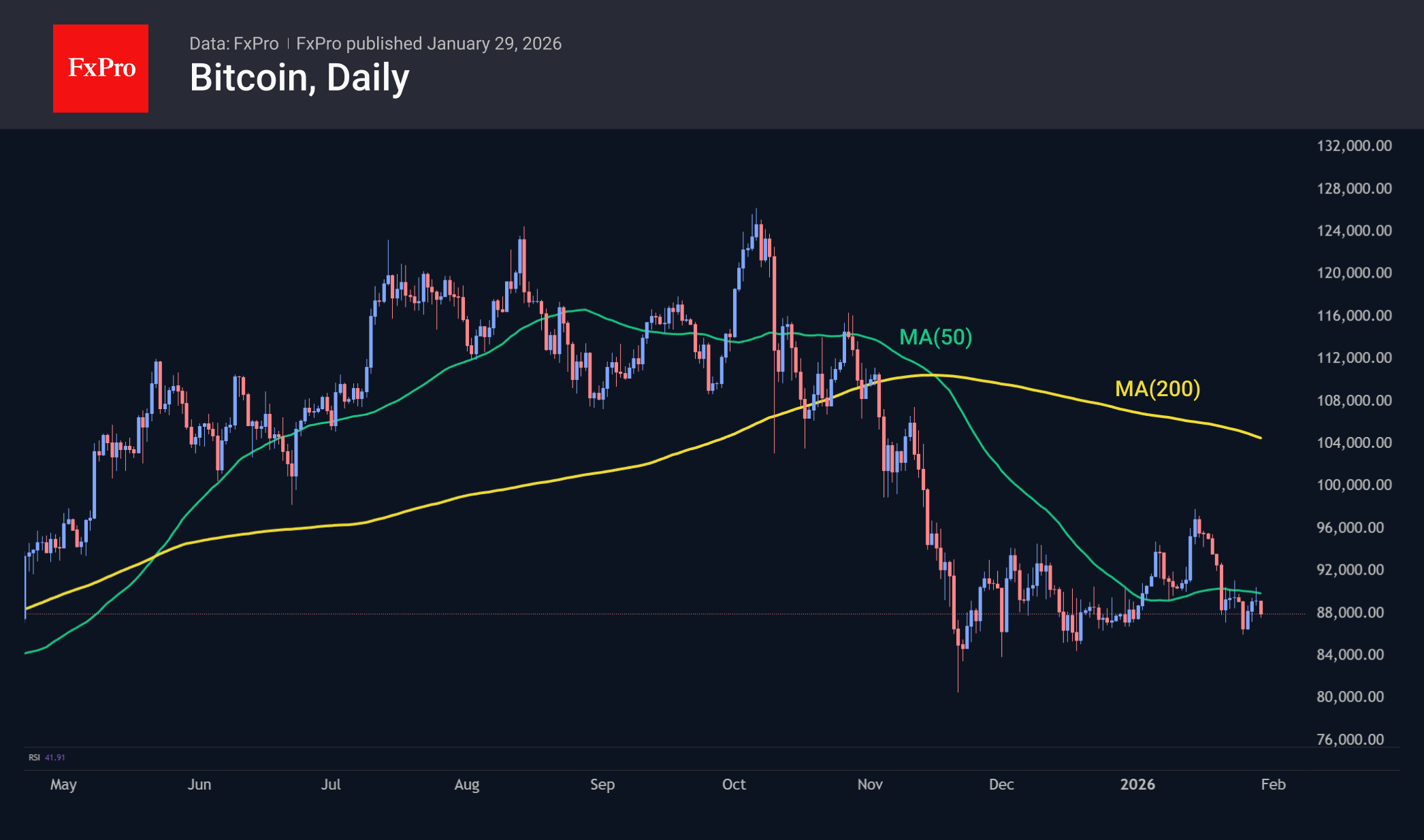
On Wednesday evening, Bitcoin saw another round of sell-offs as the market attempted to break above $90K, failing yet again to return above the 50-day moving average. This curve is gradually turning downwards, further strengthening the bearish arguments. On the other hand, BTC has not yet begun an active decline after consolidation. A formal signal for the start could be a break of support near $85K.
An important question is whether a sharp downturn in metals will help cryptocurrencies by restoring interest in them, or whether it will cause even more damage. We lean towards the latter due to the potential for deleveraging, which is dangerous for all risky assets in the early stages. This is a zugzwang situation, where the next move only makes the situation worse.
Crypto News
Bitcoin is trading just above $86,600, which is the average entry price for spot ETF buyers, according to CryptoQuant. A fall below this ‘psychological barrier’ will deprive holders of their ‘profit buffer’ and trigger an acceleration in the sale of shares.
Glassnode notes a market recovery after October’s deleveraging. The key trend is a shift in focus from aggressive risk to defensive strategies. Traders have reallocated capital from perpetual futures to the options market.
In January, precious metals surpassed cryptocurrencies in popularity on social media, according to Santiment. Investors’ attention has shifted to gold and silver due to the sharp rise in their prices.
Tether stores about 140 tonnes of gold worth $23 billion in a former nuclear bunker in Switzerland, said company head Paolo Ardoino. This makes Tether the largest private holder of physical gold in the world. Last year, the company acquired more than 70 tonnes of the precious metal and intends to continue purchasing.
In early February, Fidelity will launch its own stablecoin on the Ethereum blockchain. The creation of the asset will be a response to growing customer demand and part of a strategy to expand the practical utility of blockchain-based financial instruments.
Ripple has introduced Ripple Treasury, a platform for corporate treasury management. The solution allows traditional cash and digital assets to be managed in a single system to simplify cross-border payments and liquidity management.
Bitcoin Price Forecast
Every new Bitcoin analysis as it publishes, today's technical signal and key levels, live price — on one page.
See all Bitcoin forecasts