


US stock futures edged higher during the Asian session on Thursday, February 19. Easing concerns about AI disruption and AI-related CAPEX and returns on investment lifted sentiment overnight, bolstering demand for US tech stocks. However, broader market gains were modest amid uncertainty about the Fed’s monetary policy outlook.
Increased risk of a US military strike against the Iranian government and a potential full-blown US-Iran conflict also capped the morning gains.
Despite rising geopolitical tensions, bets on an H1 2026 Fed rate cut to support a bullish medium-term outlook for US stock futures. Later on Thursday, US labor market data and developments in the Middle East will influence risk appetite ahead of Friday’s crucial US economic data.
Below, I’ll outline the key market drivers, the medium-term outlook, and the technical levels traders should watch.
US-Iran Conflict Risk Intensifies
This week, the US and Iran failed to reach an agreement on all of the US administration’s demands, raising the threat of a full-blown US-Iran conflict. Reports of an imminent US-Iran war triggered market caution during the Asian session.
Axios reported a potential military strike in days, sending oil prices sharply higher. WTI crude advanced 0.65% in morning trading, extending on the previous day’s 4.4% rally. However, with diplomatic channels still open, markets remained hopeful that Tehran would buckle under Trump’s increased military threat to avoid a major conflict.
Developments in the Middle East will remain key to near-term price trends for US stock futures. Further escalation into a broader Middle East conflict could challenge the bullish medium-term outlook for US index futures.
Dow Jones Price Forecast
Every new Dow Jones analysis as it publishes, today's technical signal and key levels, live price — on one page.
See all Dow Jones forecastsUS Labor Market and the Fed in Focus
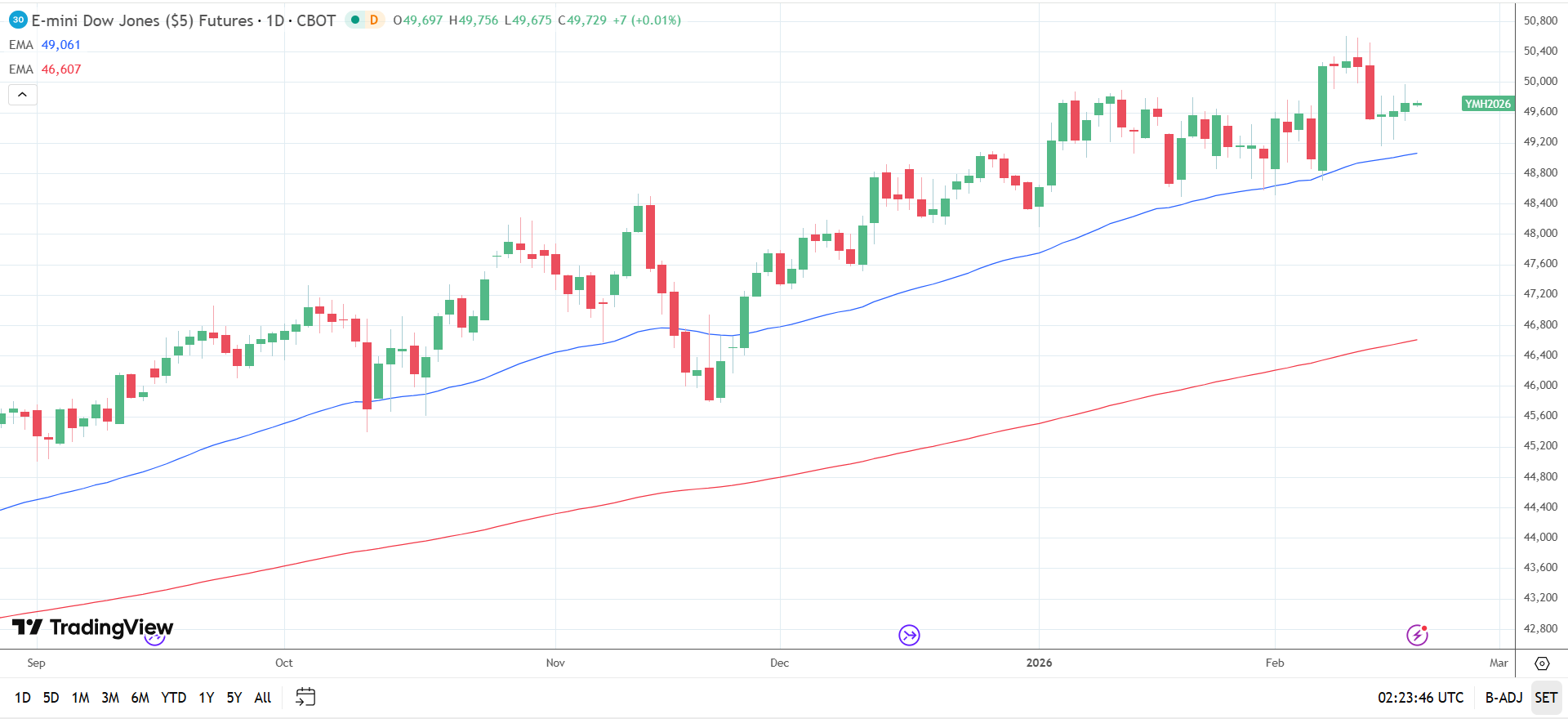
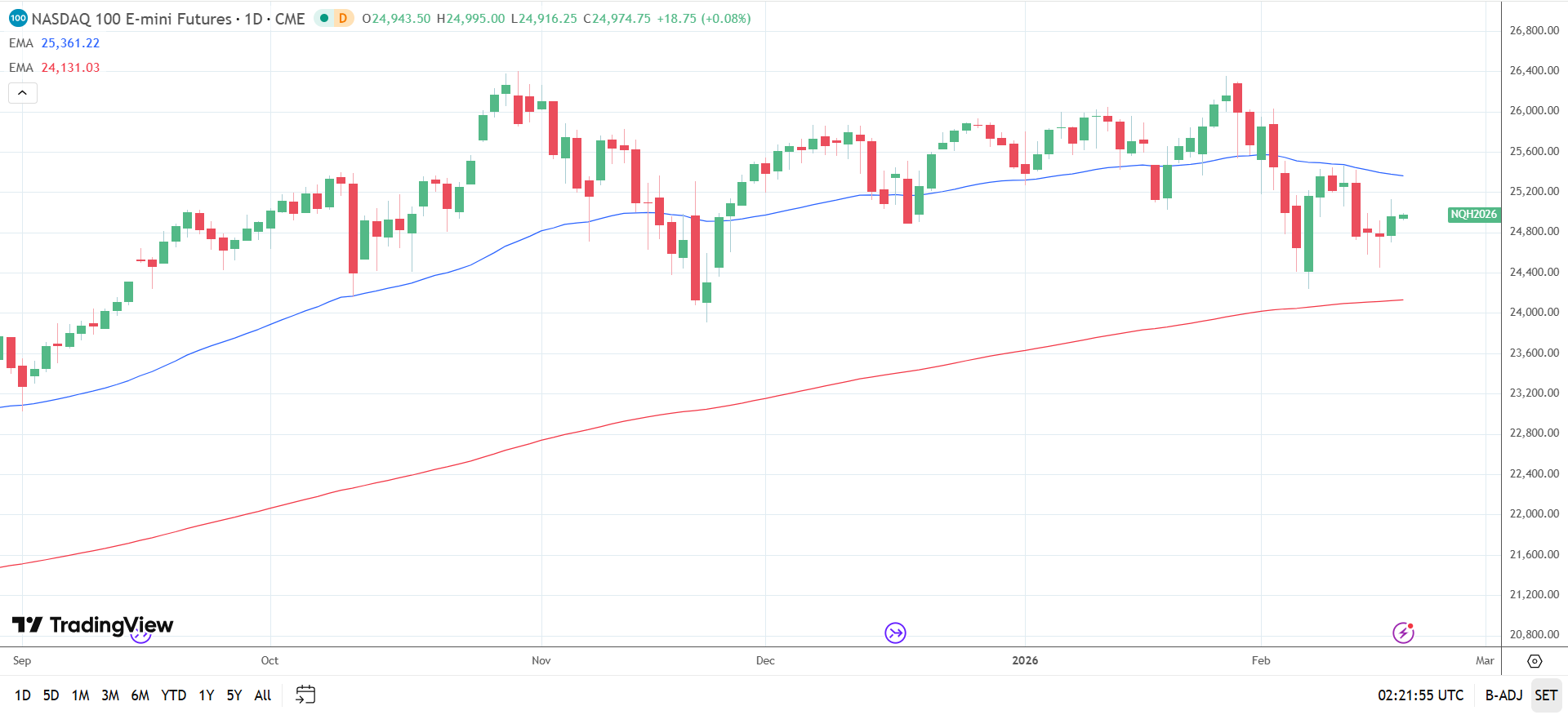
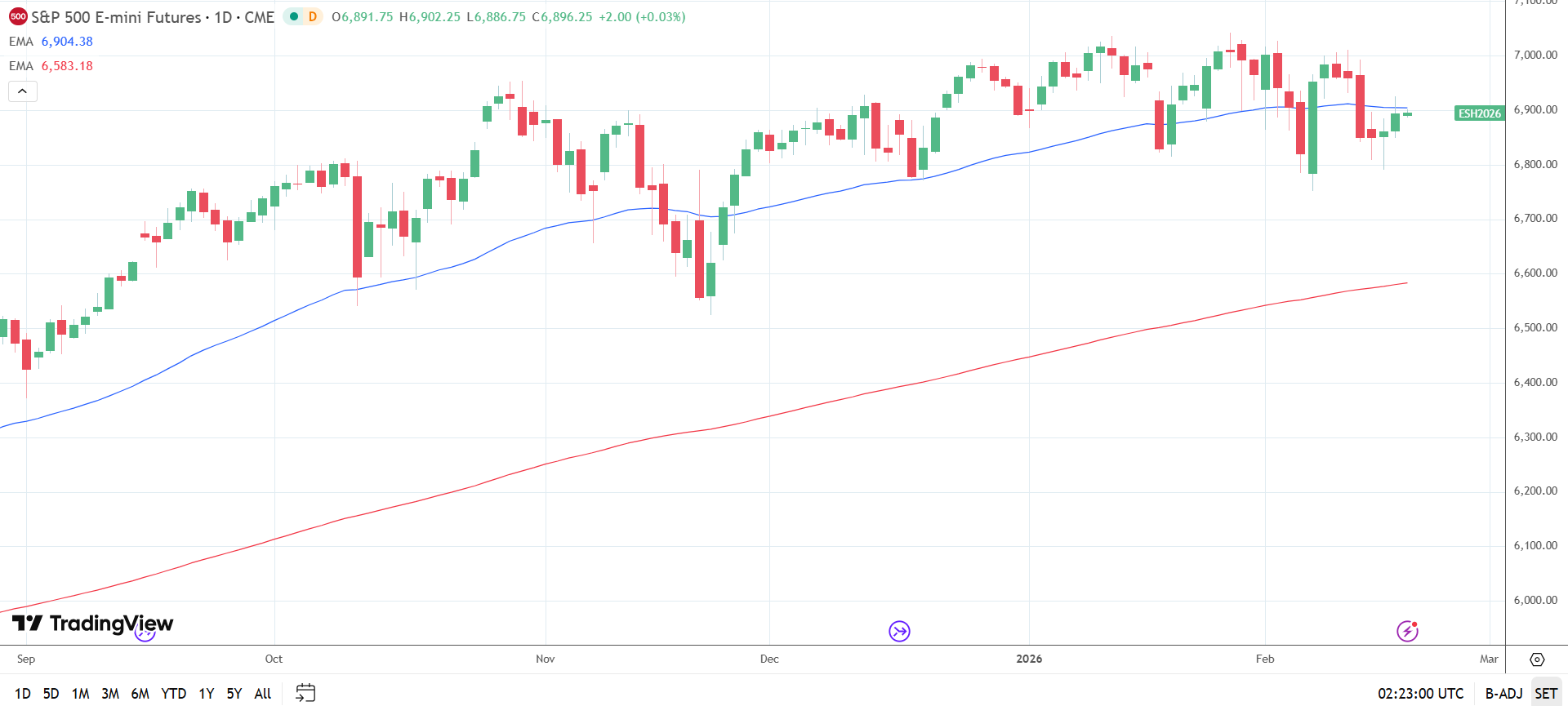
US futures posted modest gains during the Asian session on February 19. The Dow Jones E-mini climbed 7 points, while the Nasdaq 100 E-mini and the S&P 500 E-mini advanced 19 points and 2 points, respectively.
Later in Thursday’s session, US jobless claims will influence risk appetite. Economists expect initial jobless claims to fall from 227k (week ending February 7) to 225k (week ending February 14). Downward trends in claims would indicate a resilient US labor market, supporting a more hawkish Fed rate path. Delays to rate cuts would leave borrowing costs elevated, affecting corporate profits and stock valuations.
Beyond the data, traders should closely monitor FOMC members’ speeches following Wednesday’s FOMC Minutes. Growing support for a June rate cut after softer US inflation would boost demand for risk assets. For context, Committee members supported a rate cut if inflation cooled. At the time, Committee members only had access to December’s CPI Report. In January, headline US inflation fell from 2.7% to 2.4%, while core inflation eased from 2.6% to 2.5%.
According to the CME FedWatch Tool, the probability of a June Fed cut increased from 58.6% on February 11 to 61.2% on February 18 because of softer inflation numbers. Currently, markets expect two Fed rate cuts in 2026, with a year-end target rate of 3.00% -3.25%.
Key Technical Levels for Dow Jones, Nasdaq 100, and S&P 500
Despite the morning gains, the Nasdaq 100 E-mini and the S&P 500 E-mini remained below their 50-day EMAs, while holding above their 200-day EMAs. The EMA positions signaled a bearish near-term but bullish longer-term outlook. Meanwhile, the Dow Jones E-mini traded above its 50-day and 200-day EMAs, indicating a bullish bias that aligns with favorable fundamentals.
Near-term trends will hinge on US economic data, central bank rhetoric, and Middle East developments. Key levels to monitor include:
Dow Jones
- Resistance: 50,000, the February 10 record high of 50,611, and then 51,000.
- Support: the 50-day EMA (49,061), and then 48,500.
Nasdaq 100
- Resistance: 25,000, the 50-day EMA (25,361), and then the October 30 record high of 26,399.
- Support: 24,500 and then the 200-day EMA (24,131).
S&P 500
- Resistance: the 50-day EMA (6,904) and then the January 13 high of 7,036.
- Support: 6,750 and then the 200-day EMA (6,583).
Outlook: Fed Rate Cut Bets Support Bullish Sentiment
In my opinion, the short-term price outlook remains cautiously bullish. Meanwhile, softer inflation and ongoing bets on an H1 2026 Fed rate cut reaffirm the bullish medium-term outlook. These favorable fundamentals align with longer-term technicals for US stock futures.
However, several events would likely derail the bullish medium-term outlook, including:
- A full-blown US-Iran conflict.
- The Bank of Japan declares a higher-than-expected neutral interest rate (hawkish: potentially 1.5%-2.5%). Narrowing rate differentials could trigger a yen carry trade unwind as seen in mid-2024. Reduced liquidity would weigh on US risk assets. Such an event would invalidate the cautiously bullish short-term outlook.
- US economic indicators and the Fed dampen rate cut bets.
Conclusion: Bullish Bias Remains Intact
In summary, lingering bets on multiple Fed rate cuts in 2026 and a cautiously hawkish BoJ reaffirm the medium-term outlook for US stock futures. A surprise BoJ or Fed hawkish shift would likely weigh on sentiment. Crucially, expectations of multiple Fed rate cuts are likely to hinge on an H1 2026 rate cut. This week’s Personal Income and Outlays Report and the Services PMI are likely to be key for market trends.
Despite the ongoing risk of yen carry trade unwinds and a potential US-Iran conflict, US stock futures may reach new highs if the Fed signals an H1 2026 rate cut. Lower borrowing rates would increase liquidity, offsetting yen carry trade unwind drains, supporting a bullish longer-term outlook.
Follow our live coverage and consult the economic calendar for real-time market updates.