



US stock futures were steady during the Asian session on Friday, February 20, but faced a potentially volatile end to the week. Markets remained cautious over rising tensions in the Middle East.
US President Trump declared a deadline for Iran to agree to a deal, sending WTI crude oil to a 7-month high. Asian indices faced heavy selling pressure, underscoring market tensions.
Meanwhile, Japanese inflation cooled sharply in January, dampening bets on a Bank of Japan rate hike, bolstering demand for US equity futures.
While markets are likely to remain exposed to rising geopolitical risks, expectations of an H1 2026 Fed rate cut continue to support a bullish medium-term outlook for US stock futures. Later on Friday, key US data will influence sentiment toward the Fed’s policy stance and risk appetite.
Below, I’ll outline the key market drivers, the medium-term outlook, and the technical levels traders should watch.
US-Iran Developments Test Risk Sentiment
Overnight, US President Trump reportedly set an ultimatum for Iran to reach a deal over its nuclear program or face the consequences. Regarding the timeline to reach a deal, the US President stated:
“You’ll be finding out over the next probably 10 days. I would think that would be enough time, 10, 15 days, pretty much maximum.”
The threat of a full-blown US-Iran conflict sent WTI crude oil to $66.8, its highest level since August 2025. In June 2025, WTI crude soared from $63 levels to a high of $75.8 in response to Israel’s military strikes against Iran.
Developments in the Middle East will remain key to near-term price trends for US stock futures. Further escalation into a broader Middle East conflict could challenge the bullish medium-term outlook for US index futures.
Dow Jones Price Forecast
Every new Dow Jones analysis as it publishes, today's technical signal and key levels, live price — on one page.
See all Dow Jones forecasts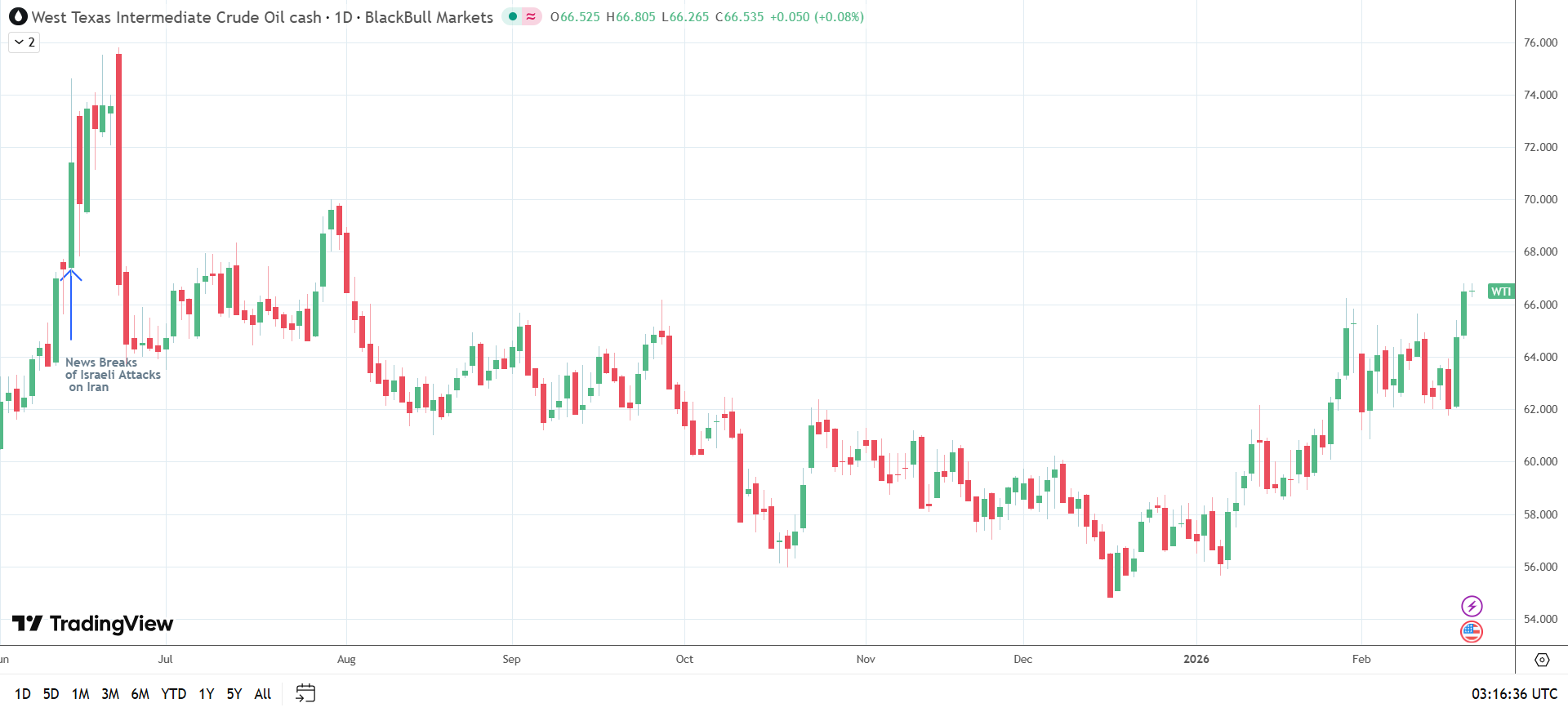
Japanese Inflation Cools Sharply, Challenging BoJ Rate Hike Bets
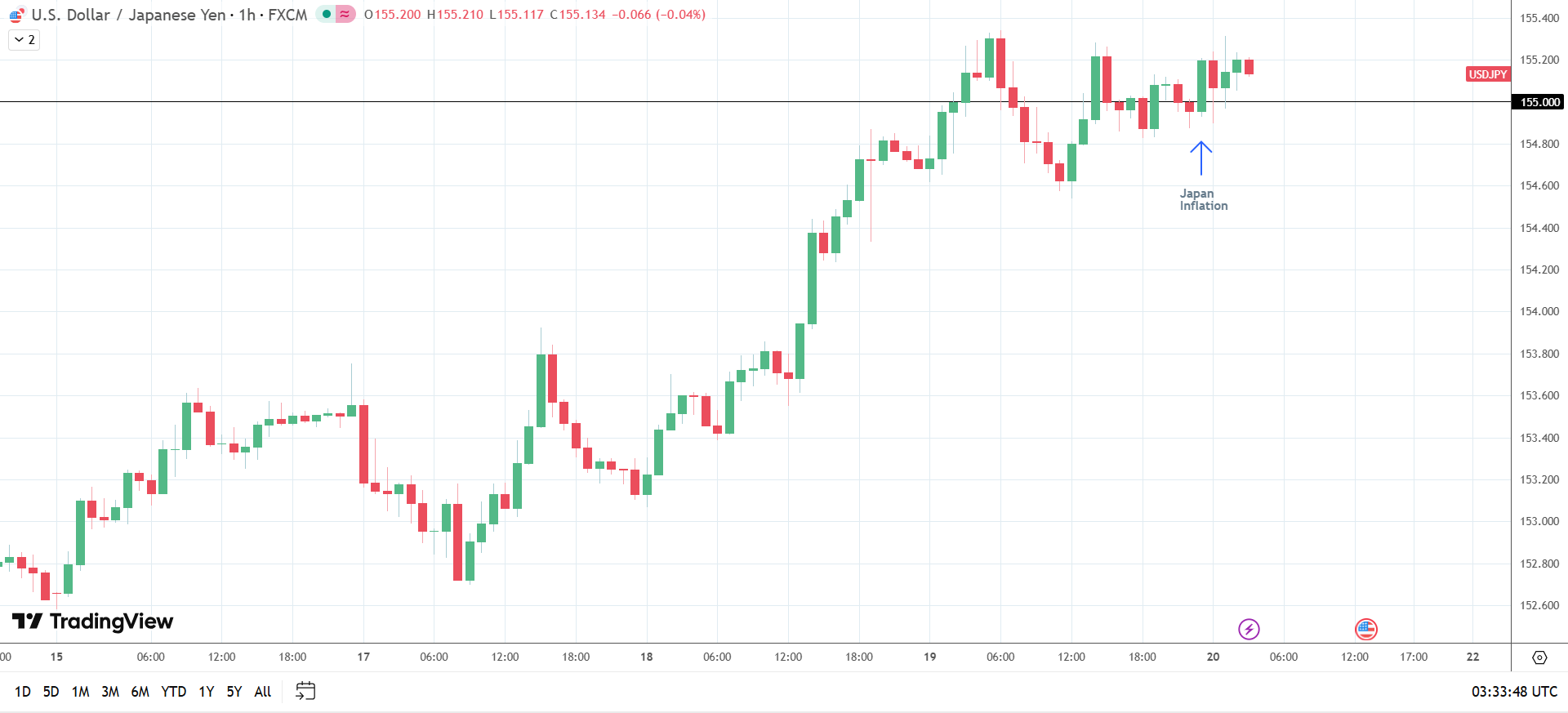
While developments in the Middle East remain key for risk assets, Japanese inflation data tempered bets on an April Bank of Japan rate hike, sending USD/JPY higher. Headline inflation plunged from 2.1% in December to 1.5% in January, while core inflation dropped from 2.4% to 2.0%, the BoJ’s inflation target.
Waning expectations of an April BoJ rate hike sent USD/JPY to a high of 155.313. Despite the weaker yen, the Nikkei 225 slid 1.23% in morning trading, reflecting investor caution ahead of the weekend.
US Economic Calendar to Spotlight the Fed
US futures posted modest gains during the Asian session on February 20. The Dow Jones E-mini advanced 44 points, while the Nasdaq 100 E-mini and the S&P 500 E-mini climbed 42 points and 11 points, respectively.
Later in Friday’s session, Services PMI and the Personal Income and Outlays report will affect market bets on a June Fed rate cut. A pickup in service sector activity and an upswing in the Core PCE Price Index would temper expectations of a June Fed rate cut. However, traders should consider the personal income and spending figures. Lower income and weaker spending would signal a softer inflation outlook.
While markets are typically sensitive to the Personal Income and Outlays report, the figures are for December, which may limit market volatility. However, the Services PMI will be key, with traders also needing to consider output price trends, a key contributor to US inflation.
Beyond the data, traders should closely monitor FOMC members’ reactions to the US economic data. Support for a June rate cut after softer US inflation would lift demand for US stock futures.
According to the CME FedWatch Tool, the probability of a June Fed cut fell from 62.3% on February 12 to 58.0% on February 20. Nevertheless, markets still expect two Fed rate cuts in 2026, with a year-end target rate of 3.00%-3.25%, key to the bullish medium- to longer-term outlook for US stock futures.
Key Technical Levels for Dow Jones, Nasdaq 100, and S&P 500
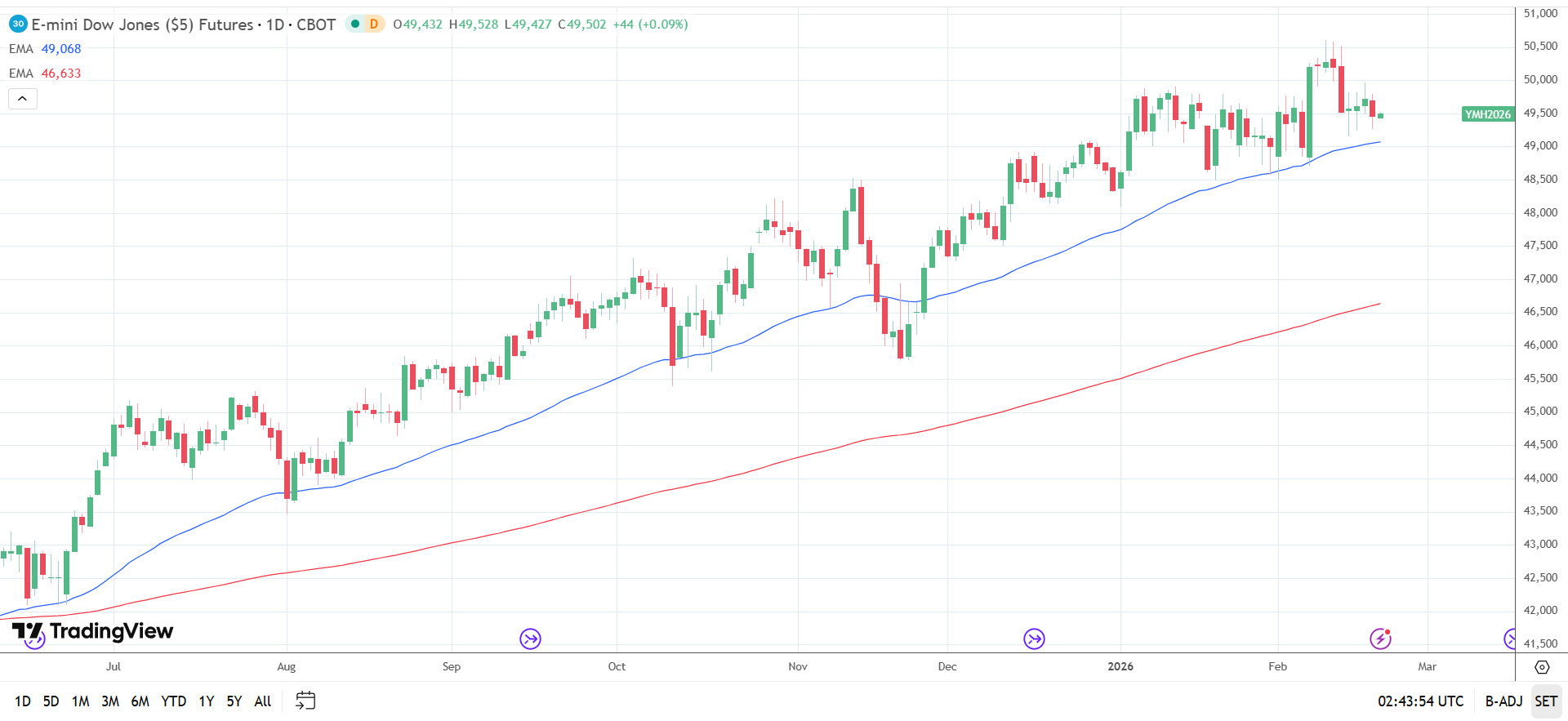
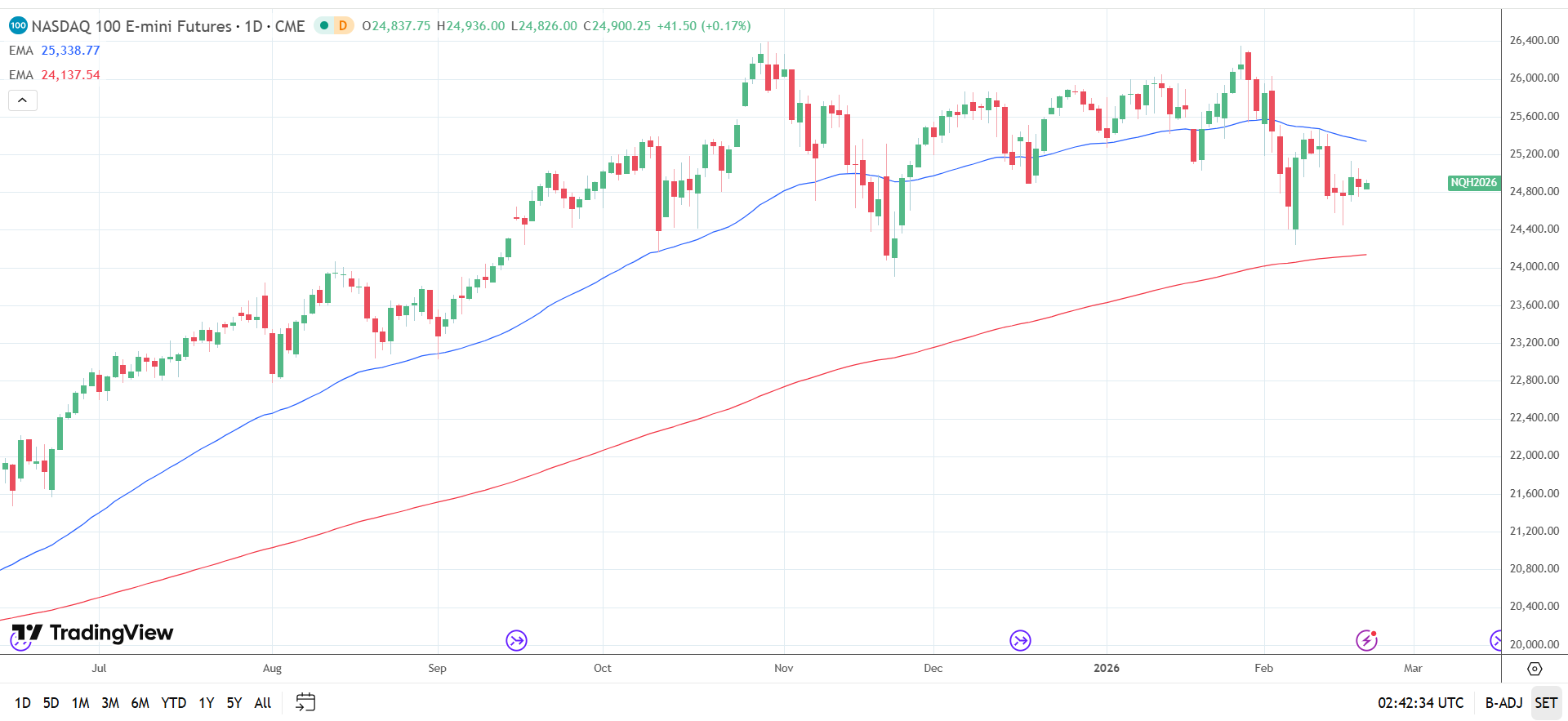
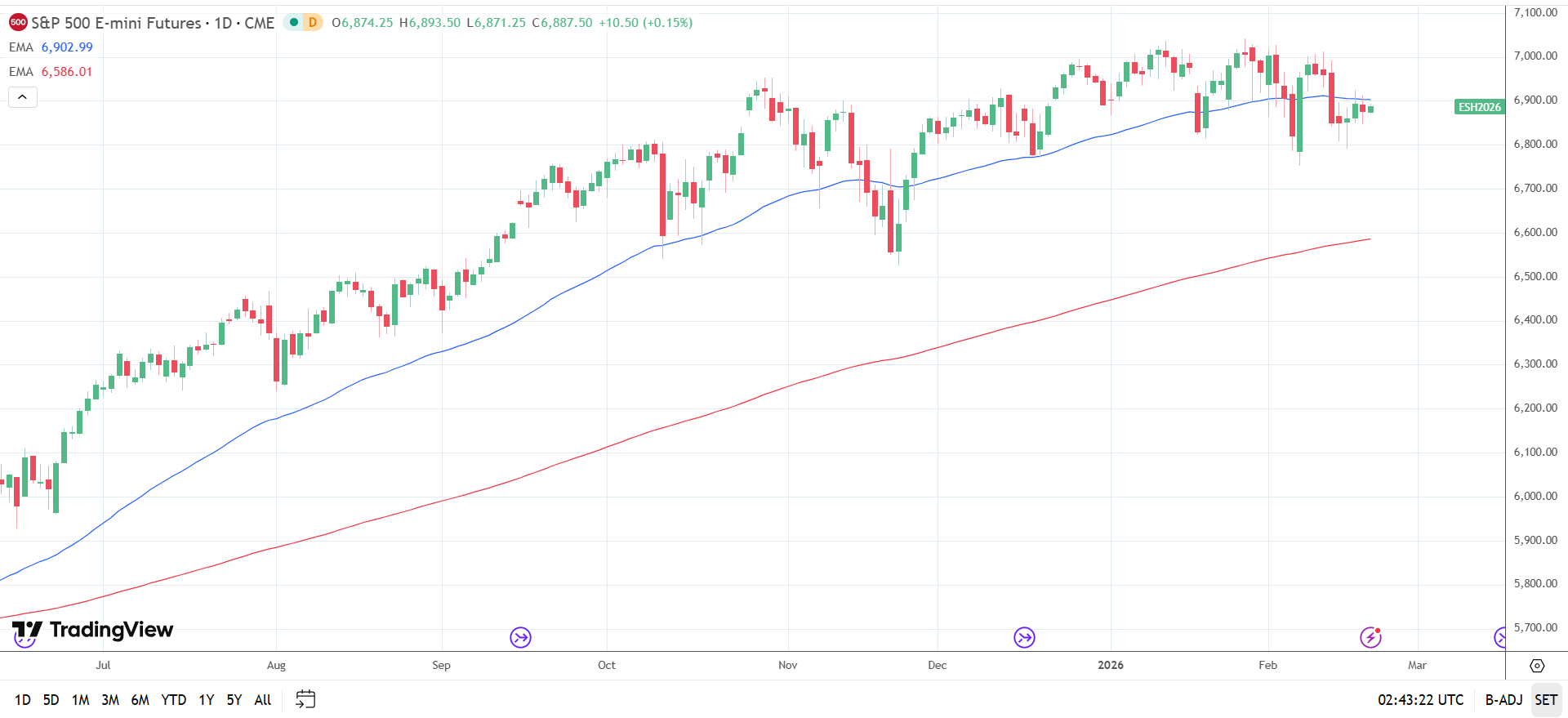
Despite the morning gains, the Nasdaq 100 E-mini and the S&P 500 E-mini remained below their 50-day EMAs, while holding above their 200-day EMAs. The EMA positions indicated a bearish near-term but bullish longer-term outlook. Meanwhile, the Dow Jones E-mini held above its 50-day and 200-day EMAs, signaling a bullish bias that aligns with favorable fundamentals.
Near-term trends will hinge on the upcoming US economic indicators, central bank chatter, and Middle East developments. Key levels to monitor include:
Dow Jones
- Resistance: 50,000, the February 10 record high of 50,611, and then 51,000.
- Support: the 50-day EMA (49,068), and then 48,500.
Nasdaq 100
- Resistance: 25,000, the 50-day EMA (25,339), and then the October 30 record high of 26,399.
- Support: 24,500 and then the 200-day EMA (24,138).
S&P 500
- Resistance: the 50-day EMA (6,903) and then the January 13 high of 7,036.
- Support: 6,750 and then the 200-day EMA (6,586).
Outlook: US Economic Data Key to Bullish Sentiment
In my opinion, the short-term price outlook remains cautiously bullish. Meanwhile, ongoing bets on an H1 2026 Fed rate cut reinforce the bullish medium-term outlook. These favorable fundamentals align with longer-term technicals for US stock futures.
However, several events would likely derail the bullish medium-term outlook, including:
- A US-Iran conflict.
- The Bank of Japan announces a higher-than-expected neutral interest rate (hawkish: potentially 1.5%-2.5%). Narrowing rate differentials could trigger a yen carry trade unwind as seen in mid-2024. Reduced liquidity would weigh on US risk assets. Such an event would invalidate the cautiously bullish short-term outlook.
- US economic data and the Fed cool rate cut bets.
Conclusion: Bullish Bias Remains Intact
In summary, lingering expectations of multiple Fed rate cuts in 2026 and a cautiously hawkish BoJ reinforce the medium-term outlook for US stock futures. A surprise BoJ or Fed hawkish pivot would likely weigh on sentiment. Importantly, expectations of multiple Fed rate cuts could hinge on an H1 2026 rate cut, underscoring the significance of today’s data for risk assets.
Despite the ongoing risk of yen carry trade unwinds and a potential US-Iran conflict, US stock futures may target new highs if the Fed indicates an H1 2026 rate cut. Lower borrowing rates would boost liquidity, countering yen carry trade unwind drains, supporting a bullish longer-term outlook.
Follow our Live Coverage and consult the economic calendar for real-time market updates.