
Softer Japanese inflation sent the Dow Jones E-mini and S&P 500 E-mini to record highs on Friday, December 26.
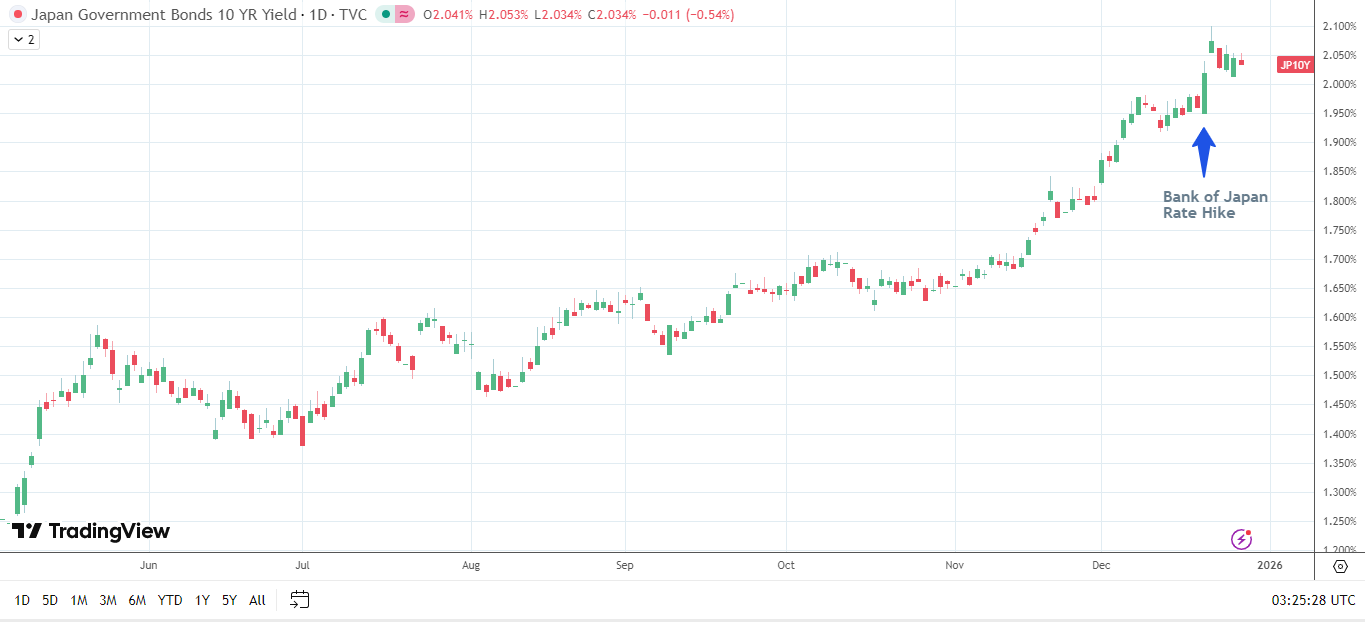
The inflation data pushed 10-year Japanese Government Bond (JGB) yields lower, boosting demand for risk assets. Tokyo’s headline inflation rate fell to the BoJ’s 2% target, indicating a lower Bank of Japan neutral interest rate. The yen weakened on the day, sending USD/JPY higher, fueling yen carry trades into US dollar assets.
US stock futures were steady in morning trading, with a less hawkish BoJ policy stance supporting a bullish price outlook.
Below, I’ll outline the key market drivers, the medium-term outlook, and the key technical levels traders should watch.

Japanese Economic Data Cool BoJ Rate Hike Bets
Tokyo’s annual inflation rate fell from 2.8% in November to 2.0% in December, dropping to the BoJ’s 2% target. However, the more influential and so-called core-core inflation rate eased to 2.6%, holding well above the 2% target. Nevertheless, softer core-core inflation and the sharp drop in headline inflation eased BoJ rate hike bets, weighing on the yen.
10-year Japanese Government Bond (JGB) yields fell in the morning session, sending USD/JPY up 0.22% to 156.231. A weaker yen boosts yen carry trades into risk assets. The Nikkei 225 rallied 1.01%, lifting sentiment. A less hawkish BoJ rate path supports a bullish short- to medium-term outlook for US equity futures.
Dow Jones Price Forecast
Every new Dow Jones analysis as it publishes, today's technical signal and key levels, live price — on one page.
See all Dow Jones forecasts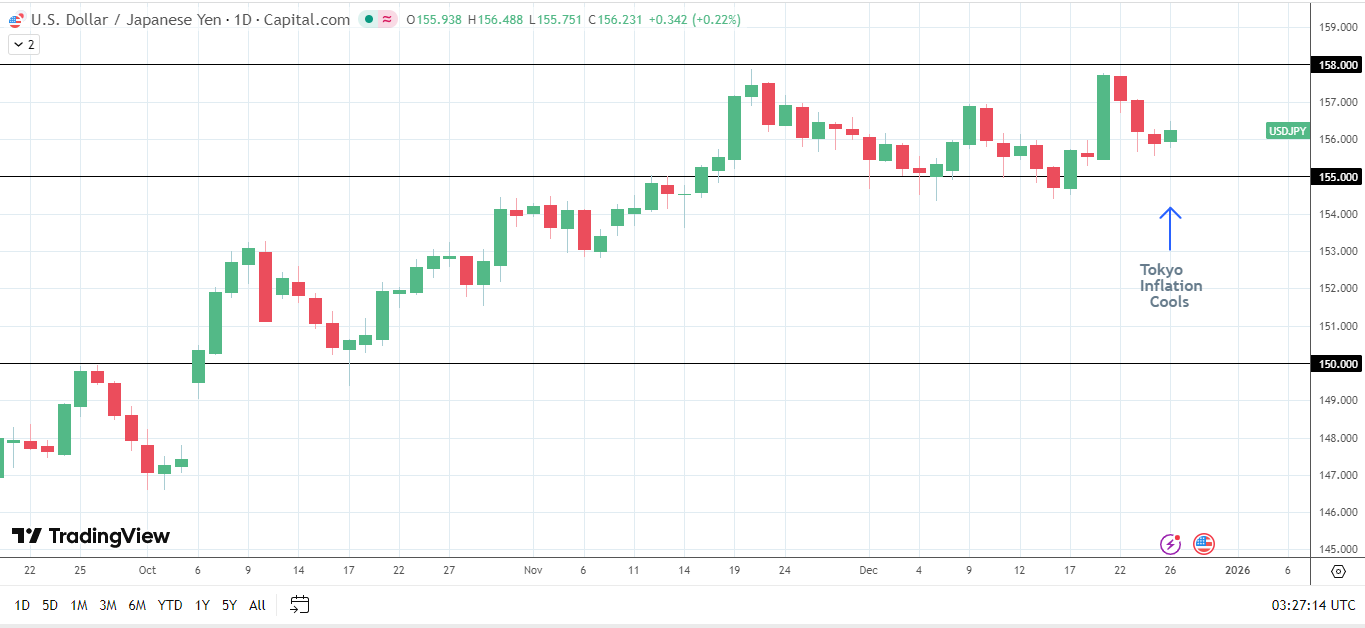
Fed Speakers in Focus
US futures saw mixed performances during the Asian morning session on Friday, December 26. The Nasdaq 100 E-mini and the S&P 500 E-mini gained 18 points and 1 point, respectively, while the Dow Jones E-mini slipped 18 points.
Later on Friday, Fed speakers will fuel speculation about a March Fed rate cut amid renewed demand for AI-linked stocks.
Growing calls for a March Fed rate cut to bolster the US labor market after softer US inflation would raise bets on a March rate cut. A more dovish policy outlook would signal lower borrowing costs and rising profits, boosting demand for high-capex company stocks.
According to the CME FedWatch Tool, the chances of a March Fed rate cut dropped from 48.7% on December 24 to 47.8% on December 26. However, hopes for a new Fed Chair favoring lower interest rates support a more dovish rate path.
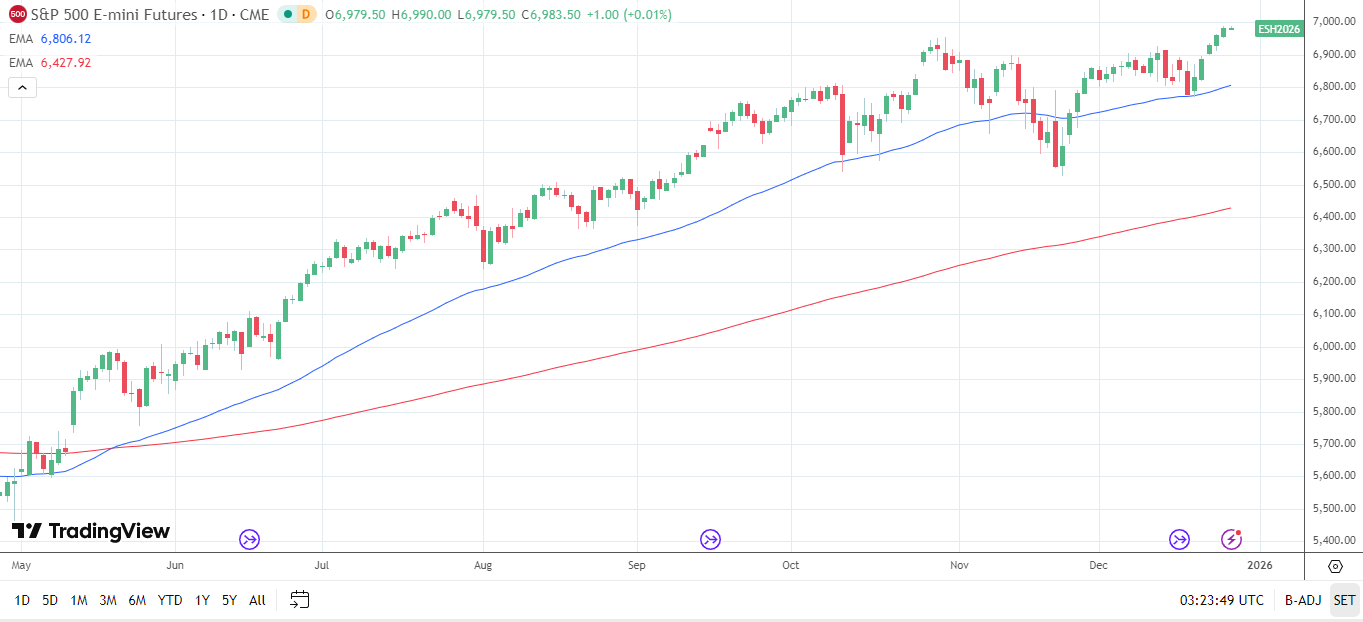
The current market dynamics have fueled demand for US stock futures, eyeing a six-day winning streaks, on December 26. Notably, the Dow Jones E-mini and the S&P 500 E-mini climbed to new all-time highs in morning trading, underscoring the bullish sentiment.
Key Technical Levels for Dow Jones, Nasdaq 100, and S&P 500
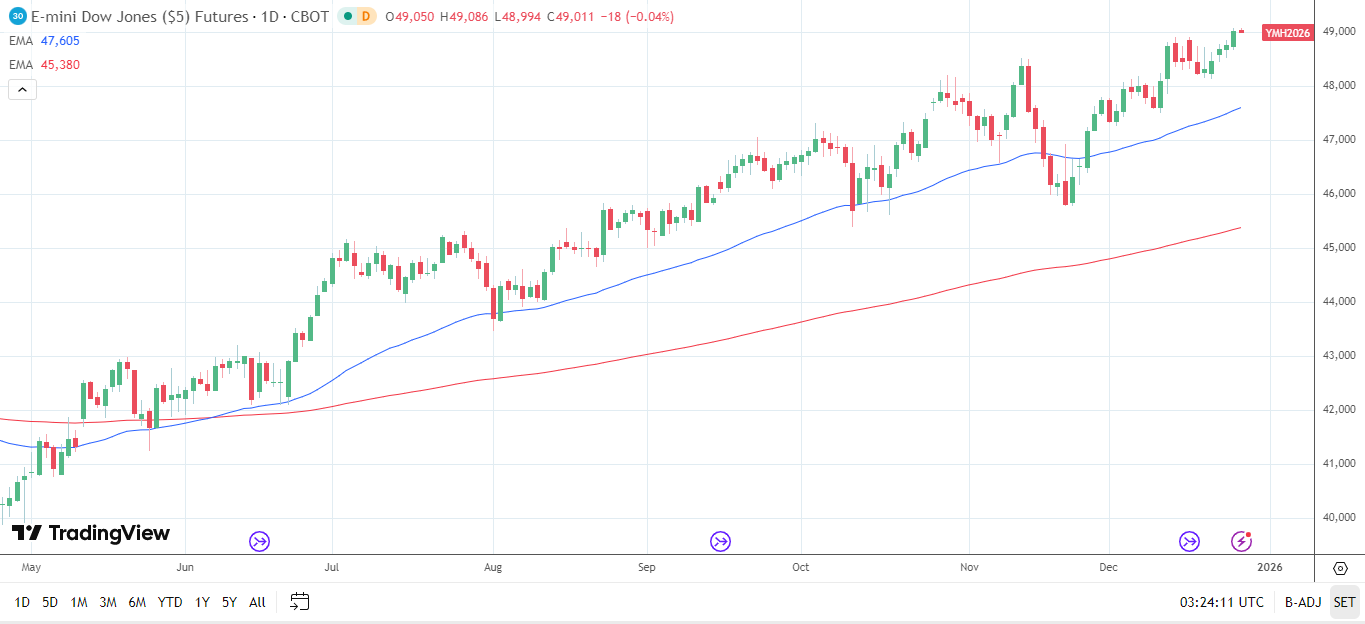
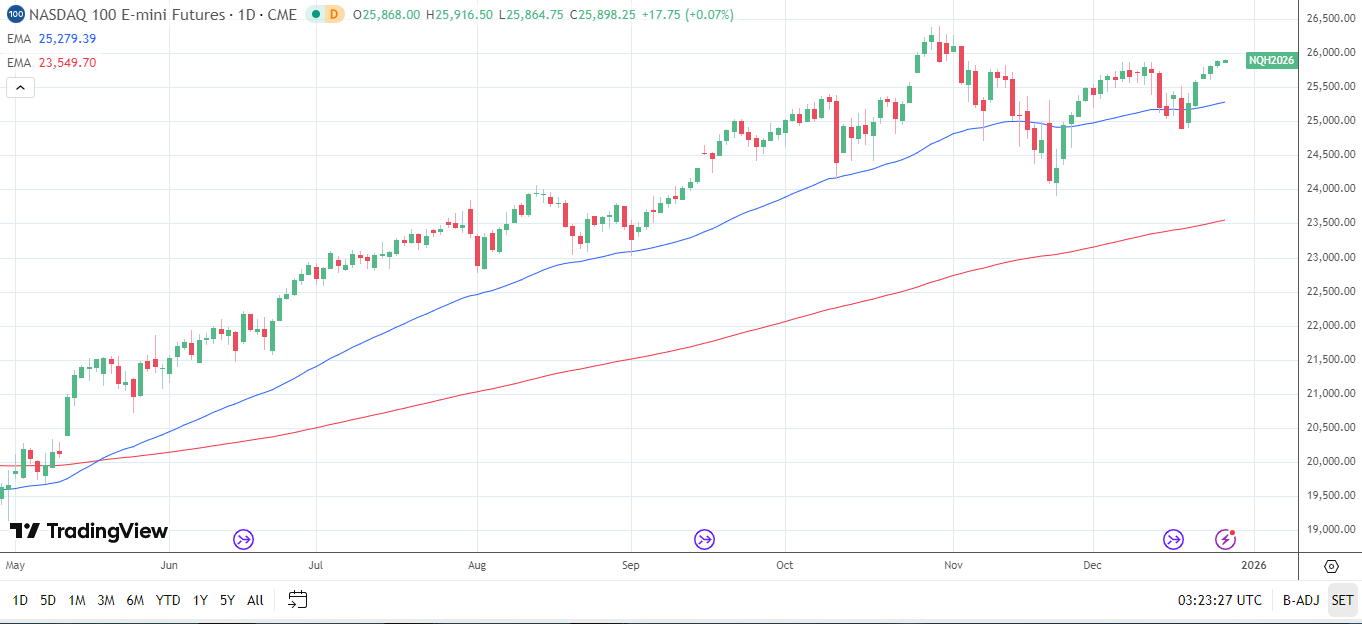
The five-day winning streak through to Wednesday, December 24, left the Dow Jones E-mini, the Nasdaq 100 E-mini, and the S&P 500 E-mini trading above their 50-day and 200-day EMAs. The EMAs signaled a positive short- to medium-term bias, aligning with the constructive outlook.
Near-term trends will hinge on US data, Fed rhetoric, and Bank of Japan forward guidance. Key levels to monitor include:
Dow Jones
- Resistance: The December 26 record high of 49,086, and then 49,500.
- Support: 48,500 and then the 50-day EMA (47,605).
Nasdaq 100
- Resistance: 26,000 and then the October 30 record high of 26,399.
- Support: the 50-day EMA (25,279) and then 24,500.
S&P 500
- Resistance: the December 26 record high of 6,990, and then 7,000.
- Support: the 50-day EMA (6,806) and then 6,500.
Bullish Medium-Term Outlook Hinges on Fed and BoJ Cues
In my opinion, the short-term outlook remains bullish given the alignment of fundamentals and technical indicators. Meanwhile, expectations of an incoming Fed Chair supporting loose monetary policy reinforce the positive medium-term outlook.
This week, US President Trump posted on the Truth Social platform:
“I want my new Fed Chairman to lower interest rates if the market is doing well, not destroy the market for no reason whatsoever. […] The United States should be rewarded for SUCCESS, not brought down by it. Anybody that disagrees with me will never be the Fed Chairman!”
Nevertheless, several scenarios would likely unravel the positive medium-term outlook, including:
- BoJ declares a neutral interest rate of between 1.5 and 2.5% and signals multiple rate hikes, triggering a yen carry trade unwind.
- Better-than-expected US data and hawkish Fed chatter temper expectations of a Fed rate cut.
Conclusion: Outlook Bullish
In summary, a strong US economy, expectations of further rate cuts, the AI race, and a less hawkish BoJ reinforce the bullish short- to medium-term outlook for US stock futures.
Meanwhile, traders should closely monitor USD/JPY trends, yen intervention warnings, and the Nikkei 225. Intervention threats and hawkish BoJ rhetoric could drive JGB yields higher and USD/JPY lower, challenging the constructive bias.
This week, Japan’s Finance Minister Satsuki Katayama warned action against excessive forex movements ahead of the inflation figures, sending USD/JPY to a low of 155.553.
Key levels include a USD/JPY break below 150 and 10-year JGB yields climb to the December 22 high of 2.1%. These levels would likely kickstart a Nikkei 225 pullback, spilling over to the US markets.
Despite the risk of further BoJ rate hikes, US stock futures have the potential to break new ground as the year-end approaches.
Follow our live coverage and consult the economic calendar for real-time market updates.