Global markets are bracing for a pivotal policy clash this week, but the real risk may not come from London or Frankfurt—it may come from Tokyo.
Market focus shifted to the upcoming central bank meetings, testing demand for risk assets in the Asian morning session on Thursday, December 18. The Bank of England and the European Central Bank announce interest rate decisions later today. Markets expect the BoE to cut and for the ECB to stand pat.
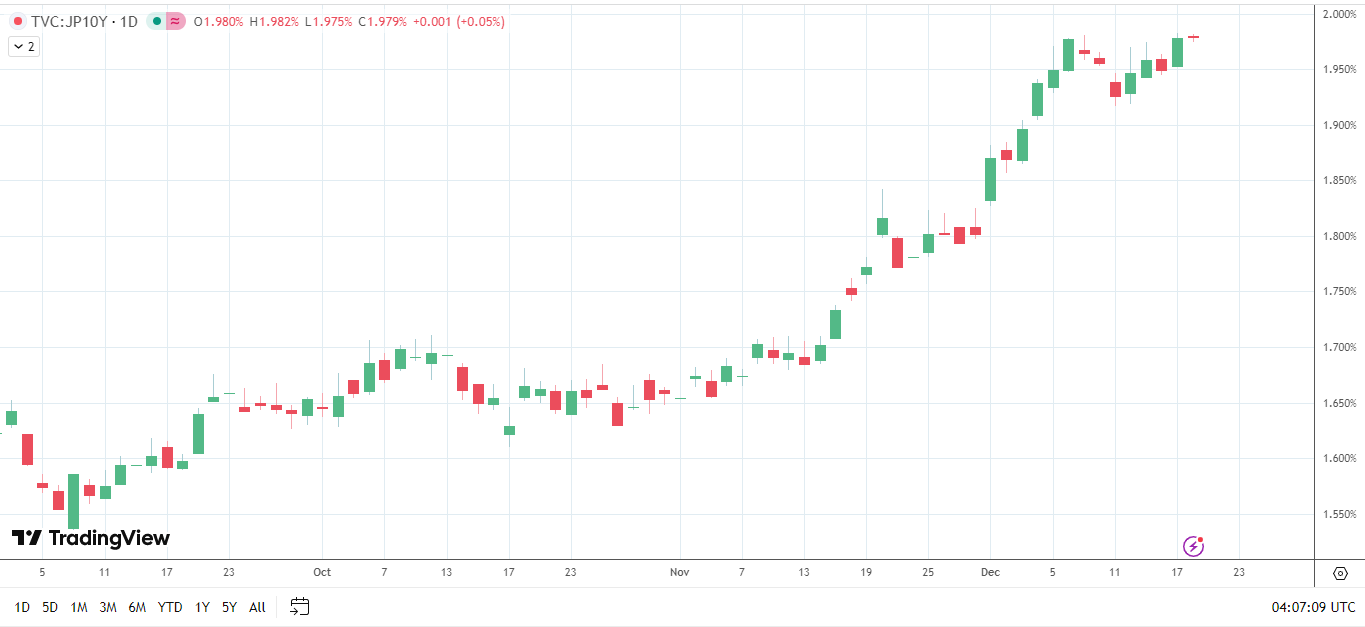
However, Friday’s Bank of Japan interest rate decision will likely have far greater market ramifications. Expectations of a BoJ rate hike and further monetary policy tightening in 2026 have pushed 10-year Japanese Government Bond (JGB) yields to an 18-year high this week. Fears of a yen carry trade unwind have intensified as 10-year JGBs hover near their highest level since April 2007.
A potential BoJ rate hike collided with concerns about US companies’ AI funding costs, challenging hopes for a Santa Rally. Despite the near-term headwinds, the outlook looks brighter for the medium-term.
Below, I’ll outline the key market drivers, the medium-term outlook, and the key technical levels traders should watch.

Bank of Japan Rate Decision Looms
Markets expect the BoJ to raise interest rates by 25 basis points to 0.75% on Friday, December 19. Relative to other economies, a 0.75% interest rate would still be low, supporting yen carry traders, albeit less profitably.
However, the bigger risk is the BoJ’s neutral interest rate announcement. The neutral interest rate is neither accommodative nor restrictive. A higher neutral interest rate would signal multiple rate hikes and a sharply narrower US-Japan rate differential. A marked narrowing in rate differentials would likely trigger a yen carry trade unwind, similar to the mid-2024 event.
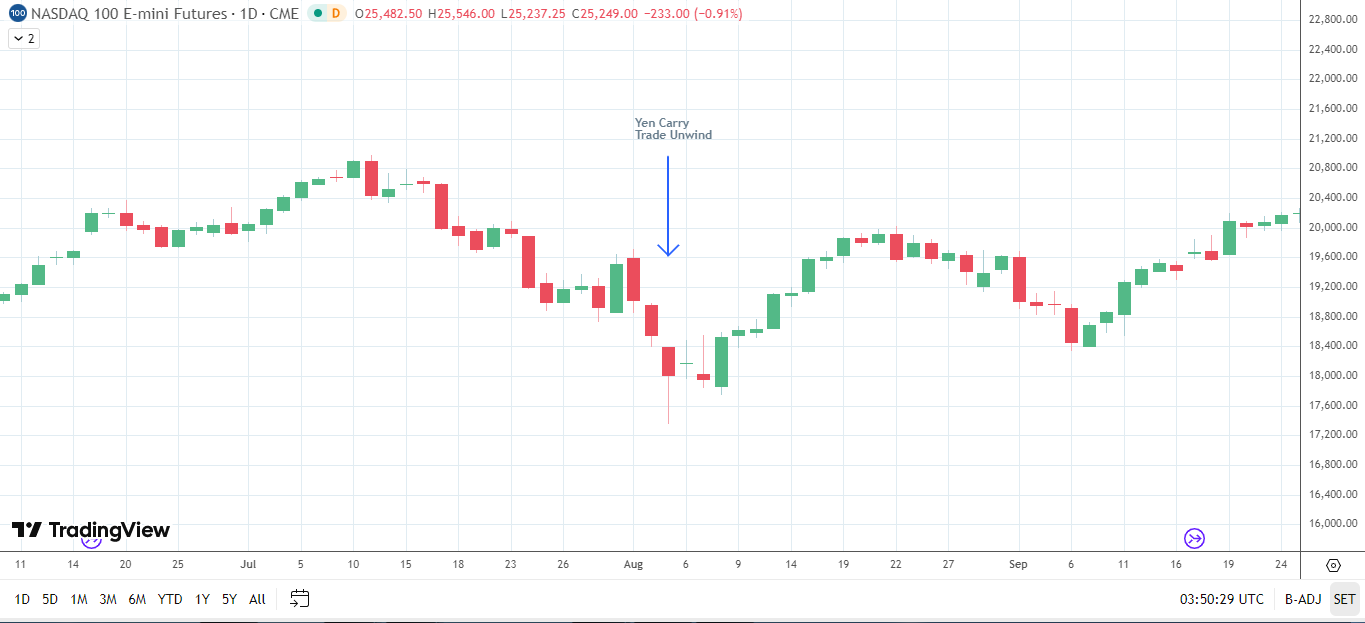
For context, the BoJ cut JGB purchases on July 31, 2024, aligning with market expectations, but spooked markets by unexpectedly raising interest rates to 0.5%. The Nasdaq 100 E-mini futures fell from 19,648 on July 31 to 17,351 on August 5, an 11.7% loss. The risk of market disruption on Friday, December 19, exposes US stock futures to short-term downside risks.
Crucially, USD/JPY has yet to signal a yen carry trade unwind. USD/JPY has fallen 0.24% in the run-up to the BoJ monetary policy decision. By contrast, USD/JPY slid 5.6% in the lead-up to the July 31, 2024, BoJ rate hike and cut to JGB purchases. USD/JPY price trends and 10-year JGB yields are key early indicators of an unwind.
Unlike the market disruption in mid-2024, the Fed’s dot plot signaled a single rate cut in 2026, a less dovish policy stance. The Fed’s policy outlook eased the immediate threat of a yen carry trade unwind, giving US data a greater influence ahead of the BoJ announcement.
Dow Jones Price Forecast
Every new Dow Jones analysis as it publishes, today's technical signal and key levels, live price — on one page.
See all Dow Jones forecasts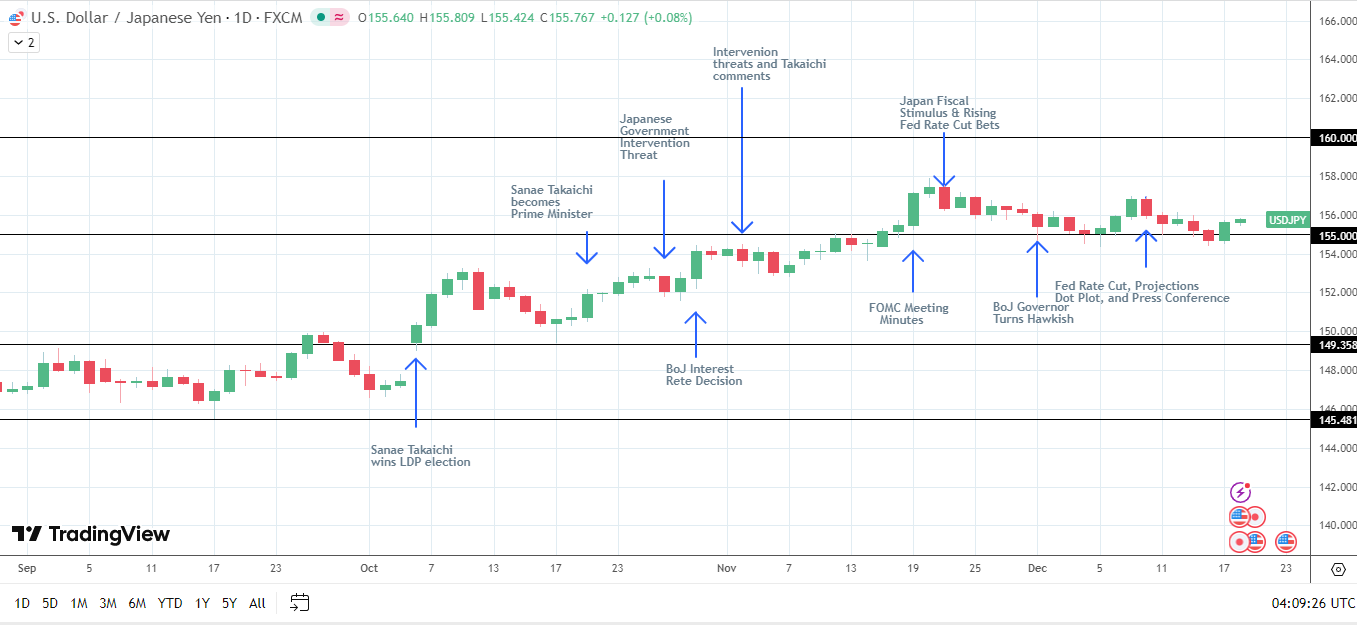
US Inflation to Spotlight the Fed
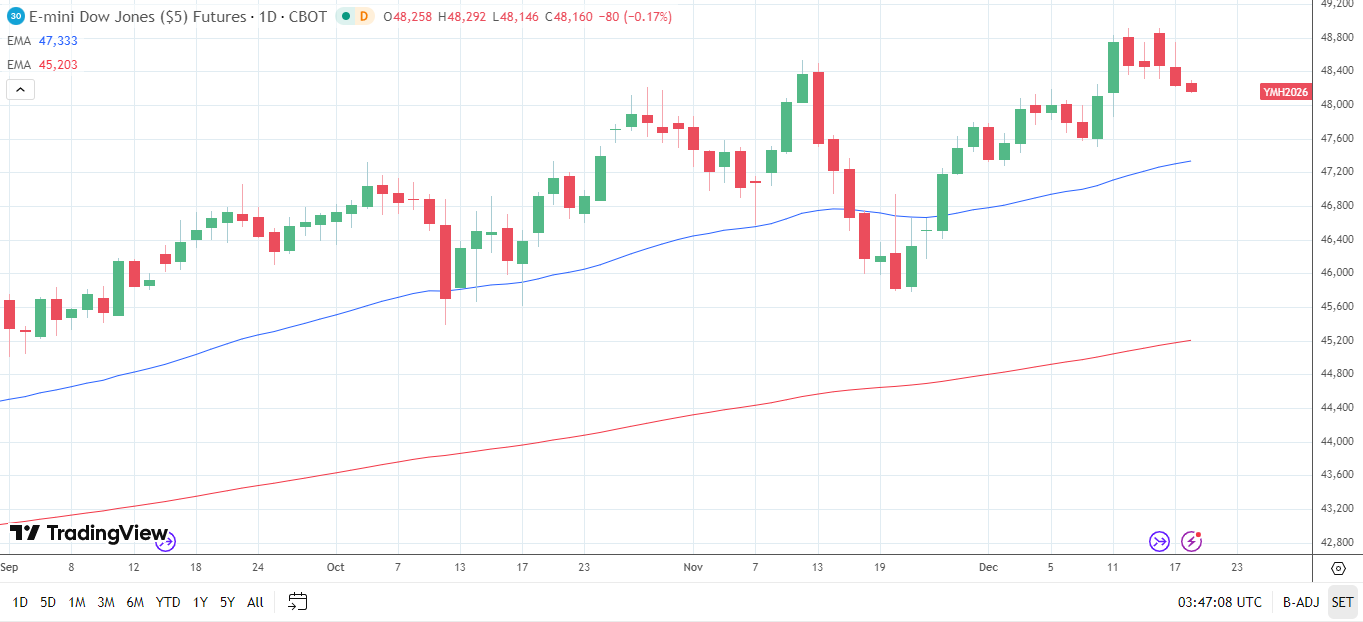
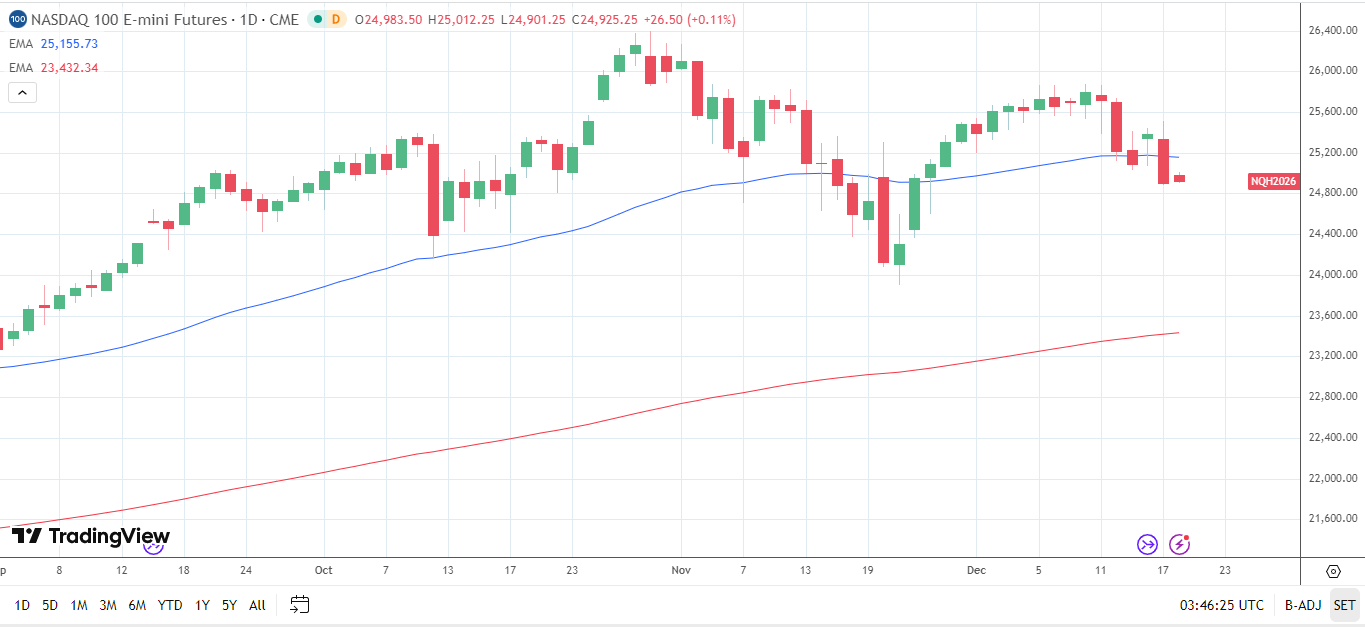
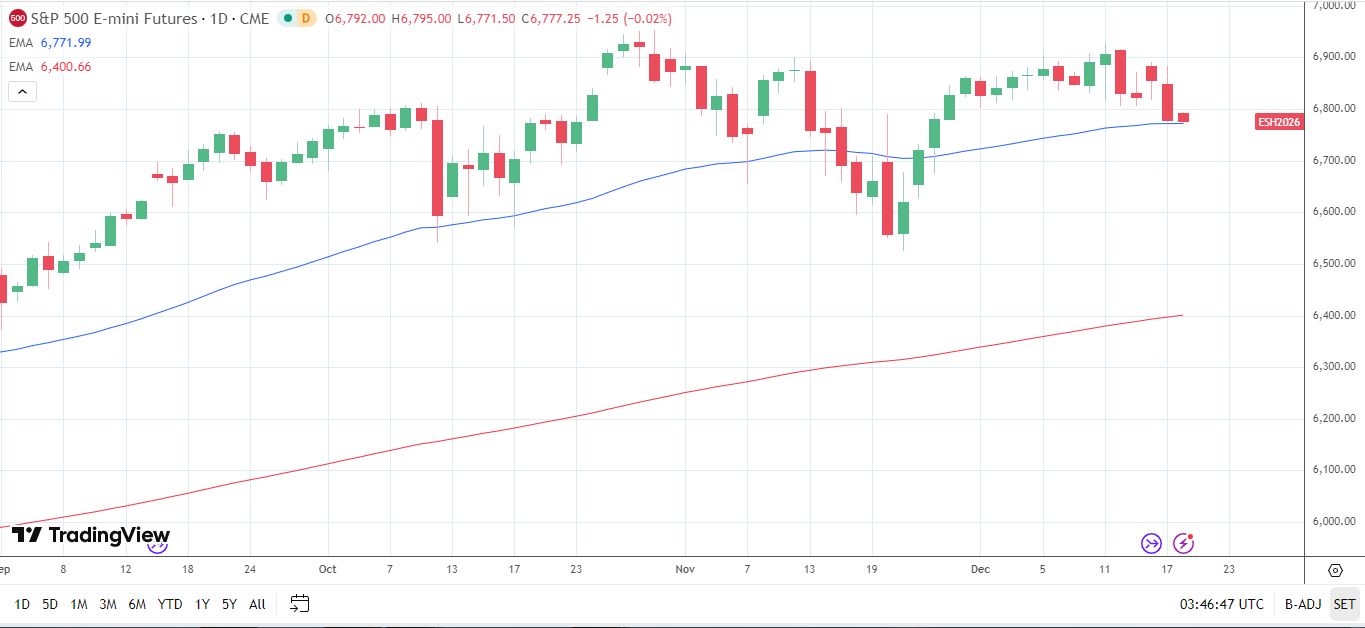
US futures had a mixed Asian morning session on Thursday, December 18. The Dow Jones E-mini and the S&P 500 E-mini fell 80 points and 1 point, respectively, while the Nasdaq 100 E-mini gained 27 points
Later on Thursday, US inflation figures will likely fuel speculation about a March Fed rate cut. Economists forecast the annual inflation rate to rise from 3.0% in September to 3.1% in November. There were no inflation figures for October because of the US government shutdown.
Hotter-than-expected inflation numbers would lower expectations of a March Fed rate cut. A more hawkish Fed rate path would ease risks of a yen carry trade unwind. Nevertheless, higher-for-longer borrowing costs would weigh on buyer demand for high CAPEX shares such as tech stocks.
Rising inflation would support the bearish near-term outlook, while expectations of further Fed rate cuts support a bullish medium-term outlook.
Key Technical Levels for Dow Jones, Nasdaq 100, and S&P 500
Losses from Wednesday and the mixed Thursday session left the Nasdaq 100 E-mini below its 50-day EMA, while above its 200-day EMA. The EMAs indicated a bearish near-term, but a bullish long-term bias. Meanwhile, the Dow Jones E-mini and the S&P 500 E-mini traded above their 50-day and 200-day EMAs, indicating a bullish bias.
Near-term trends will hinge on US inflation data, JGB yields, USD/JPY price trends, and the BoJ monetary policy decision and forward guidance. Key levels to monitor include:
Dow Jones
- Resistance: 48,500, the December 12 record high of 48,917, and then 49,000.
- Support: 48,000, 47,500, and then the 50-day EMA (47,333).
Nasdaq 100
- Resistance: the 50-day EMA (25,156), 25,500, 26,000, and then the October 30 record high of 26,399.
- Support: 24,500 and then 24,000.
S&P 500
- Resistance: the October 30 record high of 6,954, and then 7,000.
- Support: the 50-day EMA (6,772), 6,500, and then 6,250.
Short-Term and Medium-Term Outlook Hinge on Key US Data and BoJ
In my opinion, the short-term outlook has turned bearish given the upcoming US inflation data and BoJ interest rate decision. However, the medium-term outlook remains cautiously bullish amid lingering hopes for a March Fed rate cut. Despite concerns about a BoJ rate hike and a yen carry trade unwind, US-Japan rate differentials are likely to remain attractive, albeit less profitable, lowering the immediate risk of market disruption.
Nevertheless, several scenarios may invalidate the cautiously bullish medium-term outlook, including:
- Bank of Japan declares a 2% neutral rate, signaling multiple rate hikes in 2026 and a sharply narrower US-Japan rate differential.
- Hotter-than-expected US inflation data curbs Fed rate cut bets.
Conclusion: Outlook Cautiously Bullish
In summary, hotter US inflation data and a BoJ rate hike would support a bearish short-term outlook for US stock futures.
However, a cooling US labor market and loss of US economic momentum would signal a more dovish Fed rate path beyond Q1, with the BoJ likely to raise rates slowly, supporting a bullish medium-term outlook.
Over the next 48 hours, traders should closely monitor JGB yields, the USD/JPY, and the Nikkei 225. Their trends are potential warning signals for a yen carry trade unwind.
Key levels include a USD/JPY drop to 150 and 10-year JGBs at 2%, an important level to watch. These levels would likely trigger a sharper Nikkei 225 sell-off, weighing on broader risk sentiment.
Follow our live coverage and consult the economic calendar for real-time market updates.