
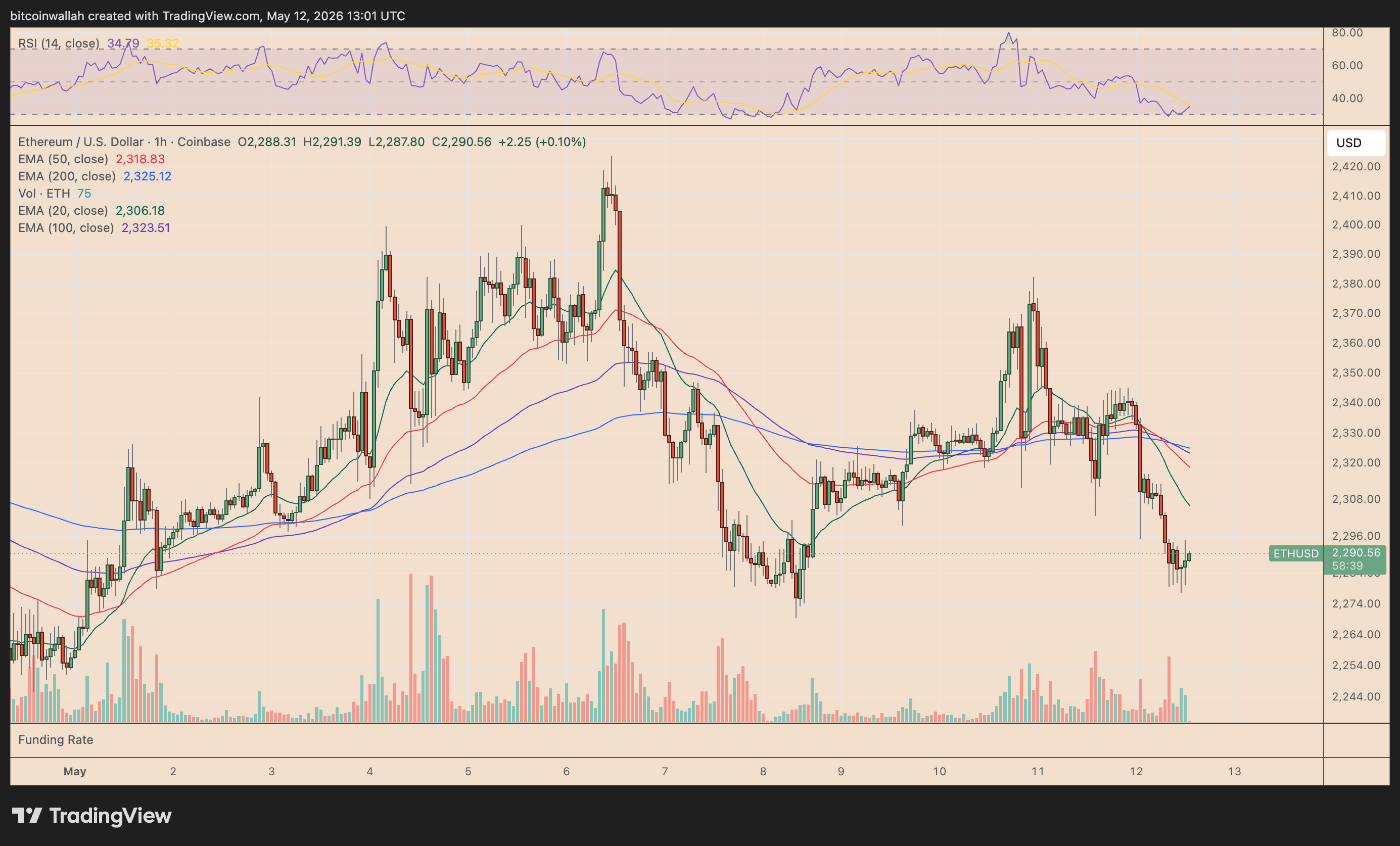
Ethereum’s native token, Ether (ETH), fell 2.25% to below $2,280 on Tuesday after a firm US inflation report reinforced concerns that the Iran war is feeding into the broader economy through higher energy costs and renewed supply-chain stress.

CPI Data Spooks ETH Traders
ETH/USD weakened after April’s core consumer price index came in on the hot side. Headline CPI rose 3.8% from a year earlier, its fastest pace since 2023, and increased 0.6% from the previous month.
Core CPI, which excludes food and energy, climbed 0.4% month over month and 2.8% annually. Part of the increase was attributed to a statistical quirk in the rent component tied to the 2025 government shutdown.
Still, the reading was not a complete surprise. About 40% of economists surveyed by Bloomberg had forecast a core CPI increase of 0.4% or higher, with 28 of 70 estimates landing in that range.
The bigger concern for markets is energy.
The near-freeze in shipping through the Strait of Hormuz, the key passage linking the Persian Gulf to global markets, has severely disrupted fuel supplies and revived fears of another inflation shock.
That has pushed oil prices higher. As of Tuesday, Brent crude was up more than 2.5%.
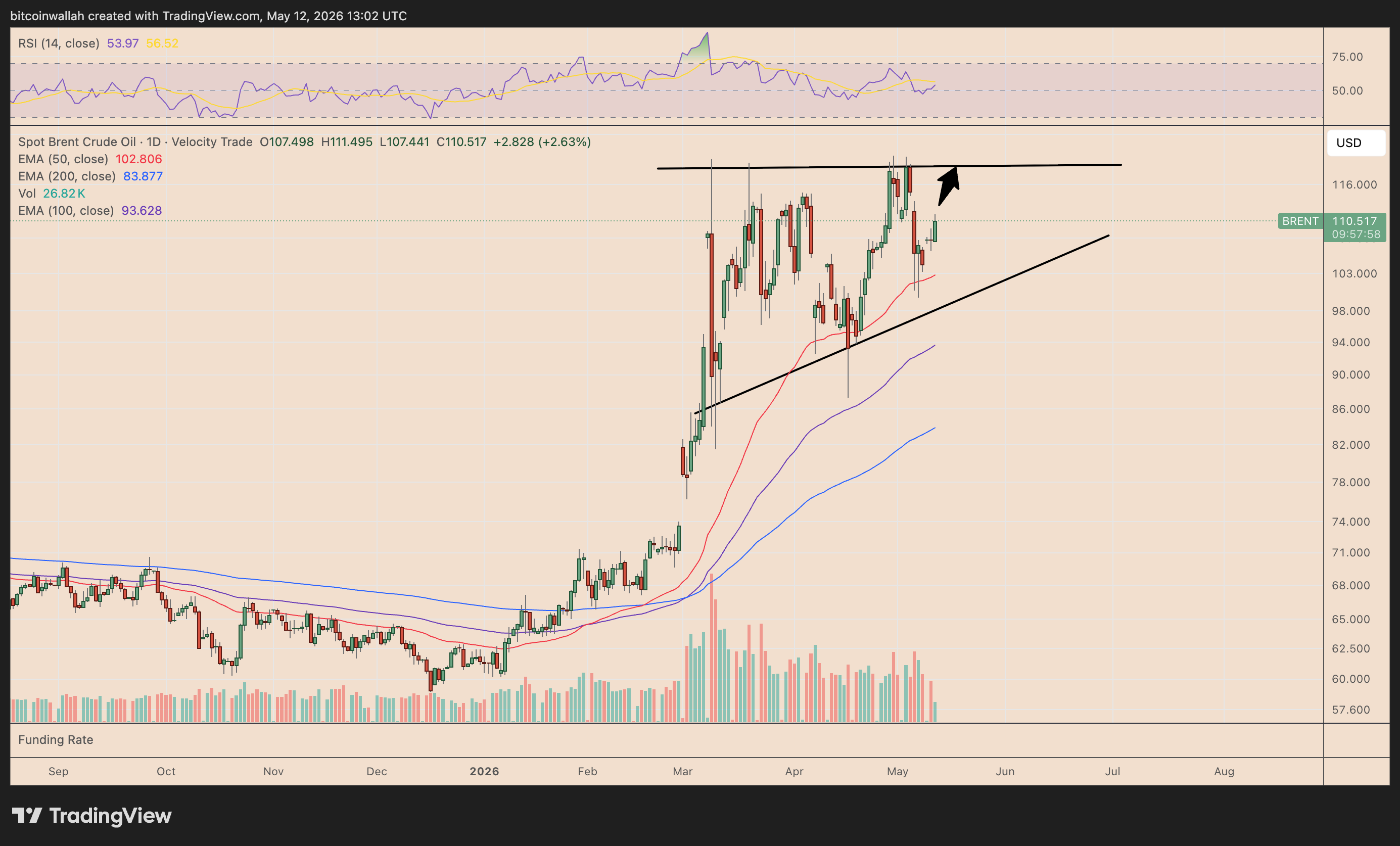
From a technical standpoint, oil’s price looks poised to rally toward $120, a level aligning with the upper boundary of its prevailing ascending triangle range. That adds pressure on risk assets such as Ether.
Ethereum Price Forecast
Every new Ethereum analysis as it publishes, today's technical signal and key levels, live price — on one page.
See all Ethereum forecastsETH Rising Wedge Breakdown Risks Deeper Pullback
ETH/USD was trading just above its 50-day exponential moving average (50-day EMA) around $2,275 on Tuesday, a level that has acted as short-term dynamic support throughout Ether’s recent rebound.
However, the broader structure still resembles a rising wedge, a bearish reversal pattern formed as price climbs within converging upward-sloping trendlines while momentum weakens.
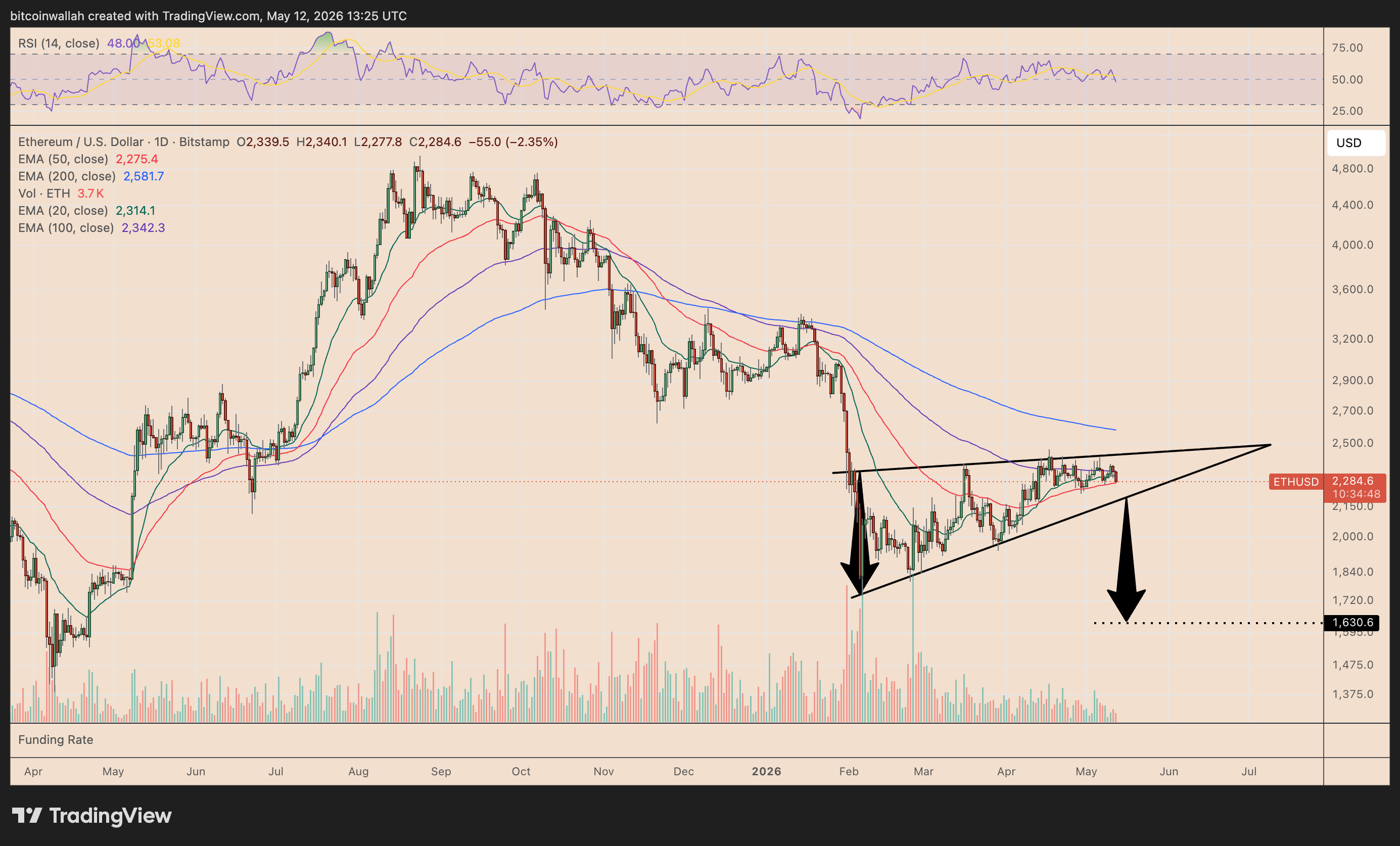
A decisive break below the 50-day EMA could push ETH toward the wedge’s lower support trendline near $2,200.
If that support fails as well, the pattern’s measured-move target points to a deeper decline toward the $1,630 area, down roughly 30% from current levels.
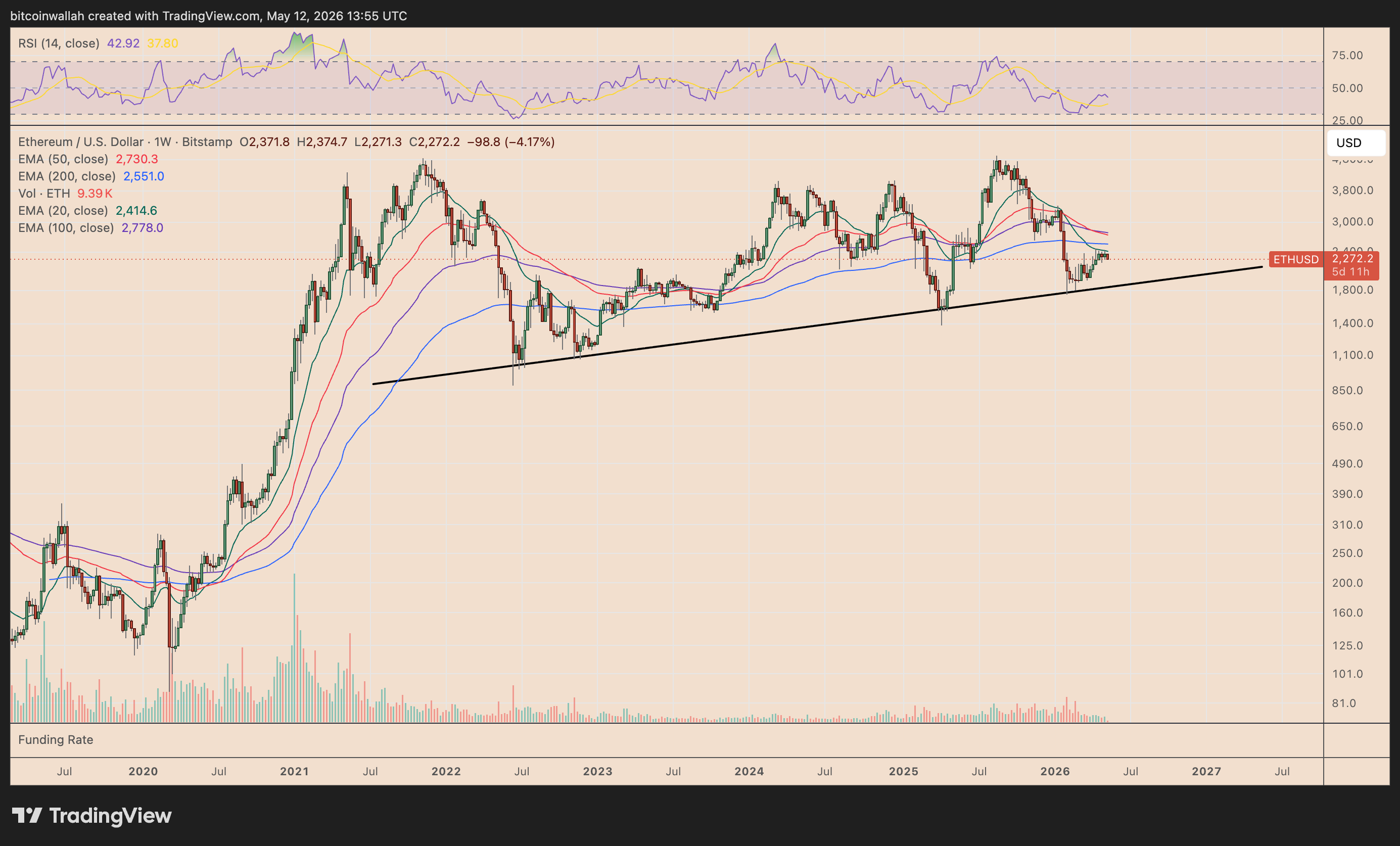
Analyst Taqwa Ayub echoed a similar downside setup for Ethereum, albeit citing a double top pattern on the weekly chart.
A double top pattern forms when the price undergoes an M-shaped trend, established by two consecutive peaks at roughly the same price level. It resolves when the price breaks below the structure’s support and falls by as much as its maximum height.
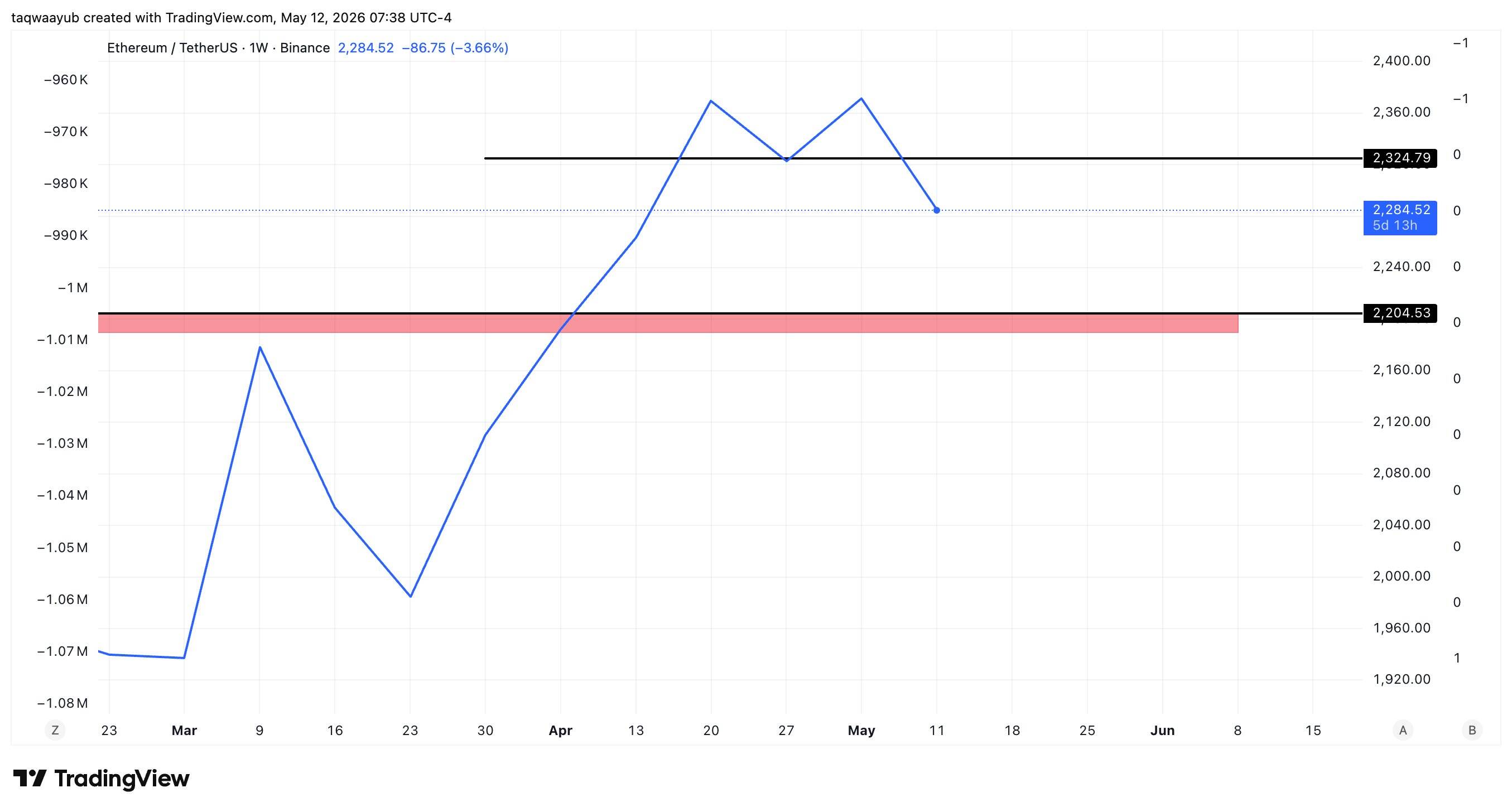
The analyst predicted the ETH price to reach $2,200 initially due to the double top setup.
On the weekly chart, ETH is also feeling downside pressure near its 20-period exponential moving average (20-period EMA, green line) at around $2,415. A strong pullback from there risks sending the price toward the ascending trendline support around the $1,975–$2,000 area.
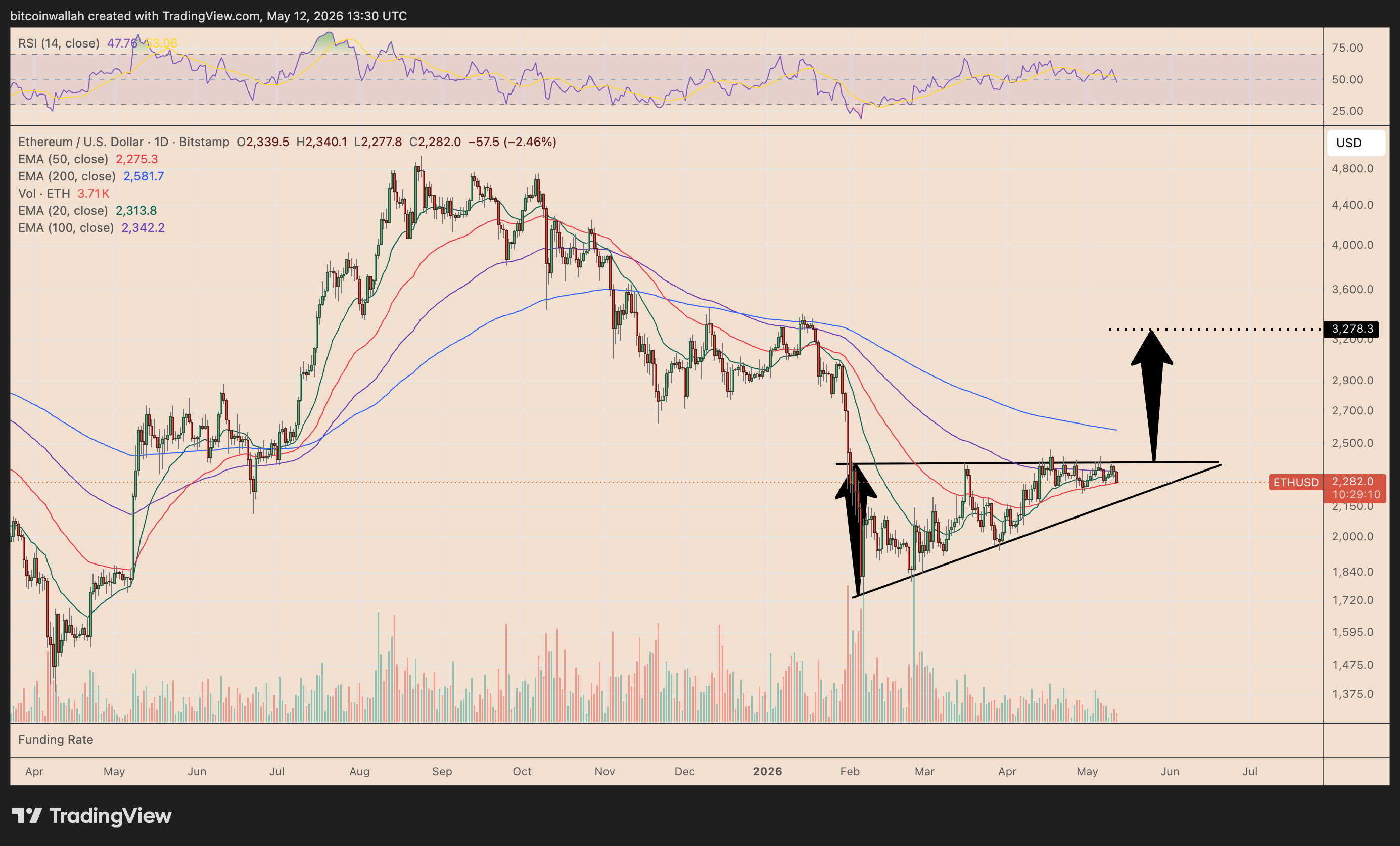
An ascending triangle setup typically resolves when the price breaks decisively above the upper trendline and rises by as much as the structure’s maximum height.
Applying this technical rule brings ETH’s upside target to around $3,280, up 45% from the current price levels.
ETH Tests Key Onchain Cost Basis Level
On-chain data suggests Ether may be approaching a major trend inflection point.
According to CryptoQuant data shared by analyst CW, ETH is now trading near the realized price of accumulation addresses, wallets historically associated with long-term holders that consistently buy ETH without significant spending activity.
The realized price represents the average acquisition cost of these holders. When Ether trades below this level, accumulation addresses are generally underwater, reflecting weak market conditions and lower investor confidence.
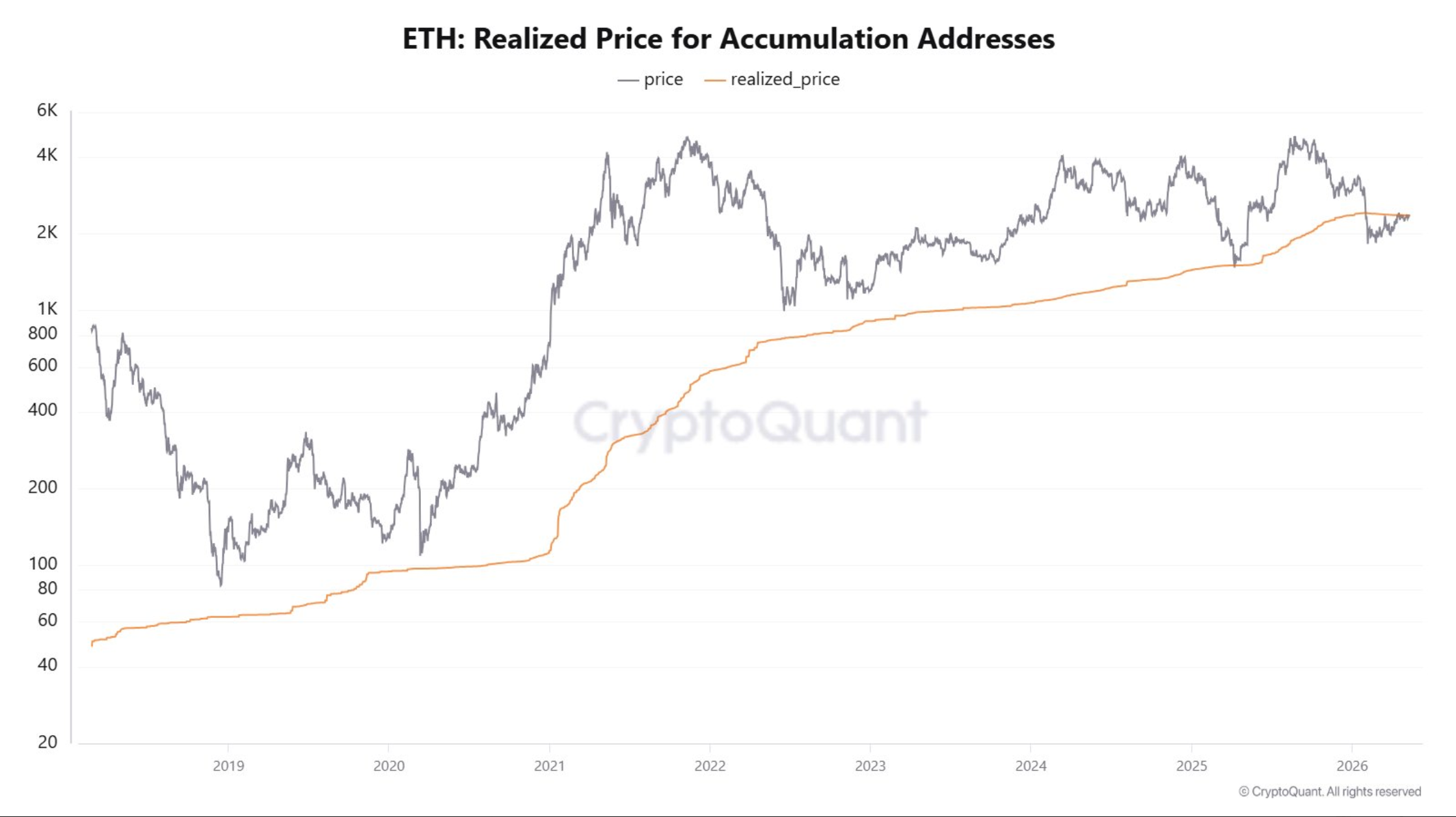
A move back above it, however, often signals that long-term holders have returned to profit, improving sentiment across the network.
The latest setup shows ETH attempting to reclaim this cost basis after spending months below it during the broader downtrend.
If confirmed, the breakout could indicate that Ethereum’s bearish phase is losing momentum and that the market is entering the early stages of a broader recovery trend.