
Bitcoin (BTC) price has rallied by roughly 40% since February, mostly due to Michael Saylor’s Strategy, which bought more than 100,000 BTC across March and April alone, absorbing nearly 370% of Bitcoin’s new supply.
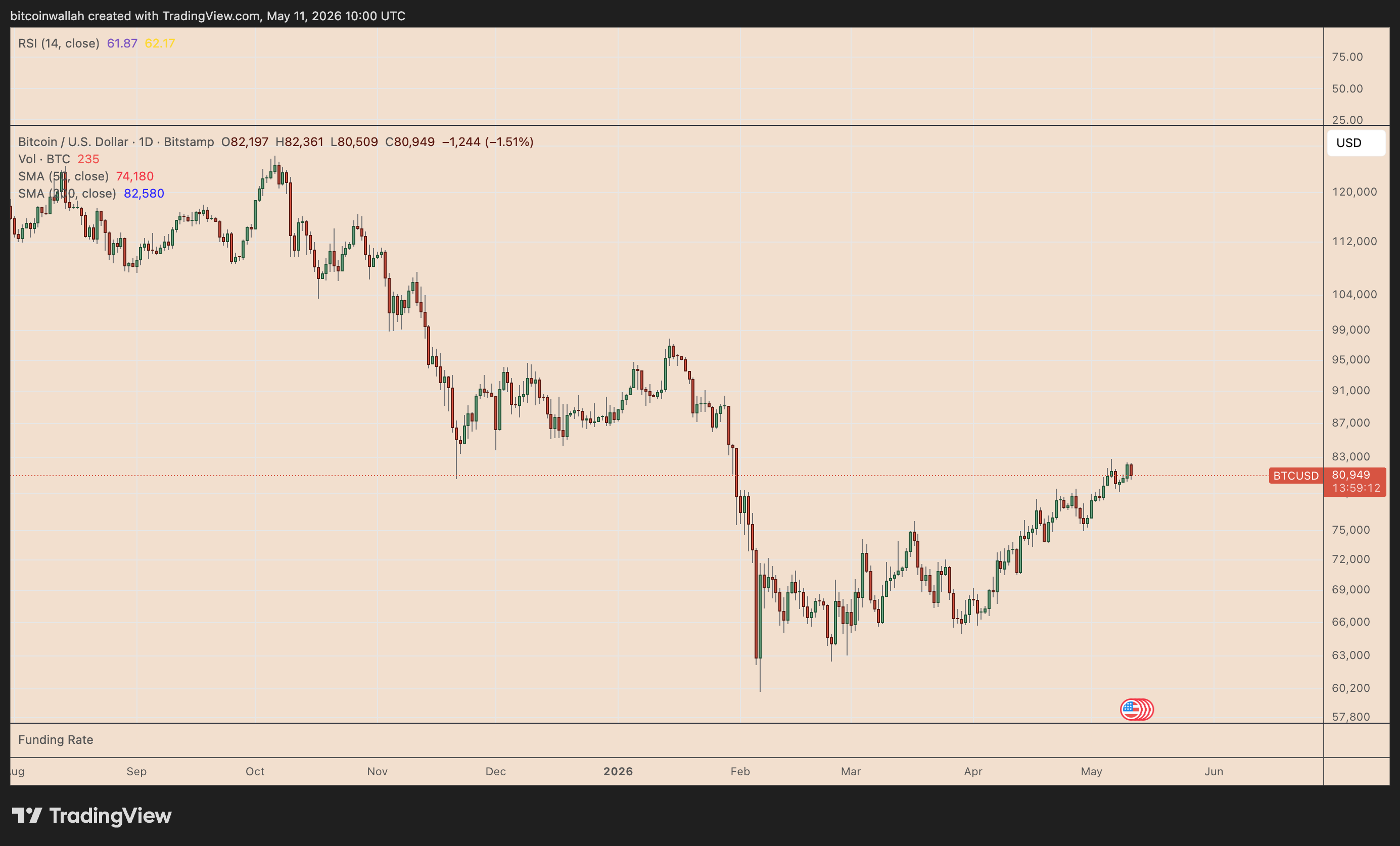
Nonetheless, a few pricing models anticipate pain ahead for the Bitcoin bulls, with one even seeing a revisit to the $60,000 support zone, followed by deeper declines. Let’s examine.

Bitcoin “Lifetime Support” Model Puts BTC Floor Near $57,000
The so-called Bitcoin Lifetime Support Model places BTC’s long-term support band between roughly $46,700 and $57,100.
The model averages Bitcoin’s lifetime simple moving average, single EMA, double EMA, triple EMA, and quadruple EMA, then plots a 10% band around that blended trendline. Its upper band currently sits near $57,112, while the lower band is around $46,728.
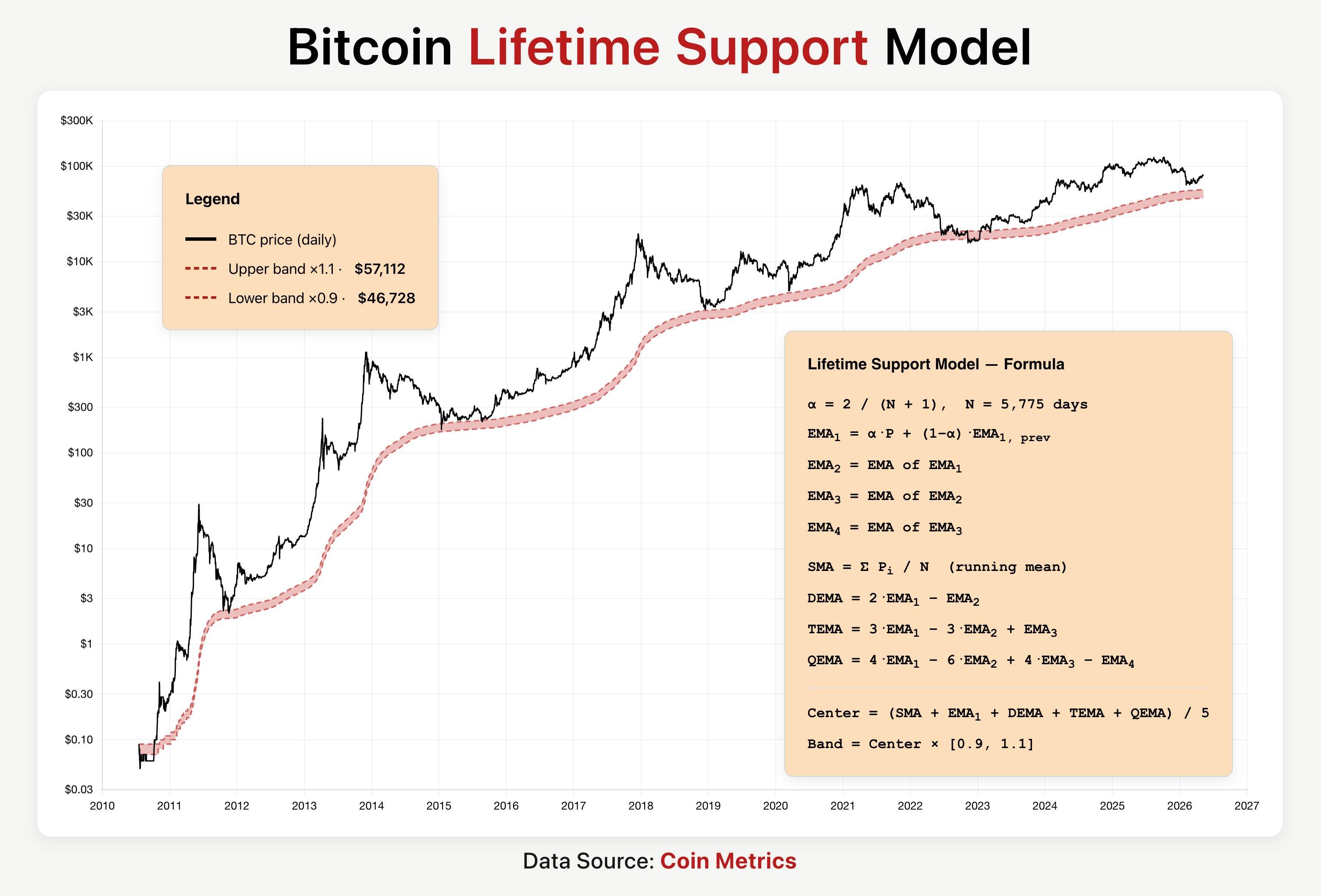
In other words, the model suggests Bitcoin’s macro floor may be closer to the high-$40,000 to high-$50,000 range, even after BTC’s sharp rebound from February lows.
Historically, BTC has rarely spent long periods below this band. Similar tests or brief breakdowns appeared near major cycle bottoms in 2015, 2018, March 2020, and 2022, before strong recoveries followed.
The model implies that, if the current rebound fails near major resistance levels, a pullback toward the model’s upper support area near $57,000 remains technically plausible.
A deeper break below that zone would put the lower band near $46,700 in focus, signaling a more severe bear-market extension.
Bitcoin Price Forecast
Every new Bitcoin analysis as it publishes, today's technical signal and key levels, live price — on one page.
See all Bitcoin forecastsBitcoin’s Bear Flag Backs Mid-$50,000 Downside Target
Bitcoin’s recent rebound may also be forming a classic bear flag pattern, a continuation setup that often appears before the prevailing downtrend resumes.
As of Monday, BTC was trading inside the upward-sloping parallel channel. Bear flags typically resolve when the price breaks below the lower trendline and declines by as much as the previous downtrend’s height.
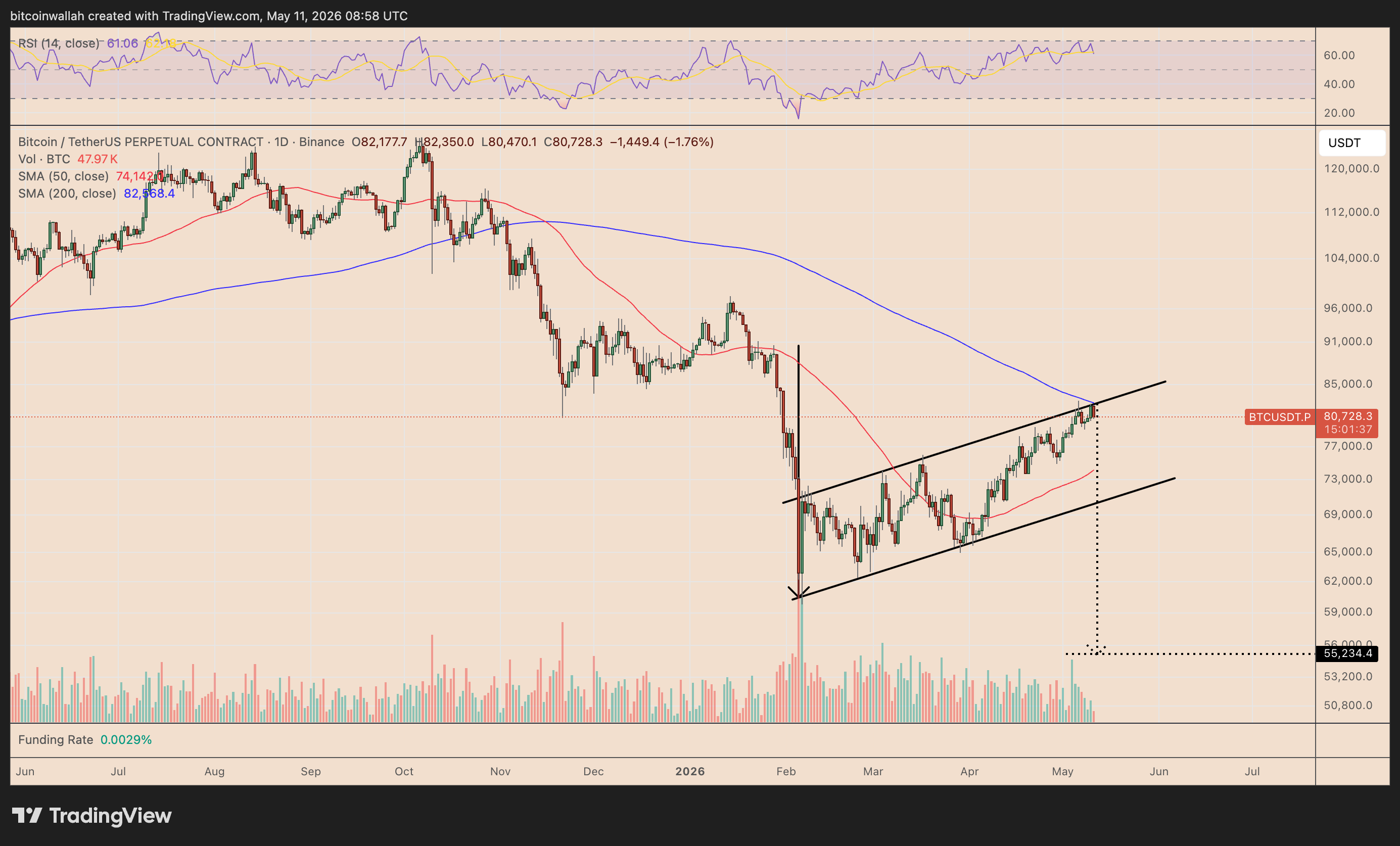
Applying that technical rule to the current setup brings Bitcoin’s downside target to around $55,000, a level that broadly aligns with the Lifetime Support Model upper band near $57,000.
Bitcoin’s daily relative strength index (RSI) has climbed above 60 after staying oversold in February, suggesting the rally may be losing steam as it approaches key resistance.
The bearish setup is forming as Bitcoin struggles to reclaim its 200-day simple moving average (200-day SMA) near $82,500. The level has acted as strong resistance since late 2025, repeatedly capping rebound attempts.
$BTC testing the 200-day EMA – right as it potentially forms a daily bearish divergence.
Divergence needs a red daily close to lock in, so nothing is decided yet – but definitely worth keeping an eye on today. pic.twitter.com/iHPW7qqsbb
— Jelle (@CryptoJelleNL) May 11, 2026
A decisive breakout above the 200-day SMA would invalidate the bearish outlook and increase the chances of a broader recovery toward the $90,000 level.
Elevated Oil Prices, SPX-Gold Volatility Risk Max Pain For Bitcoin Bulls
As FXEmpire reported earlier, Bitcoin continues to track broader risk sentiment as markets digest volatile geopolitical and macroeconomic pressures, led by the ongoing US–Iran war.
Optimism that Washington and Tehran could reach a deal to reopen the Strait of Hormuz faded after President Donald Trump dismissed Iran’s latest proposals as “totally unacceptable.”
The setback kept energy markets on edge. Brent crude rose more than 2% on Monday to trade above $103 a barrel, while US stock futures hovered near record highs, showing that risk appetite remains intact for now despite rising oil-shock risks.
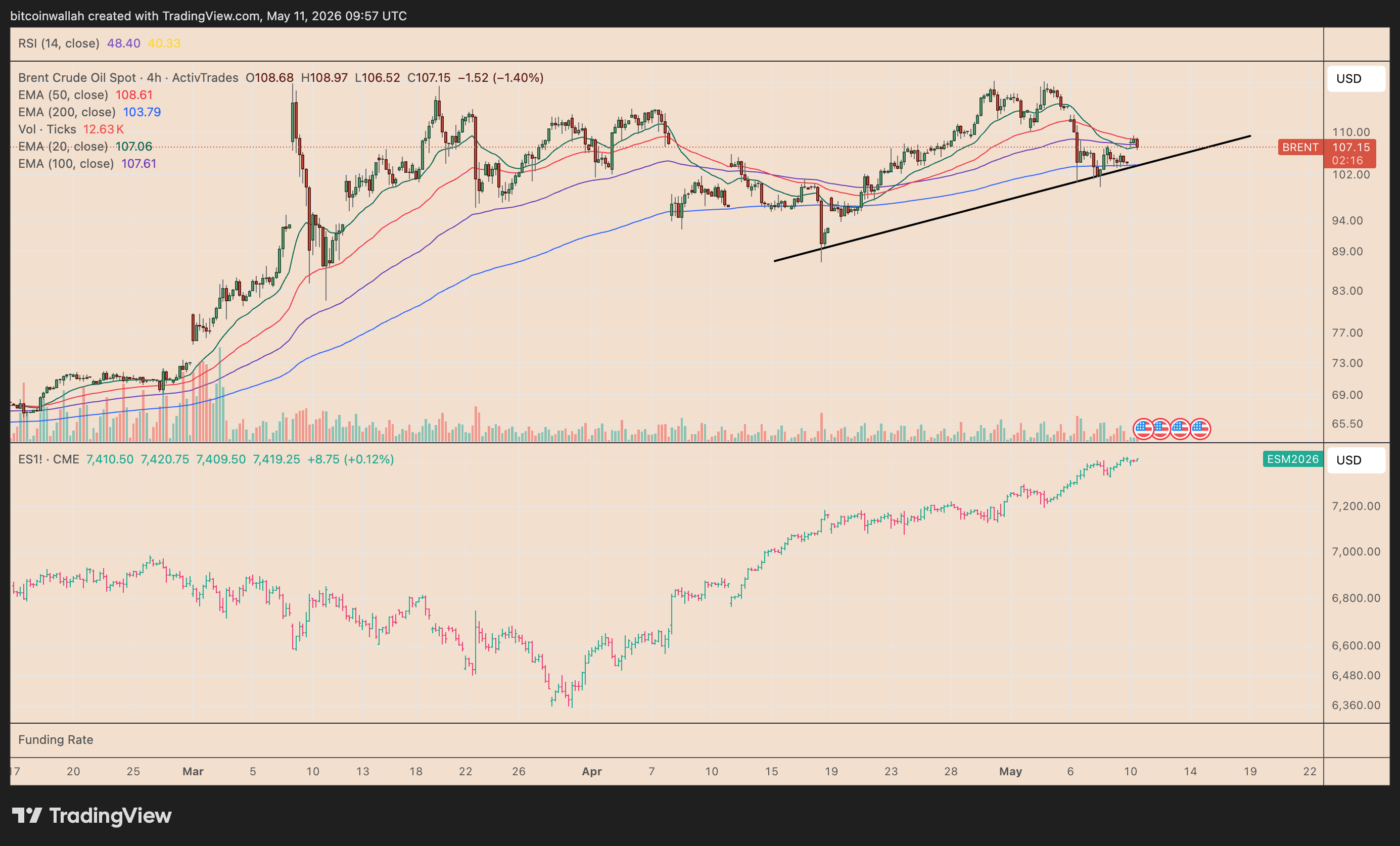
Still, Bloomberg Intelligence strategist Mike McGlone warns that one cross-market signal is flashing caution. He notes that gold’s 180-day volatility has climbed to roughly 2.3 times that of the S&P 500, its highest level since 2006.
Historically, such extremes in gold volatility relative to stocks have appeared before major equity drawdowns.
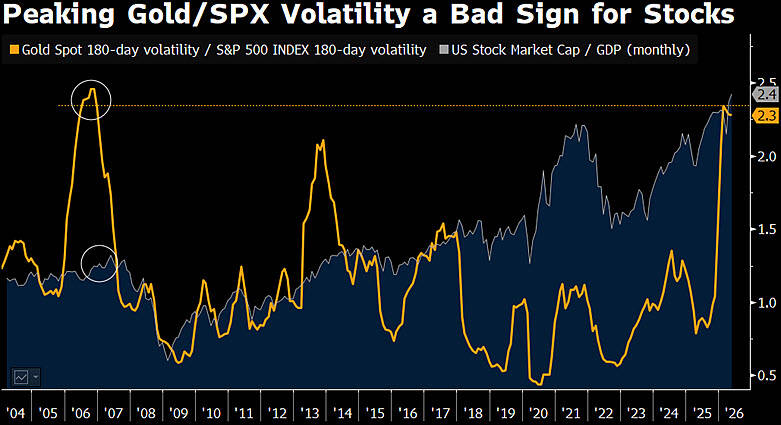
A similar spike nearly two decades ago preceded the fall in the US stock market capitalization-to-GDP ratio from around 1.3x in 2007 to near 0.6x at the 2009 trough.
McGlone argues that gold’s rare shift from a defensive store of value into a volatile risk asset may be a late-cycle warning.
US equities are now valued near 2.4 times GDP, with McGlone saying that the stock market has effectively become equivalent to “the economy.” That leaves risk assets vulnerable to a post-inflation deflation cycle.
Earlier this year, McGlone predicted Bitcoin to reach $10,000 in 2026.
Bitcoin Bottom Signal Points To Rebound Above $90,000
Despite the bearish risks, one longer-term indicator suggests Bitcoin may already have established a macro bottom near its February lows around $60,000.
The signal appeared after BTC successfully retested its 200-week simple moving average (200-week SMA; blue wave), a level that historically marked major cycle bottoms in 2019, 2020, and 2022.
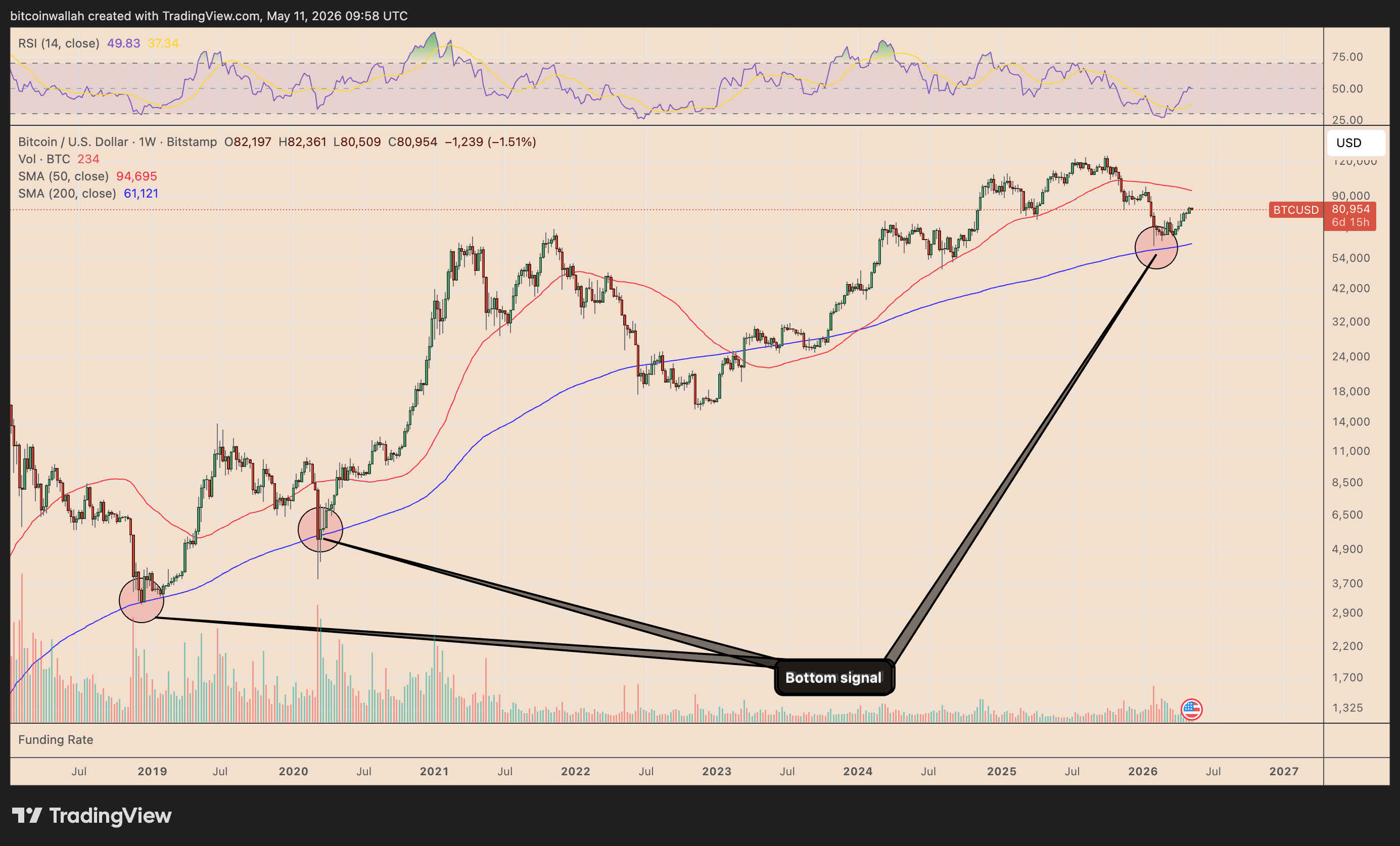
Each previous rebound from the 200-week SMA preceded strong upside continuation, including rallies toward or above the 50-week SMA (red wave). Bitcoin is now attempting a similar recovery setup.
If the fractal repeats, BTC could reclaim the 50-week SMA near $94,000 by June, implying more than 15% upside from current price levels.