If you read our last Bitcoin (BTC) weekly analysis, you might recall that I had employed a slightly cautious tone due to renewed US–Iran conflicts in the Strait of Hormuz.
The logic was straightforward: any signs of uneasiness between Washington and Tehran would lead to higher oil prices, which, in turn, would feed on inflation fears. Risk assets like Bitcoin seldom perform well under such an environment, not unless Michael Saylor’s Strategy attempts to absorb selling pressure with its Bitcoin buying spree.
These fundamentals worked against Bitcoin in tandem, but the top cryptocurrency still managed to rally impressively. As of Sunday, its price was up 2.80%, hovering above the psychological $80,000 support. Indeed, it will finish this week in green.

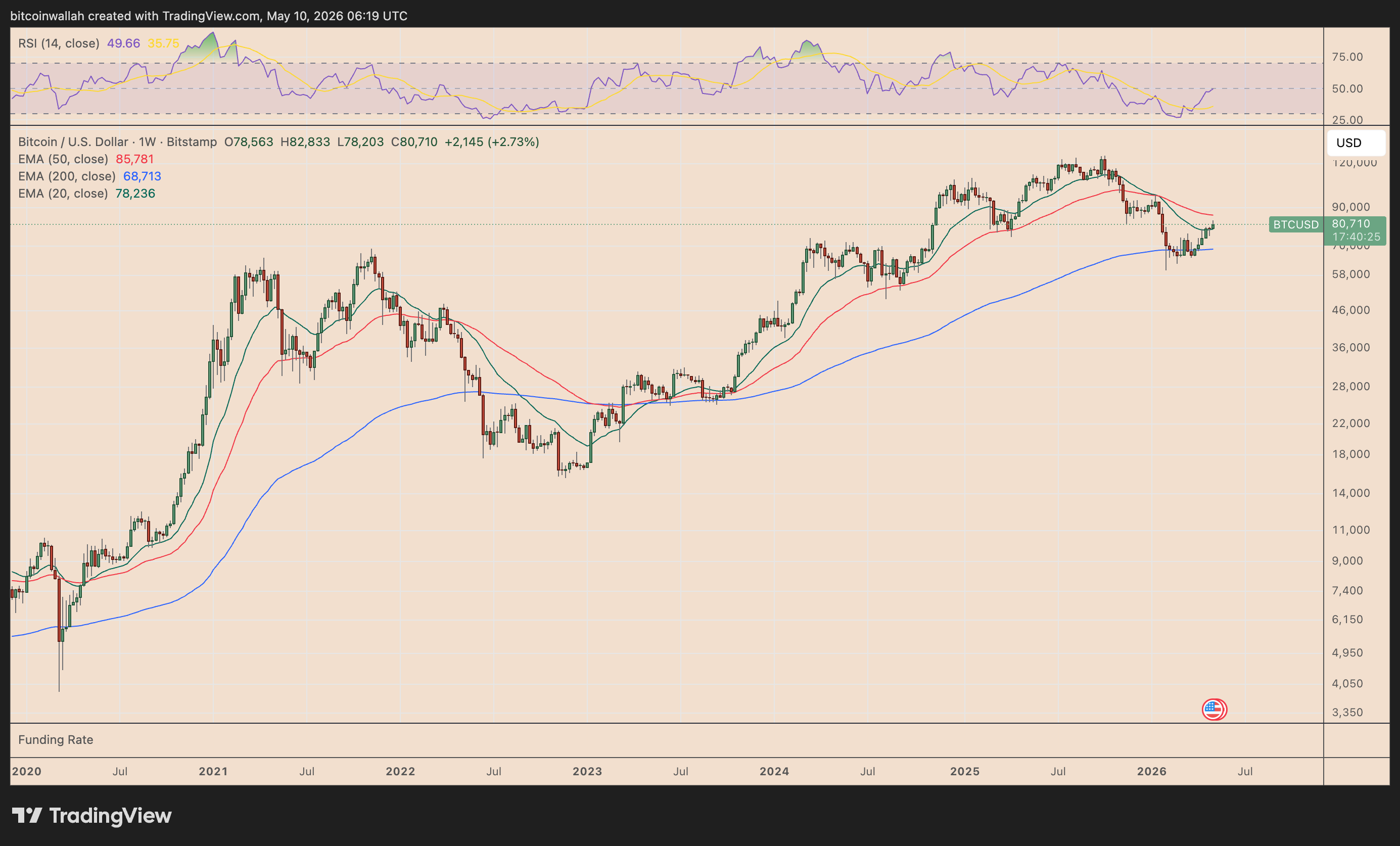
US Earnings, US–Iran Ceasefire Major Catalysts Behind Bitcoin’s Upside
The driving engine behind this week’s Bitcoin rally was a slew of uplifting Q1 earnings reports in the US.
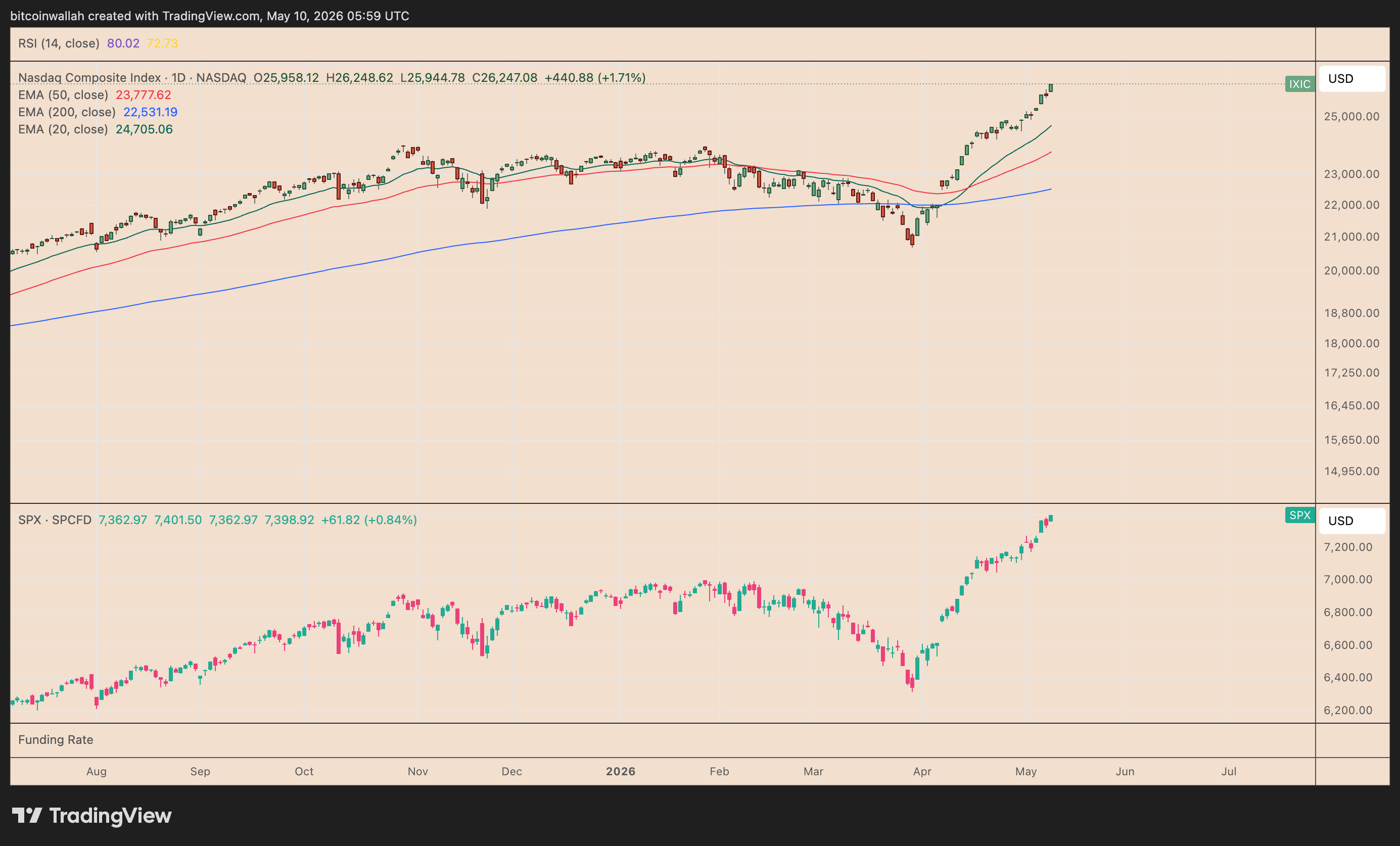
Note that: 443 S&P 500 firms have reported, with 73% beating revenue estimates and 82% topping earnings expectations. Aggregate revenue growth is running at 10.43%, while EPS growth stands at 25.28%.
Both figures are slightly below last week’s pace, but they still point to strong corporate momentum that has helped support risk appetite across markets. The S&P 500 and Nasdaq Composite hit fresh all-time highs this week.
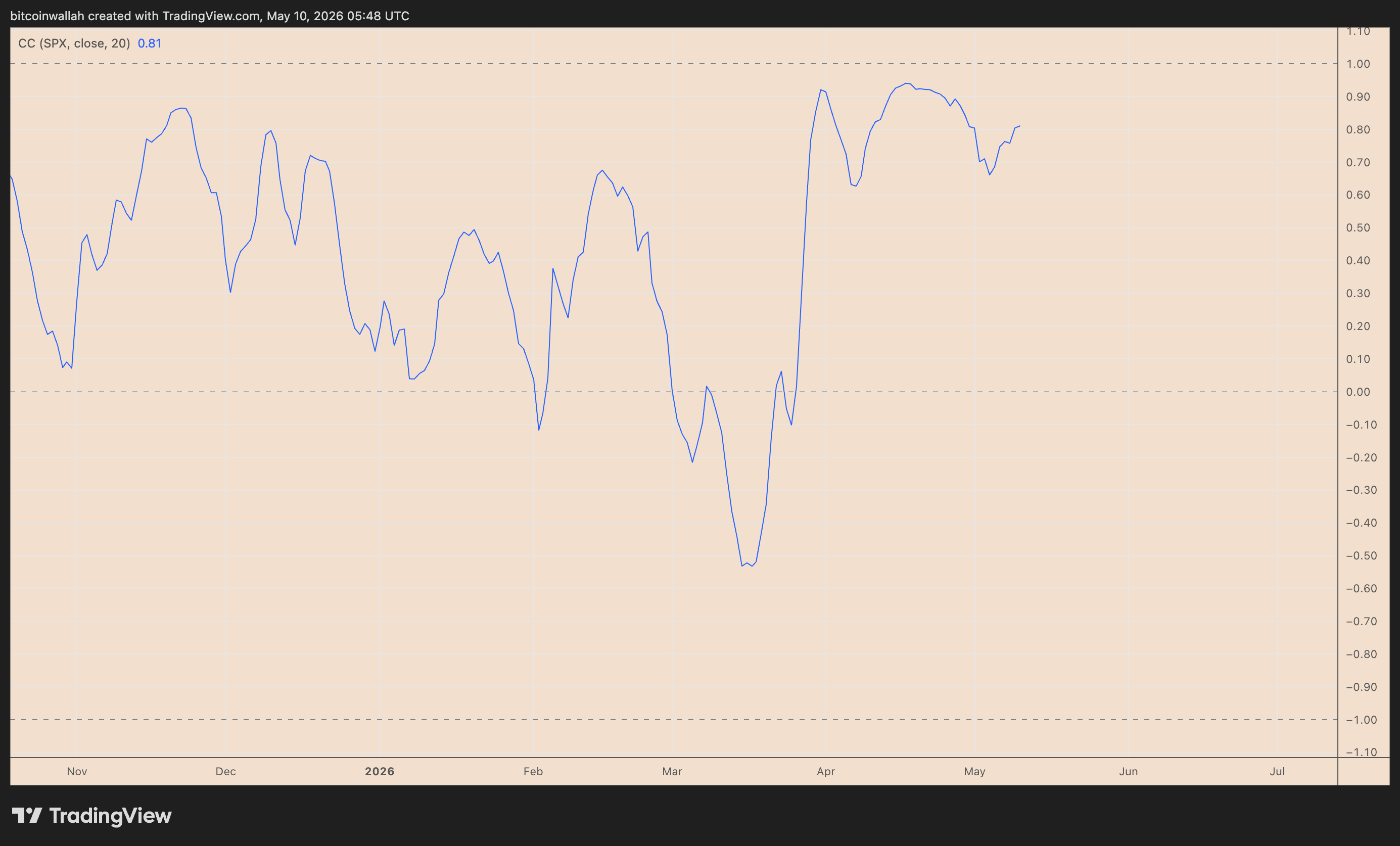
Bitcoin seems to be riding the same wave, given its persistent 20-day rolling correlation with the S&P 500 remains above 0.81.
On the Iran front, markets spent the week parsing mixed US-Iran headlines, but the broader tone remained cautiously constructive for risk assets.
The ceasefire came under pressure after renewed exchanges of fire, yet both sides signaled they did not want a wider escalation, helping preserve hopes that the conflict may still move toward a negotiated outcome.
Iran was reviewing a US peace proposal led by envoy Steve Witkoff, even as the two sides remained far apart on key demands.
The Strait of Hormuz remained the market’s main stress point. Sporadic security incidents and flare-ups kept traders on edge, but the ceasefire has so far held well enough to prevent a fresh shock to energy flows.
TRUMP EXPECTS IRAN RESPONSE “VERY SOON”
President Donald Trump said Saturday he expects to hear from Iran “very soon” regarding the latest US peace proposal.
Speaking to a French TV reporter, Trump said Iran still wants a lasting deal. He added that Washington was expecting a…
— *Walter Bloomberg (@DeItaone) May 9, 2026
A notable confidence signal came from the planned transit of a Qatari LNG tanker through the strait. It is a potential test of whether limited passage can resume despite Iran’s broader restrictions on non-Iranian shipping.
Notable shipping movement in the Strait of Hormuz.
Qatar is sending a laden LNG tanker (if sucesfull, it would be 1st crossing for Qatar since the start of the war).
Crucially, the Al Kharaitiyat tanker is following the new Iranian shipping lanes. Her destination is Pakistan. pic.twitter.com/IsqSNHsRaj
— Javier Blas (@JavierBlas) May 9, 2026
There have been no confirmations so far about this mission’s success or failure.
Nonetheless, these US–Iran war updates have calmed markets, including Bitcoin.
As of Sunday, Brent crude was down circa 15% from last week’s panic highs. In other words, oil is no longer pricing an immediate worst-case supply shock, but it is still carrying a sizable geopolitical premium as long as Hormuz disruptions remain unresolved.
Bitcoin Price Forecast
Every new Bitcoin analysis as it publishes, today's technical signal and key levels, live price — on one page.
See all Bitcoin forecasts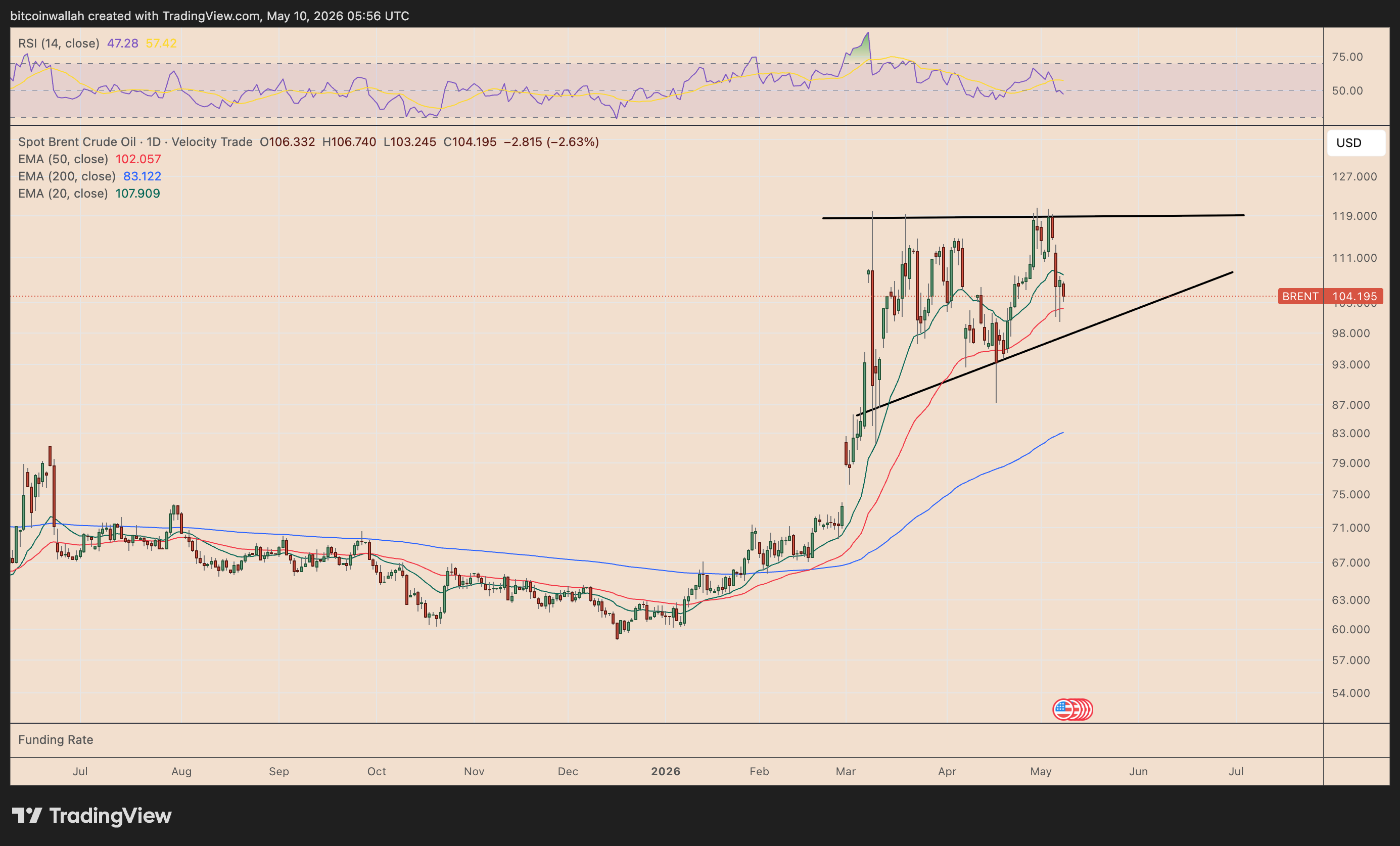
US Jobs Report May Keep Bitcoin Upside Momentum Intact Next Week
Friday’s stronger-than-expected jobs report reinforces the view that the macro backdrop remains supportive for Bitcoin, even if the signal is arriving through equities first.
The immediate takeaway for markets is that the US labor market still looks firm, while the AI-led growth story continues to support the broader economy despite higher oil prices and fading expectations for Fed rate cuts.
BREAKING: The US economy adds 115,000 jobs in April, crushing expectations of 65,000.
The unemployment rate was 4.3%, in-line with expectations of 4.3%.
The US economy has now added +300,000 jobs in 2 months.
Another stronger than expected jobs report despite the Iran War.
— The Kobeissi Letter (@KobeissiLetter) May 8, 2026
Stocks are still the clearest barometer for Bitcoin. As long as equities keep rising on strong earnings, capital spending, and resilient growth expectations, BTC can continue benefiting from the same risk-on backdrop.
Markets may be complacent, but it is hard to call a reversal while dip buyers keep getting rewarded and earnings estimates keep moving higher. Both stocks and Bitcoin look stretched in the short term, though overbought conditions alone do not signal when momentum will break.
Next week, the focus shifts to US CPI and PPI on Tuesday and Wednesday, Trump’s planned meeting with Xi Jinping on Thursday and Friday, and any fresh Middle East headlines tied to US–Iran peace talks.
We have CPI next week.
Its priced in.
BTC has rallied after the last two CPI releases. However, if we follow 2025 CPI price action, we may see bigger players start de-risking into the event counter narrative.
Key level to hold is the 78.6K weekly open, if lost,… pic.twitter.com/F3NxUesJ9A
— Killa (@KillaXBT) May 9, 2026
Bitcoin Technical Analysis: Watch Out For That Tightening Wedge
Bitcoin may spend this week consolidating inside its rising wedge, with room for a final push toward the apex point at around $84,000.
That kind of move would suggest buyers are still in control in the short term, but only barely. Rising wedges typically resolve to the downside, especially after extended recoveries.
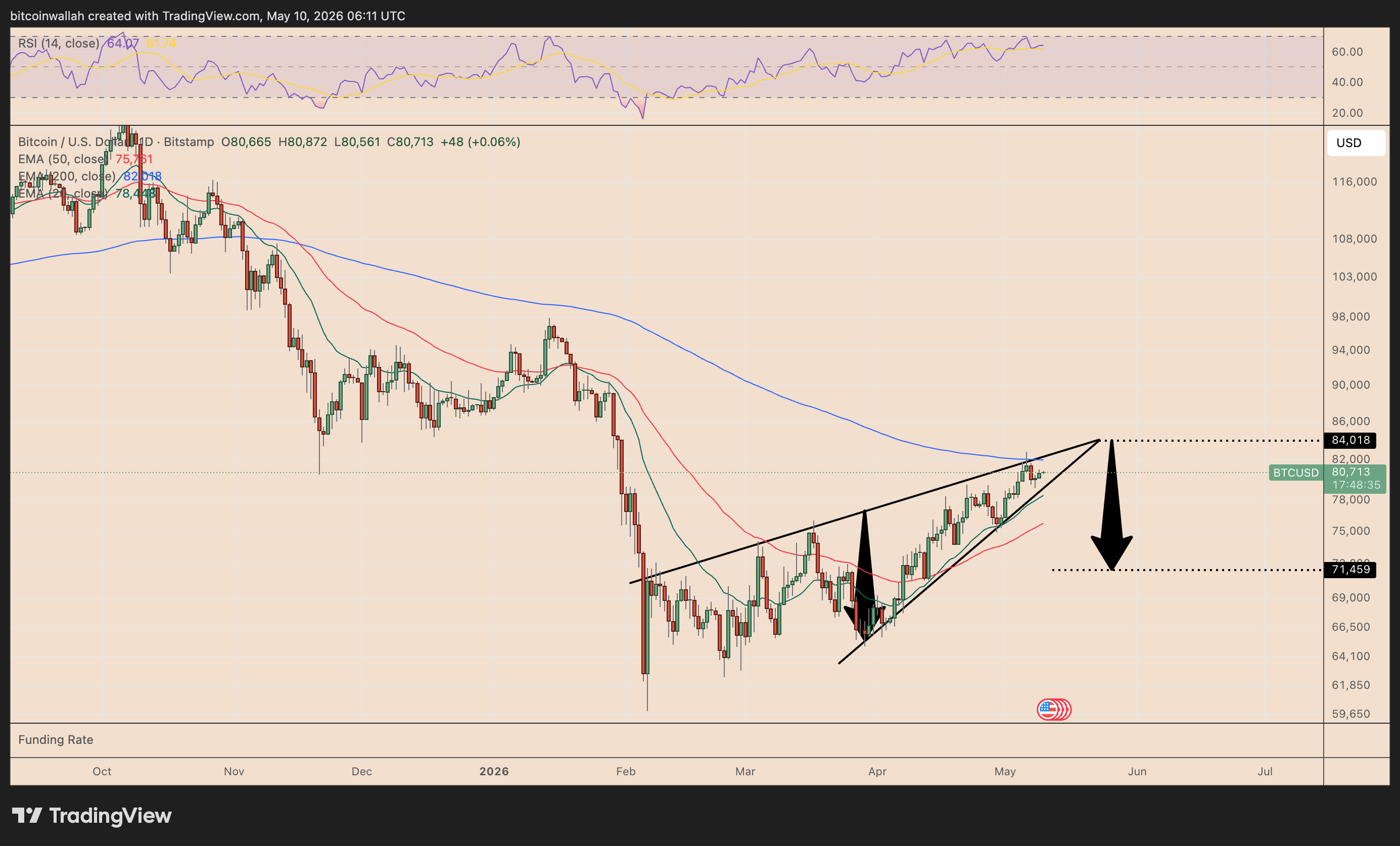
If BTC loses wedge support, the setup points to a deeper pullback, with $70,000–$71,500 emerging as the next major downside zone.
To make matters worse, the $84,000 upside aligns with the 200-period exponential moving average (200-period EMA; the blue wave) on the three-day chart.
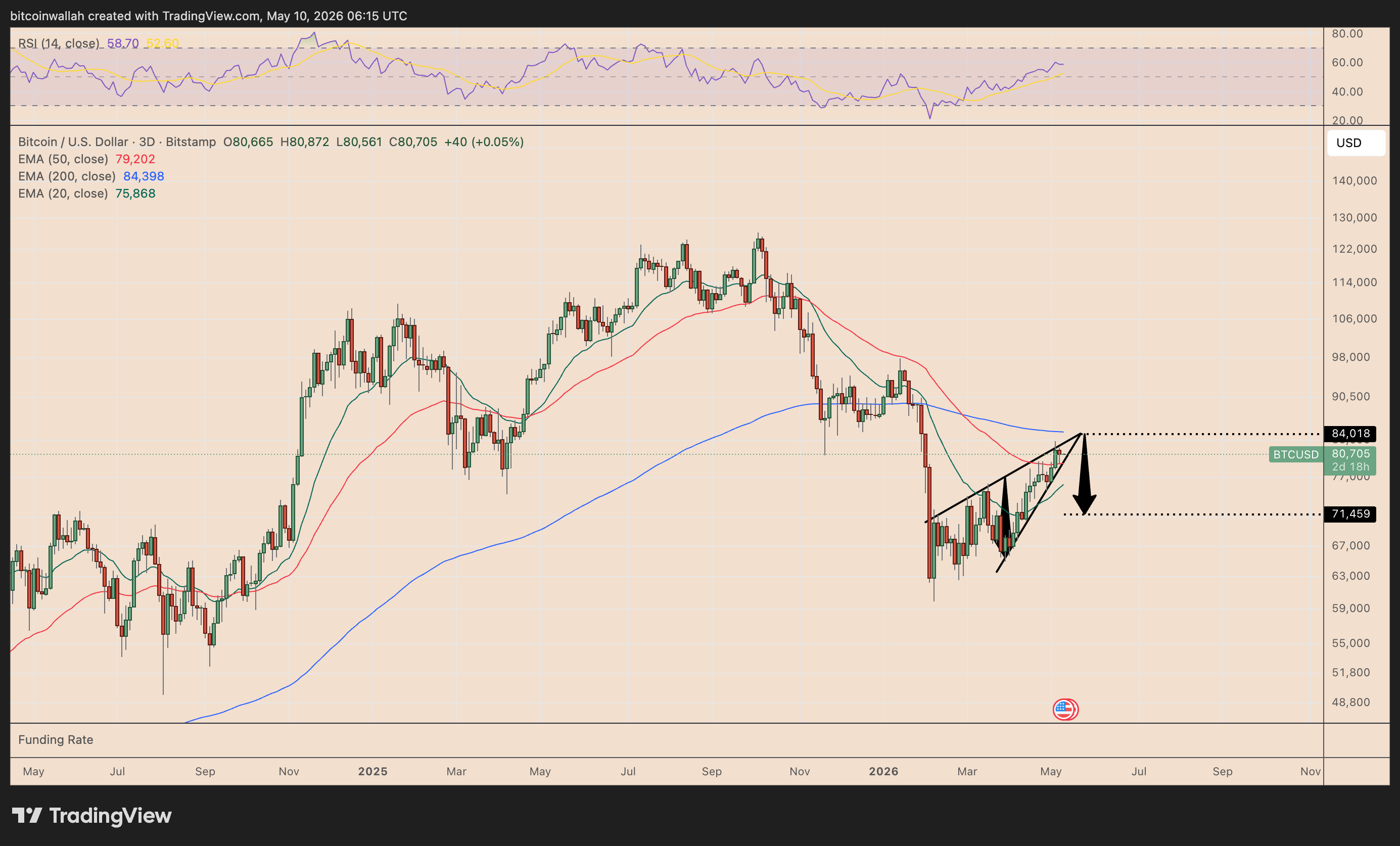
That gives us a double-edged resistance level, which, if broken, could easily send BTC toward $90,000 if the macroeconomic and geopolitical factors offer support.
All the best!