



The EUR/USD has climbed back toward the 1.1450-1.1500 area, trading near its highest level in a month despite mounting signs that the eurozone economy is losing momentum. While softer U.S. inflation has weakened the dollar by reducing expectations of further Federal Reserve tightening, another factor could soon play an even bigger role in determining the pair’s direction: European natural gas prices.
With the European Central Bank set to announce its latest policy decision next week, investors will naturally focus on interest rates and President Christine Lagarde’s guidance. However, traders may need to look beyond central bank rhetoric. Renewed tensions in the Middle East have reignited the rally in oil and, maybe more importantly for Europe, natural gas prices. If energy costs remain elevated, they could reshape inflation expectations, alter the ECB’s policy outlook and become the next major catalyst for the EUR/USD Forex pair.

Why Is EUR/USD Rising Despite Weak Eurozone Growth?
At first glance, the euro’s recent rebound appears counterintuitive. The eurozone economy continues to struggle, with economists cutting growth forecasts for a fourth consecutive quarter. Reuters’ latest survey now projects the economy to expand by just 0.5% in 2026, while quarterly growth is expected to remain stuck around 0.2%.
Recent data have done little to improve sentiment. Eurozone industrial production unexpectedly fell 0.2% month-on-month in May, reversing April’s revised 0.3% increase, while business surveys continue to point to slowing manufacturing activity as companies grapple with weak demand and rising production costs.
Ordinarily, this combination of slowing growth and weaker industrial activity would weigh heavily on the euro. Instead, the single currency has found support from the growing divergence between the ECB and the Federal Reserve.
The ECB is widely expected to leave its deposit rate unchanged at 2.25% next week. However, markets continue to anticipate another increase later this year, with September viewed as the most likely window. According to a recent Reuters poll, around 70% of economists now expect one additional ECB rate hike this year, compared with roughly 60% only a month ago.
The reason is not stronger domestic demand—it is the renewed threat of imported inflation through higher energy prices.
Meanwhile, the U.S. inflation picture continues to move in the opposite direction. June consumer prices posted their largest monthly decline since April 2020, with headline CPI falling 0.4% month-on-month, bringing annual inflation down to 3.5%. Core CPI was unchanged over the month, slowing to 2.6% year-on-year, while producer prices unexpectedly declined 0.3%, reinforcing expectations that underlying inflation pressures continue to ease.
The moderation in services inflation, one of the Fed’s key concerns, has prompted investors to scale back expectations for further tightening, reducing one of the dollar’s main sources of support.
EUR/USD Price Forecast
Every new EUR/USD analysis as it publishes, today's technical signal and key levels, live price — on one page.
See all EUR/USD forecastsWhy European Gas Prices Might Matter More Than Oil for the EUR/USD
Although crude oil attracts most of the attention whenever geopolitical tensions flare up, natural gas might be the more important commodity for the euro.
European benchmark gas prices have surged to their highest level since March as renewed tensions involving Iran have increased concerns over liquefied natural gas supplies from the Persian Gulf. Since the beginning of the year, European gas prices have climbed more than 90%, including a gain of more than 25% this month alone. Since the conflict intensified, prices have jumped by over 70%.
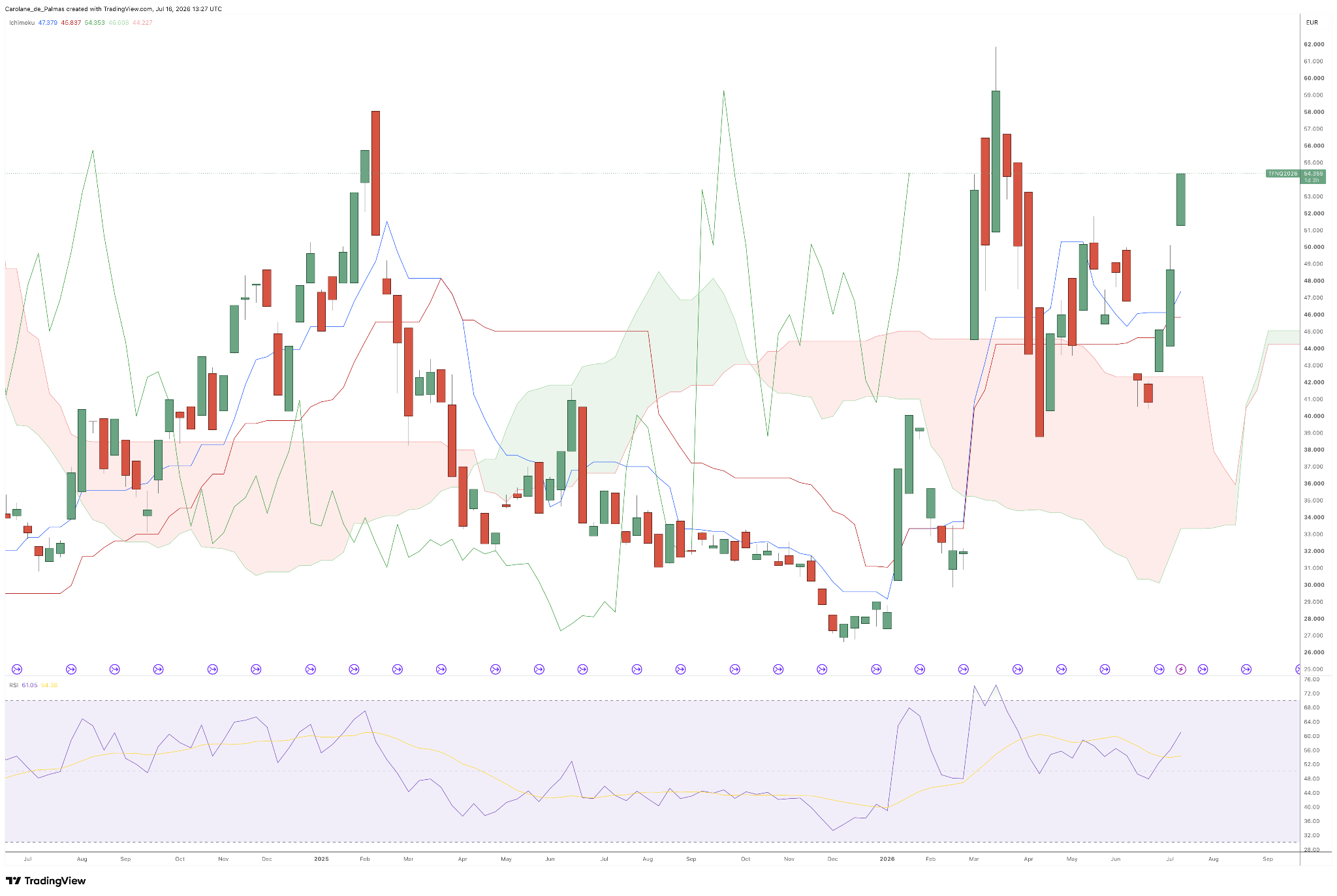
Storage remains another source of concern. European gas inventories are only around 52% full, with refill rates running below last year’s pace as the region heads toward the winter heating season.
The geopolitical backdrop also matters. The Strait of Hormuz normally handles around 20% of global LNG shipments, while Iranian attacks have reportedly disrupted around 17% of Qatar’s LNG export capacity. Any prolonged disruption would likely force European buyers into more aggressive competition with Asian importers for available LNG cargoes, keeping prices elevated.
For currency traders, this matters because gas prices affect much more than household energy bills. Higher natural gas prices immediately raise production costs across energy-intensive industries such as chemicals, steel, construction materials and manufacturing. Companies often pass part of these additional costs on to consumers, increasing inflationary pressures across the broader economy.
Unlike demand-driven inflation, imported energy inflation is much harder for central banks to control. Raising interest rates cannot produce more natural gas, but it can slow investment, weaken consumption and further dampen economic activity.
That makes energy prices a double-edged sword for the euro. They may encourage the ECB to maintain a restrictive stance for longer, supporting the currency through higher rate expectations. At the same time, persistently elevated energy costs undermine corporate profitability, reduce business investment and weaken growth, limiting the euro’s upside potential.
EUR/USD Technical Analysis
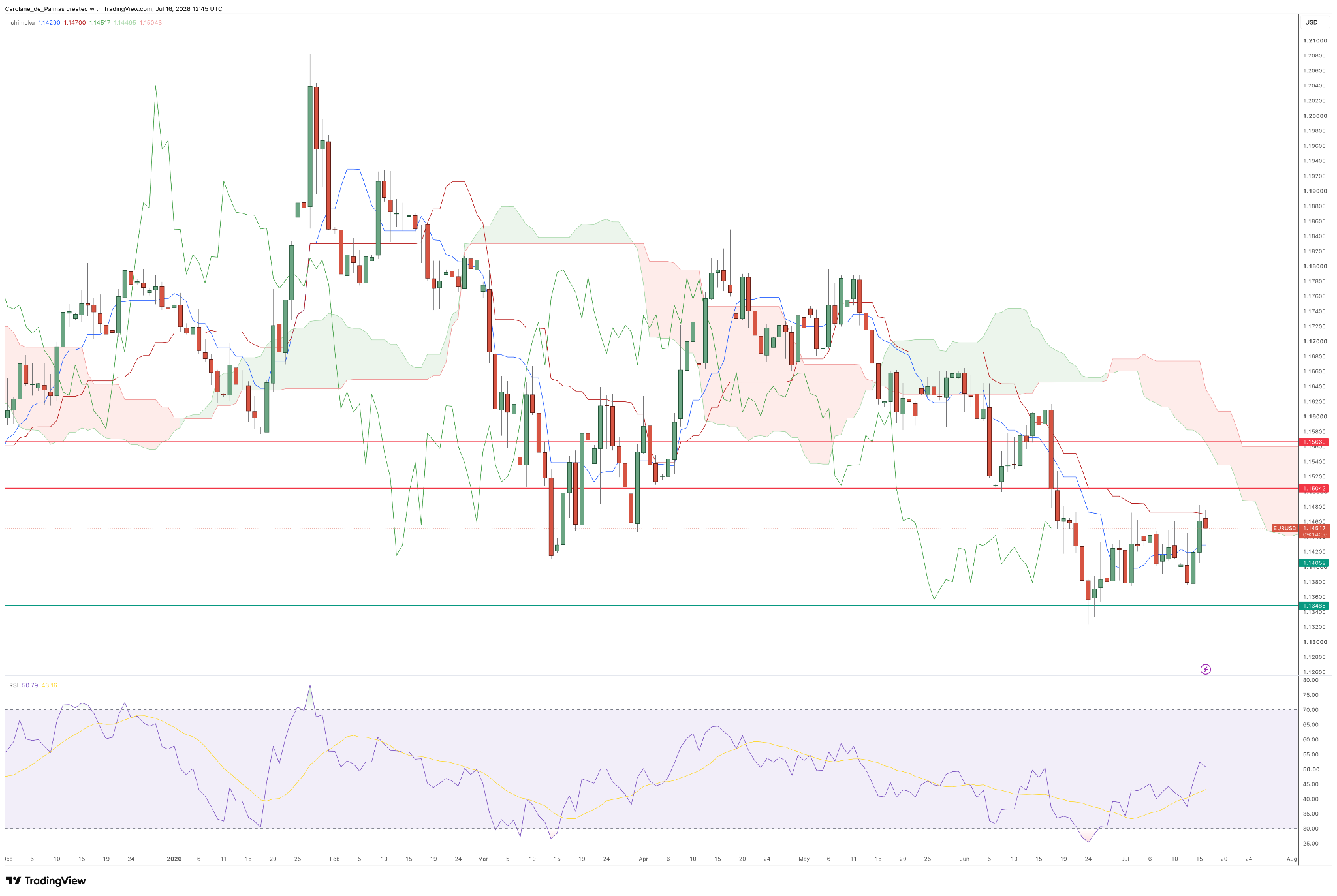
The daily chart suggests the EUR/USD is stabilizing following two consecutive bullish sessions. The Relative Strength Index (RSI) has reclaimed the neutral 50 threshold, signaling a gradual recovery in upward momentum. However, the broader technical outlook remains neutral. Because the pair continues to trade below the Ichimoku cloud, buyers have yet to regain decisive control of the medium-term trend.
Levels to Watch
- Resistance Zone: 1.1504 & 1.1566. A clean break above these levels—and a push through the Ichimoku cloud—would validate a stronger bullish reversal.
- Support Zone: 1.1405 & 1.1349. A break below these levels would add downward pressure to the EUR/USD.
Looking ahead, next week’s ECB meeting will undoubtedly attract most of the attention. However, traders should avoid focusing solely on interest-rate guidance. If European gas prices continue to climb, markets may increasingly price in a more hawkish ECB while simultaneously becoming more concerned about the eurozone’s deteriorating growth outlook.
Conversely, any easing in geopolitical tensions that brings gas prices lower could improve the region’s growth prospects while allowing the euro to benefit from the widening policy gap with the Federal Reserve.
The key risk for euro bulls is that a prolonged energy shock eventually shifts the market’s focus away from higher interest rates and back toward recession risks. In periods of heightened geopolitical uncertainty, the U.S. dollar has historically benefited from safe-haven demand, while the United States remains considerably less vulnerable than Europe to imported energy shocks thanks to its domestic oil and gas production.
Sources: Reuters, CNBC, The Wall Street Journal, Eurostat, Fed, ECB
The information provided does not constitute investment research. The material has not been prepared in accordance with the legal requirements designed to promote the independence of investment research and as such is to be considered to be a marketing communication.
All information has been prepared by ActivTrades (“AT”). The information does not contain a record of AT’s prices, or an offer of or solicitation for a transaction in any financial instrument. No representation or warranty is given as to the accuracy or completeness of this information.
Any material provided does not have regard to the specific investment objective and financial situation of any person who may receive it. Past performance is not a reliable indicator of future performance. AT provides an execution-only service. Consequently, any person acting on the information provided does so at their own risk.


