
EIA Storage Data Is the Only Number That Matters Thursday
Natural gas is sitting in a four-day consolidation waiting for the EIA storage report at 14:30 GMT to break the range. Production is running 3.2% above last year and the five-year storage surplus is keeping the bears comfortable, but the weather forecasts are holding heat across most of the country through July 19 and cooling demand is the reason this market has not rolled over already. The report either reaffirms the downtrend or triggers a short-covering rally, and four days of going nowhere says the market is ready to move on whichever side the number breaks.
At 13:12 GMT, August Nymex Natural Gas futures are trading $2.931, up $0.007 or +0.24%.

Nearby Natural Gas Futures Technical Analysis
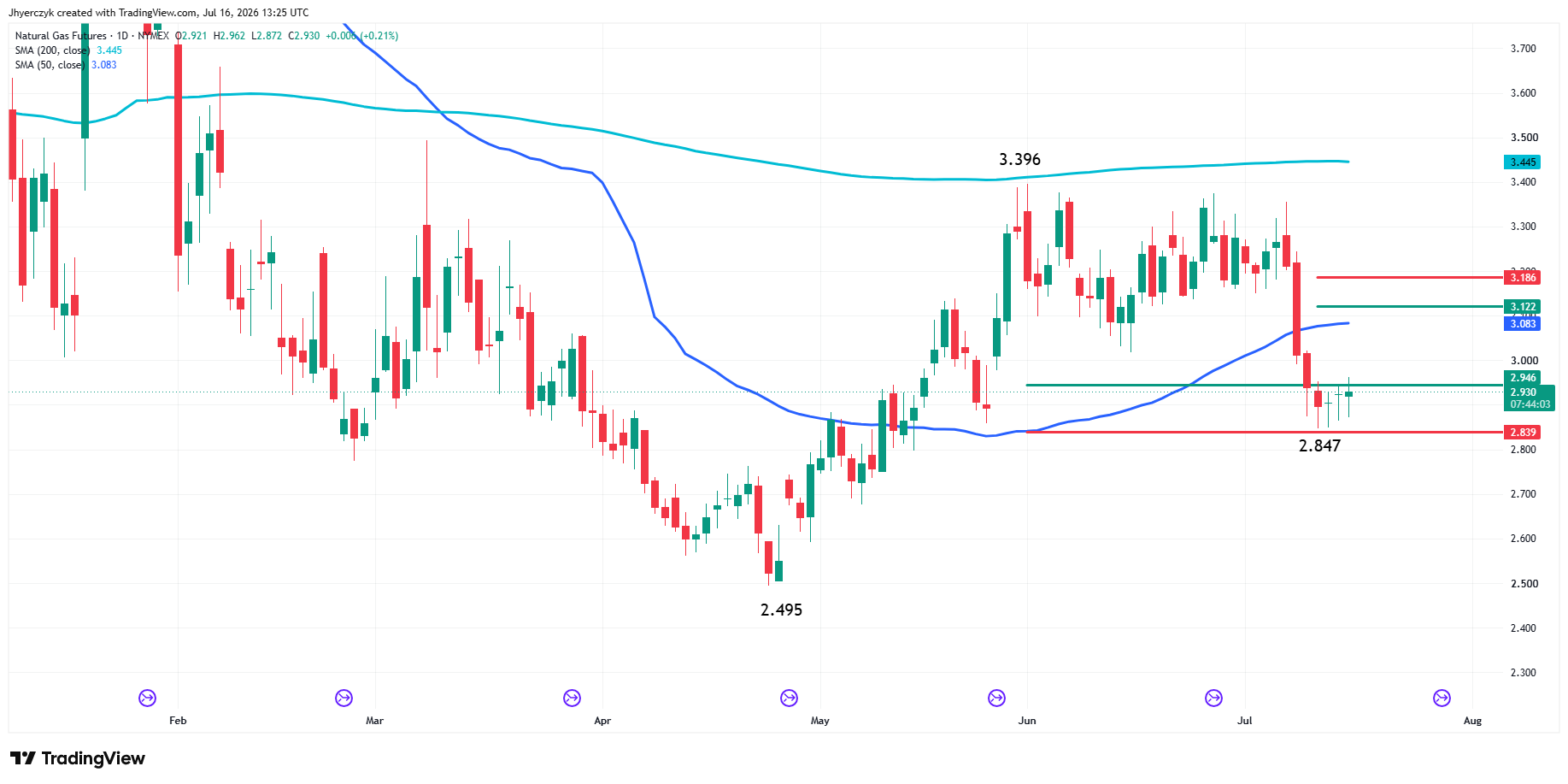
The nearby natural gas futures contract is trading inside the May/June retracement zone at $2.839 to $2.946. The chart pattern suggests a counter-trend breakout over $2.946 could create the upside momentum to generate a meaningful near-term rally into the 50-day moving average at $3.083 and another short-term retracement zone at $3.122 to $3.186, where professional bears will likely be waiting.
On the downside, taking out $2.847 with conviction could bring in another round of heavy selling pressure if more speculative bulls decide to throw in the towel on this year’s summer rally. I don’t think we’re at that point yet, but moving closer.
Daily August Natural Gas Futures Technical Analysis
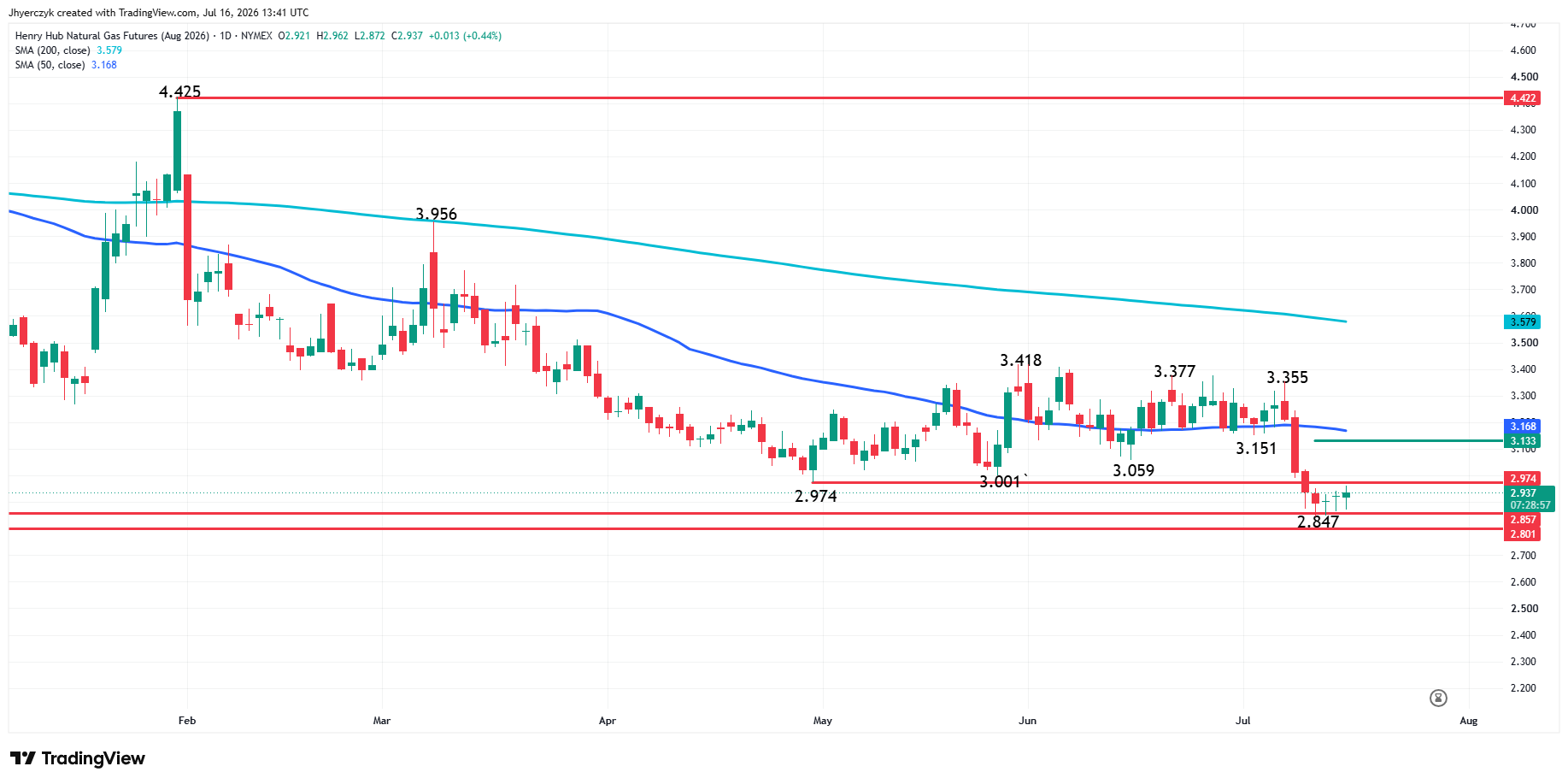
August natural gas futures are nearly flat as traders await the EIA report at 14:30 GMT. The market is flat right now, but four days of consolidation between the April bottom at $2.974 and this week’s low at $2.847, suggests impending volatility. In other words, the EIA data will either reaffirm the downtrend, or trigger a short-covering rally.
If you’re trading only the August contract then your next downside target under the former bottom at $2.857 is $2.801. Under that is a guess because the actual low for this specific futures contract is in the $2.30 vicinity. But I’ve always said you’re not big enough to turn a market, so why bother trying to passively bid and pick a bottom. If you have an inclination to get long, the best trading style is to actively take out offers and go with the flow.
Natural Gas Price Forecast
Every new Natural Gas analysis as it publishes, today's technical signal and key levels, live price — on one page.
See all Natural Gas forecastsIf there is a sustained breakout over $2.974 today then traders may set their sights on a pop to the resistance cluster at $3.133 to $3.168. That’s a reasonable target for the counter-trend trader. Especially since big money has a tendency to cap gains and re-short rallies. Keep in mind, when you go against the trend, you are trading against professionals who favor the downside. They like to let you in for a little taste before dropping the hammer on you.
Daily February Natural Gas Futures Technical Analysis
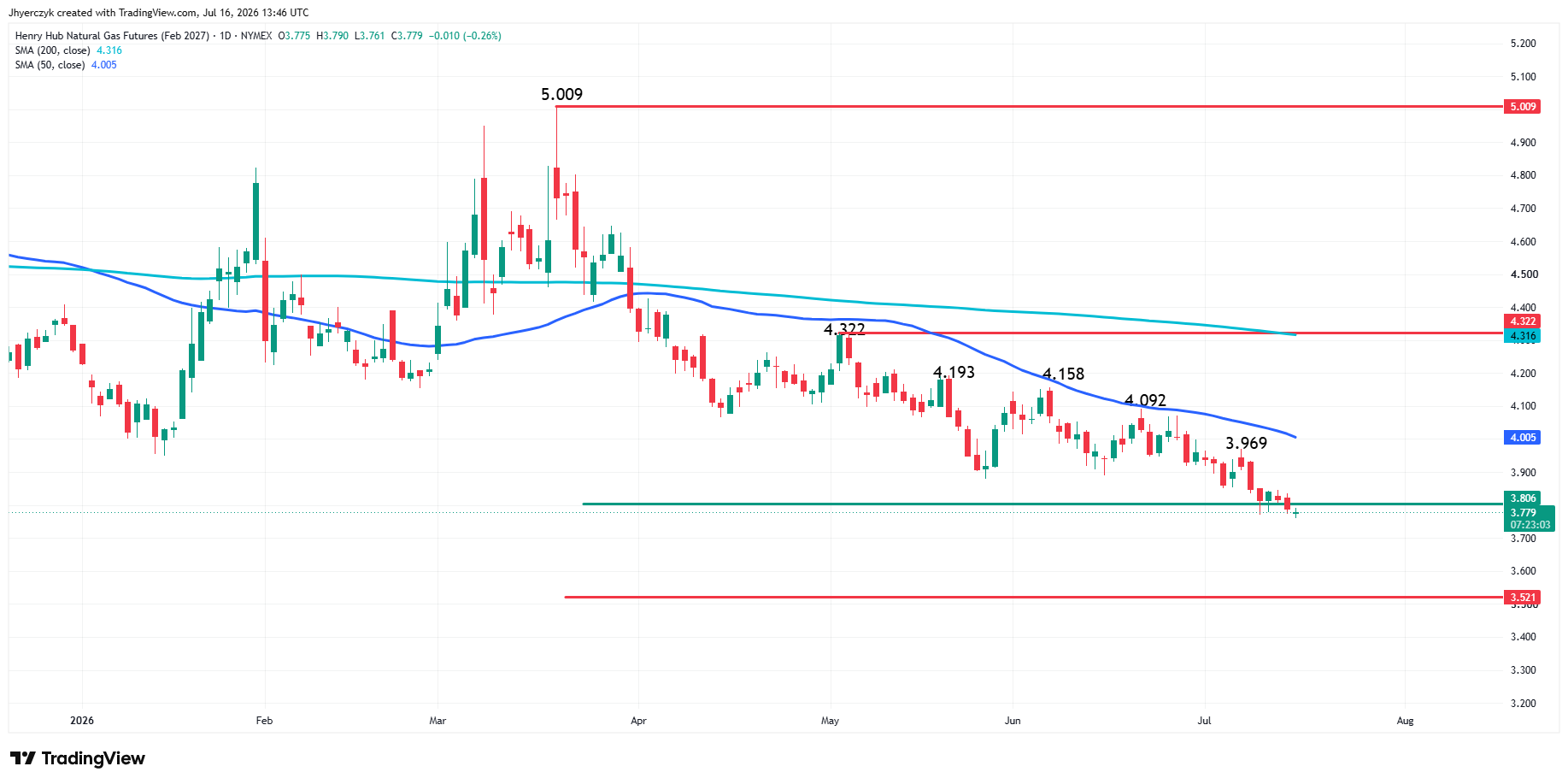
February Natural Gas Futures continue to drift lower. The deferred futures contract is now trading near the upper end of its long-term retracement zone at $3.806 to $3.521. The 50-day moving average at $4.005 is still providing resistance and bearish guidance.
While the Nearby and August futures contract focus on current weather conditions and storage, December traders are eyeing the Super El Niño developments.
Production Keeps the Ceiling Low
Lower-48 dry gas production averaged 111.2 billion cubic feet per day Wednesday, running 3.2% above year-ago levels, and the EIA raised its 2026 production forecast to match that pace. Baker Hughes reported the rig count holding steady at 126, so producers are not pulling back despite prices sitting under $3. The supply side of this market is not giving the bulls anything to work with.
LNG feed gas deliveries eased to 17.8 billion cubic feet per day, down 3.3% from the previous week, which takes another potential demand source off the table for now. Ras Laffan export facility damage in Qatar could eventually tighten global LNG supply enough to pull more U.S. gas into export channels, but that is a longer-term story and it is not showing up in this week’s feed gas numbers.
The Heat Is Real but the Storage Surplus Is Bigger
Forecasts are calling for upper 80s to above 100 degrees across the northern half of the country through July 19, with major Midwest and East Coast cities pushing into the 90s. Texas and the Southwest are the soft spot with showers keeping temperatures mostly in the 80s before hotter weather returns later in the period. Cooling demand is elevated and air conditioners are running at full capacity across most of the country.
The storage picture is not cooperating with the weather story. Inventories are sitting 6.6% above the five-year seasonal average and only 0.8% below last year. Analysts expect the EIA to report a 44 billion cubic feet injection for the week ended July 10, nearly matching the five-year average build of 45 billion cubic feet. An in-line number does nothing to change the supply cushion that keeps professional money comfortable on the short side.
What to Watch
The EIA number at 14:30 GMT is the session. A smaller injection than the expected 44 billion cubic feet gives buyers a reason to test the upper end of the consolidation range, and a breakout over $2.946 on the nearby contract opens the path toward the 50-day moving average where the bears are likely waiting. A build at or above expectations keeps the downtrend intact and the 6.6% storage surplus gives sellers the confidence to press.
Production running above 111 billion cubic feet per day with a steady rig count means the supply side is not fading, and that overhang stays in place regardless of what the weather does over the next two weeks. El Niño expectations for a warmer fall and winter are weighing on the deferred contracts and the February futures are already drifting lower into the long-term retracement zone. The near-term trade is weather versus storage. The longer-term trade still belongs to the bears until production gives them a reason to step aside.
More Information in our Economic Calendar.