Breakout Followed by Early Reversal Pressure
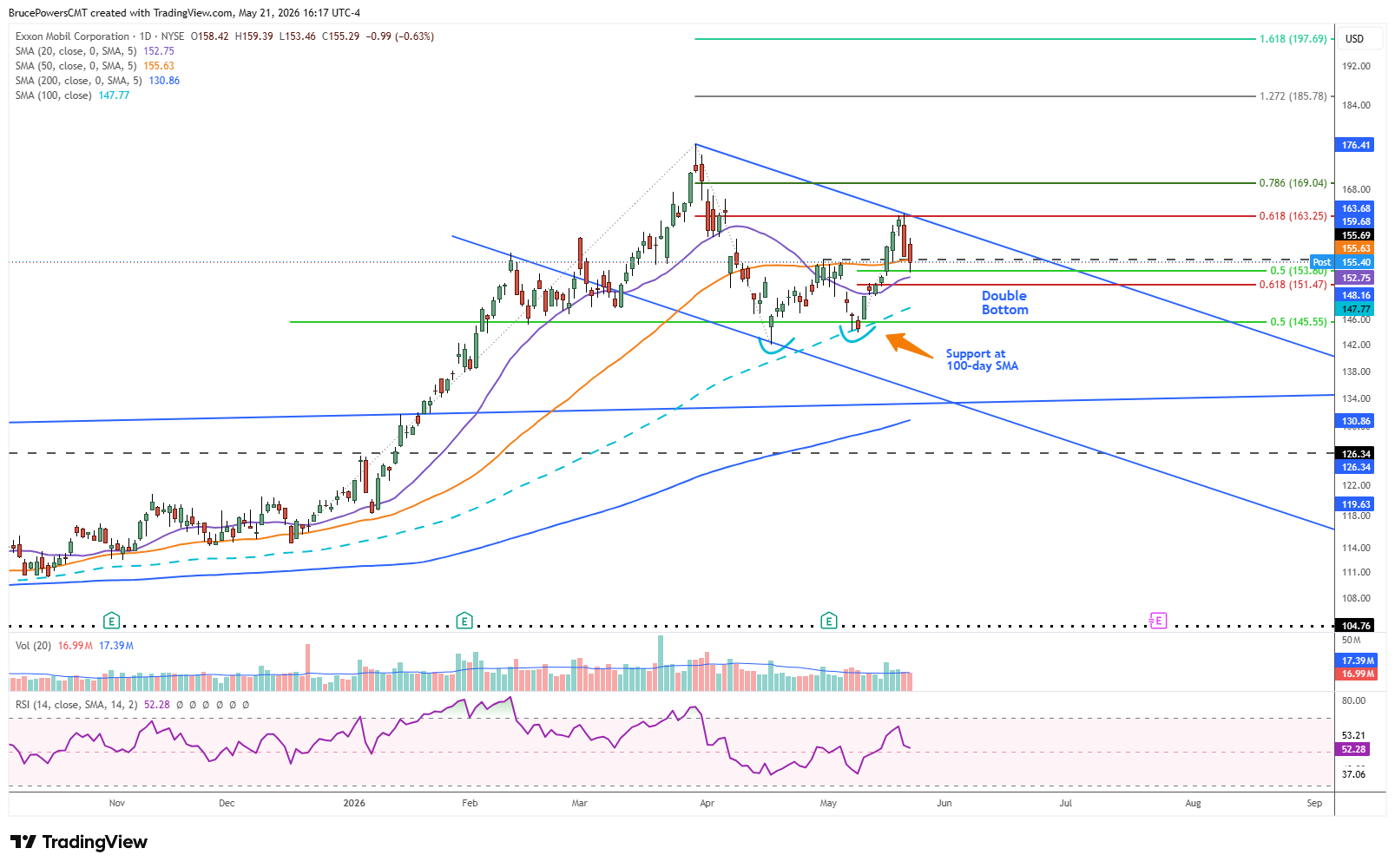
The stock of Exxon Mobile Corporation (XOM) recently confirmed bullish price action with a breakout above a double bottom pattern and the 50-day moving average. The initial move was followed by a reversal, forming a lower swing high at $163.68 and a bearish reversal on Wednesday. ExxonMobil is a leading global integrated oil and gas company and sellers remained in control of the company’s stock on Thursday.
XOM broke back below the 50-day average to reach a low of $153.46 and the 50% retracement of the prior advance. Also, that was almost a test of support near the 20-day moving average near $152.73. Nonetheless, the 20-day average marks the next key support zone, followed by the 61.8% Fibonacci retracement at $151.47. This sequence reflects a typical post-breakout retest phase, where early gains are being evaluated by the market.

Retest Zone Defines Short-Term Direction
XOM is in its first pullback following a significant breakout and bullish reversal signal that suggests that the bearish correction is complete, and the larger advance can continue. However, further evidence is needed. Specifically, a renewed recovery above the neckline of the double bottom at $155.69 and the 50-day average, now around $155.61, would be required to reassert bullish control. A declining trend channel is also included on the chart, suggesting that it could indicate further downside pressure. But first support above the 61.8% retracement would need to fail to confirm a deeper downside continuation.
Otherwise, the expectation is for the pullback to find support and eventually resolve to the upside as buyers get more aggressive. A continuation of the developing uptrend based on structure will not confirm until there is a recovery of this week’s lower swing high at $163.68, which now serves as a key near-term pivot following the initial breakout attempt described above.
Higher-Timeframe Support Structure Holds Key
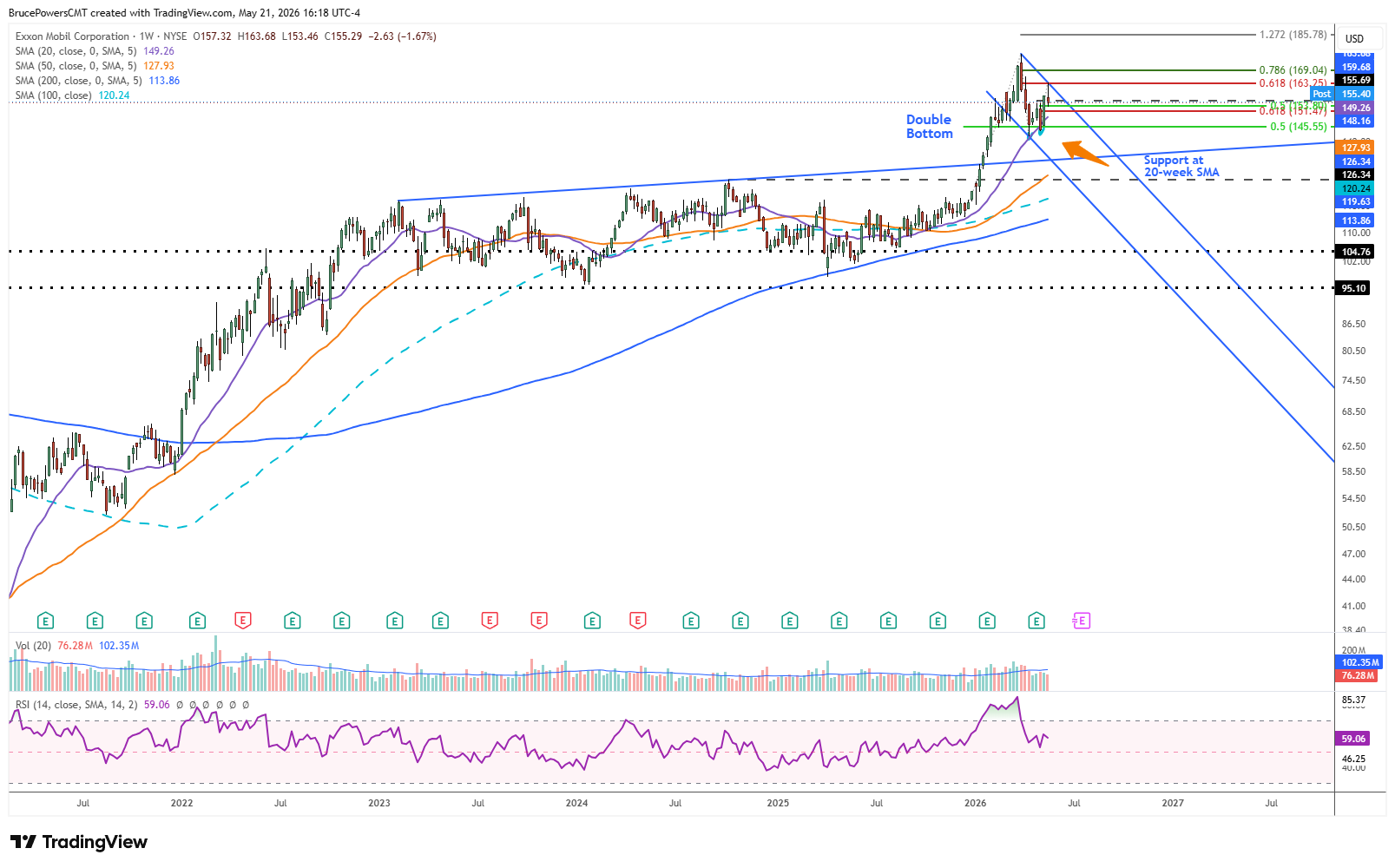
The weekly chart confirms strong support near recent lows as represented by the rising 20-week moving average. It is now near $149.24 and marks another potentially significant support zone. On the daily chart, the 100-day moving average is in a similar position and is around $147.76 currently. It represents the low end of dynamic trend support. Since it was tested recently with the second bottom and higher swing low of $143.92, it is anticipated to do so again.
Taken together, these higher-timeframe support levels help frame the current pullback as a test of the prior breakout structure, reinforcing that the broader trend initiate by the double bottom remains technically intact unless these support areas begin to fail.
If you’d like to know more about how commodity markets work, please visit our educational area.