Compression Builds Toward Key Breakout
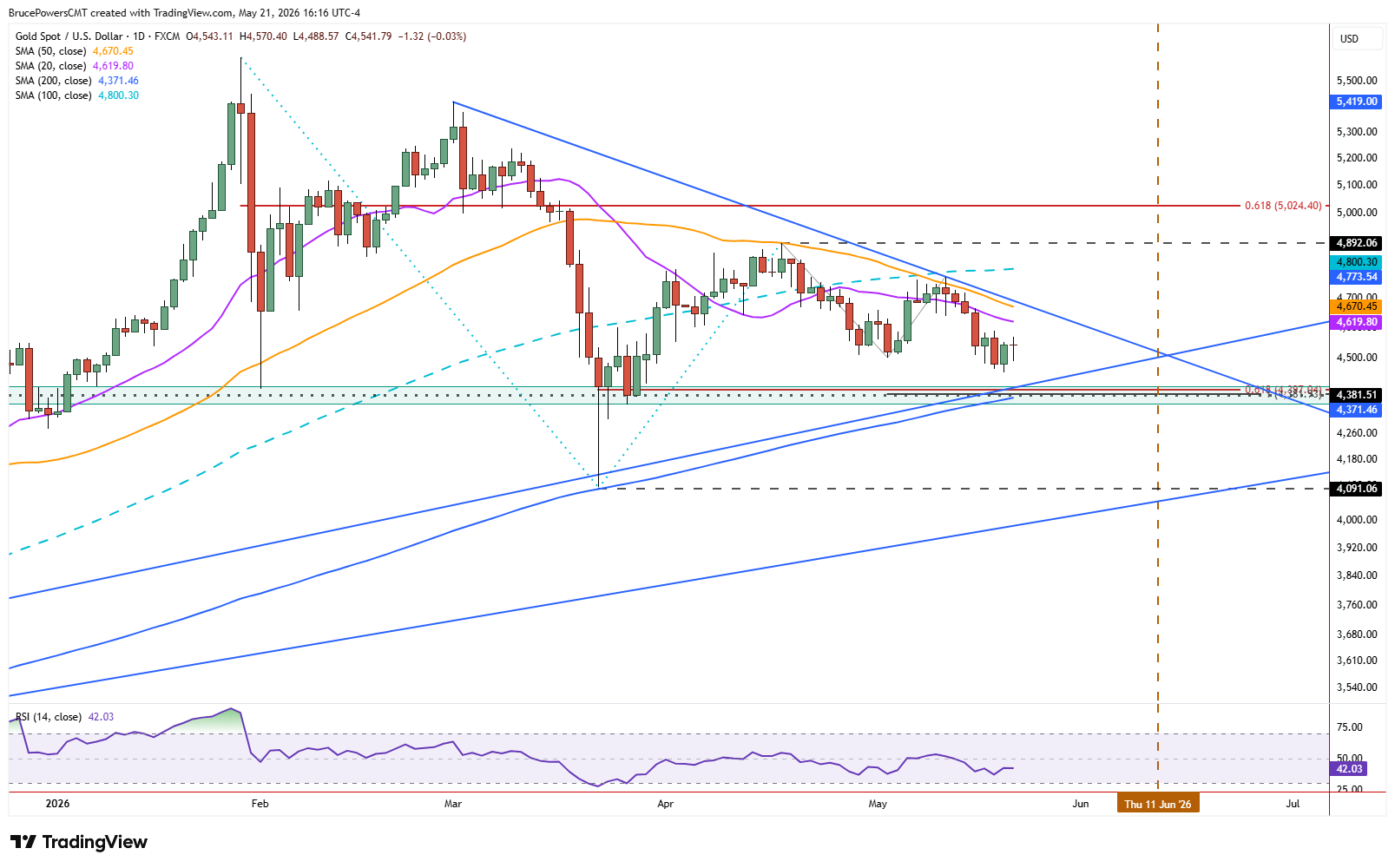
Gold has been consolidating for the past two months inside a relatively wide range established in March. Volatility has been contracting during that time within a larger bearish correction, as market participants await the next move and the return of momentum. The tightening of the price range can best be seen by the symmetrical triangle formation bounded by two trendlines that cross at the apex around June 11.
Gold Price Forecast
Every new Gold analysis as it publishes, today's technical signal and key levels, live price — on one page.
See all Gold forecasts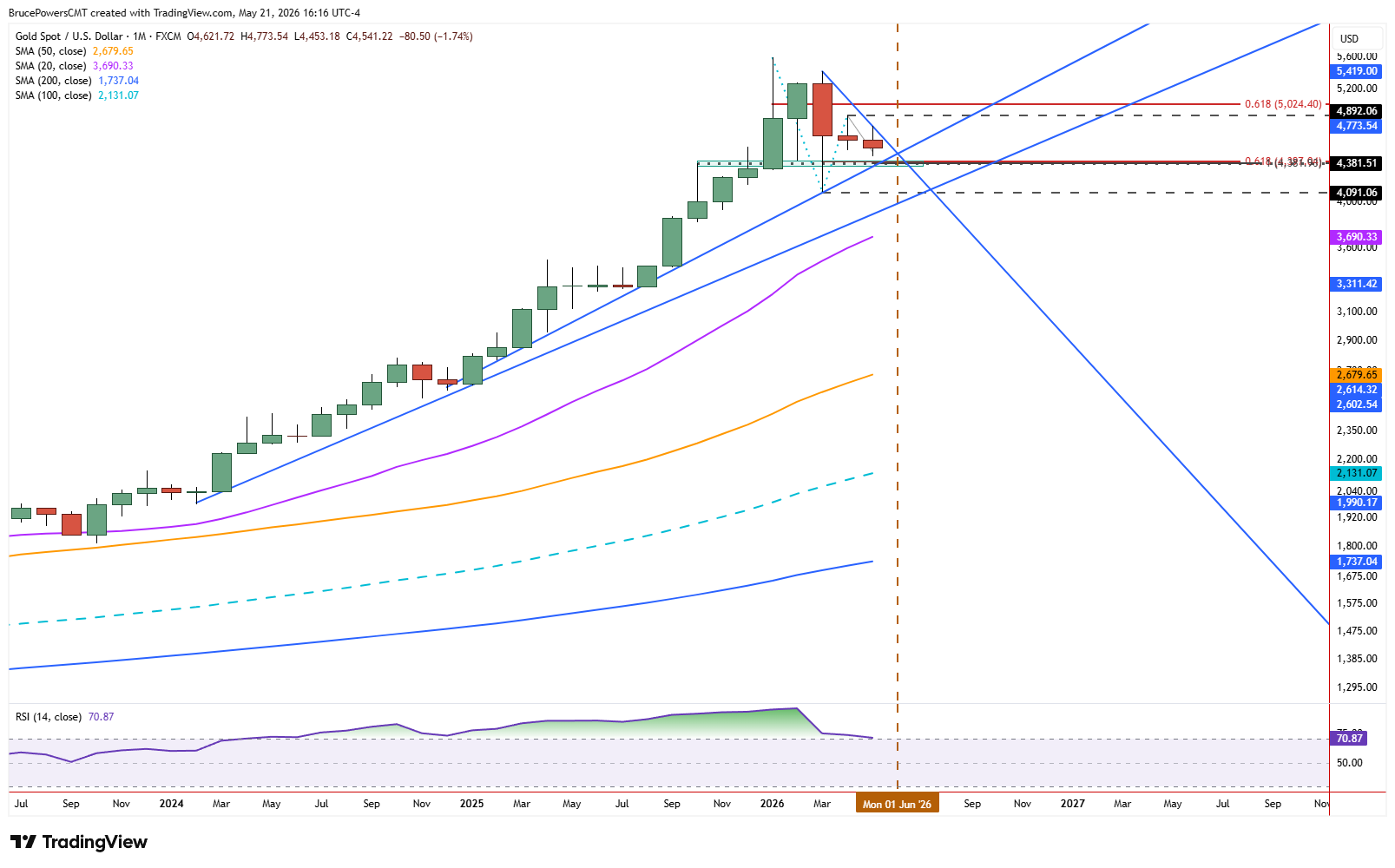
A long-term 200-day moving average ($4,371) marks a key support zone, while the 50-day moving average ($4,671) represents key resistance. The distance between the two has been narrowing noticeably, reflecting the compression in price action that should eventually resolve with a decisive move out of the current range.
A breakout from a symmetrical triangle pattern should happen when price is about 40% to 75% of the way toward the apex of the triangle. Gold looks like it is in that zone now. This means that before June 11, gold will likely break through one of the pattern boundary lines. At that time momentum may spike in the direction of the breakout, potentially marking the beginning of the next sustained trend move following the recent period of contraction.

Bull Trend Structure Remains Intact
The trend structure favours an upside breakout given the recent successful test of support near the 200-day moving average in March, resulting in a higher swing low of $4,091. That was the first test of support near the 200-day average since March 2024, and the clear bullish response confirmed the integrity of the larger bull trend. Therefore, there is no reason to suspect a failure of support on another test. However, that outlook could begin to change on a sustained decline below that indicator.
There is a confluence of possible support starting around the February spike low of $4,401 and down to the 200-day moving average around $4,371. That range includes an uptrend line that was recently joined by the 200-day average. The prior confirmation of support near the 200-day average adds to the possibility of seeing support there again or within the $4,401 to $4,371 price zone.
Resistance Levels Define Upside Trigger
The 50-day moving average is near $4,671 and it continues to indicate dynamic resistance for the immediate trend, along with the downtrend line. A decisive breakout will also trigger the triangle pattern. The lower swing high of $4,774 from May is key resistance from structure after that. A recovery above that high will signal a reversal of the short declining ABCD pattern and increase the chance for further strengthening above the lower swing high of $4,891 from April.
If you’d like to know more about how to trade gold and silver, please visit our educational area.