Fresh strikes from both the US and Iran have dented hopes for a materially more durable peace deal, and markets have responded.
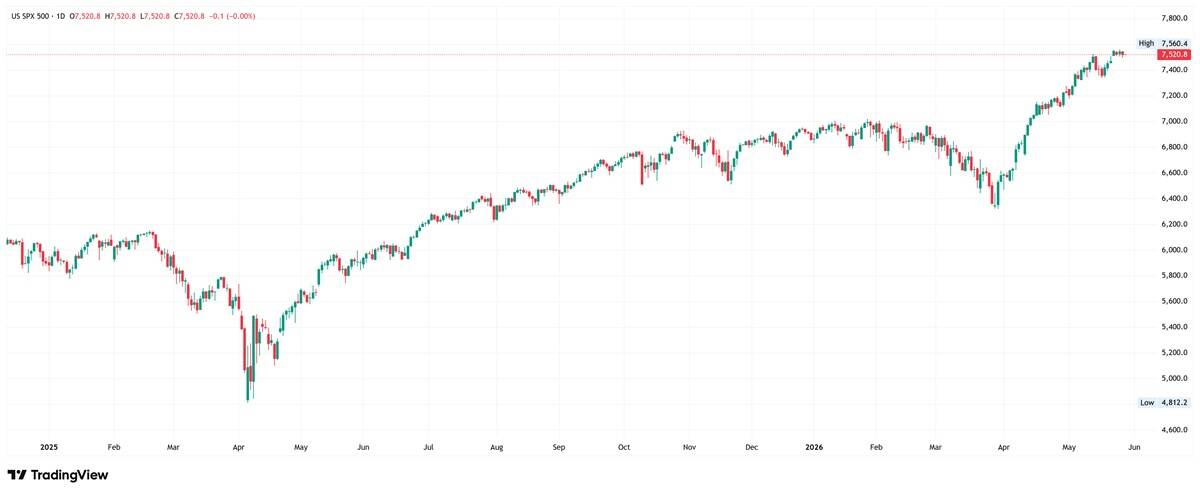
In the equities space, US benchmarks offered mixed performance: 236 stocks rallied in the S&P 500, 263 ended in the red, and sector performance was roughly even. However, Asia-Pacific equity markets unwound sharply overnight, sending key regional indices south and snapping a run higher underpinned by AI-driven earnings momentum.
No Closer to a US-Iran Resolution
The direct catalyst for this morning’s deterioration in risk appetite is a fresh round of US airstrikes targeting an Iranian drone operation in Bandar Abbas, close to the Strait itself. US forces also intercepted four Iranian attack drones aimed at a commercial vessel.
The US describes the strikes as defensive and says the ceasefire framework remains intact, though I would argue the distinction between a ‘defensive’ strike and an escalation is becoming increasingly academic when both sides are exchanging blows with regularity.
What concerns me most is the compounding confusion around the diplomatic track. Iranian state television had circulated reporting suggesting an interim framework was close to being agreed – one that would have seen maritime traffic through the Strait normalising within roughly a month, though the White House dismissed this flatly. President Trump then appeared at a Cabinet meeting to assert that no single nation would govern access to what he described as international waters, without elaborating on precisely how that principle would be enforced in practice.
Markets: Oil, Bonds & the USD
Brent crude has recovered from Wednesday’s downside move, bouncing back toward the mid-90s. That prior decline had been triggered by a brief surge in peace-deal optimism, which now looks, in hindsight, premature. I would note that the longer-dated oil futures curve has remained stubbornly elevated throughout the recent volatility, which to me signals that the market’s base case remains one of prolonged disruption rather than imminent resolution.
Brent Oil Price Forecast
Every new Brent Oil analysis as it publishes, today's technical signal and key levels, live price — on one page.
See all Brent Oil forecastsThe inflationary transmission from elevated energy prices is, in my view, the dominant macro theme heading into the second half of 2026. The 10-year US Treasury yield climbed 4 bps to just above 4.5%, while the 30-year remained above the psychologically significant 5% level, where it has been anchored for most of May. The USD nudged higher against a basket of peers, pressuring the JPY toward ¥160, a level that has historically prompted formal intervention by the MoF.
US PCE Inflation on Deck
The release of the US April PCE price index today at 12:30 pm GMT is certainly one of the single most consequential data points of the week. Energy prices have been running hotter long enough that their first-order impact on headline inflation is no longer in doubt, and I expect the PCE print to reflect that. Consensus sits at 3.8% for the YY headline measure – marking a three-year high – with the core read anticipated at 3.3% YY, comfortably above the Fed’s 2% target.
The USD’s reaction will hinge on whether the core figure surprises to the upside. A reading of 3.4% or above on core PCE would, in my view, cause the front end of the Treasury curve to reprice hawkishly and push USD/JPY through the ¥160 intervention threshold. A softer-than-expected print, however, would provide some breathing room for the Fed, but I would not expect meaningful USD weakness given the geopolitical premium baked into energy prices at the moment.
Fed commentary this week has been notably pointed. Governor Lisa Cook stated explicitly on Wednesday that inflation is heading in the wrong direction and that she stands ready to raise rates should the deterioration persist. Vice Chair Philip Jefferson, speaking in Tokyo on Thursday, was somewhat more measured – acknowledging the labour market’s resilience whilst emphasising that the focus must remain squarely on returning inflation to 2%.
Written by FP Markets Chief Market Analyst Aaron Hill