For much of 2026, the Oil market has behaved as though geopolitical risk begins and ends with disrupted production. Every headline has been interpreted through a familiar lens: how many barrels could disappear, which producers can increase output and whether the Strait of Hormuz remains open.
That framework is becoming increasingly outdated.
The next major advance in Crude prices may not be driven by a sudden collapse in supply. Instead, it could emerge from something far less dramatic – but far more persistent: the global race to rebuild depleted strategic and commercial Oil inventories.
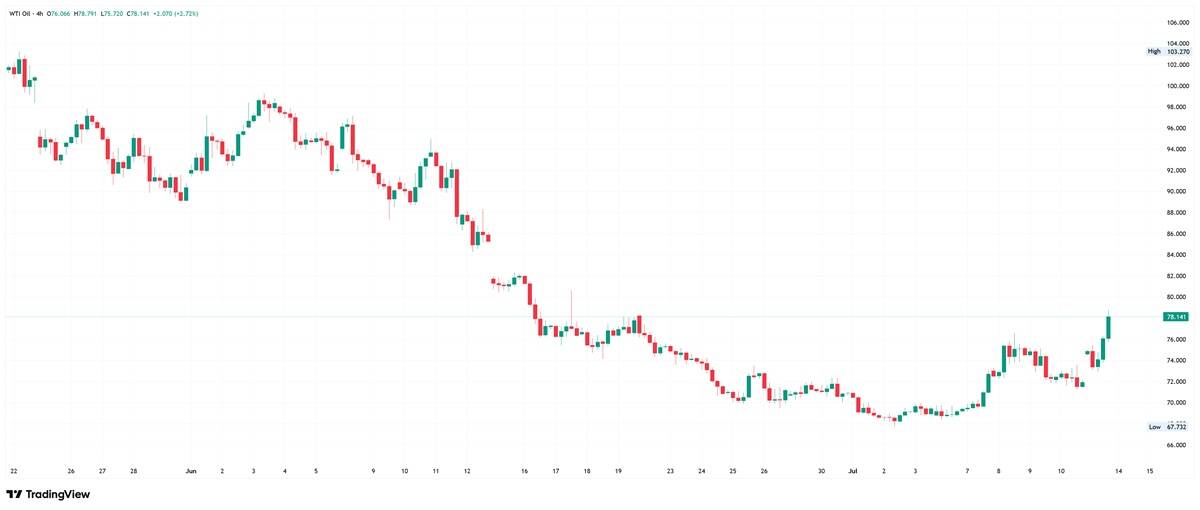
Brent and WTI may have rallied sharply following renewed U.S-Iran military tensions, but the deeper story extends well beyond daily headlines. Governments, refiners and Commodity traders are quietly entering a period where replenishing emergency stockpiles could become one of the strongest structural demand drivers of the decade.
“Most traders remain focused on supply disruption,” says Lars Hansen, Head of Research at The Gold & Silver Club. “The bigger opportunity is recognising that inventory rebuilding creates sustained demand long after the headlines disappear.”

The Emergency Buffer Is No Longer What It Was
The first phase of the Iran crisis was absorbed surprisingly well.
Strategic Petroleum Reserve (SPR) releases, inventory exchanges, rerouted cargoes and softer Asian demand helped prevent a severe supply shock. Markets interpreted those measures as evidence that global energy systems had become more resilient.
The reality is considerably different.
Those emergency barrels were never free. Many were released through exchange agreements requiring equivalent volumes and additional premium barrels – to be returned in the future. What appeared to be additional supply has effectively become deferred demand.
Current estimates suggest replenishment alone could create an additional 500,000 to 750,000 barrels per day of structural crude demand through 2028 as governments restore emergency reserves and commercial inventories recover.
“These are not speculative purchases,” Hansen explains. “They are policy-driven acquisitions that governments and refiners simply cannot postpone indefinitely.”
Brent Oil Price Forecast
Every new Brent Oil analysis as it publishes, today's technical signal and key levels, live price — on one page.
See all Brent Oil forecastsHormuz Is Raising Costs Without Closing
The Strait of Hormuz remains the world’s most critical Oil artery, historically carrying around one-fifth of global seaborne crude trade.
Trump’s proposal to impose a 20% charge on cargoes passing through the strait, alongside renewed military operations and the blockade of Iranian ports, has added another layer of uncertainty to an already fragile shipping environment.
Even without a complete closure, higher insurance premiums, elevated freight costs, security risks and slower tanker movements increase the delivered cost of every physical barrel.
That distinction is increasingly important.
Oil markets no longer require exports to stop entirely in order to tighten. Rising logistical costs alone reduce market efficiency and strengthen the long-term price floor for crude.
“The logistics premium is becoming just as influential as the supply premium,” Hansen says. “Reliable physical delivery has become an increasingly valuable commodity in itself.”
The Quiet Buying Spree Already Beginning
While attention remains fixed on OPEC+ production policy, a more powerful structural trend is quietly gathering momentum.
Strategic reserve replenishment is set to coincide with recovering refinery utilisation, rebuilding commercial inventories and improving Asian crude demand.
Rather than offsetting one another, these forces reinforce each other.
Every barrel purchased for storage removes supply from today’s physical market while strengthening tomorrow’s energy security. Unlike previous cycles driven primarily by consumption growth, this demand is precautionary, policy-led and considerably more persistent.
That combination creates an environment where physical fundamentals may tighten even without a major production shock.
Why This Oil Cycle Could Surprise Almost Everyone
History shows Oil bull markets rarely end when production returns.
They end when confidence returns.
Today, governments recognise their strategic buffers are thinner than before. Refiners are reassessing inventory policies. Traders increasingly value physical availability over theoretical production capacity, while geopolitical uncertainty continues to reshape global shipping economics.
Taken together, these forces point toward a structurally tighter market than many traders currently anticipate.
“The market has spent months pricing geopolitical headlines,” Hansen concludes. “It has yet to fully price the enormous wave of inventory rebuilding that follows them. That may become the defining Oil trade of this decade.”
The next Oil bull market may not begin with a dramatic production collapse or a sudden supply emergency.
It could begin quietly – through thousands of government tenders, refinery purchases and commercial inventory rebuilds competing for the very same physical barrels.
For traders focused solely on today’s headlines, that shift risks being missed.
For those who understand where structural demand is moving next, this could emerge as one of the defining macro opportunities of 2026. The only question now is: Are you positioned to capitalize?