


Gold (XAU) price continues to be pressured by elevated Treasury yields which are dampening demand for the metal. The price has dropped to nearly $4,460 and hit its lowest point since March 30. This is due to the inflation worries that have kept interest rate expectations high. Because gold does not pay interest, higher yields are making bonds more appealing. This environment puts pressure on gold and silver (XAG) prices in the short term.
Gold Faces Pressure as Yields and Dollar Strength Return
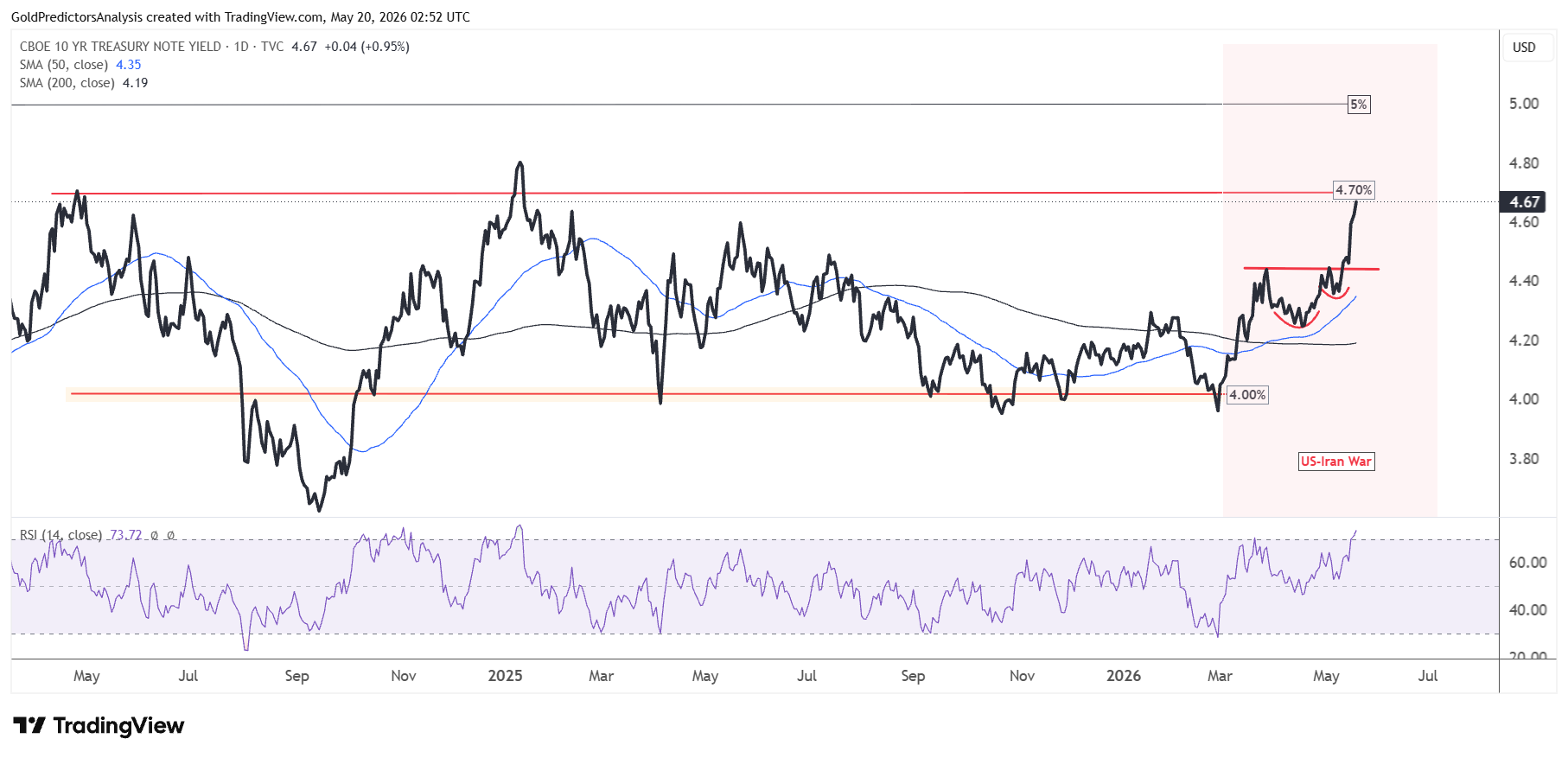
The upside move in the Treasury yields is the main concern. The higher the real rates, the more costly it is to hold the metal. The chart below shows that the 10-year US Treasury yield is approaching the target of 4.70% after forming a strong bullish cup and handle pattern above the 50-day SMA. A break above 4.70% will open the door for a rally to 5%. This surge in yields will likely put further pressure on gold and silver.
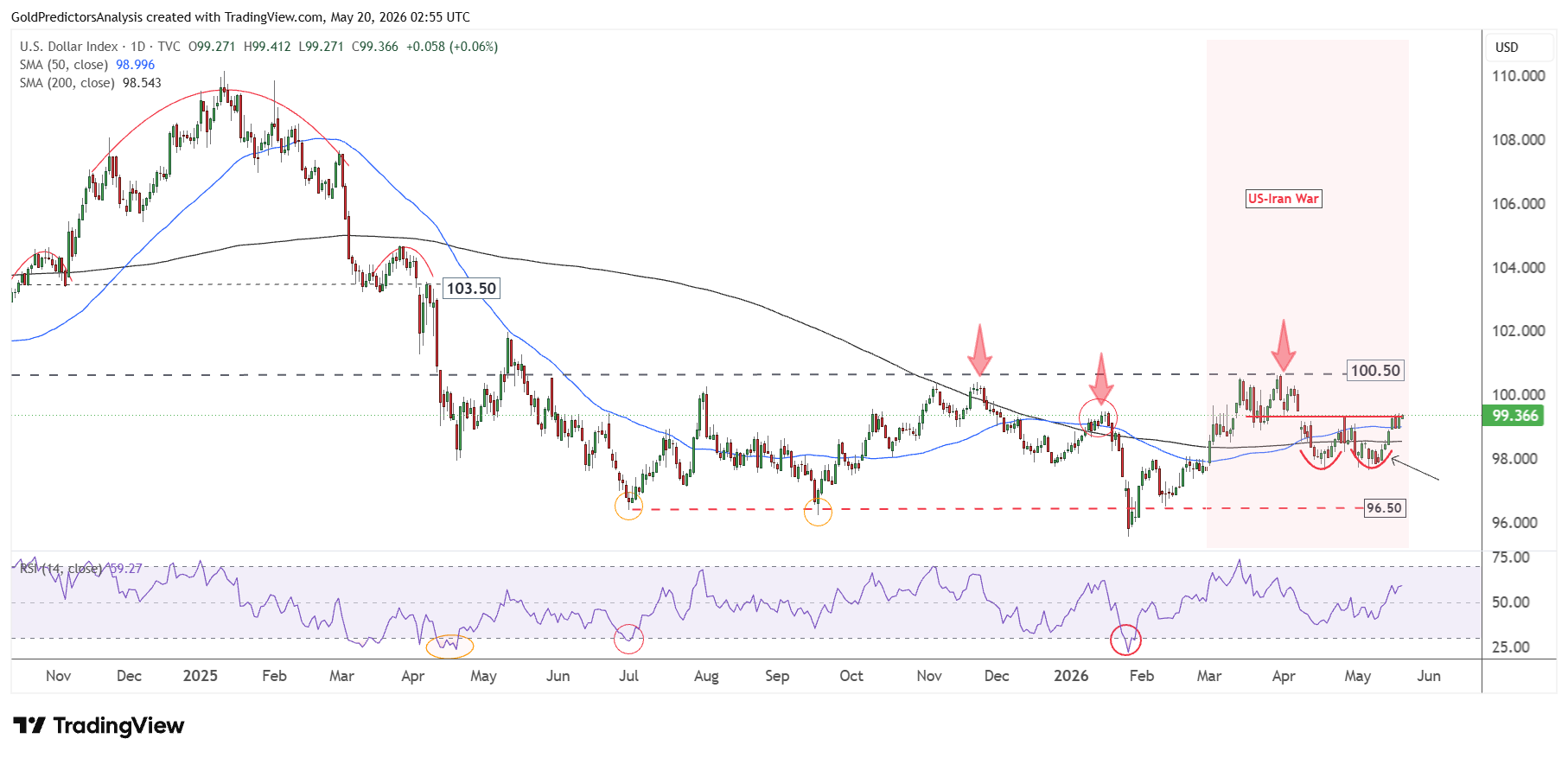
There is also some pressure from a strong dollar, which makes gold more costly to those who don’t use the U.S. currency. The daily chart for US dollar index shows that the index is attempting to break from 99.35 after forming a double bottom pattern. This will likely push the index to 100.50 which will further pressure the gold and silver prices.
The rise in yields and the strength of the dollar normally cap the upside potential of gold even with geopolitical risks in the mix.
The Strait of Hormuz remains an issue and the outlook is complicated. The price of oil could be affected by any delay in reopening the route and the inflationary pressure. This may provide support to gold in the longer term. But in the near-term, the market is concerned with the risk that the central banks may hike interest rates again to combat inflation. Therefore, the gold price may remain weak until yields slow or the U.S. dollar weakens.
Gold Price Forecast
Every new Gold analysis as it publishes, today's technical signal and key levels, live price — on one page.
See all Gold forecastsGold Technical Analysis – Triangle Breakdown Puts 4,350 Support in Focus
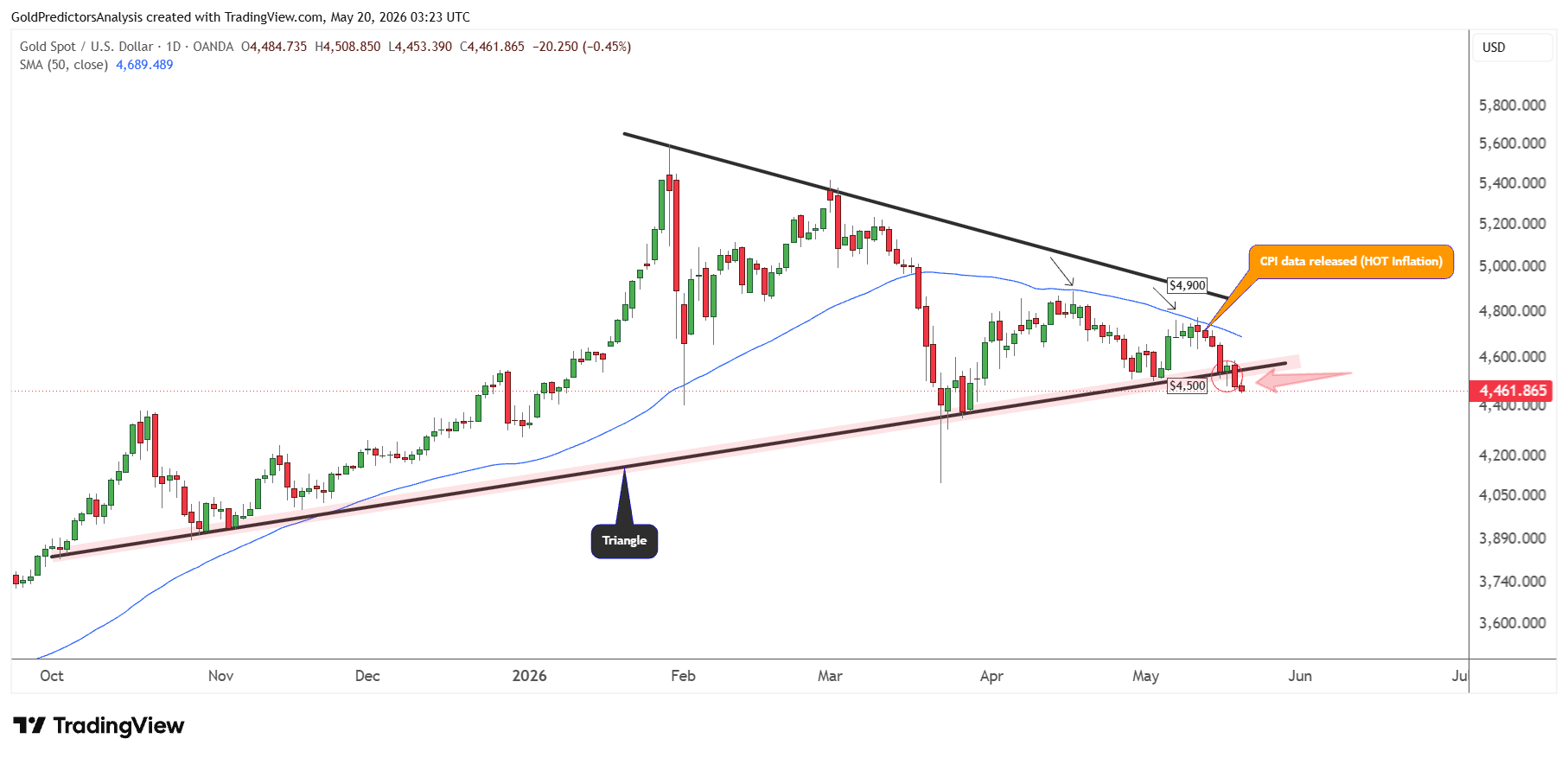
The daily chart for spot gold shows that the price has broken the triangle pattern at $4,500 and is looking for further downside. The price failed to break above the 50-day SMA after the inflation data release, which keeps pressure on the gold price. The break from $4,500 indicates further downside in the short term.
But if the gold price fails $4,350, then it will introduce a strong drop towards $4,000. A recovery above $4,900 can keep the bullish momentum in gold.
The chart below shows the importance of the $4,350 to $4,400 support zone. The chart shows that the $4,400 zone was important during the February 2, 2026 and the March 23, 2026 drop.
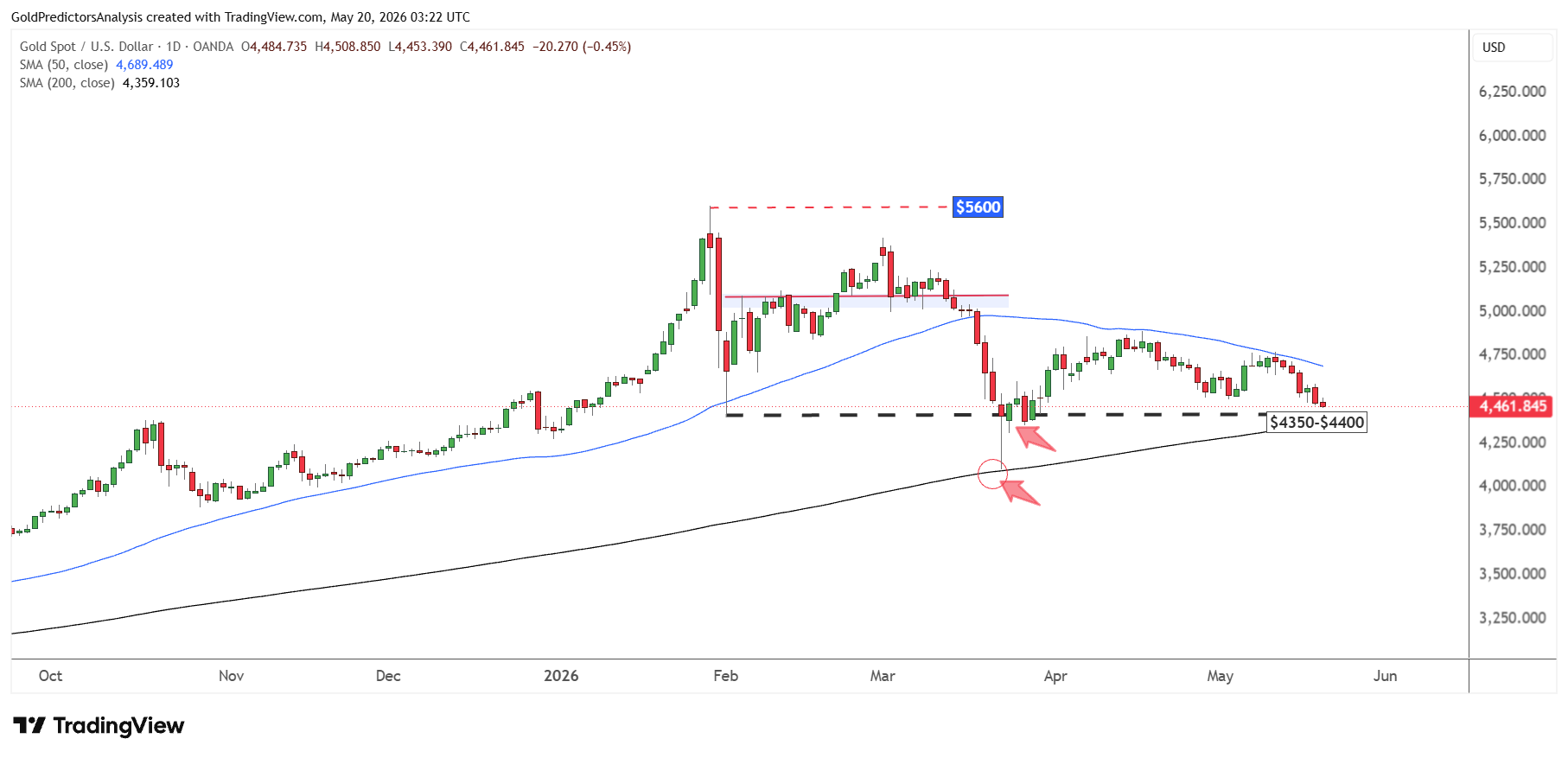
This level was held on a closing basis in the gold market. Now, the 200-day SMA is also coming towards $4,360. Therefore, if the gold price drops towards $4,350 and rebounds to close above the $4,400 area, it might produce a strong reversal around this zone. But a break below $4,350 will indicate further weakness towards $4,000.
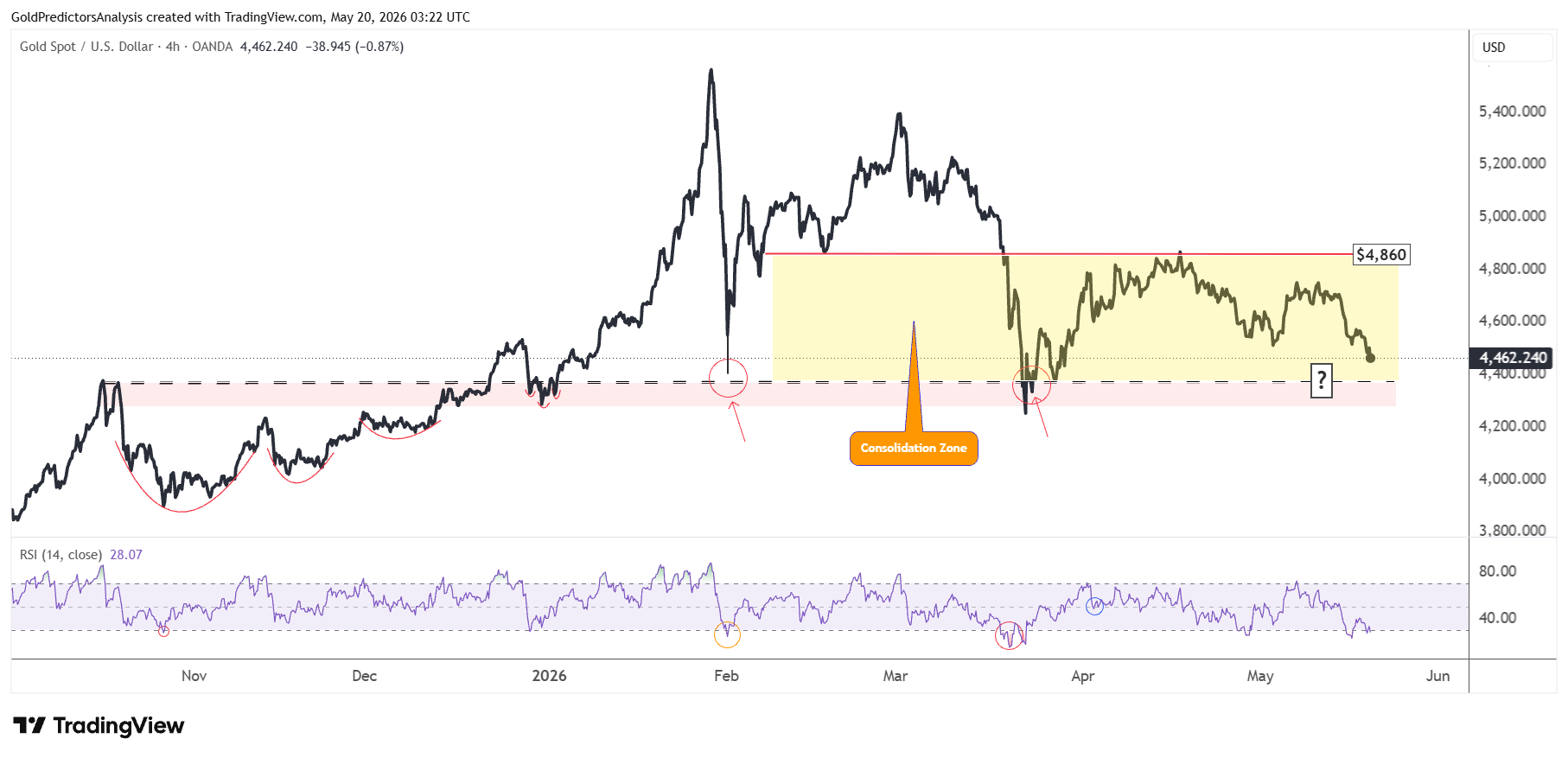
The short-term direction for the gold market remains uncertain as seen in the 4-hour chart below. The chart below shows that the price is consolidating within the yellow zone. A break in this zone can introduce the next move in the gold market. The RSI has reached oversold levels in the short term, but momentum remains negative.
Silver Technical Analysis – Short-Term Pressure Builds Below $76
The daily chart for spot silver shows that the price failed to break above the $89 area and dropped lower towards the $72 support level. A break below $72 to $70 will likely introduce further downside towards the $60 to $50 support zone.
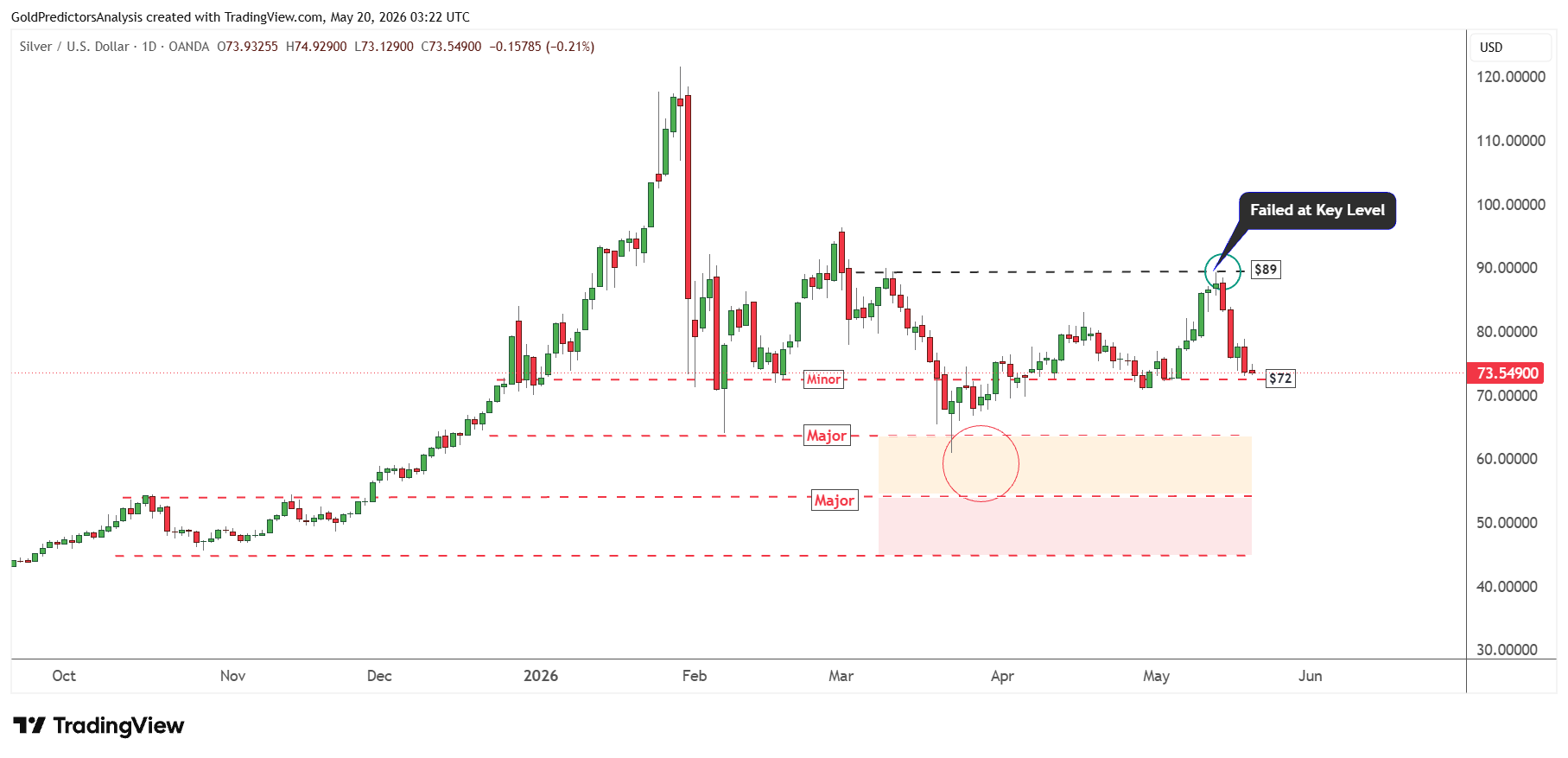
As long as the red highlighted region in the chart between $45 and $55 holds, the silver price will likely remain strong in the long term. But the short-term price action remains under pressure and looks to trade lower.
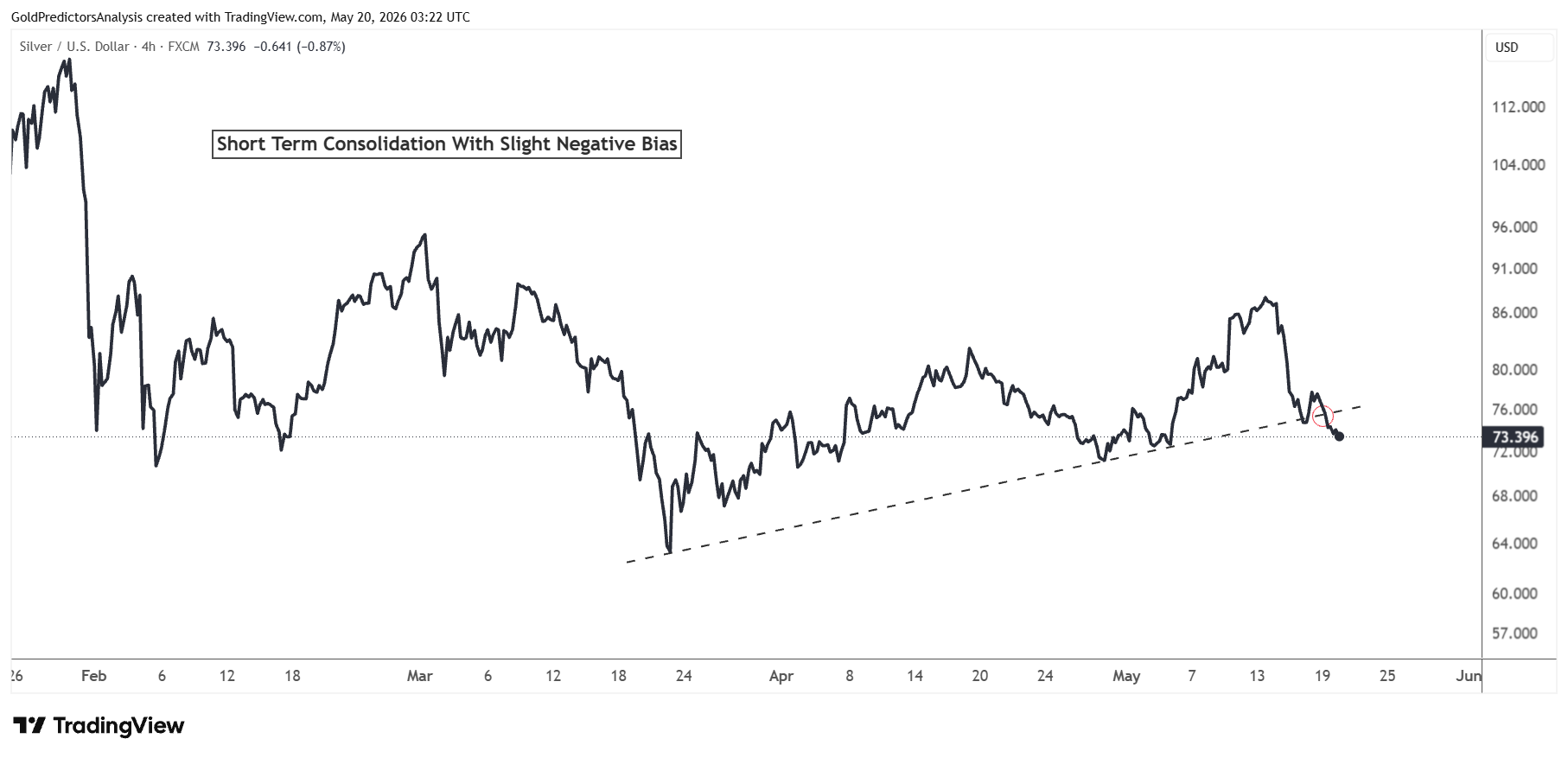
The short-term direction for spot silver shows strong consolidation. The 4-hour chart below shows that the price has broken the dotted trend line. This breakout suggests a negative trend in the short term. A recovery above $90 can ease the bearish pressure in silver prices. However, a break below $70 will likely introduce further downside towards $60.
Bottom Line
Gold and silver prices remain under pressure as escalating U.S. Treasury yields, a strengthening U.S. dollar and inflation fears continue to take a toll on investor sentiment. The triangle pattern on gold has broken down below $4,500 and is looking for the $4,350-$4,400 as the key support zone. A good bounce from this level should bring a quick turnaround. But a confirmed break below $4,350 can lead to a more severe decline to $4,000.
Silver is also unchanged following a $90 failure to make it back to trend support on the short term time frame, with the price now near $73. A break below $70 could carry the decline towards $60, but a rally above $90 would help to alleviate bear pressure.
Read More: Can XAUUSD Defend $4,400 as Treasury Yields Rise?


