
Gold Opens Week Under Pressure as Oil Spike Shifts Focus to Inflation and Yields
Spot Gold (XAUUSD) is opening Monday under pressure and it isn’t a straightforward safe-haven story. The U.S.-Iran talks collapsed over the weekend and the naval blockade announcement sent oil above $100. Gold should be running on news like that. Instead it’s selling off. That tells you the inflation and rate narrative is overriding the geopolitical bid right now.

Technical Outlook
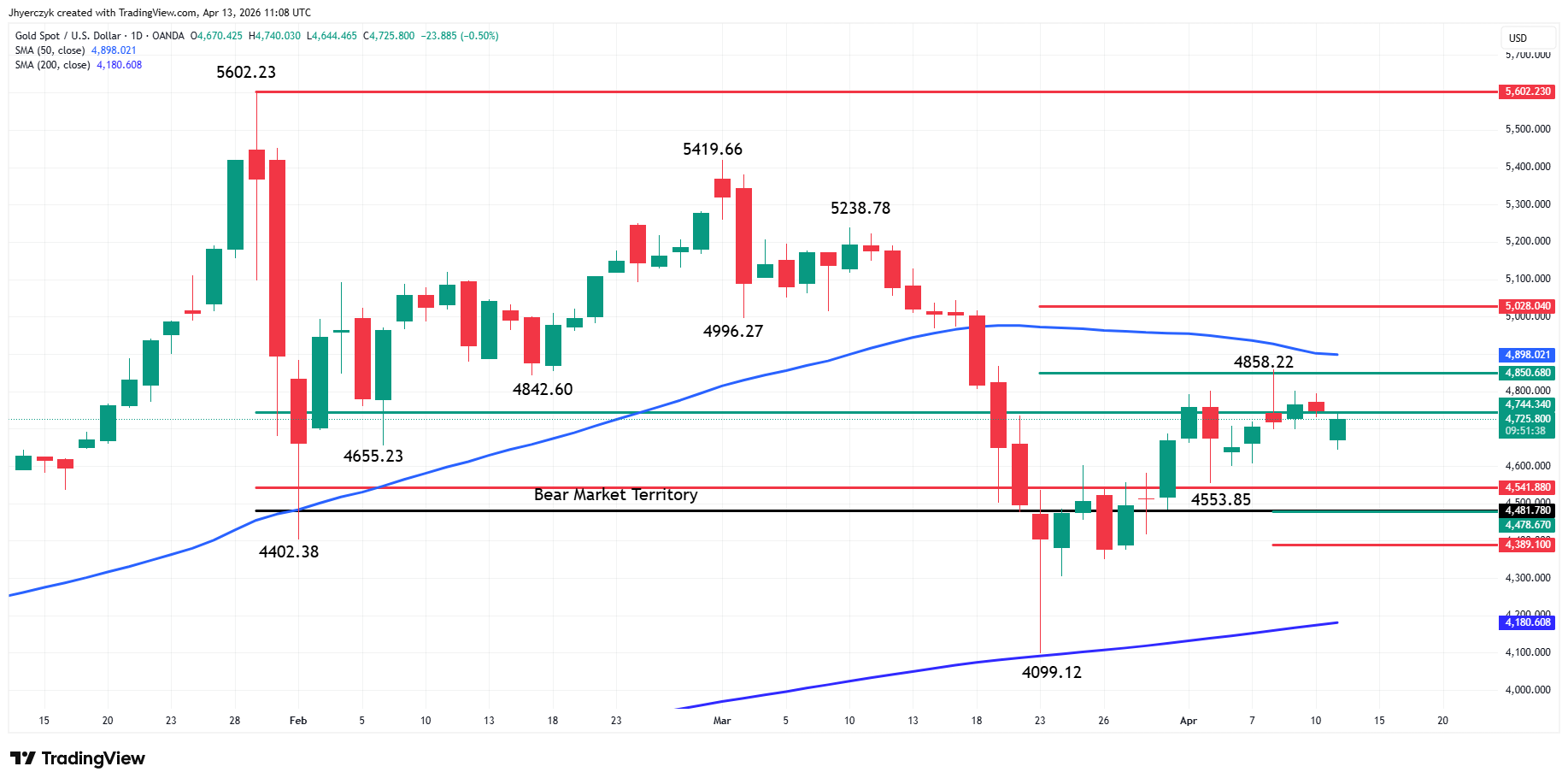
XAUUSD is edging lower on Monday after crossing to the weak side of a major 50% level at $4744.34. Trader reaction to this pivot is likely to set the tone for the week. The early price action indicates traders are gearing up for a downside bias.
The daily chart indicates the market is open to the downside with the next major target the long-term 61.8% level at $4541.88.
Overcoming $4744.34 will be a sign of strength, but the market is likely to face headwinds at $4850.68, $4858.22, last week’s high, and the major 50-day moving average at $4897.91.
Neutral with a slight bias to the downside is the best way to describe the trade right now. Broadly speaking, the 50-day MA at $4897.95 and the 200-day MA at $4180.59 are controlling the larger range with $4539.27 its mid-point.
If you want an even tighter range, watch the reaction to the longer-term zone at $4744.34 to $4541.88.
Gold Price Forecast
Every new Gold analysis as it publishes, today's technical signal and key levels, live price — on one page.
See all Gold forecastsBlockade Escalation Sends Oil Above $100 and Complicates the Gold Trade
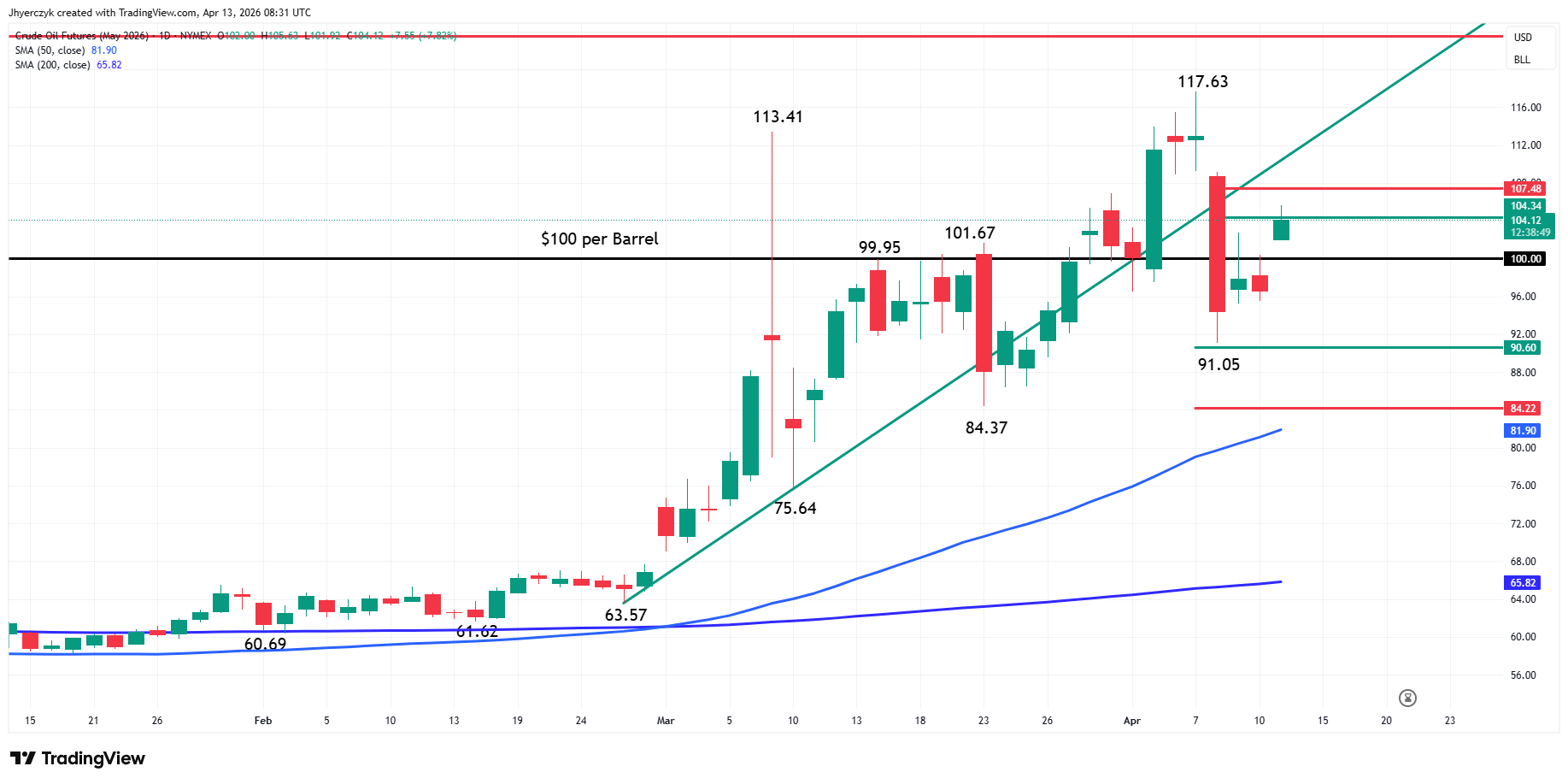
The U.S. decision to initiate a naval blockade around Iranian ports is a significant escalation. Iran responded with strong warnings about the Strait of Hormuz and WTI crude pushed above $100 immediately. That’s where the gold story gets complicated. Geopolitical instability normally brings safe-haven buyers into gold. But when the instability comes with an oil spike that feeds inflation, the calculus changes. Higher inflation expectations reduce the chances of Federal Reserve rate cuts, push Treasury yields higher and strengthen the U.S. Dollar Index. All three of those moves work against gold at the same time.
Rate Cut Expectations Retreating, Dollar and Yields Moving Higher
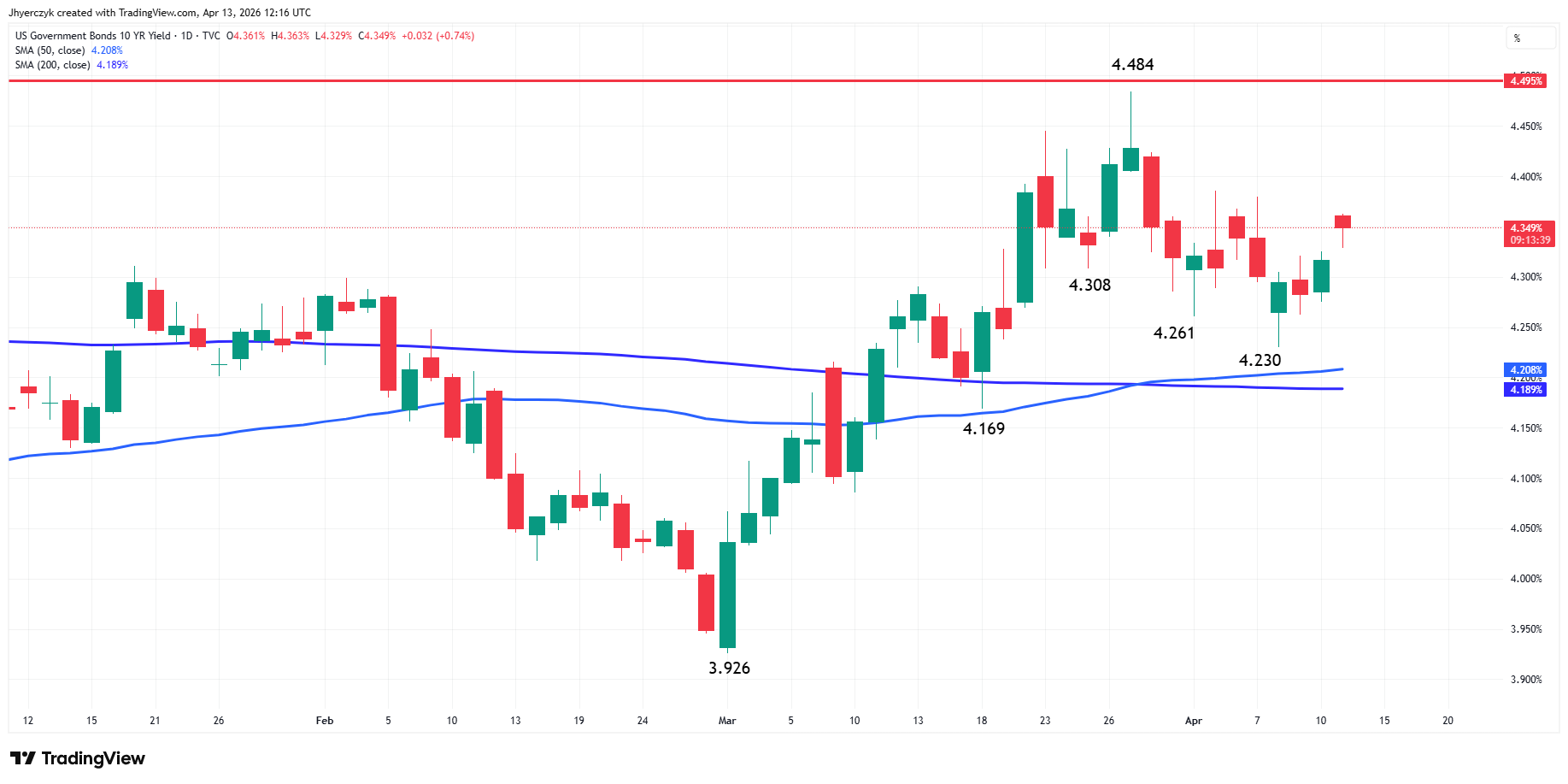
The market is already adjusting. Expectations for a December rate cut declined over the weekend. U.S. Treasury yields edged higher across the curve signaling a more restrictive policy outlook. The U.S. Dollar Index gained traction as a safe-haven currency on top of that. A stronger dollar makes gold more expensive for foreign buyers and that’s another layer of selling pressure on top of the yield headwind.
The core inflation data from last week showed prices rising less than expected and that’s the one supportive factor in this picture. But the concern is that elevated energy prices spill into broader inflation over the coming months and erase that relief. The Federal Reserve is watching the same data and they’re not ready to move.
Fundamental Outlook
I’m not chasing gold in either direction this week. The geopolitical risk is real but so is the inflation headwind from oil above $100. Until one of those forces wins out, this market is going to chop. A de-escalation that brings oil lower gives the Federal Reserve more room and gold catches a bid. Oil stays elevated, yields stay firm and the dollar stays strong, gold stays under pressure. Watch the oil market. That’s what’s running gold right now.
More Information in our Economic Calendar.