


Gold Finds a Floor at $4644 but the Path of Least Resistance Is Still Lower
Spot Gold (XAUUSD) is holding on Friday after buyers stepped in to defend $4644.46 but this isn’t a recovery. It’s a pause. The same forces that pressured gold all week are still in place and the charts aren’t giving bulls much to work with. Keep reading for the levels and what needs to change to shift the bias.
Gold Stalls Below the 50-Day and the Chart Tells You Why
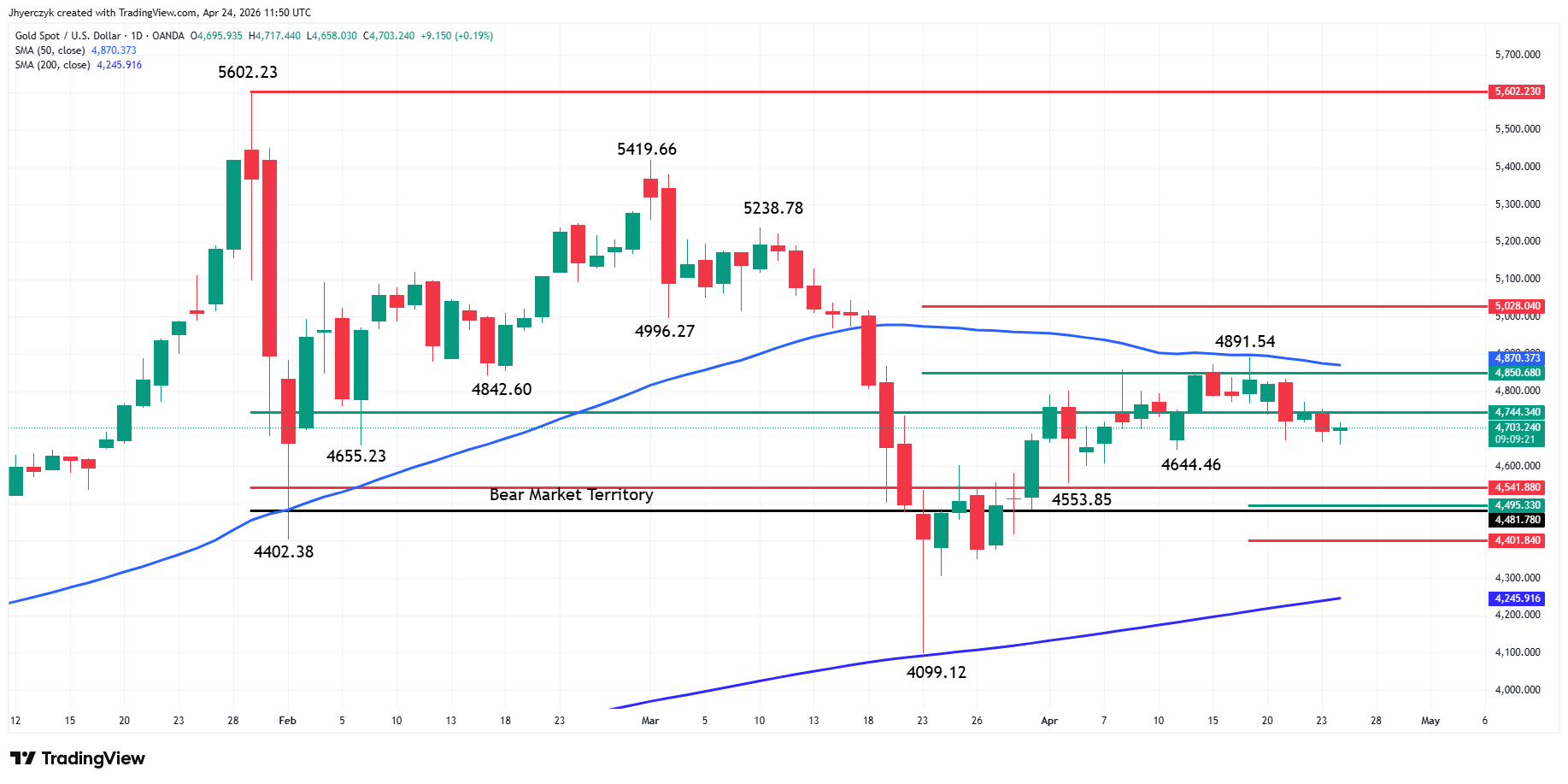
Spot Gold (XAUUSD) is inching higher on Friday after traders came in to defend the recent swing bottom at $4644.46. This price is also a potential trigger point for an acceleration to the downside.
At 12:32 GMT, XAUUSD is trading $4707.52, up $13.43 or +0.29%.
Nearby resistance is the 50-day moving average at $4870.42. After a successful test of it on April 17, the market has produced a series of lower-highs and lower-lows, indicating the presence of sellers and the lack of buying interest.
The market is also trading on the weak side of a long-term pivot at $4744.34. If the selling pressure persists and $4644.46 is taken out then look for the move to possibly extend into the long-term 61.8% level at $4541.88.
Our key value area is $4495.33 to $4401.84. This is where I think gold is going. Last week, it gave traders a chance to buy strength and play for a breakout over the 50-day moving average. When this move failed to materialize, bids got pulled and sellers took over.
Over the near-term I believe traders will be offered the opportunity to buy again, but this time in the value zone at $4495.33 to $4401.84. With the trend up according to the 200-day moving average at $4245.95, traders will see value using the 200-day moving average as their lean. Simply put, I’m looking for a clear buy the dip opportunity.
Gold Price Forecast
Every new Gold analysis as it publishes, today's technical signal and key levels, live price — on one page.
See all Gold forecastsOil Above $100 Is Gold’s Biggest Problem
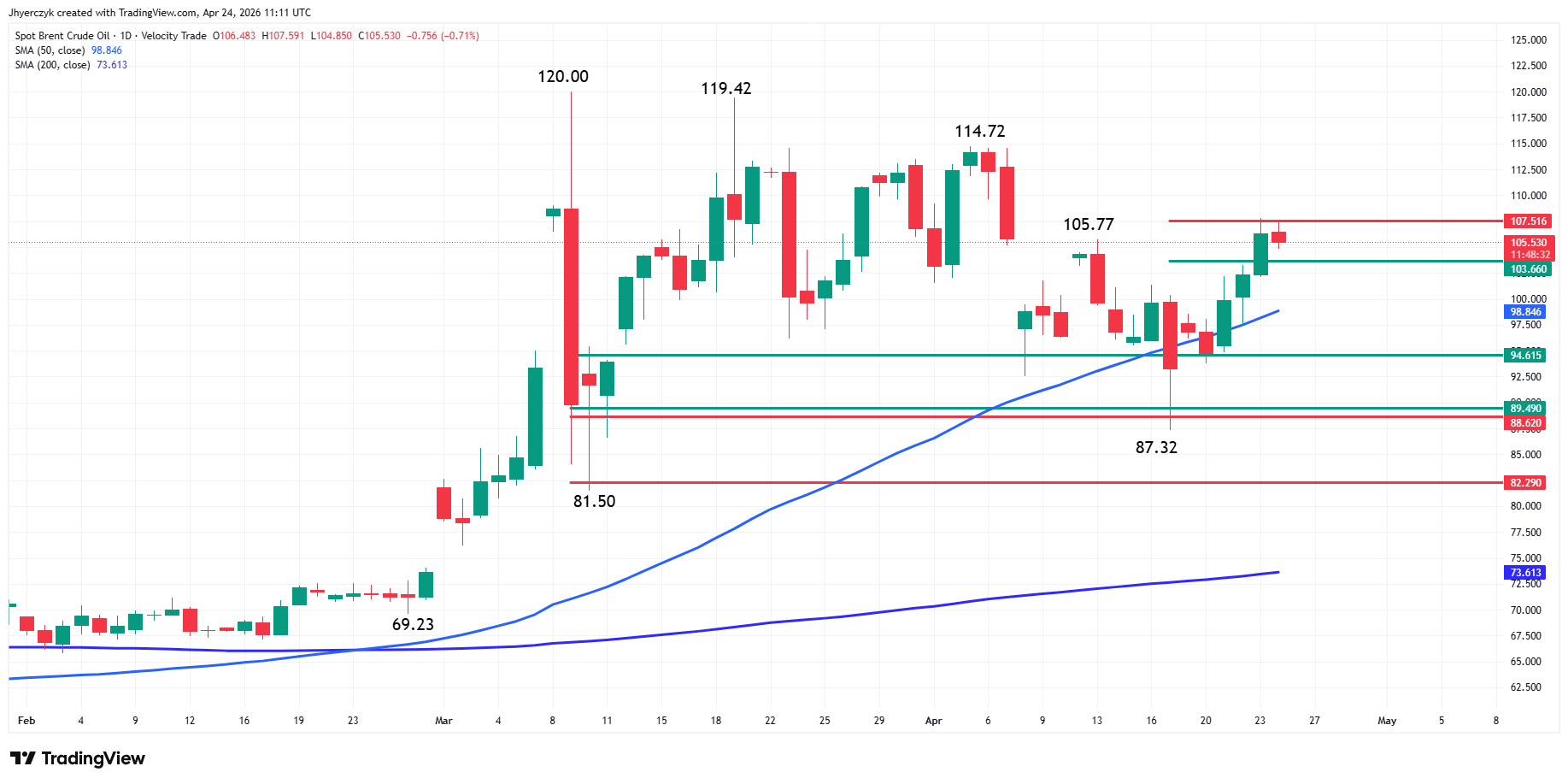
Spot Brent Crude Oil jumped roughly 18% this week and held above $105 a barrel. That move is tied directly to the Strait of Hormuz situation and it’s creating a ceiling on Spot Gold (XAUUSD) that most people aren’t talking about clearly enough. Here’s the problem. Higher oil means higher inflation. Higher inflation means the Fed holds rates longer. The Fed holding rates longer keeps the dollar firm and pulls capital toward yield bearing assets. Gold sits in the middle of that chain and gets squeezed from both ends.
Gold is supposed to be the inflation hedge but that only works when rates are falling or expected to fall. Right now rates are going nowhere and oil above $100 is the reason why. The 10-Year U.S. Treasury yield is climbing and the U.S. Dollar Index is firming. Those two things together are enough to cap any rally in Spot Gold (XAUUSD) regardless of what the geopolitical picture looks like.
The Failed Breakout Told You Everything
Last week gold had a shot at the 50-day moving average and couldn’t take it out. That’s the tell. When a market gets a clean look at resistance and stalls, bids get pulled and sellers move in. That’s exactly what happened and now gold is on track for its first weekly loss after four straight weeks of gains. The momentum shifted when that breakout failed and it hasn’t come back.
The One Bullish Case Worth Watching
Physical demand out of India and China is picking up and premiums in India are tightening on supply constraints. That’s real demand and it doesn’t disappear because Treasury yields are rising. It provides a floor but right now it isn’t strong enough to override the rate and dollar headwinds hitting gold from the other direction.
What I’m Actually Looking For
I’m not interested in buying Spot Gold (XAUUSD) up here. The value zone at $4495.33 to $4401.84 is where I want to see buyers show up. The 200-day moving average at $4245.95 is the long-term anchor and as long as it holds the trend is up and the buy the dip structure is intact. That’s the trade I’m waiting for. A clean pullback into value with the 200-day MA as the lean and a defined exit if it fails.
More Information in our Economic Calendar.