Spot Gold Takes a Second Hit as Inflation and Yields Close In
Spot Gold (XAUUSD) is trading near $4,685.05, down roughly $30 on the session Wednesday. Two straight days of selling and the source is the same both times. Inflation is running hot, yields are climbing and the Fed is not cutting. The Producer Price Index came in at 1.4% for the month against an expectation of 0.5%. Annual producer inflation hit 6%, the hottest reading since December 2022. That landed one day after CPI printed the sharpest annual increase in three years. Gold is paying for both of them.

Technical Outlook
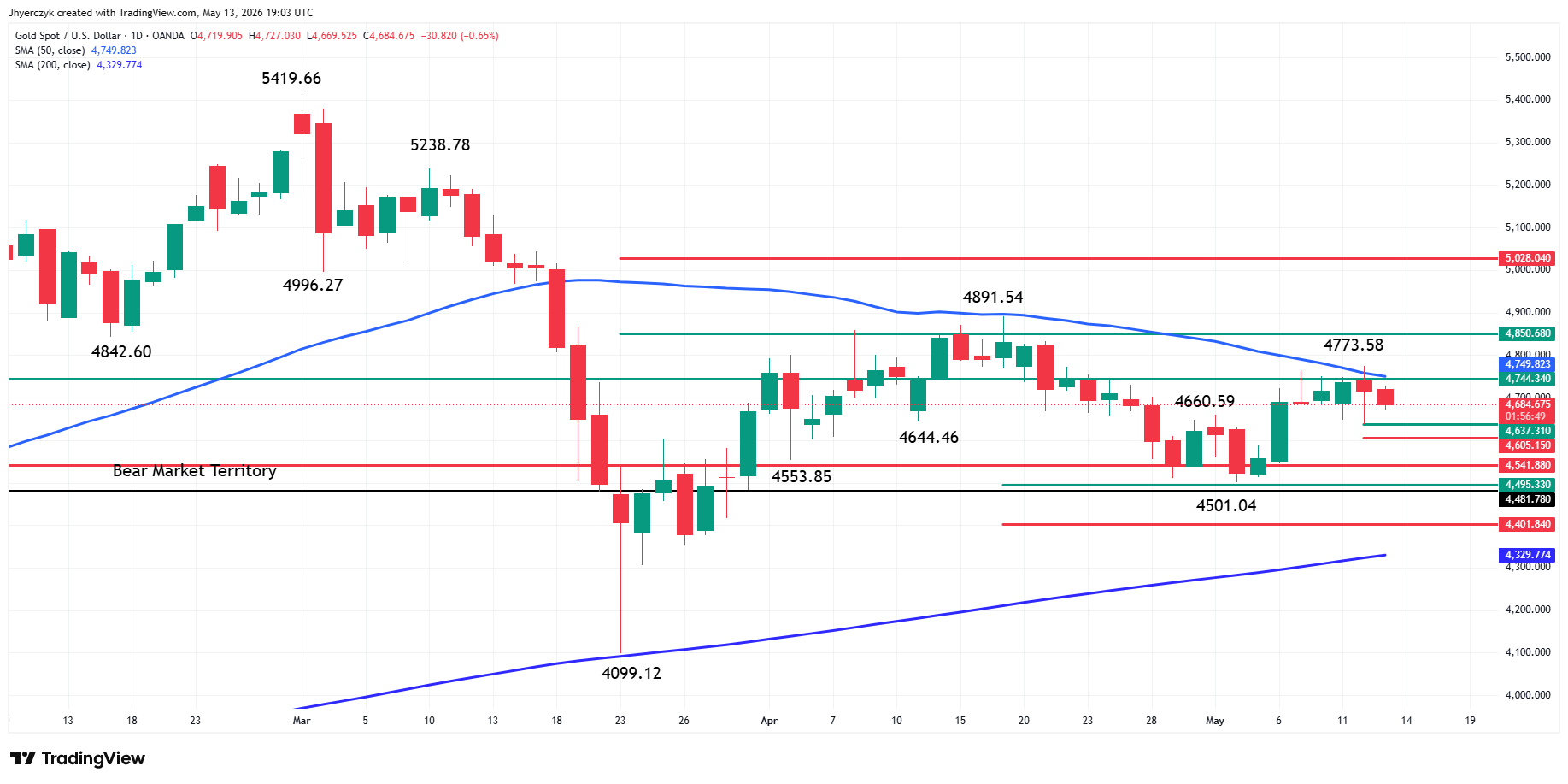
Late in the session on Wednesday, Spot Gold (XAUUSD) is edging lower after being rejected by the long-term 50% level at $4,744.34 and the 50-day moving average at $4,749.89 for the fifth straight session. This price action indicates that the resistance cluster formed by these two points is the key area to overcome if gold is going to have any chance at a short-term breakout rally.
The bullish scenario has the market breaking out over the 50-day moving average and running into immediate headwinds at another retracement zone at $4,850.68 to $5,028.04. Most of all, this zone holds the last main top at $4,891.54. The last main top before $5,238.78 to $5,419.66.
If the market cannot overcome the 50-day moving average at this time then that will tell us it does not have buyers interested in taking out offers or buying strength. They are going to be passive bidders.
The minor support is the retracement zone at $4,637.31 to $4,605.15. That was tested successfully on Wednesday. If this area holds then it will give the bulls time to build strength for another attempted breakout move.
If $4,605.15 fails then look for the selling to possibly extend into the major support cluster containing the long-term 61.8% level at $4,541.88, a minor 50% level at $4,495.33 and a minor 61.8% level at $4,401.78.
Sandwiched in there is $4,481.78. This is the line that separates the bull market from a bearish market.
The major support and long-term trend indicator remains the 200-day moving average at $4,329.79.
Some traders are calling gold neutral, but with the market breathing on a 50-day moving average breakout, I have to say it is leaning to the upside.
Low volume is the giveaway that buyers are willing to take out offers, they just do not have the numbers at this time. Continue to see buying on the dips until the aggressive investors get the clarity in the fundamentals to trade with conviction.
Gold Price Forecast
Every new Gold analysis as it publishes, today's technical signal and key levels, live price — on one page.
See all Gold forecastsTwo Inflation Prints in Two Days
April Producer Price Index came in at 1.4% for the month against a 0.5% estimate. Annual producer inflation hit 6%. That is not a rounding error and it did not arrive in isolation. Tuesday’s CPI showed consumer inflation running at the fastest annual pace in three years. Two consecutive reports moving in the same direction tell me the inflation story is not fading on its own.
The energy component is doing most of the work. June WTI crude oil above $100 runs through transportation, manufacturing and production costs before it shows up in a monthly print. Tuesday was energy-driven CPI. Wednesday was energy-driven PPI. The Fed is watching the same data traders are and neither report gives them room to move.
Yields Are Doing the Damage
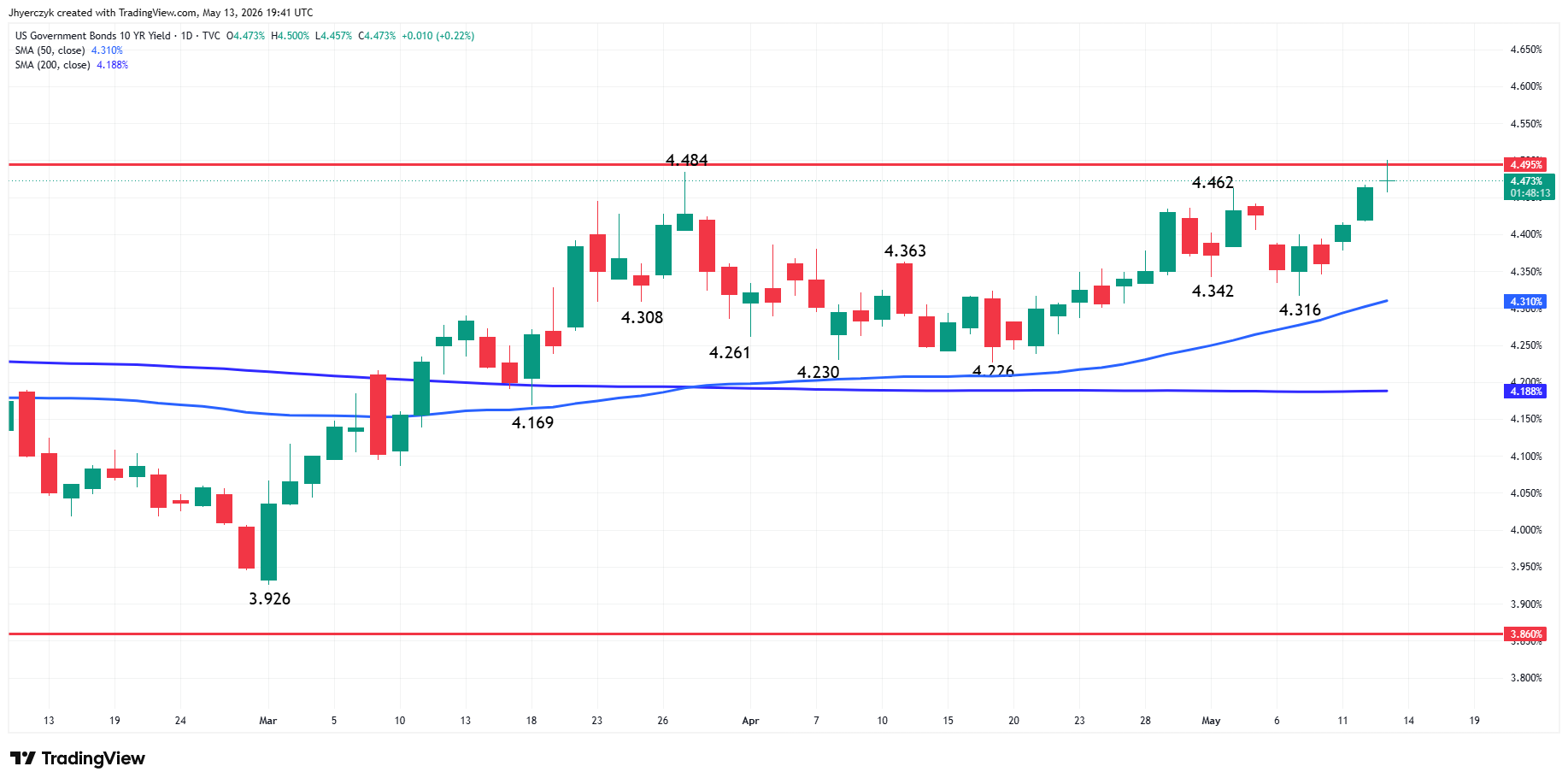
The 10-Year U.S. Treasury yield climbed to 4.49% Wednesday, its highest level since July 17. The 30-year yield pushed above 5%. Those moves are not abstract. They are a direct competitor to Spot Gold (XAUUSD). When fixed income is paying at those rates and the Fed is not cutting, the argument for holding a non-yielding metal gets harder to make every session. Rate hike expectations moved sharply this week. Traders now see a 34.3% chance of a December hike, up from around 15% just one week ago. That repricing is the mechanism behind gold’s two-day slide and it does not reverse until inflation data gives it a reason to.
The Dollar Is Adding Pressure
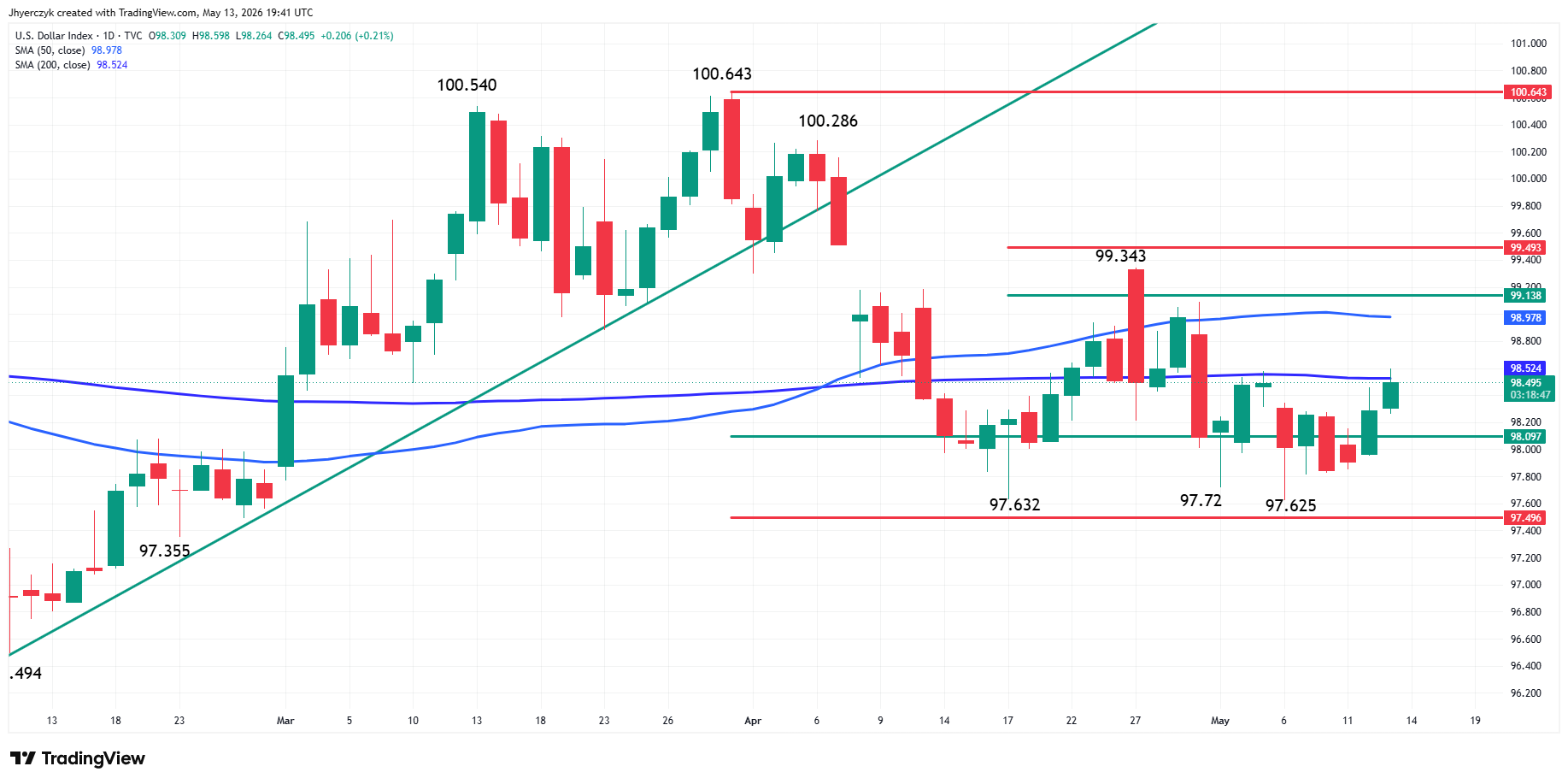
The U.S. Dollar Index rose to 98.56 Wednesday after touching a two-week high earlier in the session. A stronger dollar makes Spot Gold (XAUUSD) more expensive for every buyer outside the United States. When yields are climbing and the dollar is strengthening at the same time, gold is fighting a two-front battle and losing ground on both. That is the setup Wednesday and neither driver is showing signs of reversing before the next inflation data point arrives.
India Raised Gold Import Tariffs
India unexpectedly raised import tariffs on gold and silver to 15% from 6% Wednesday. India is one of the world’s largest physical gold consumers. A tariff jump that size does not disappear from the demand picture quietly. Physical buyers slow down, dealers pull back and the long-term price support that comes from consistent Asian demand gets thinner. It landed on an already difficult day for the metal and added another bearish layer on top of yields and the dollar.
The Beijing Summit Is the Background Risk
Trump arrived in Beijing with Nvidia CEO Jensen Huang and Tesla CEO Elon Musk alongside. Any signal out of the Trump and Xi meetings that eases trade tensions could support global growth expectations and reduce some safe-haven demand. Any deterioration in those talks adds risk back into the picture. Neither outcome directly moves Spot Gold (XAUUSD) today but both have the potential to shift the dollar and growth expectations in ways that feed back into the gold trade within sessions.
What I’m Watching
The 50-day moving average at $4,749.89 is the ceiling that has now rejected five straight attempts. Until that breaks the bears have the easier side of this trade. The minor support at $4,637.31 to $4,605.15 held Wednesday and that gives the bulls a foothold. Lose $4,605.15 and the major support cluster at $4,541.88 to $4,401.78 becomes the next test with $4,481.78 inside it as the bull and bear market dividing line. The 200-day moving average at $4,329.79 is the long-term floor. Everything between the 50-day MA and the 200-day MA is the range this market is trading until either the inflation picture shifts or the Fed signals something has changed. Neither happened Wednesday.
More Information in our Economic Calendar.