Resistance Zone Pressures Gold
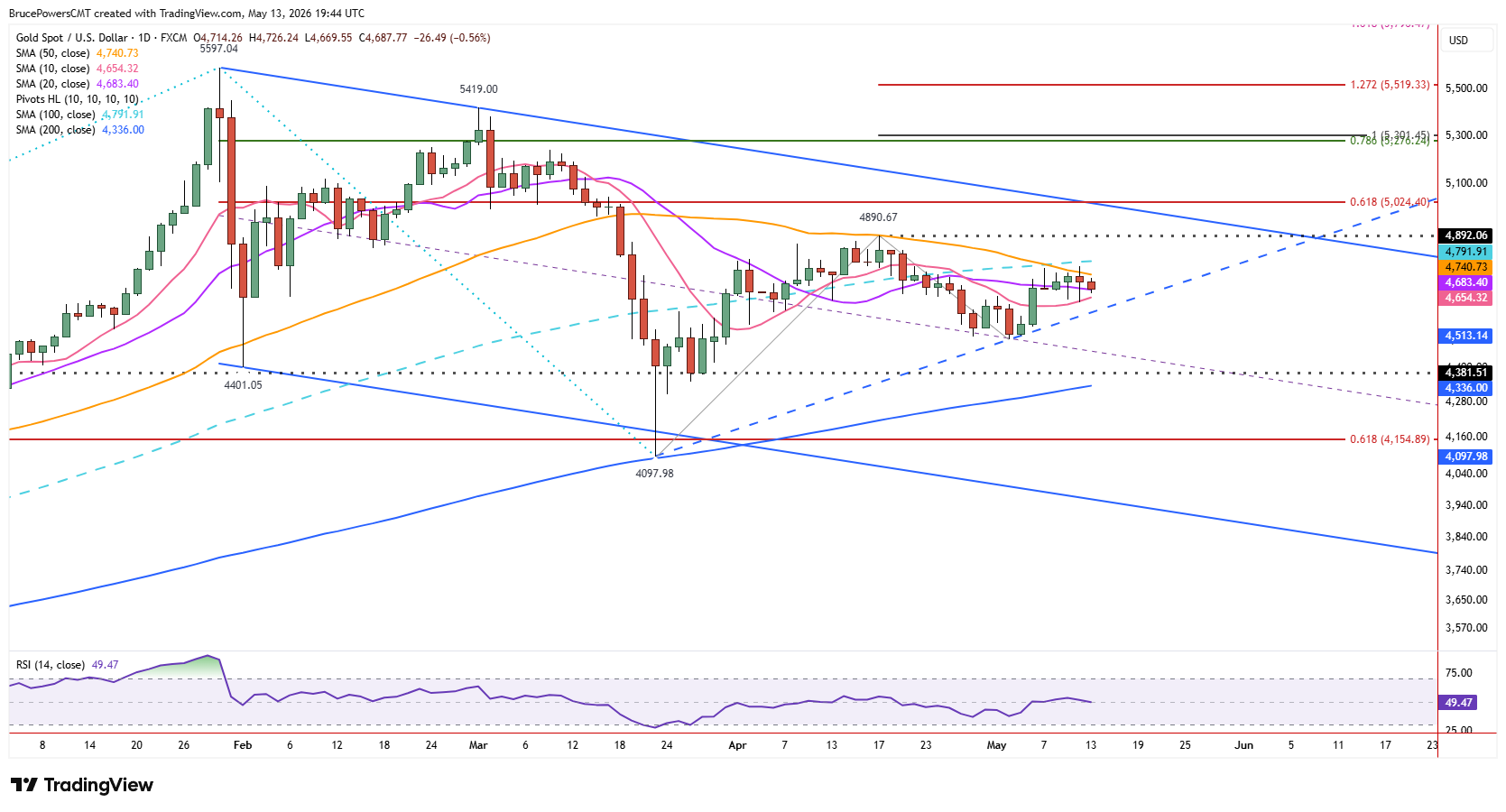
Gold retained strength Wednesday, as it consolidated inside a five-day range and near support of the 10-day moving average. It continues to test resistance near the 50-day and 100-day moving averages. Recently, bearish momentum was confirmed as the 50-day average crossed below the 100-day moving average. This puts gold in a pivotal resistance zone.
A failure to reclaim the 100-day average would indicate that downward pressure remains dominant. That makes the current test of resistance especially important, as it could help determine whether gold transitions back into recovery mode or resumes its larger corrective decline.

Recovery Attempt Faces Key Technical Barrier
Since the 50-day line was successfully tested as resistance during the prior advance to a lower swing high of $4,892, resistance is anticipated to hold once again. But that starts to change if this week’s high of $4,774 is recovered. That could quickly lead to a reclaim of the 100-day average, now near $4,792, and then potentially higher prices.
Bearish Reversal Risks Another Leg Down
On the other hand, if resistance leads to a bearish reversal below Tuesday’s low of $4,638, that will put gold back below the 10-day moving average and an uptrend line, further confirming weakness. That would also establish a lower swing high within the larger declining trend structure. Another leg down in the bearish correction would likely follow.
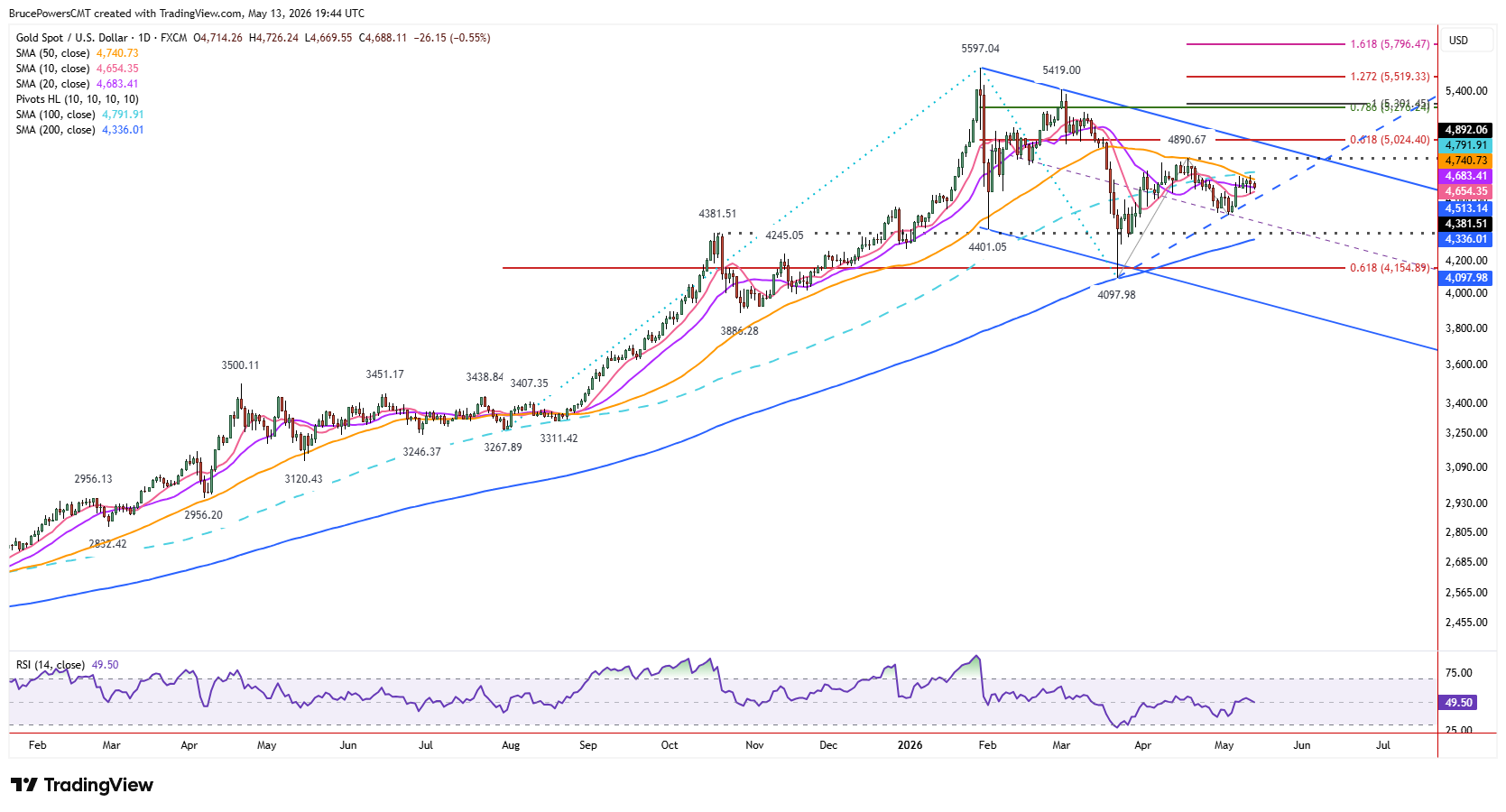
Since support was seen at the 200-day moving average during the sharp selloff in March, it may mark support again. Moreover, because the 200-day average is rising and relatively close to current prices, it could act like a magnet pulling price toward it. But first the bearish signal is needed.
A sustained reclaim of the 100-day moving average would lead to an initial target at the lower swing high of $4,891, followed by the 61.8% Fibonacci retracement at $5,024. Higher up is the confluence of the 78.6% Fibonacci retracement at $5,276 and the 100% projection of a rising ABCD pattern.
Gold Price Forecast
Every new Gold analysis as it publishes, today's technical signal and key levels, live price — on one page.
See all Gold forecasts100-Day Average Remains Critical
Long-term trend support was confirmed near the 200-day moving average in March, confirming a continuation of the long-term bullish trend. However, the 100-day moving average did a better job of identifying dynamic support during the advance. Notably, it was successfully tested several times before it failed and led to a drop to the 200-day average. This shows the significance of the 100-day average and, therefore, a sustained recovery of that line. Consequently, the same moving average now acting as resistance could once again become the key factor determining whether gold resumes the broader bullish trend in the near future or not.
If you’d like to know more about how to trade gold and silver, please visit our educational area.