


Spot Gold Holds Steady but Momentum Is Fading
Spot Gold (XAUUSD) is trading flat for a second straight session early Friday. At 08:08 GMT the market is at $4788.49, down $2.17 or 0.05%. Bullish traders are still running into a wall at the short-term 50% level just ahead of the 50-day moving average. The fourth straight weekly gain is within reach but the market isn’t making it easy.
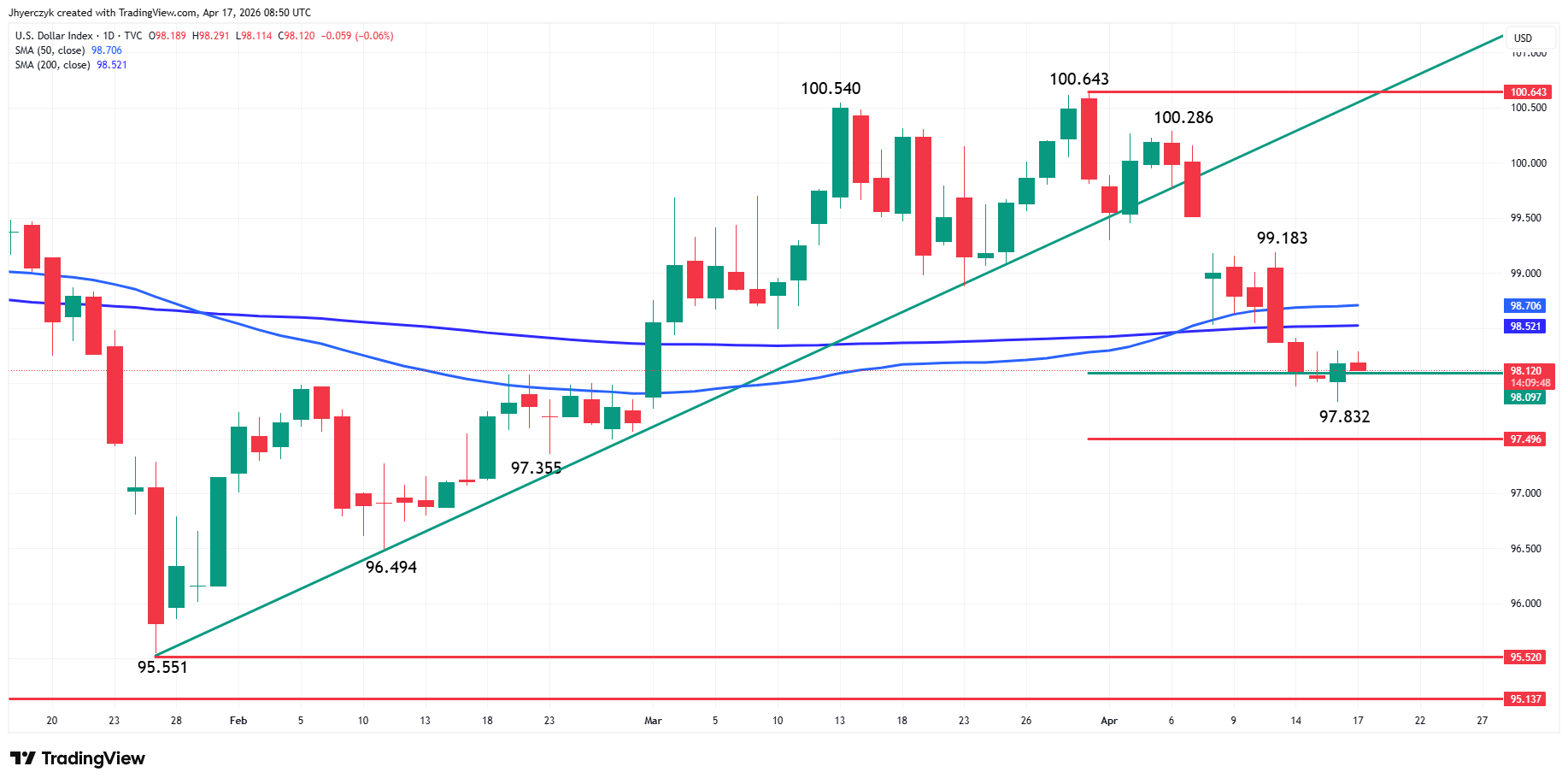
The U.S. Dollar Index is stabilizing after a recent drop and that’s putting a lid on Spot Gold. Markets are pricing just a 27% chance of a Federal Reserve rate cut in December. Before the Iran war that number pointed to multiple cuts this year. I keep coming back to those two things when I try to figure out why buyers aren’t chasing gold right now. The dollar tailwind is gone and the rate outlook isn’t helping.
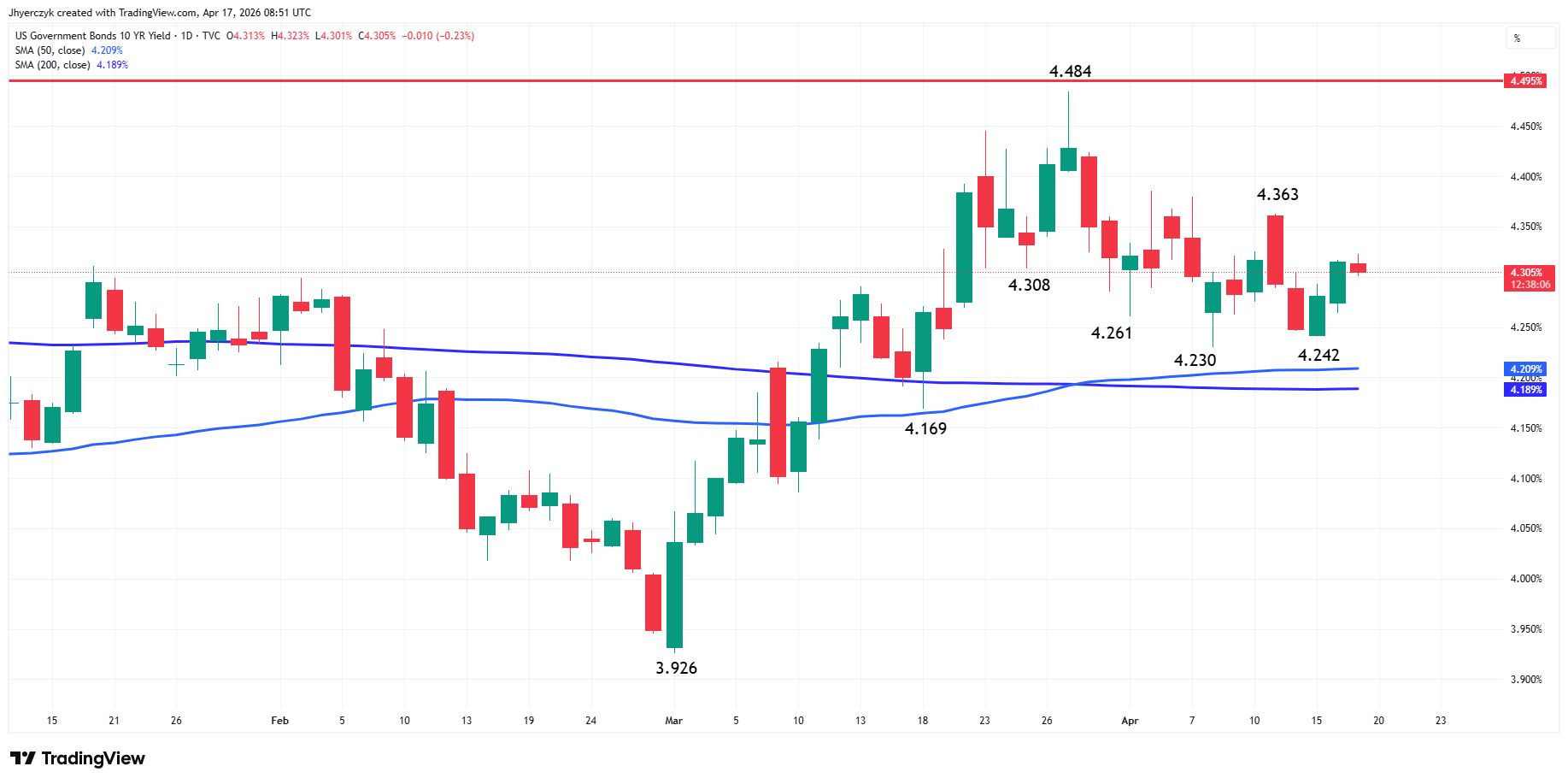
The 10-Year U.S. Treasury yield is holding firm and that’s another weight on a non-yielding metal. The Israel-Lebanon ceasefire and U.S.-Iran talks knocked safe-haven demand down at the same time. Oil pulled back on the peace talk optimism. Lower oil takes inflation pressure off the table. That’s one less reason to own gold this week.
The good news is already in the price. Traders bought the ceasefire and the Iran talk optimism earlier this week. That trade is done. What’s left is a market sitting on its hands waiting for the next move. Renewed geopolitical risk brings buyers back fast. A Fed shift toward easing does the same thing. Right now neither one is developing and gold knows it.
Technical Outlook
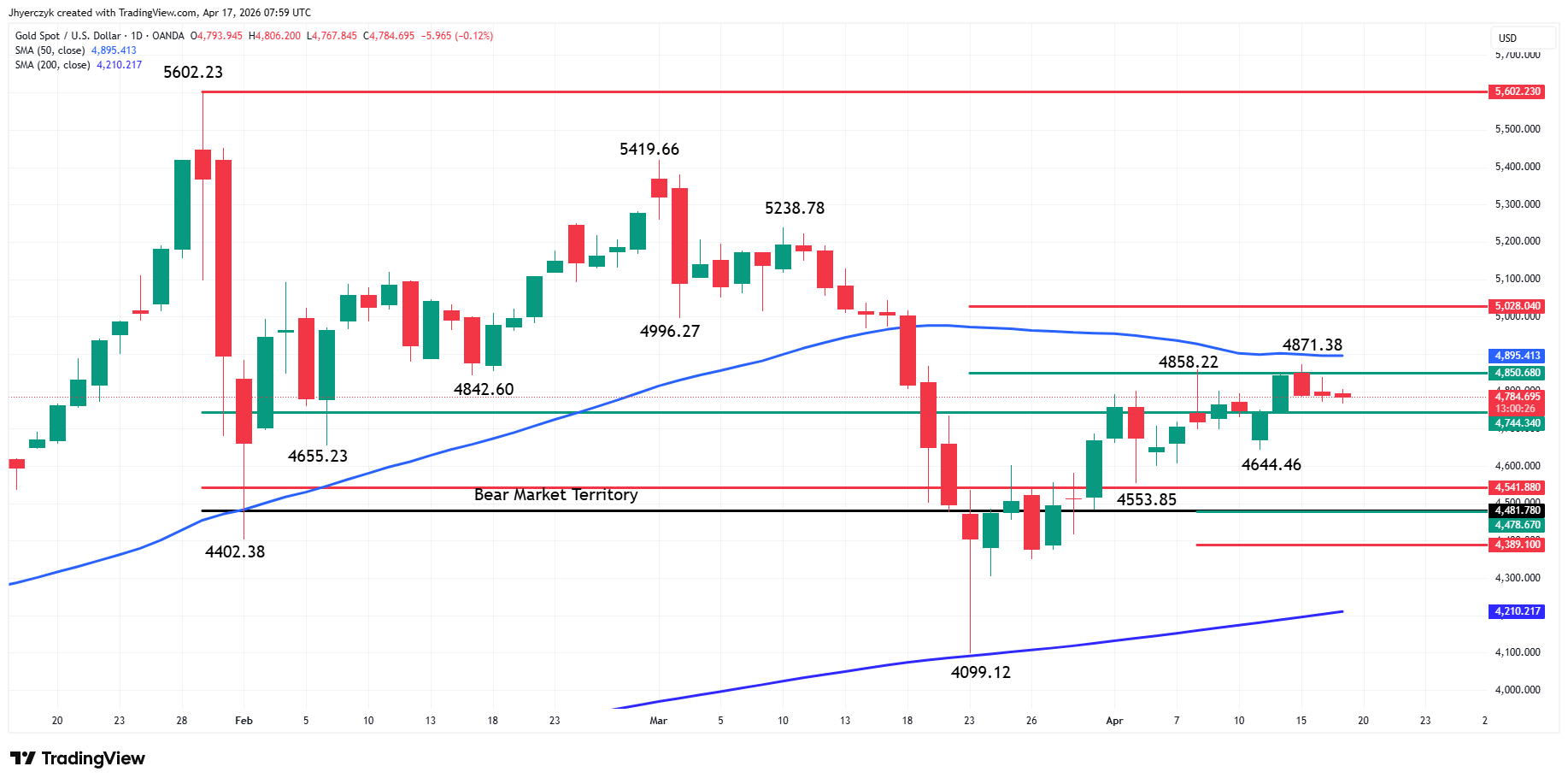
The trends are mixed. The main swing chart is down with swing top resistance at $5238.78. The minor trend is up. It is controlling the momentum. It will change to down if $4644.46 fails as support.
The long-term retracement zone support is $4744.34 to $4541.88. The short-term retracement zone resistance is $4850.68 to $5028.04.
The 200-day moving average is strong support at $4210.21, while the 50-day moving average at $4895.40. Not only is it resistance, but also the trigger point for an acceleration to the upside.
This week’s price action has been controlled by the long-term 50% level at $4744.34 and the short-term 50% level at $4850.68.
The current pattern suggests more congestion ahead. We really don’t see it opening up until it clears the 50-day moving average and the short-term 61.8% at $5028.04, but that assumes investors will be willing to buy strength. On the downside, the market starts to open up under $4744.34 and $4644.46. But I wouldn’t consider selling weakness either with support lined up at $4541.88, $4478.67 and $4389.10.
Looking at the bigger picture, with the 200-day moving average providing major long-term support, we’re still in buy the dip mode, which is the best strategy. But it only works if you can get a good entry price that takes time and patience.
Essentially, it’s not the chart patterns and price levels controlling the trade, it’s the low volume and low volatility. So pay attention to volume and volatility jumps.
Gold Price Forecast
Every new Gold analysis as it publishes, today's technical signal and key levels, live price — on one page.
See all Gold forecastsMore Information in our Economic Calendar.