



Gold is Mixed Monday as Oil, Inflation and Rate Cut Fears Keep Pressure On
Spot gold (XAUUSD) is trading mixed on Monday after back to back weekly losses. Gold traders seem to be shifting their focus from the Strait closure to bigger questions like how long will the war last and how bad is the infrastructure damage.

Brent Above $100 and the Fed in Focus
The recent price action indicates that gold traders may be moving on from the closure of the Hormuz Strait toward real concerns about the length of the war and the damage to Middle Eastern oil infrastructure. Brent oil is holding above $100 a barrel, up more than 40% in March and hovering near its highest levels in four years after the U.S. and Israel started bombing Iran on February 28, prompting the country to block shipments through the Strait.
Gold traders fear that should crude oil traders dig in and keep oil prices elevated at current levels, the Fed could pivot, stop cutting rates and keep interest rates higher for longer. This would put downward pressure on gold prices.
Gold Price Forecast
Every new Gold analysis as it publishes, today's technical signal and key levels, live price — on one page.
See all Gold forecastsCentral Banks on Deck This Week
Conditions appear to be escalating too, ahead of the Fed’s two-day policy meeting that begins on Tuesday, where central bankers are widely expected to hold interest rates steady. President Trump, perhaps sensing the war is getting out of control, is pressing allies to help secure the Strait as the Iranian military continues to control shipments traveling through the region.
And it’s not just the Fed meeting this week either. The European Central Bank (ECB), the Bank of England (BOE) and the Bank of Japan (BOJ) are also slated to have policy meetings. These central banks will be focusing on the impact of higher oil prices, growth and future policies. They will be paying particular attention to the inflation outlook because none of them want to be forced to make a risky decision to hike rates at the wrong time.
Dollar Rally Adding to Gold’s Headwinds
Rising Treasury yields have also had a negative impact on gold recently as investors sell gold to lock up the higher yields. The dollar is also getting a lift from speculative buying and short-covering. Some investors are buying the dollar because the U.S. is a net exporter of crude oil and could withstand higher oil prices for longer than say Europe, which is an oil importer. Since gold is priced in dollars, foreign demand tends to drop off when the greenback rises.
The Technical Picture
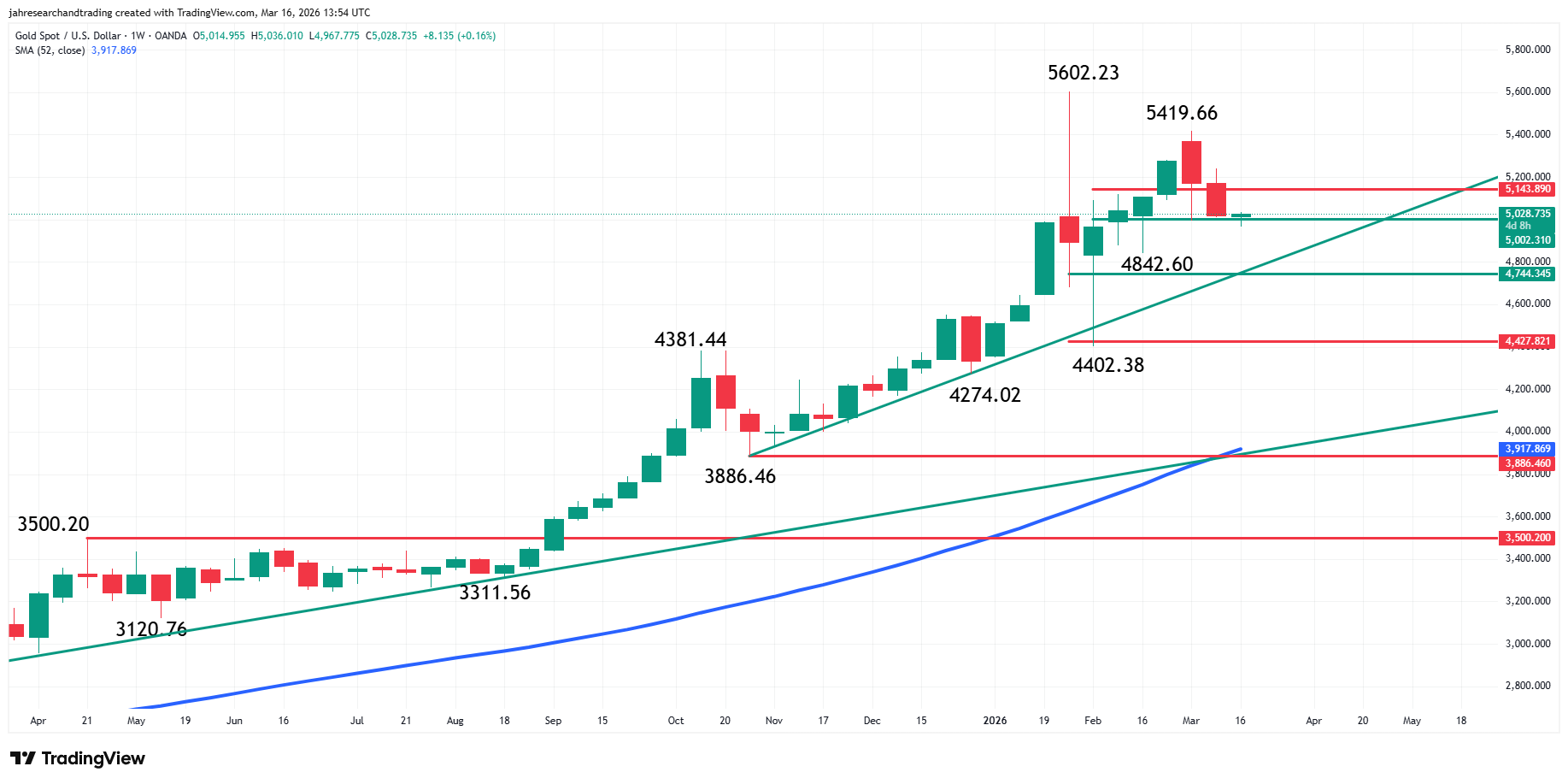
Technically, the weekly trend is up, but the secondary lower top at $5419.66 is a sign of weakness. Currently, the market is straddling a short-term retracement zone, which is controlling the near-term direction.
$5002.31 Is the Key Level This Week
The key level to watch this week is $5002.31. A failure to hold this support level could trigger the start of a steep plunge into the trend line at $4744.34. This could be an attractive price for new buyers. Longer-term, the 52-week moving average at $3917.69 is still suggesting a bullish outlook, keeping weekly gold traders in “buy the dip” mode.
More Information in our Economic Calendar.


