Nikkei 225 index dropped on Thursday as investors responded to weakness in some specific sectors, rising oil prices and a sudden move in the yen. This drop was due to the weakness in Paper & Pulp, Transport and Communication sectors which dragged down the market. The move reflected that investors were still cautious in the market despite strong moves in some technology stocks. Higher volatility also showed that investors were taking profits as the risk of intervention was back in the spotlight in the Japanese market.

Nikkei 225 Falls as Sector Weakness Spreads Across Tokyo Market
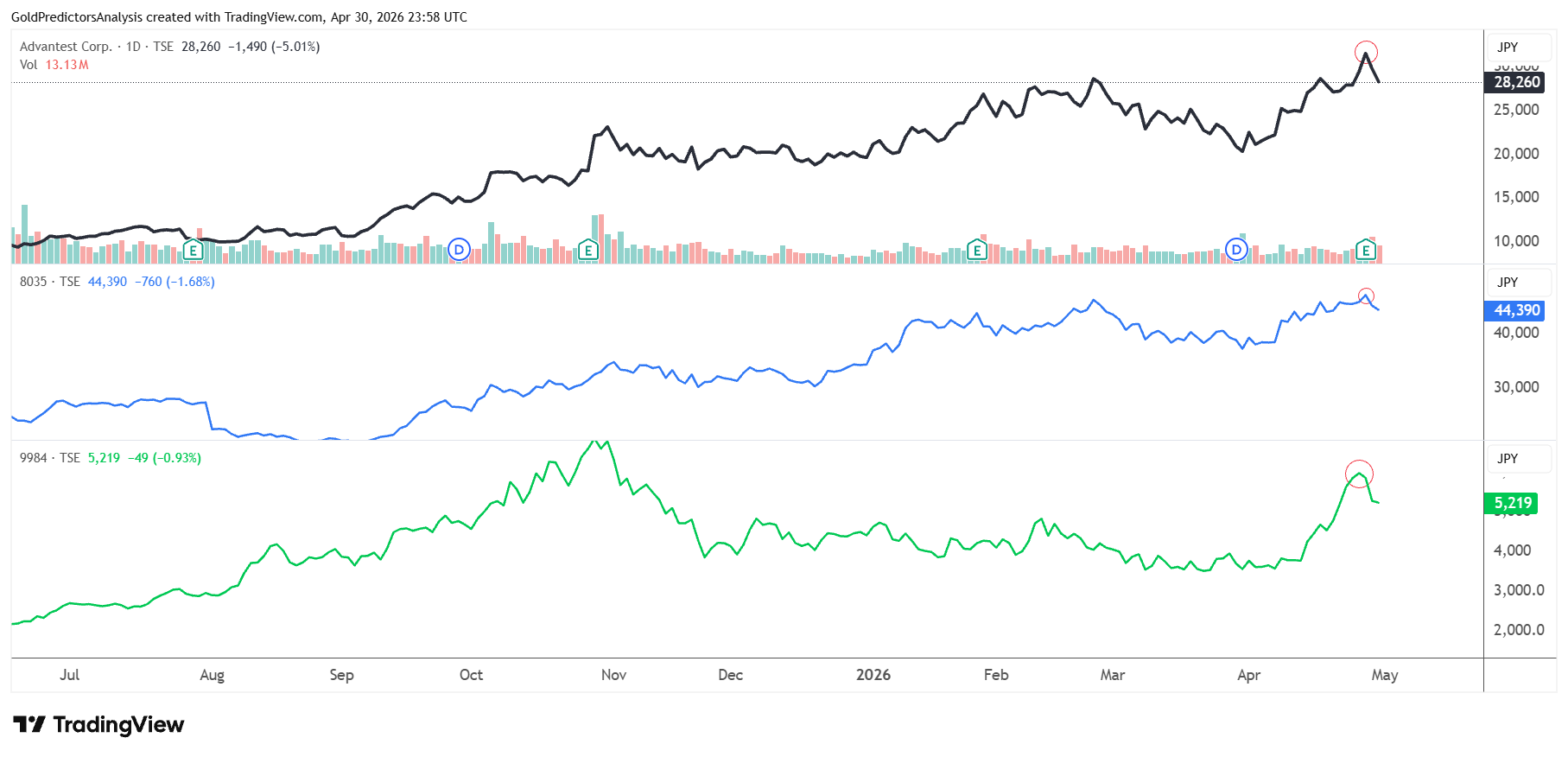
The weakness in Japanese stocks was broad. But most of the corrections in the index are driven by the moves in technology stocks. Nikkei 225 has 54.15% of its weight in technology stocks. Advantest Corp, Tokyo Electron and Softbank Group are the top technology stocks by weight in Nikkei 225. The chart below shows that these stocks started to correct lower after hitting the resistance.
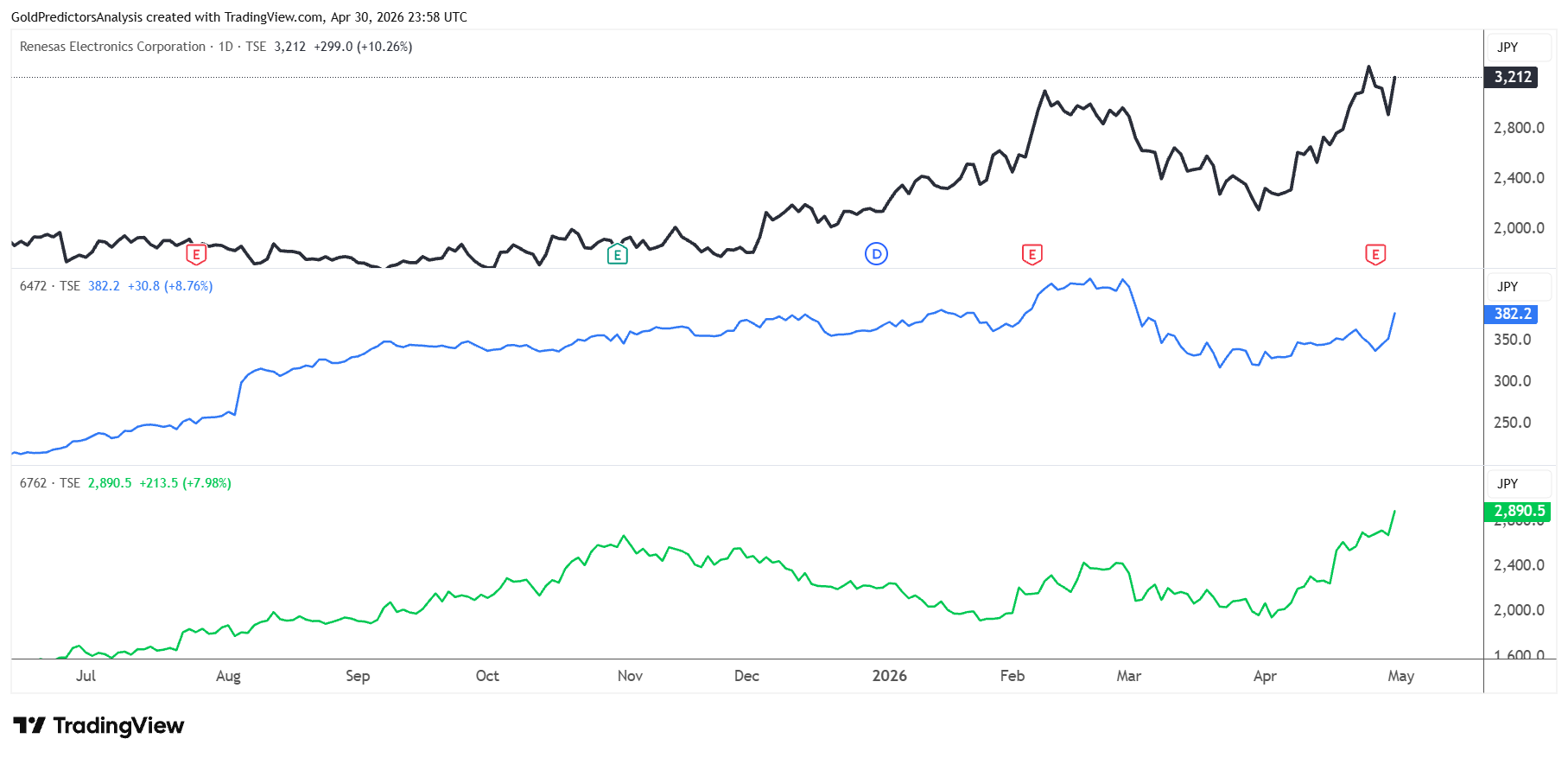
But there was some positive news. Renesas Electronics, NTN and TDK increased by 10.26%, 8.76% and 7.98%, respectively. This indicates that investors were still looking for companies related to semiconductors, parts and components and the supply chain.
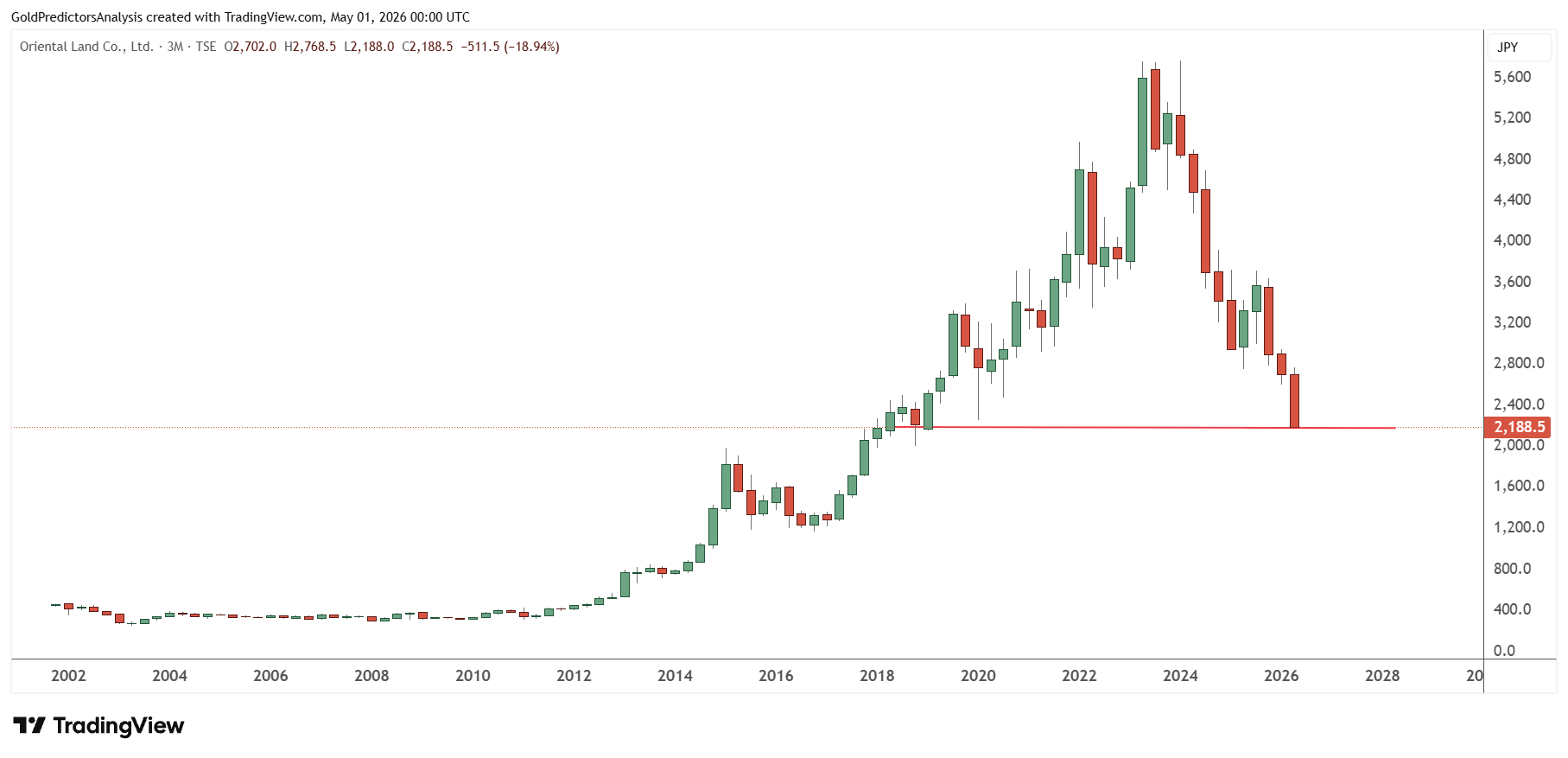
But steep falls in Fujitsu, Oriental Land and Central Japan Railway weighed on sentiment. Oriental Land hit a five-year low, which weighed on sentiment in the consumer and services sectors. The chart below shows that further weakness is likely in Oriental Land.
Nikkei Price Forecast
Every new Nikkei analysis as it publishes, today's technical signal and key levels, live price — on one page.
See all Nikkei forecastsYen Surge and Oil Rally Create Fresh Pressure for Japanese Stocks
The strong yen was the bigger market factor. The yen jumped as much as 3% as the Japanese government had intervened in the market to buy yen and sell dollars. The USD/JPY dropped to 156 on Thursday. It is significant for the Nikkei 225 because a stronger yen can lead to a loss of value of earnings of Japan’s exporters. This drop was developed from the technical resistance of 160 as seen in the chart below.
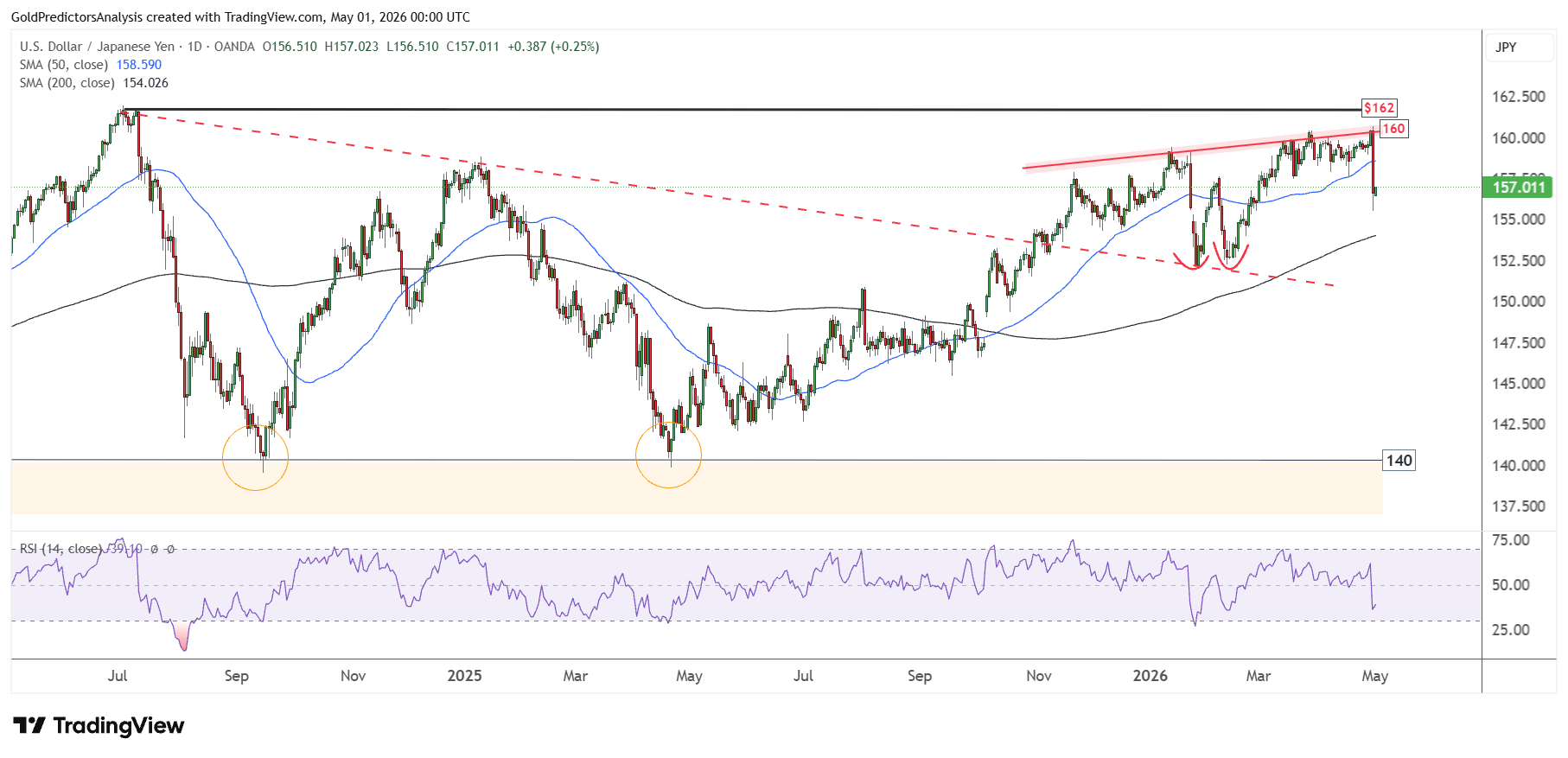
It also came at an uncertain time. Finance Minister Satsuki Katayama had already said the time for “decisive action” was drawing near. The statements suggest the government is no longer happy with a weak yen. This poses a risk for investors. Further intervention may put pressure on export industries even as world demand grows.
Oil prices added another challenge. WTI oil increased to $110, while Brent oil increased to $120. The higher energy prices are not good for Japan as it is an oil importer. The surge in oil prices increases inflationary pressure, puts pressure on earnings and is bad for transport shares. The Nikkei 225 faces pressure as the yen could strengthen, oil prices are still high and other markets are weak, offsetting some gains in some tech shares.
Nikkei 225 Technical Outlook: Consolidation Builds Below 60,000
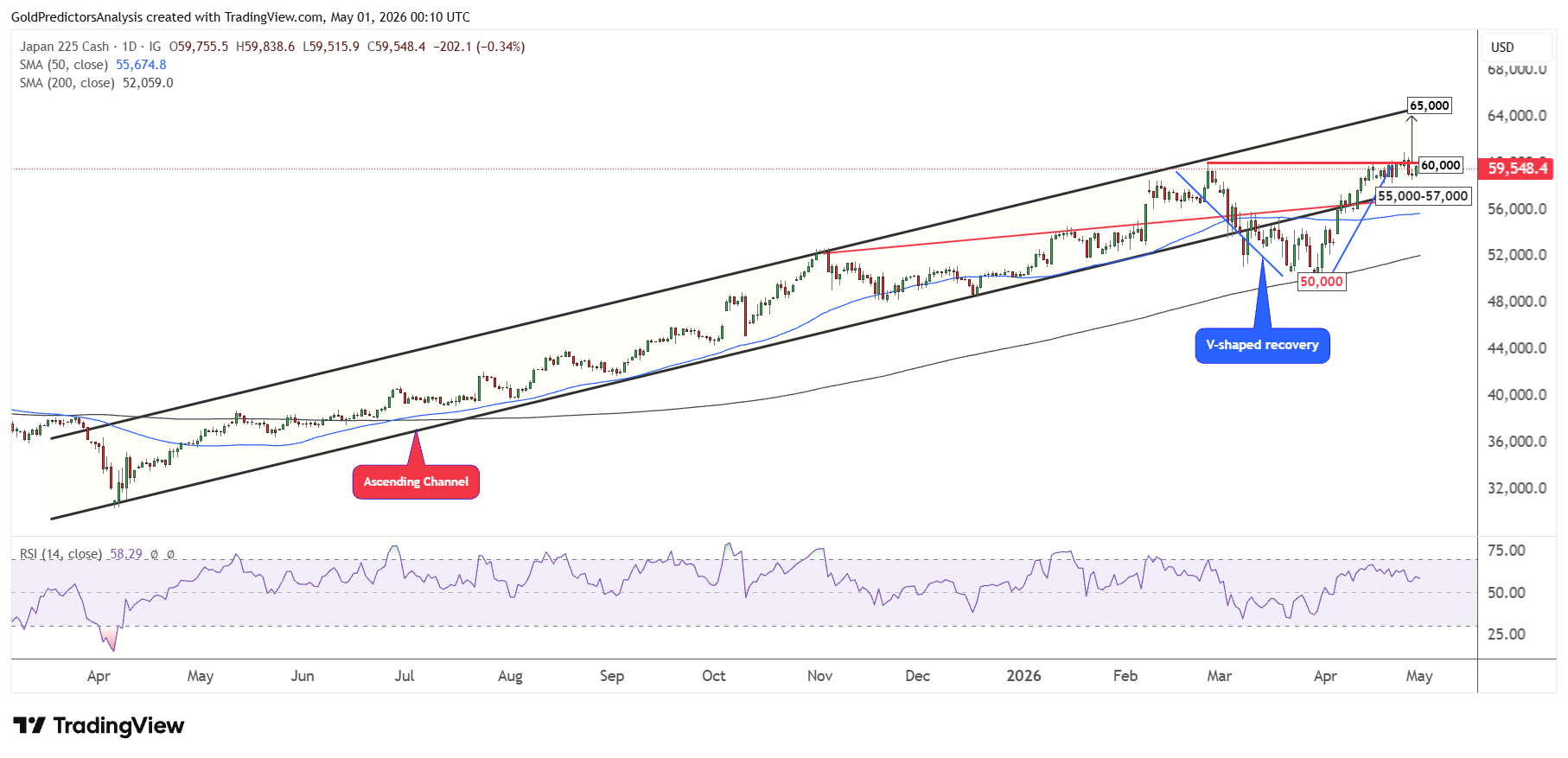
The daily chart for the Nikkei 225 shows that the index has consolidated at the edge of the long term resistance of 60,000 for the past 12 days. An attempt to break higher on 27 April was rejected but the consolidation indicates the buildup of positive energy for the next rally. A confirmed break above 60,000 will indicate a strong rally to 65,000. The emergence of a V-shaped recovery above the 200-day SMA indicates positive trend.
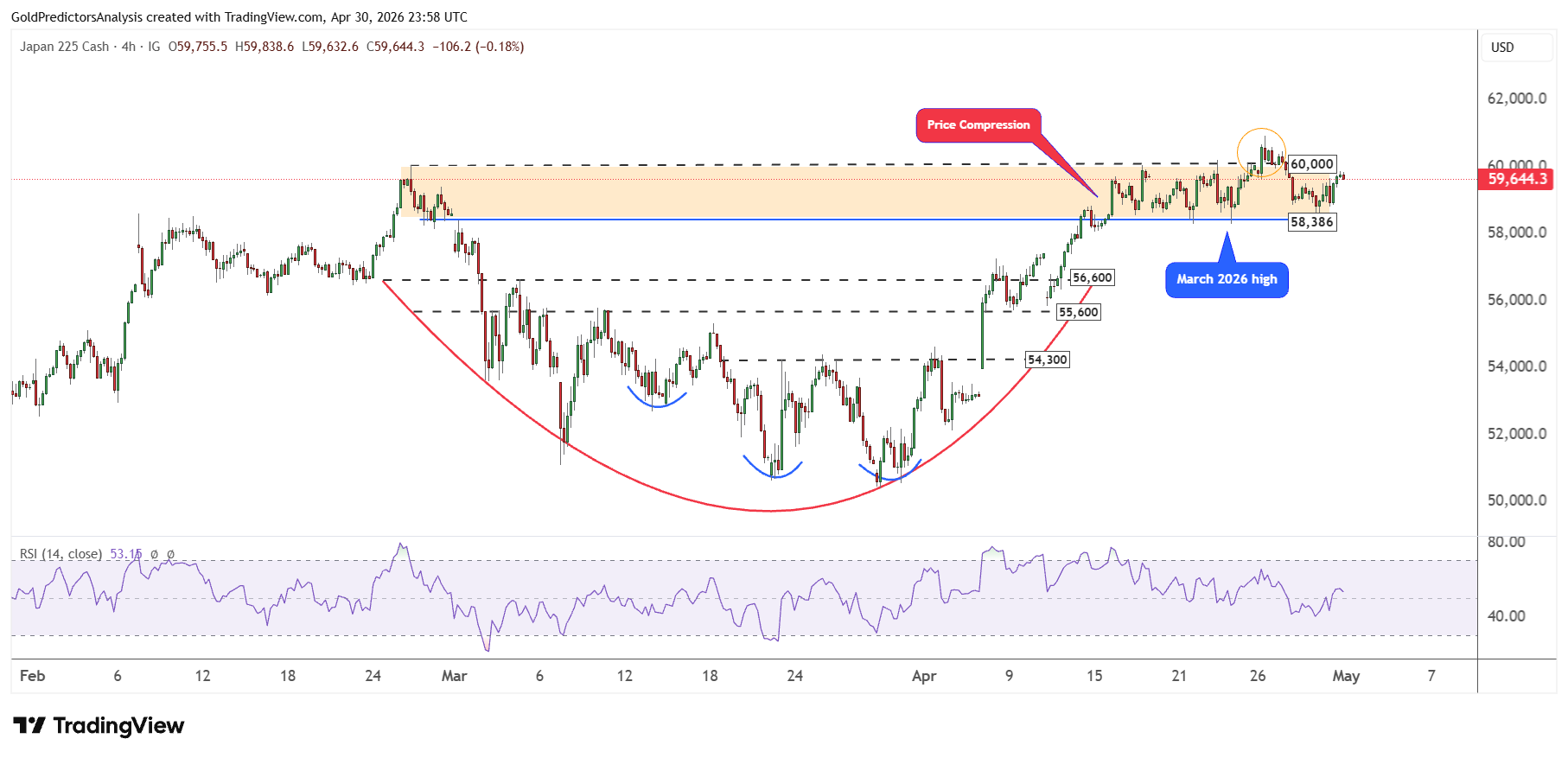
These bullish consolidations are also observed on the 4-hour chart, which shows consolidation between 58,000 and 60,000. The formation of a cup pattern above the support of 50,000 indicates bullish price action.
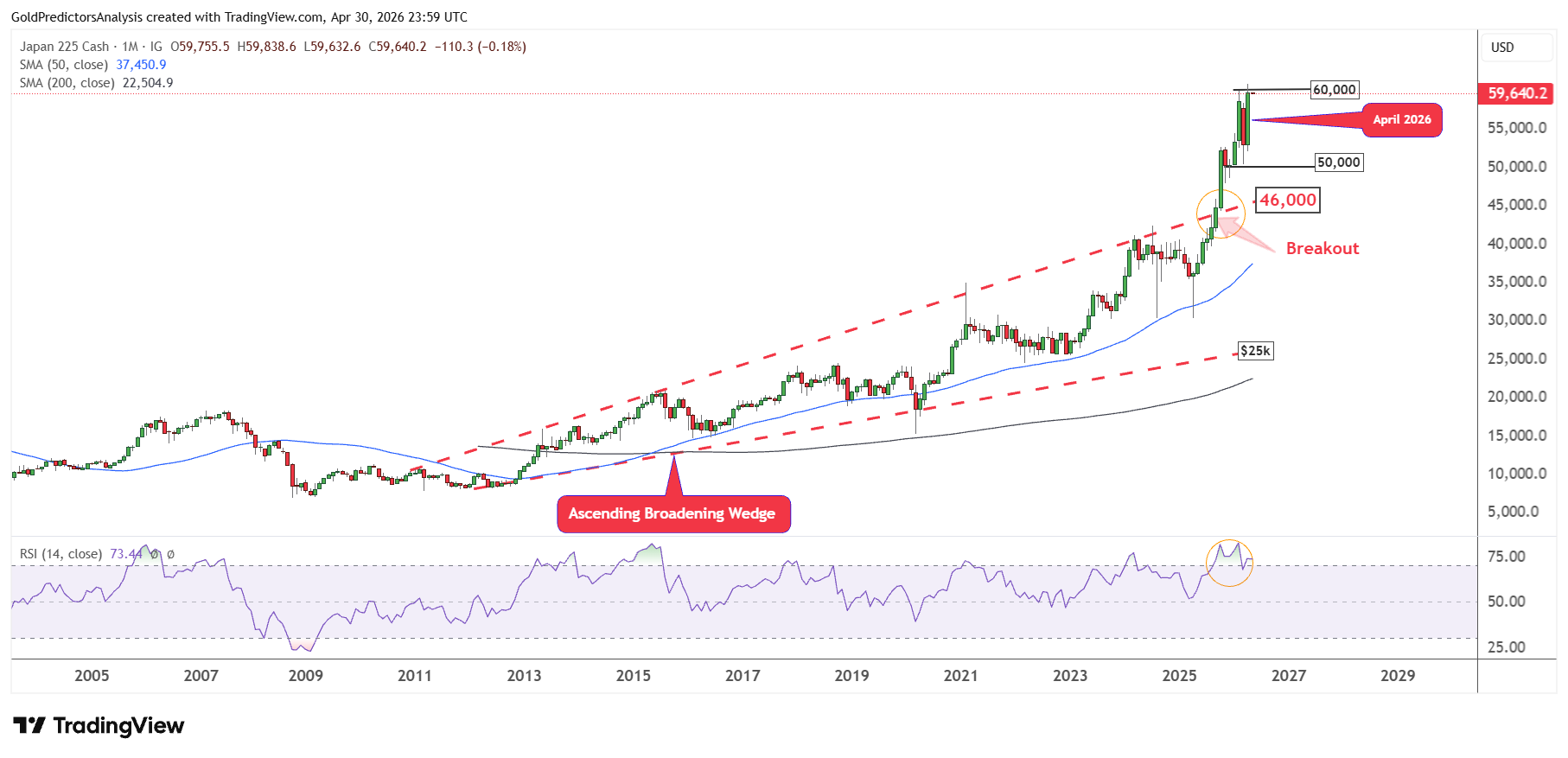
The monthly chart shows that the Nikkei 225 produced its highest monthly close in April 2026 despite the global energy crisis. This further indicates positive momentum may continue in May 2026.
Bottom Line
The Nikkei 225 is still in a two-sided situation as sector weakness, yen strength and oil prices put pressure on the index in the near term. The currency intervention could continue to put pressure on exporters, while high oil prices could impact margins and transport companies. But the index remains supported by strength in technology and semiconductor shares. The technicals also remain supportive as the index consolidates below 60,000 resistance. A breakout above this level could clear the way for a move towards 65,000. However, a lack of momentum may leave the index unpredictable.