



Solana (SOL) is the worst-performing asset in the top 5, with year-to-date losses of 33% as the buyers’ interest in this altcoin remains weak despite the market’s latest recovery.
The price action rejected a move above $90 for a sixth time earlier this month, indicating that sellers remain in control.
SOL failed to capitalize on the market rally that started in April and booked a minor 2.8% gain while Bitcoin (BTC) and Ethereum (ETH) reaped gains of 14% and 10%, respectively.
Investors continue to be reluctant to rotate their capital out of these two tokens and into riskier segments of the crypto market as the situation in the Middle East remains tense. Oil prices hiked above $100 again as the U.S. blockade of the Strait of Hormuz continues.
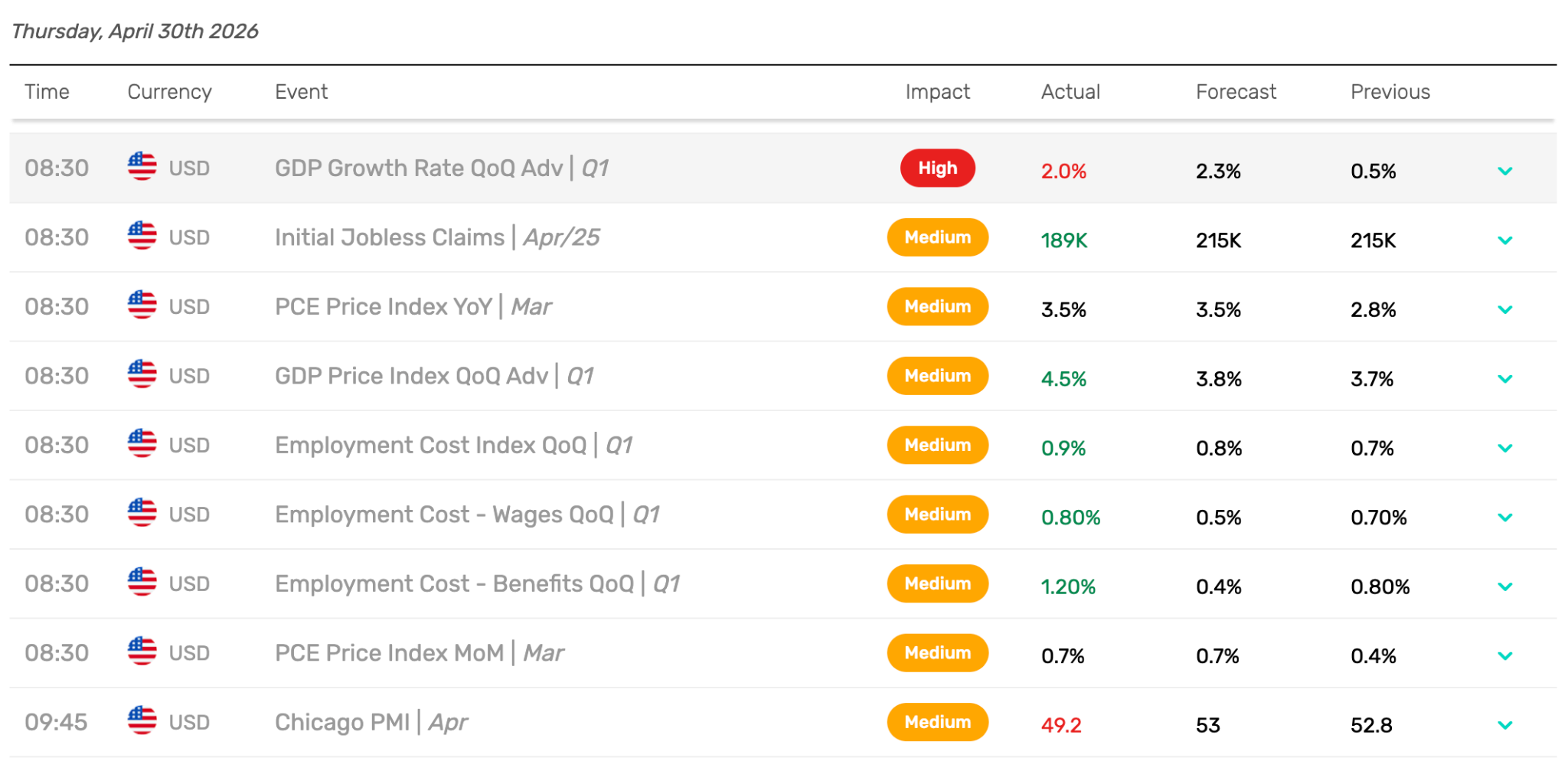
Moreover, the PCE Price Index, the key inflation gauge for the U.S. Federal Reserve, rose from 2.8% in February to 3.5% in March. Although this figure was in line with analysts’ expectations for the period, it indicates that higher energy costs are rapidly impacting price stability in the North American country.
Changes in the Fed’s Leadership Create Uncertainty
The head of the Fed, Jerome Powell, delivered his last speech as Chairman of the U.S. central bank.
The FOMC made no changes to the federal funds rate during this meeting, as expected, but there was a split among governors in terms of their willingness to add paragraphs to the press release that suggested some sort of dovish attitude.
The market does not expect a rate cut this year anymore, primarily as higher energy costs are expected to keep inflation way above the 2% target rate. Hence, what we are seeing in terms of the performance of risk assets is pretty much a reflection of what’s going on in the macroeconomic landscape.
Investors don’t expect any form of easing from central bankers. Hence, they are currently unwilling to take excessive risks.
The price of Solana (SOL) is directly impacted by this as it translates into lower demand, thin volumes, and low chain and application fees. The outlook is dire for tokens beyond BTC and ETH, as the latter have proven that they are the market’s darlings during times of economic distress.
Solana Price Forecast
Every new Solana analysis as it publishes, today's technical signal and key levels, live price — on one page.
See all Solana forecastsOn-Chain Data Confirms Thin Volumes and Low Network Usage
Turning to on-chain data, we can see that network usage experienced another decline last week. This is the 9th consecutive week of lower transaction volumes in Solana. The metric currently stands 32% below its recent peak of 959 million transactions processed during the weekend ended on February 8.
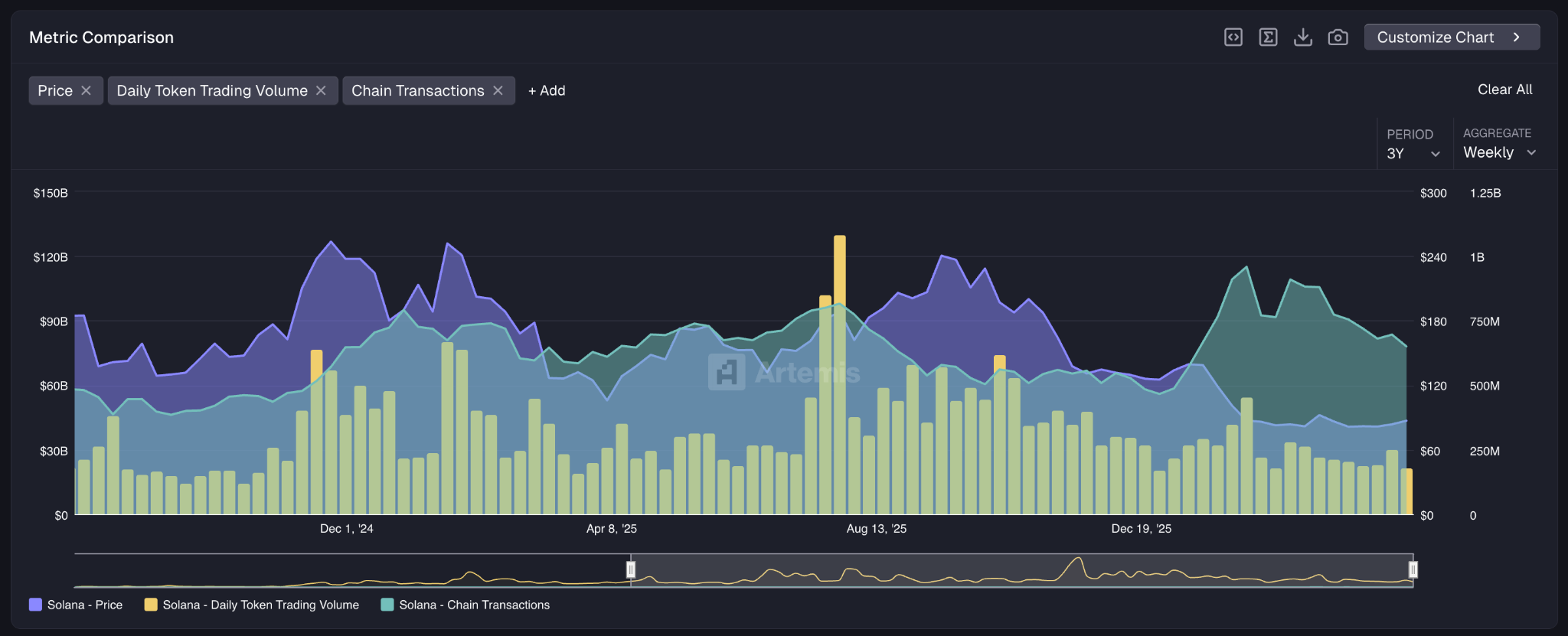
In addition, trading volumes remain quite thin compared to historical standards. Last week, $22 billion worth of SOL were traded. This is around half of the volumes we saw during the April-September 2025 bull market, and just 20% of the levels we saw when the price was rallying at its strongest pace.
This is a clear indication of weak organic spot buying, low demand for derivatives (futures market), depressed market sentiment, and a clear lack of interest in altcoins as a whole.
Weekly RSI Flashes Buy Signal But Price Action Remains Stalled
Heading to the weekly chart, same as we have identified for other top tokens recently, there is an interesting historical pattern in the Relative Strength Index (RSI) that could anticipate the beginning of a strong rally for Solana.
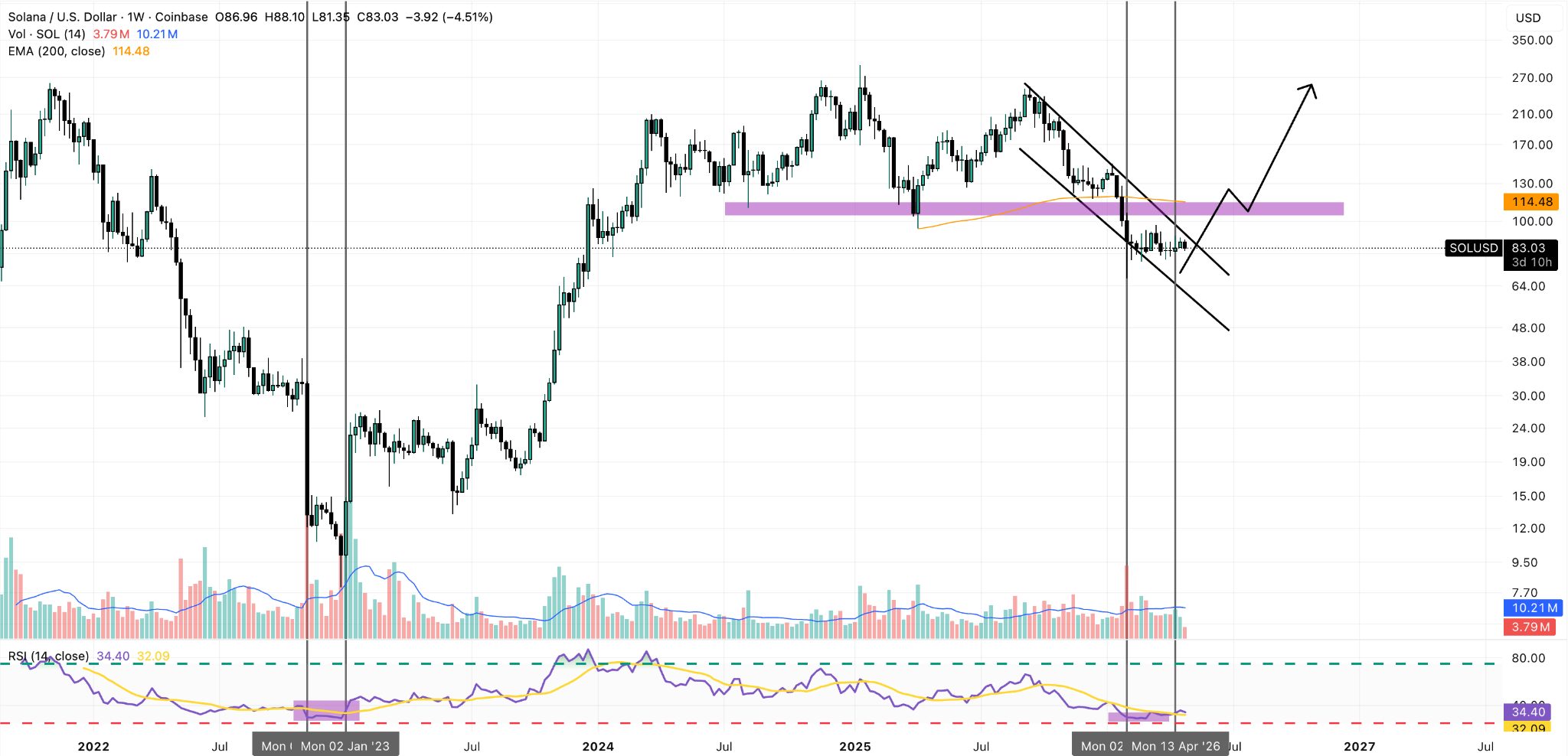
Back in November 2022, SOL’s weekly RSI hit 30. Back then, the token traded at $13. Three months later, it dropped to $9. However, once the RSI recovered and started climbing above the 14-week moving average, one of Solana’s strongest bullish cycles started.
The first upward climb from $9 to $22 delivered a total gain of 190% in just one month. Fast-forward to today, the RSI hit 30 back in February this year, and just crossed above the signal line (14-week MA) in mid-April.
Meanwhile, the full move delivered a huge gain of around 2,400% for those who sold at the top at around $250.
However, the main difference with 2022’s price action is that there was no explosive price movement this time. Different from similar RSI patterns we spotted in our latest Bitcoin price prediction, Solana’s reaction during the latest rally was underwhelming.
Solana Needs a Big Boost to Get Things Moving
What we need to see to get on board with a long position at this point would be a strong climb to $100. What exactly will be the catalyst that pushes the token to these heights? That’s the hard part.
Macroeconomic conditions are not that good this time. Extreme changes to the Fed’s monetary policy are not expected, and an improvement in the geopolitical situation alone may not have the strength to prompt a rally.
We need something else. Something that drives interest back to crypto again. We have seen a downturn in search volumes. The public’s interest in crypto has dried up as the technology has reached a stallmate.
Wall Street and big banks are embracing blockchain technology, but most of their efforts are still in a Petri dish. The market needs solid evidence that cryptocurrencies will be the future of money.
Until that happens, SOL may stay in consolidation mode for a while. What seems evident from this weekly price action and historical patterns is that the worst of this bear market is already behind us.
SOL Could Drop to $50 as the Market Has Been Unable to Lure Buyers
Looking at the daily chart, it is clear that SOL remains in consolidation. The token has been trading between $77 and $90 for two months now. What we need is a solid breakout to predict this altcoin’s next moves.
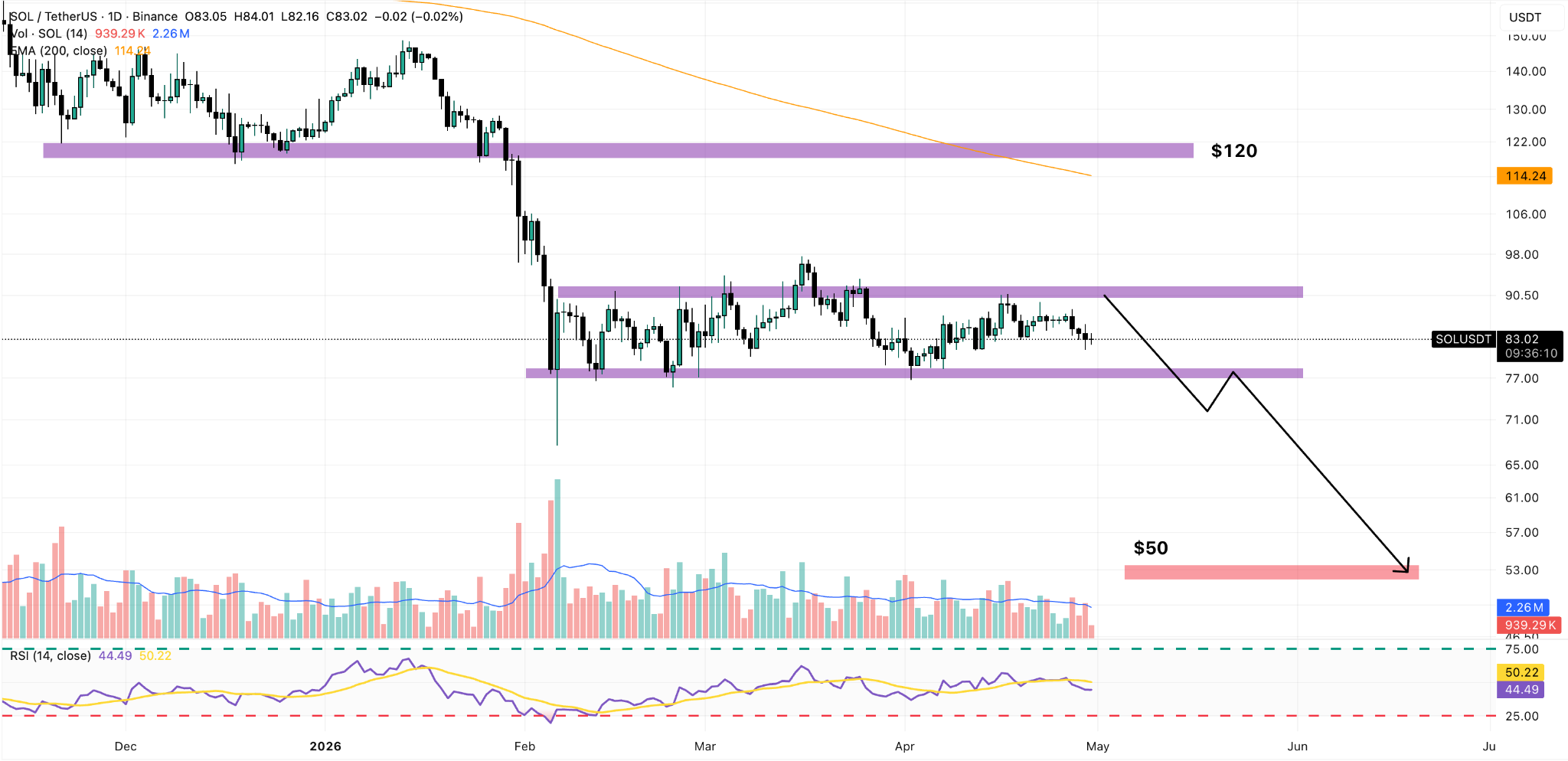
Bulls tried a break above $90 at some point but were met with a significant wave of selling shortly afterward. Since then, they have not been able to overcome this ceiling.
If we are not going up, we are likely going down. Hence, we expect a decline to $77 as the market continues to search for enough liquidity to push SOL higher.
Remember what happened in 2022? Solana had to move from $13 to $9 to find the necessary liquidity to start rallying. If history repeats, we may be in for a decline to the low 50s before SOL’s next big move begins.


