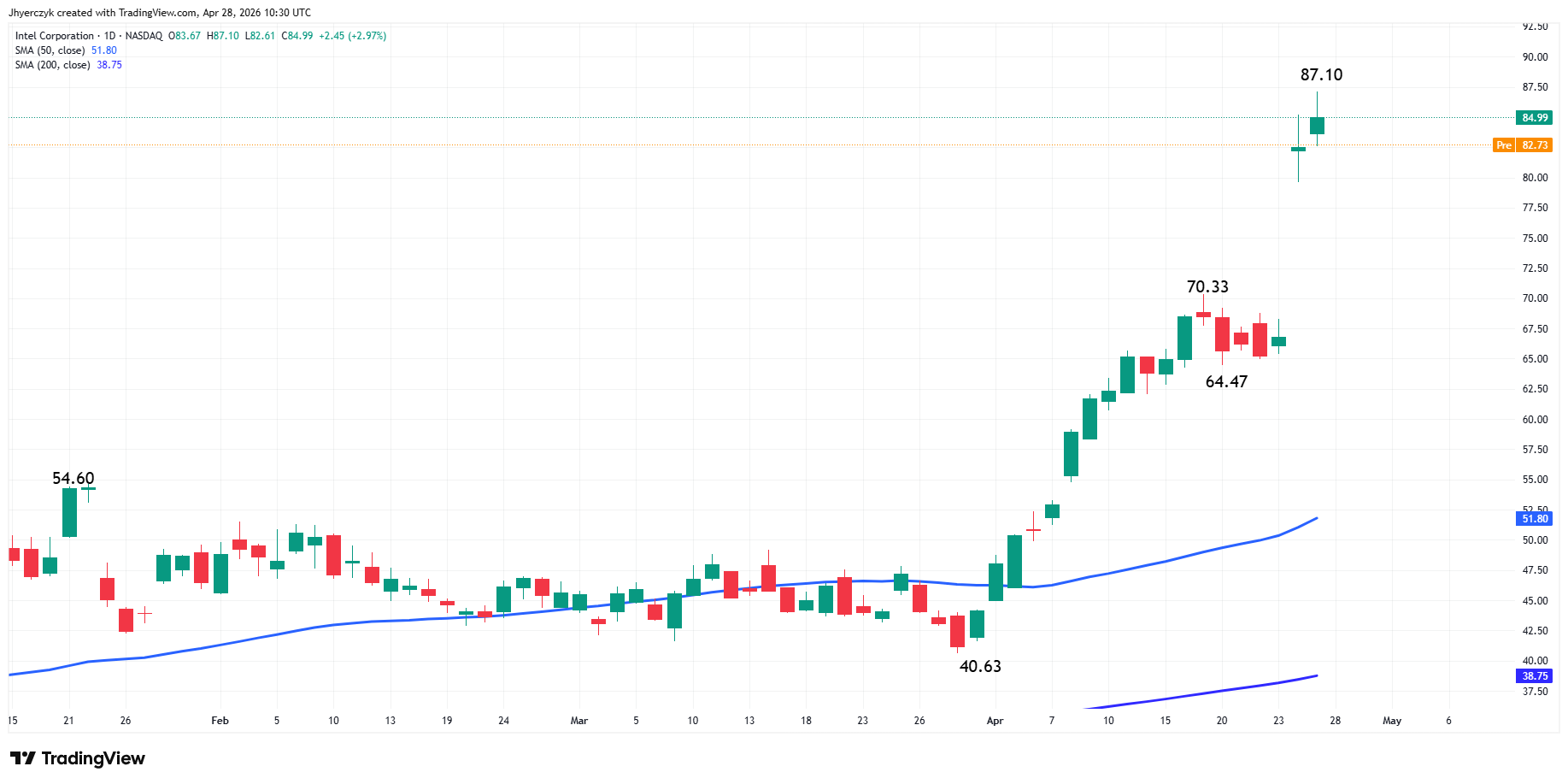
I did not see this quarter coming and neither did the Street. Revenue hit $13.58 billion against an estimate of $12.4 billion and adjusted earnings came in at $0.29 per share when consensus was sitting near zero. Shares jumped more than 20% after hours and held. That last part is what I am focused on. A stock that gaps on earnings and gives it back is telling you one thing. A stock that gaps and holds is telling you something completely different. Intel held and that is the only context you need for everything that follows.
Ahmed Yousre, Global Market Strategist at PU Prime commented:

Wall Street Stalls as Intel-Led AI Optimism Meets Macro Headwinds
U.S. equities closed mostly flat on Wednesday, as early optimism driven by artificial intelligence (AI) momentum gradually faded amid persistent macro uncertainties.Support initially came from the semiconductor space, where strong signals from Intel reinforced confidence that AI-driven growth is expanding beyond GPUs into broader data center infrastructure. Solid earnings and guidance—particularly in server CPUs—highlighted that AI demand is deepening across the supply chain, providing a structural tailwind for the technology sector and the broader equity market.
However, as the session progressed, this optimism proved difficult to sustain. The Federal Reserve’s decision to keep interest rates unchanged, while widely expected, offered little in terms of new catalysts. At the same time, continued diplomatic setbacks between the United States and Iran kept geopolitical risks elevated, weighing on overall market sentiment and limiting risk appetite.
The combination of these factors left equities in a consolidation phase, where strong long-term growth themes—especially AI-led investment—are increasingly being balanced against near-term pressures from a higher-for-longer rate environment and ongoing geopolitical uncertainty.
Looking ahead, market direction will likely hinge on upcoming Big Tech earnings, particularly whether AI-related capital expenditure remains robust. In parallel, developments in U.S.–Iran negotiations and further signals from the Federal Reserve will remain key in shaping the near-term outlook for U.S. equities.
Guidance That Changes the Calculus
Second quarter guidance came in above consensus and the number that caught my attention was not the revenue range. It was the server CPU outlook. Intel lifted that projection to strong double-digit growth and that answered a question the market has been sitting with for a while. AI infrastructure spending has been treated as a GPU story. Intel just made the case it is not that simple. CPUs are running critical workloads inside the large-scale AI systems being deployed right now and the data centers being built to support them need server processors in volume. If that demand is growing at the rate Intel is projecting, estimates across the supply chain are too low.
The companies that supply into that chain are already feeling it. High-bandwidth memory, networking chips and advanced manufacturing equipment all see more business when server CPU shipments accelerate. Advanced packaging is becoming a more important part of the build-out too as traditional process scaling runs into its limits. Intel’s progress there is being read as a directional signal for where capital allocation goes next across the sector.
The foundry story gained ground this quarter in a way I did not expect. A year ago the question was whether Intel could be taken seriously in foundry. That question has changed. Now it is about how fast they can scale and whether yields and timelines hold up. Customers reducing Asia production exposure need alternatives. Intel is making a real argument that it can be one.
The Turnaround Is Starting to Hold
A year ago Intel was a company where the excuses were starting to pile up. Thursday night it looked like a company that ran out of excuses because it stopped needing them. Supply bottlenecks that were choking execution have started to clear and the financial results are reflecting it in a way the slide decks never did. Pricing discipline held. Cost management showed up in the margins. Orders are moving. Delivery times are improving. That is not a turnaround story anymore. That is a turnaround.
PC demand has been a weight on this company for years and I was not looking for much from the client computing side. The stabilization in those numbers is not the headline but it matters because it means Intel is not fighting a two-front war anymore. Two segments moving in the right direction at the same time is a different company than the one that was reporting a year ago.
How to Position for Semiconductor Exposure
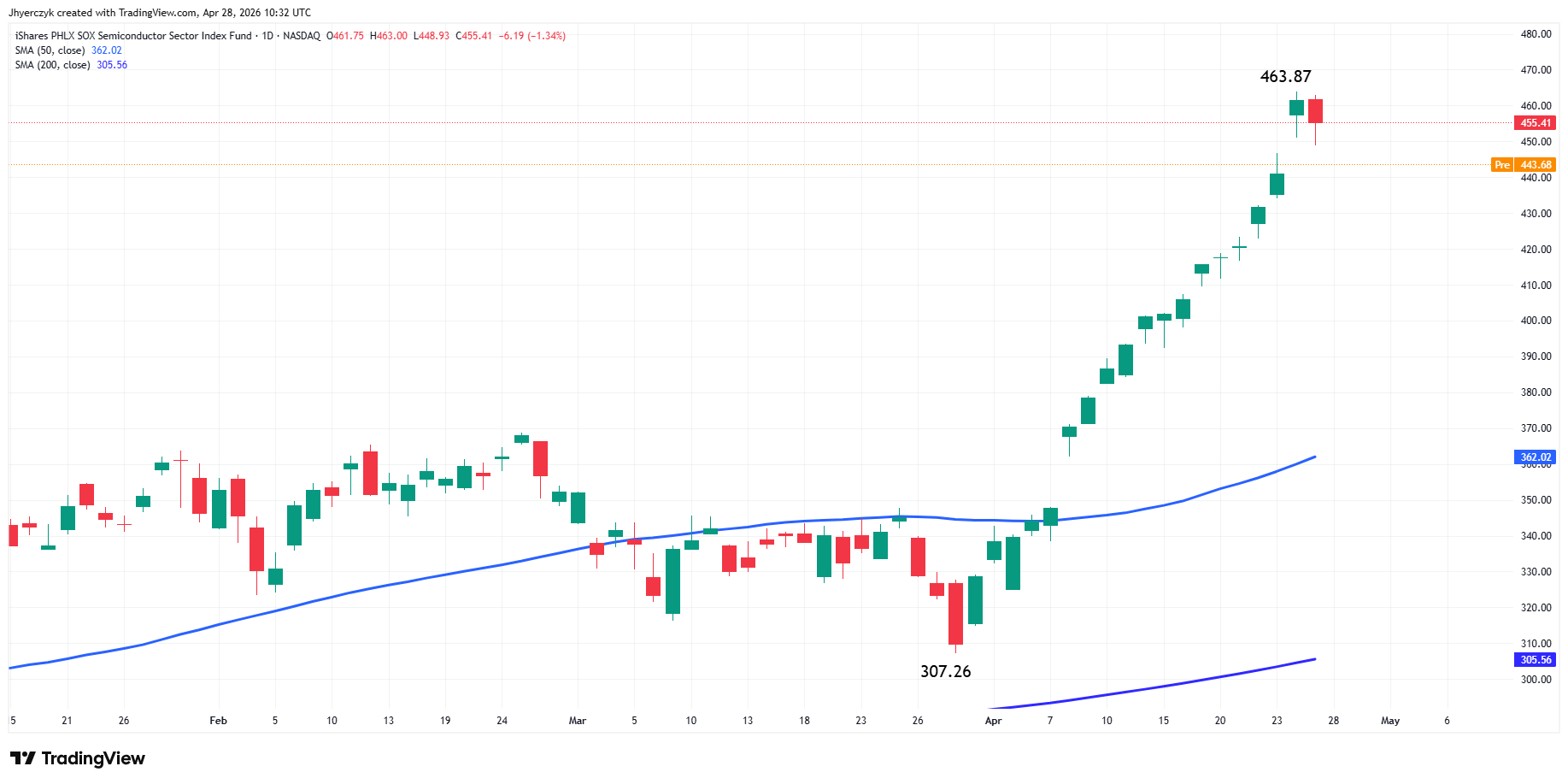
My broker clients are not trying to pick winners in this space. They want sector exposure and they want to size it correctly. The iShares Semiconductor ETF and VanEck Semiconductor ETF are the two I hear about most. Both were working before Intel reported and this quarter gave holders a reason to stay. First Trust Nasdaq Semiconductor ETF and Invesco PHLX Semiconductor ETF run similar ground with different weightings and that distinction matters when leadership inside the sector starts to rotate.
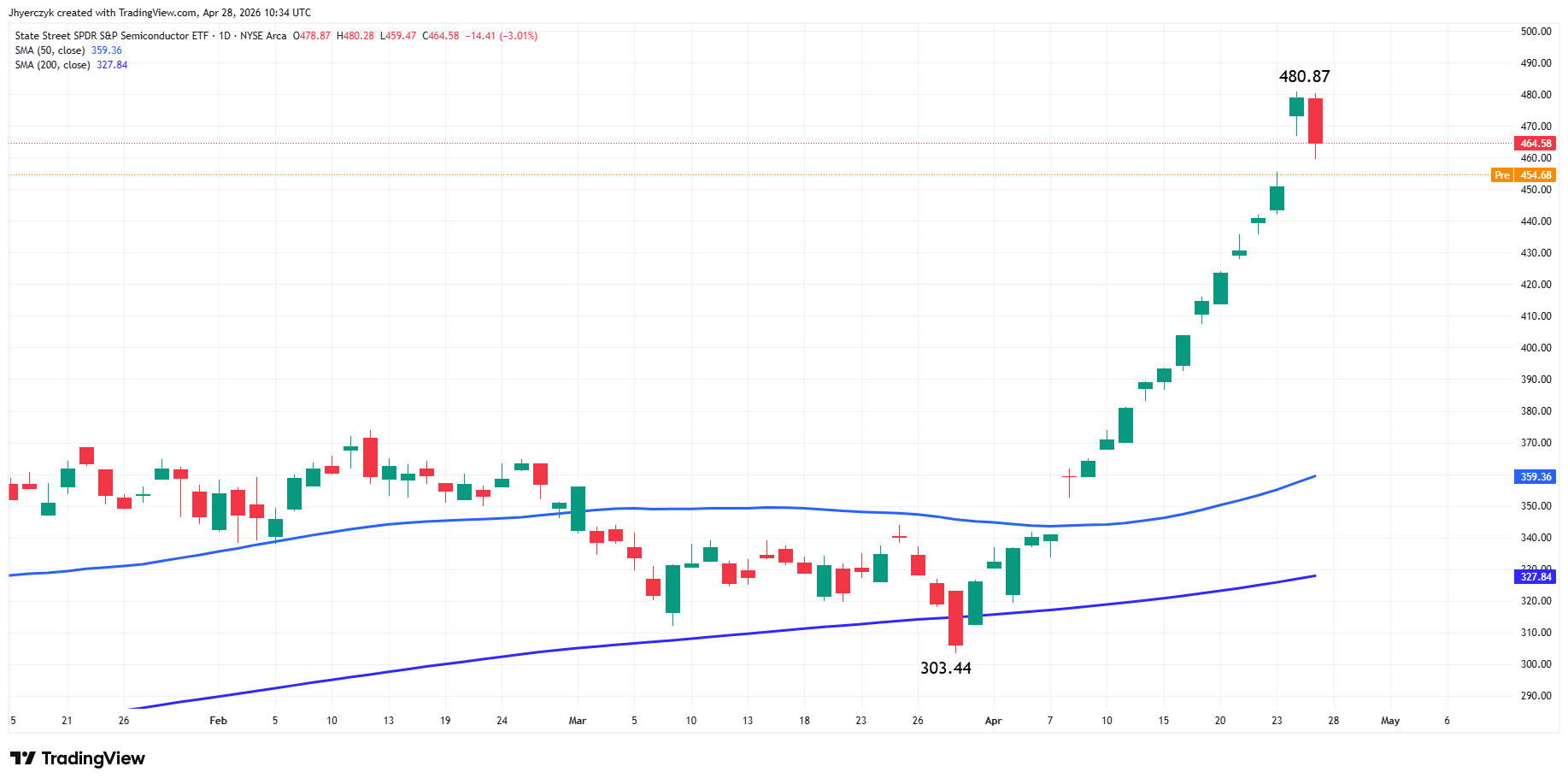
The SPDR S&P Semiconductor ETF runs equal-weighted and that is where things get interesting if this rally broadens beyond the handful of mega-cap names doing most of the work right now. Direxion Daily Semiconductor Bull 3X Shares belongs in a different category entirely. The compounding decay during volatile stretches is real. I have watched traders hand back weeks of gains in two sessions because they were in that vehicle without a defined exit. If you use it, know exactly where you are getting out before you get in.
Margin Pressure Is the Risk Line to Watch
Intel’s guidance buried a number that deserves more attention. Near-term margin pressure from process ramp-ups and inventory positioning got a line in the report and most people moved past it. In my opinion that is a mistake. Ramp costs do not show up at one company in isolation. When I see one name flag them I start watching the next round of reports very carefully because the pattern tends to repeat. AMD, Nvidia and Taiwan Semiconductor Manufacturing Company are all on deck and that is exactly where I will be looking.
Trade policy has not gone away either and I want to be direct about that. One export restriction announcement can move semiconductor stocks faster and harder than an earnings miss. I have watched it happen more than once. Intel having a strong quarter does not change that exposure. The risk is still sitting there and it will not announce itself in advance.
What the Next 90 Days Will Tell Us
AMD, Nvidia, Taiwan Semiconductor Manufacturing Company and Broadcom all report in the weeks ahead and that is where this story either gets confirmed or gets complicated. Intel set a number that moved estimates. Now those estimates need something to lean on. Strong AI demand commentary from the right names keeps the revision cycle moving and gives this rally more room. Cautious guidance or soft demand signals gives traders sitting on big semi gains exactly the cover they need to start reducing exposure.
The way I see it Intel did its part. The next three months either validate this move or stall it at current levels. I have seen both versions of this story play out. Which one we are in depends entirely on what comes out of the next wave of reports.