


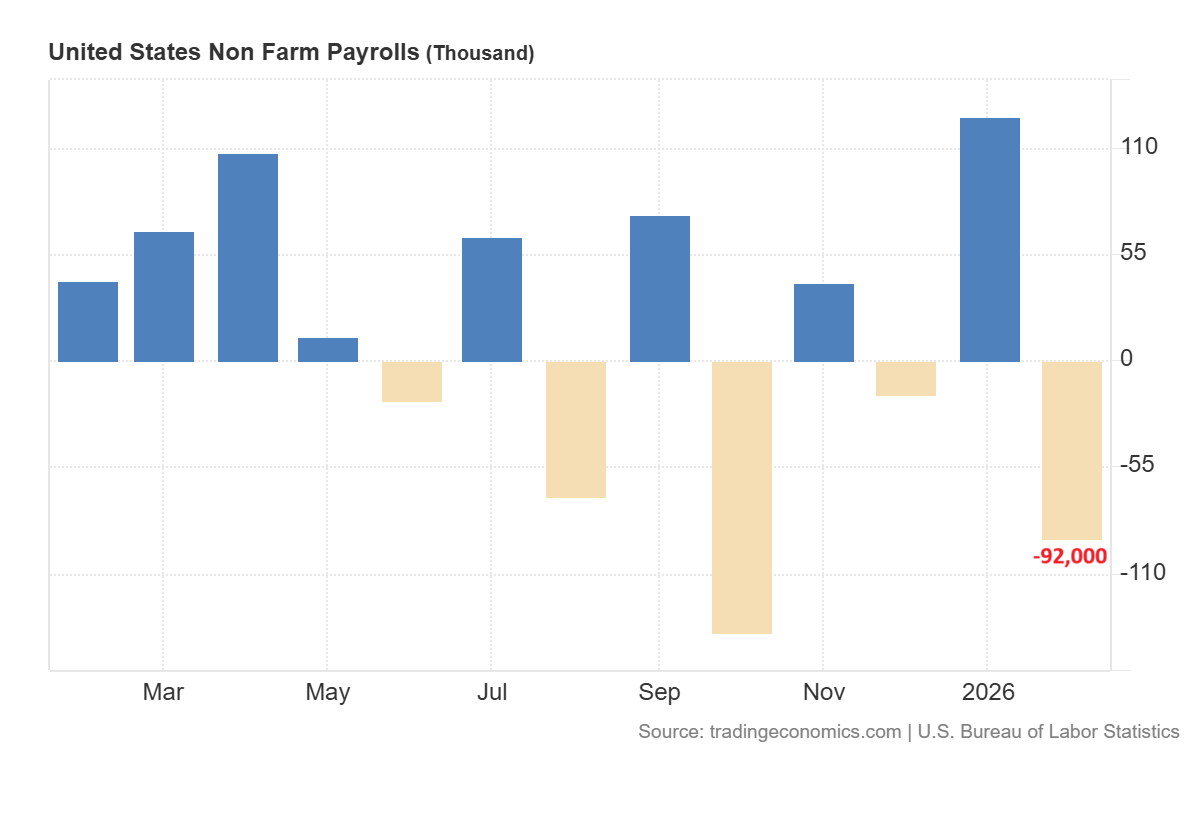
Financial markets became cautious following the latest U.S. labour data that revealed signs of slowdown. The job market lost 92,000 jobs in February. Investors responded swiftly as the report indicated that the economy may be heading into a slower phase.
At the same time, an increase in geopolitical tensions and higher oil prices has led to increase in inflation concerns. This environment indicates that investors are moving towards defensive assets. Gold (XAU) has once again come to the forefront of attention as a safe haven during uncertain times.
Weak Labour Market Signals Growing Economic Risks
The February employment report showed definite weakness in several sectors. Employment in health care was down 28,000 jobs as strike activity disrupted operations. Offices of physicians lost about 37,000 jobs, but hospitals were able to add 12,000 jobs. Employment also continued to fall in the information sector, which lost 11,000 jobs, and federal government employment fell by another 10,000.
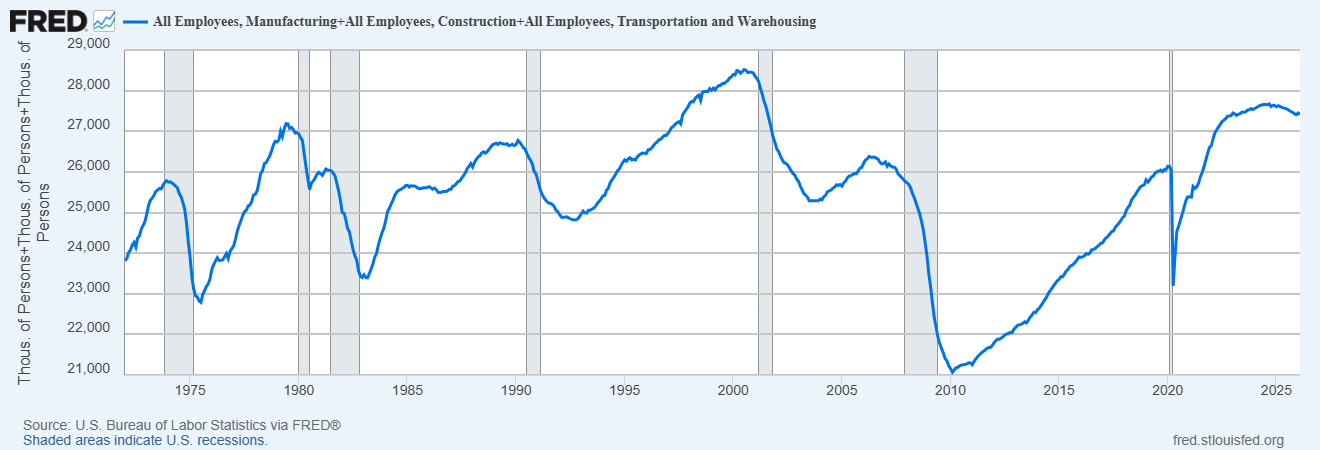
More worrisome is the trend for cyclical sectors of the economy. Manufacturing, construction and transportation and warehousing employment have dropped since September 2024, as shown in the chart below. A drop of 300,000 jobs in these sectors is an indication that the economy might be entering a recession.
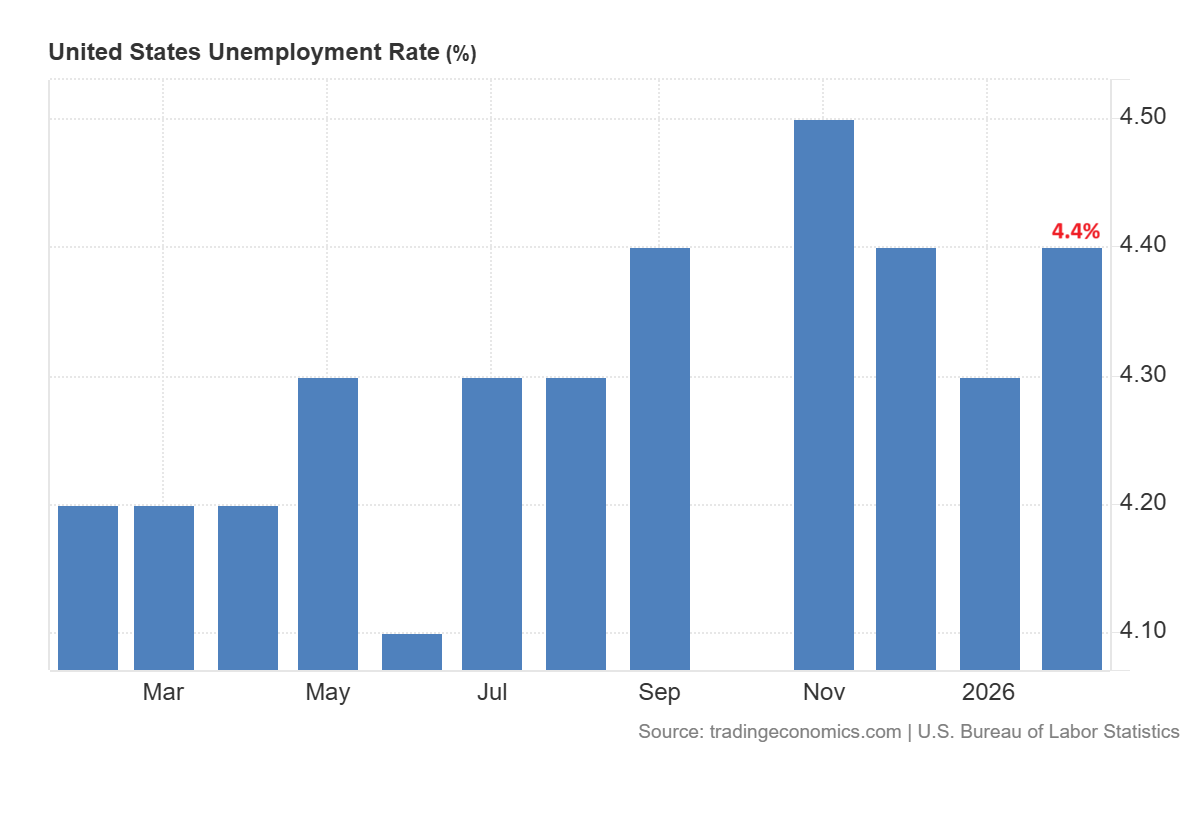
The unemployment rate is also up at 4.4%. While this is still below 5% which may be regarded as a recession, the direction of the trend is starting to make investors nervous.
Gold Price Forecast
Every new Gold analysis as it publishes, today's technical signal and key levels, live price — on one page.
See all Gold forecastsInflation Pressure and Geopolitical Tensions Support Gold
Despite the slowdown in employment, inflationary pressures are strong. Average hourly earnings increased by 0.4% for the second month as seen in the chart below.
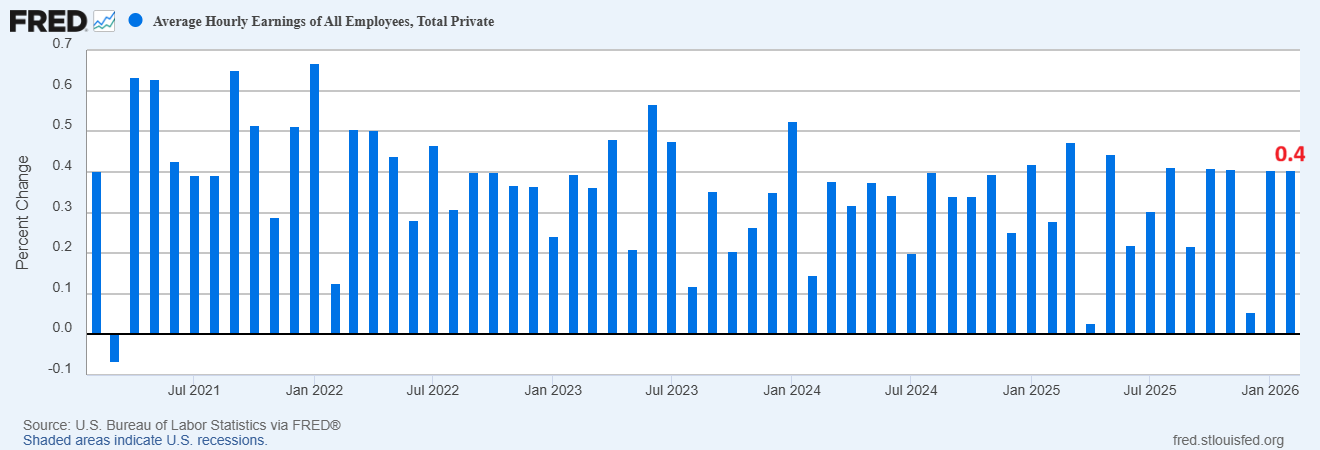
This pace suggests an annual wage growth rate of almost 5%. This robust wage growth makes it hard for the Federal Reserve to lower interest rates quickly due to policymakers being careful not to add to inflation.
Energy markets are also driving risk of inflation. Crude oil prices have surged and doubled from lows of December 2025. Higher oil prices tend to increase cost of transportation and production across global economy. In such environment, the investors frequently seek protection against not only inflation but geopolitical uncertainty by investing in gold.
Financial markets are therefore displaying very clear risk off behaviour. Investors are moving toward assets that hold their value during times of instability. As the state of geopolitical tensions is high and economic signals are weakening, demand for gold is likely to increase.
Technical Structure Signals Consolidation Above Key $5,000 Support
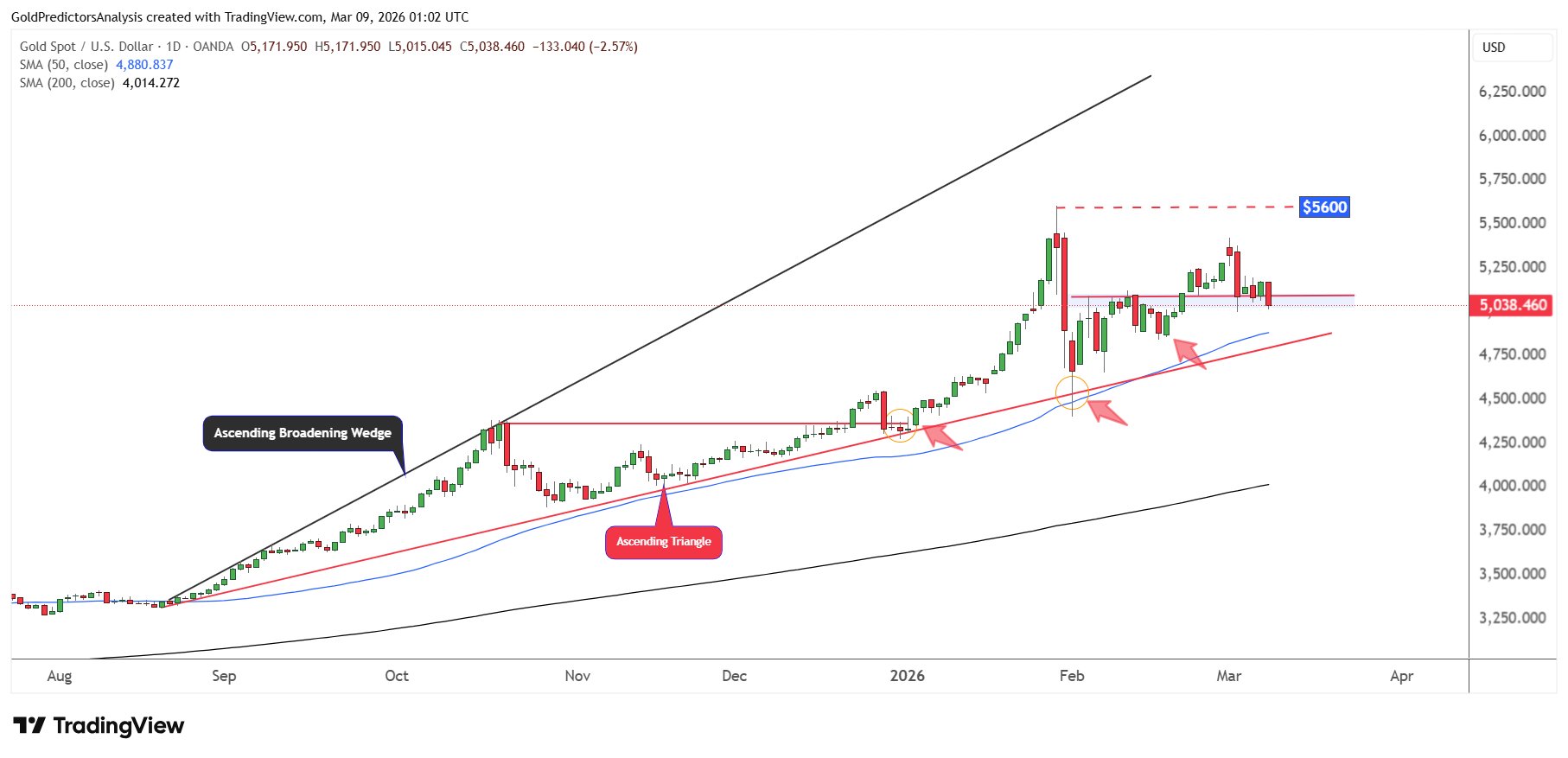
The daily chart for spot gold shows strong consolidation above the key $5,000 level within an ascending broadening wedge pattern. The gold price is currently consolidating to determine its next move. As long as $5,000 holds, the next move in gold will likely be higher toward $5,600. However, a break below $5,000 would indicate further downside toward $4,800.
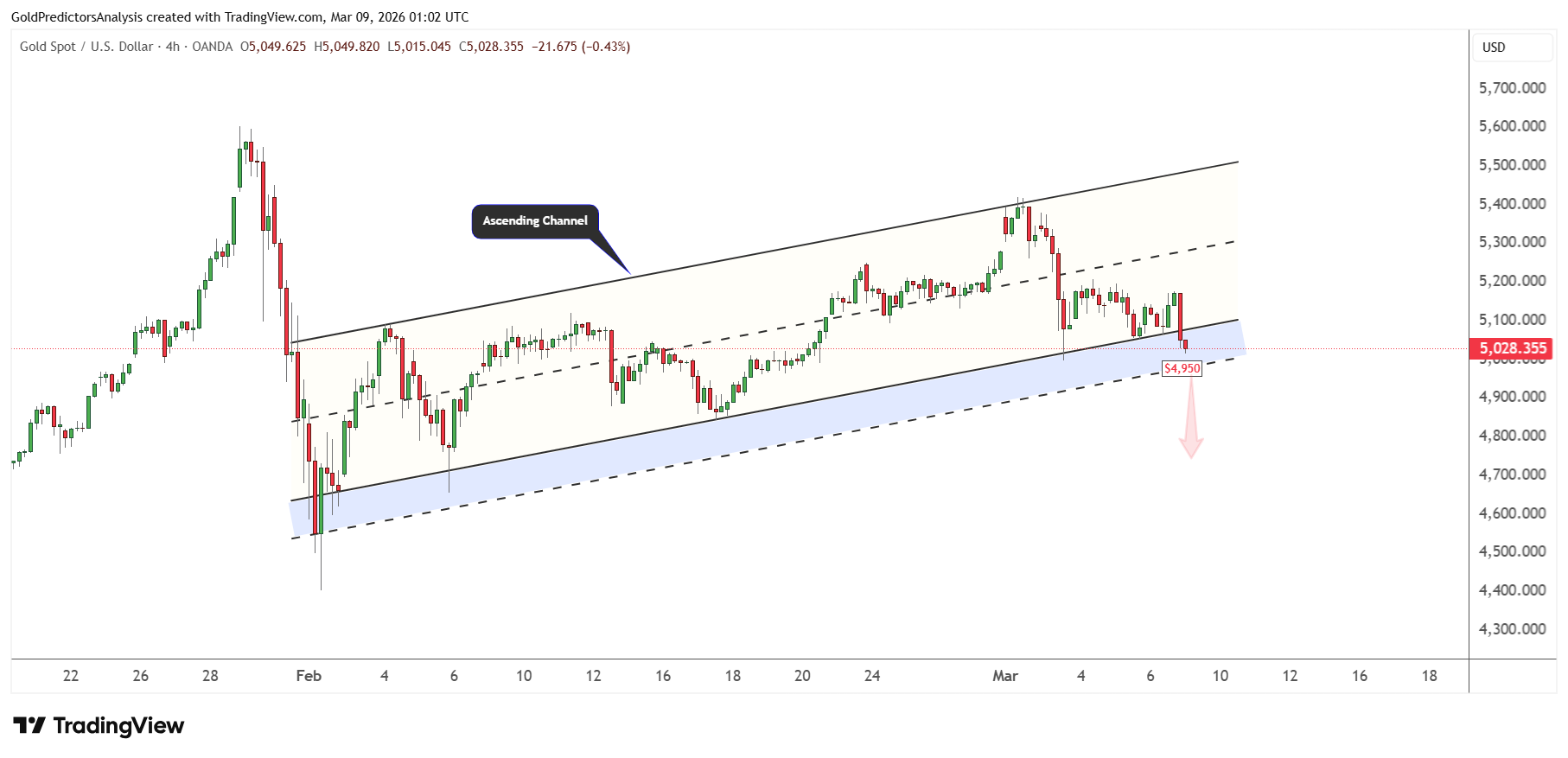
The 4-hour chart shows the formation of an ascending channel pattern. The price has been consolidating within this channel since February 2026. After the release of \employment data, gold prices rallied higher. However, during the Monday opening, prices dropped back toward $5,000. A break below this level would increase the risk of further downside pressure.
Bottom Line
Gold is supported as economic signals weaken and geopolitics are elevated. The labour market is showing signs of slowing and strong wage growth and rising oil prices continue to keep inflation risks alive. This situation makes it hard for the Federal Reserve to lower interest rates quickly and makes financial markets more uncertain.
As a result, investors are shifting their portfolio towards defensive assets that can preserve their value during unstable times. Gold continues to attract the demand for safe haven and the key level to be watched is $5,000. If this support is held, prices could continue higher to $5,600. A break below this level will open the door for a deeper correction to $4,800.
If you’d like to know more about how to trade gold and silver, please visit our educational area.