



Oil prices softened a bit on Thursday but the market remained strong in an upward trend. Brent oil (BCO) rallied above $100 a barrel following a steep increase in the previous session while WTI oil (CL) is also trading at high levels. This was primarily due to lack of progress in peace negotiations between the United States and Iran. Meanwhile, both parties continued to impose restrictions on the flow of trade via the Strait of Hormuz. These disruptions underpin the oil prices. The seizure of two ships by Iran and the interception of Iranian tankers by the U.S. contributed to the supply fears and kept the market nervous.
The ceasefire extension cooled the markets a bit, but the traders understand that the real risk is not resolved as the naval blockade and shipping restrictions were still in place. This is why oil did not fall significantly after its initial rally from the war. The market knows that with Hormuz partly blocked, there will be high supply risks. This maintains a floor on oil prices.
US inventory data added further insights as to why oil remained firm. Crude stocks have grown which would typically push prices lower. But the bigger story is how acute fuel demand and product inventories are. Gasoline and distillate stocks dropped significantly more than expected and point to boom consumption and tighter refined fuel supply.
On top of that, US crude and petroleum exports climbed to record high as buyers in Asia and Europe rushed to secure supply amid the disruption of war with Iran. A combination of strong exports, falling fuel inventories and geopolitical turmoil is positive for oil prices. Near-term oil price volatility is likely to remain but the overall setup is supportive if supply routes come under pressure.
WTI Crude Oil Signals More Upside
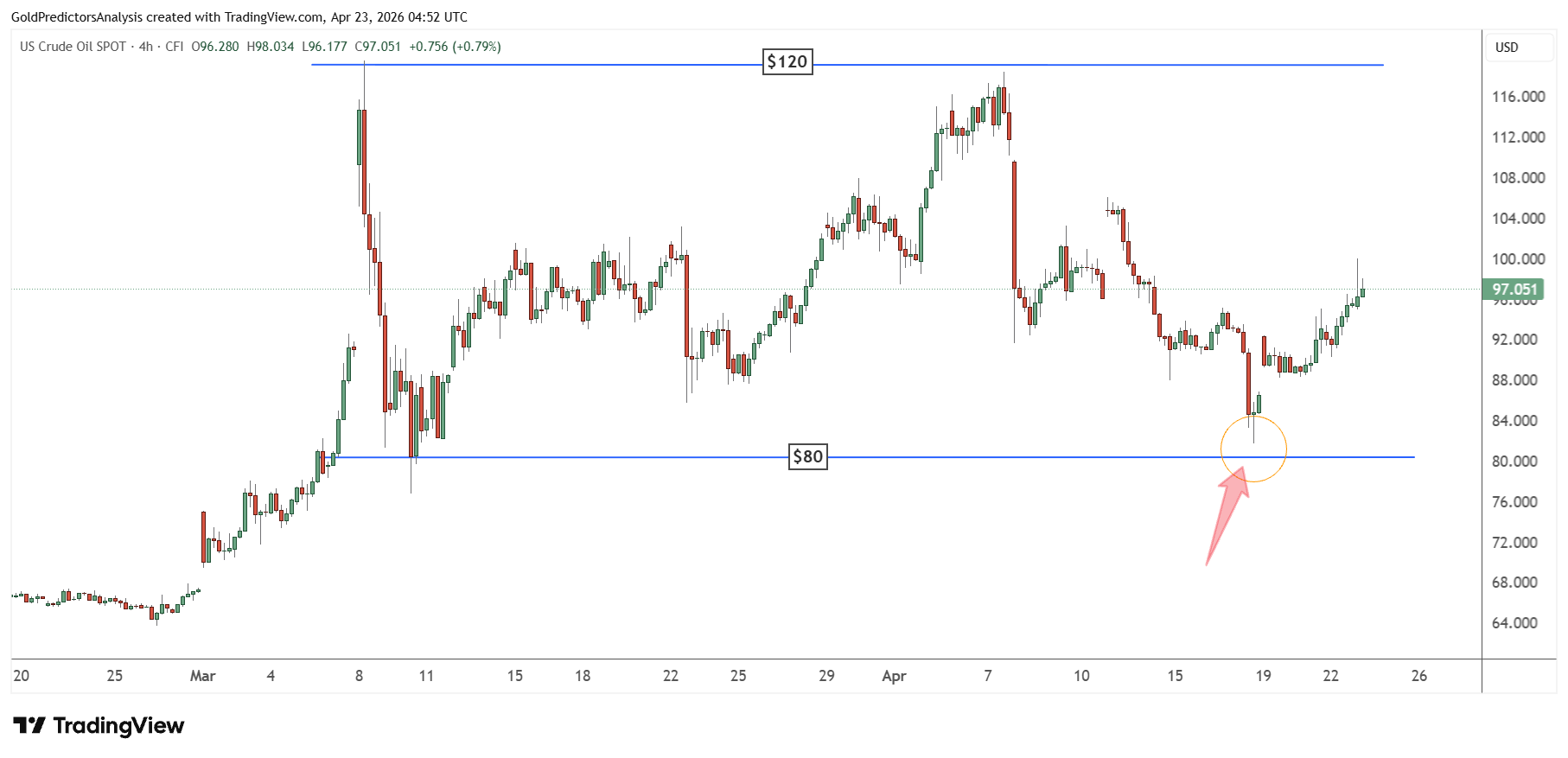
The 4-hour chart for WTI shows that the price is trading within the wide range of $80 and $120 and is looking for the next move. A break below the $80 area is unlikely, but it will open the door for a drop towards the $60 to $70 area. However, a break above the $120 level will indicate further upside towards the $150 and $200 region. The ongoing crisis in the Strait of Hormuz means that, until the Strait is fully operational, crude oil prices will likely remain elevated. Any further escalation in the conflict may push prices above the $120 level and much higher.
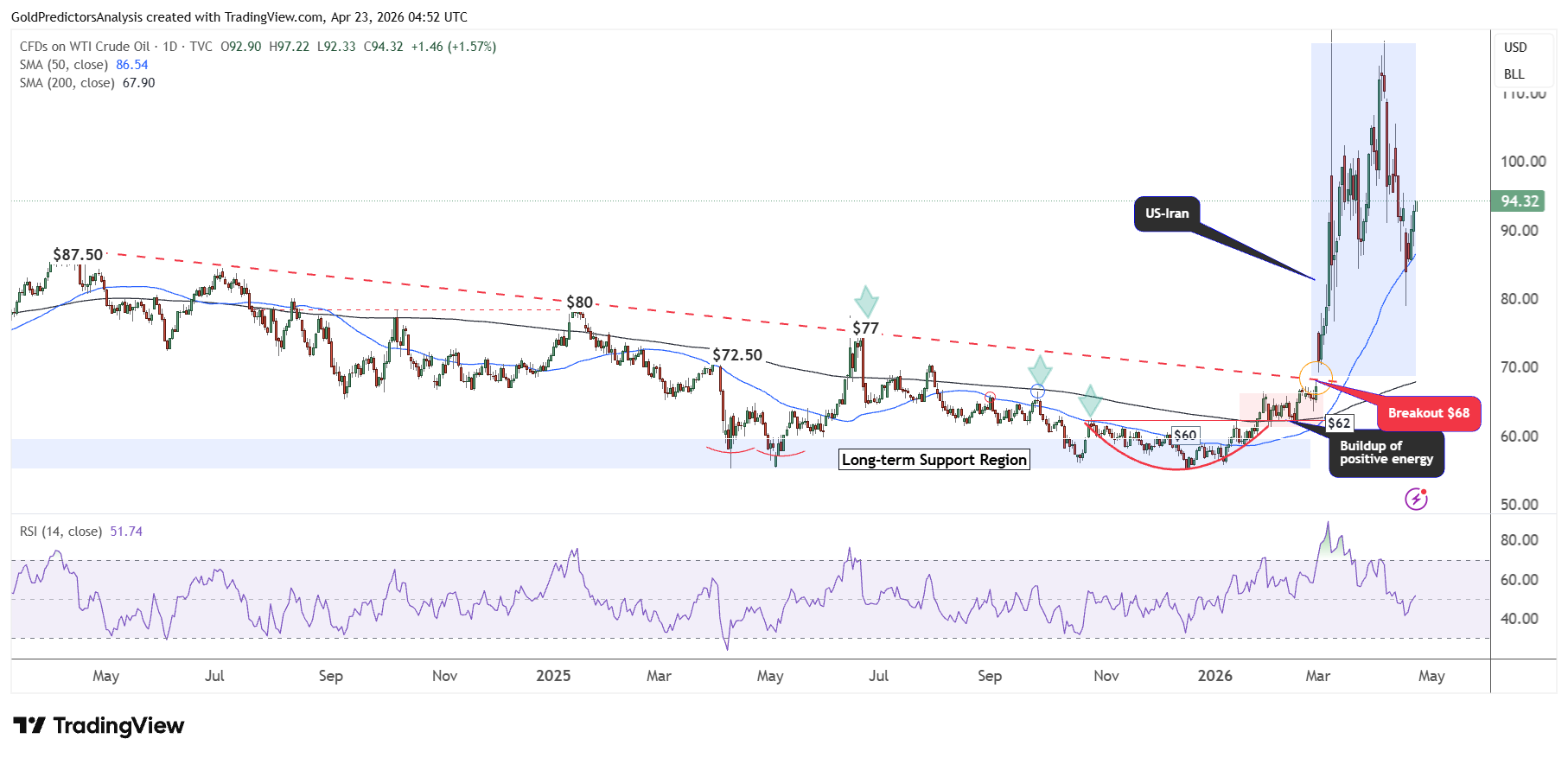
The daily chart for WTI also shows that prices dropped below the 50-day SMA but failed to close below this moving average and continued to rebound strongly above the $90 area. Since the lower band of support at $80 has been reached, the prices may again rebound above the $90 area.
Brent Oil Price Forecast
Every new Brent Oil analysis as it publishes, today's technical signal and key levels, live price — on one page.
See all Brent Oil forecastsBrent Crude Oil Builds Bullish Structure
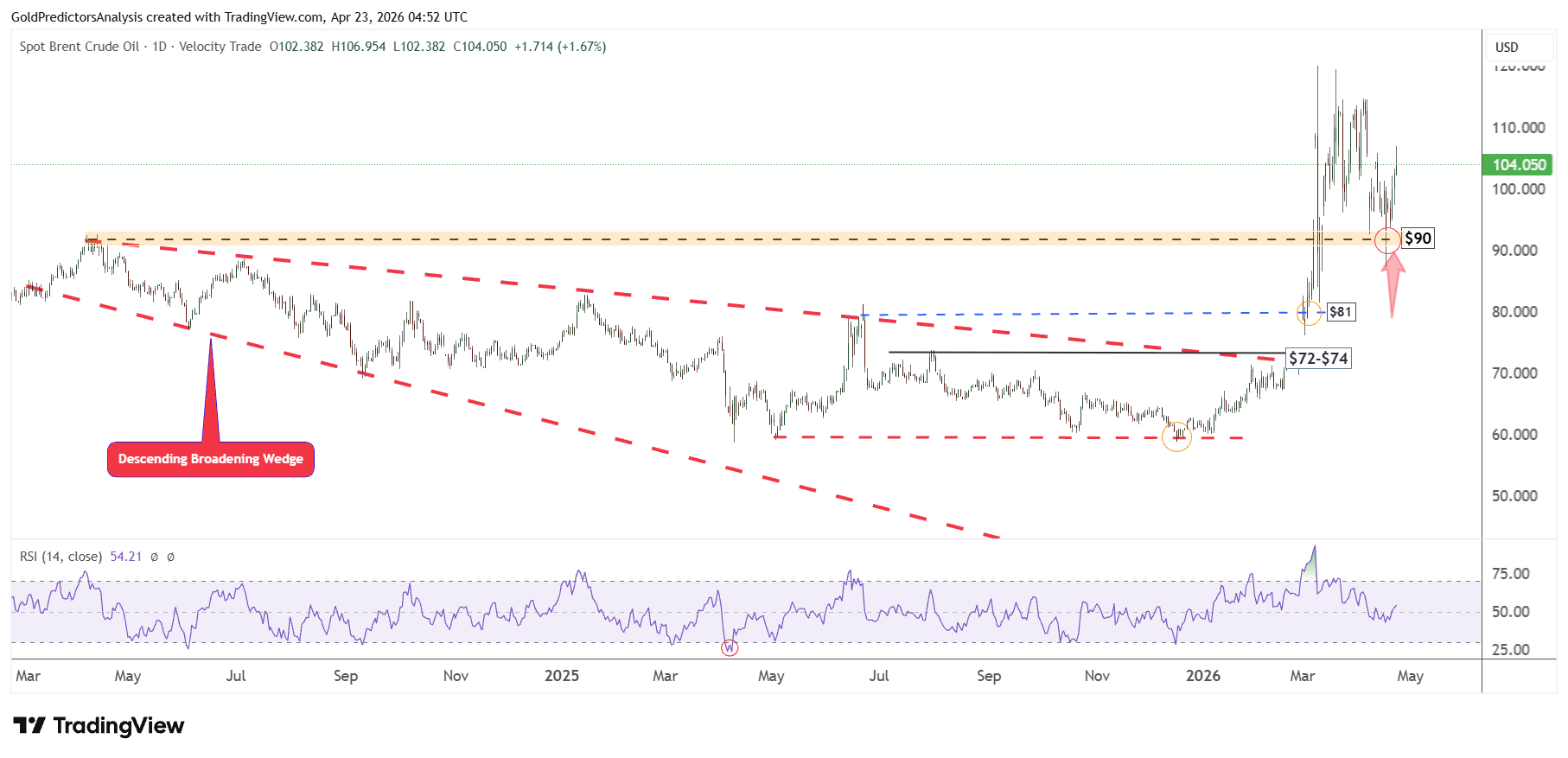
The daily chart for Brent crude oil shows that the price has found strong support at $90 and initiated a rebound above the $100 area. The breakout from the descending broadening wedge pattern, followed by the rally to the $120 level and now the retracement towards the breakout area of $90, indicates that prices are forming bullish price action. A break above $120 will indicate a strong surge in Brent crude oil towards the $150 and $200 area.
Bottom Line
Oil prices are supported as the dominant supply risk has not been eliminated. The extension of the ceasefire calmed the panic in the short term, but the tensions around the Strait of Hormuz continue to leave the market on edge. The high U.S. exports and profound dips in fuel stocks are also indicative that the demand is solid. Simultaneously, WTI and Brent remain bullish on technical charts above the key support levels. Overall, the prices are biased to the upside but the tensions in the Middle East keep the volatility higher. As long as the traffic around the Strait of Hormuz returns to normal, the prices will likely continue higher.
If you’d like to know more about how to trade crude oil, please visit our educational area.