


Wedge Breakdown Meets Initial Support
Gold consolidated on Wednesday, remaining inside Tuesday’s price range. A bearish signal was triggered with the breakdown of a rising wedge pattern on Tuesday, before support was found at $4,669, near the 20-day moving average. The 20-day average was reclaimed on April 8, marking a key near-term trend indicator that had recently acted as resistance before switching to support. Although the wedge triggered to the downside, price needs to fall below the 20-day average and a minor swing low at $4,640 to further confirm the weakness suggested by the pattern.
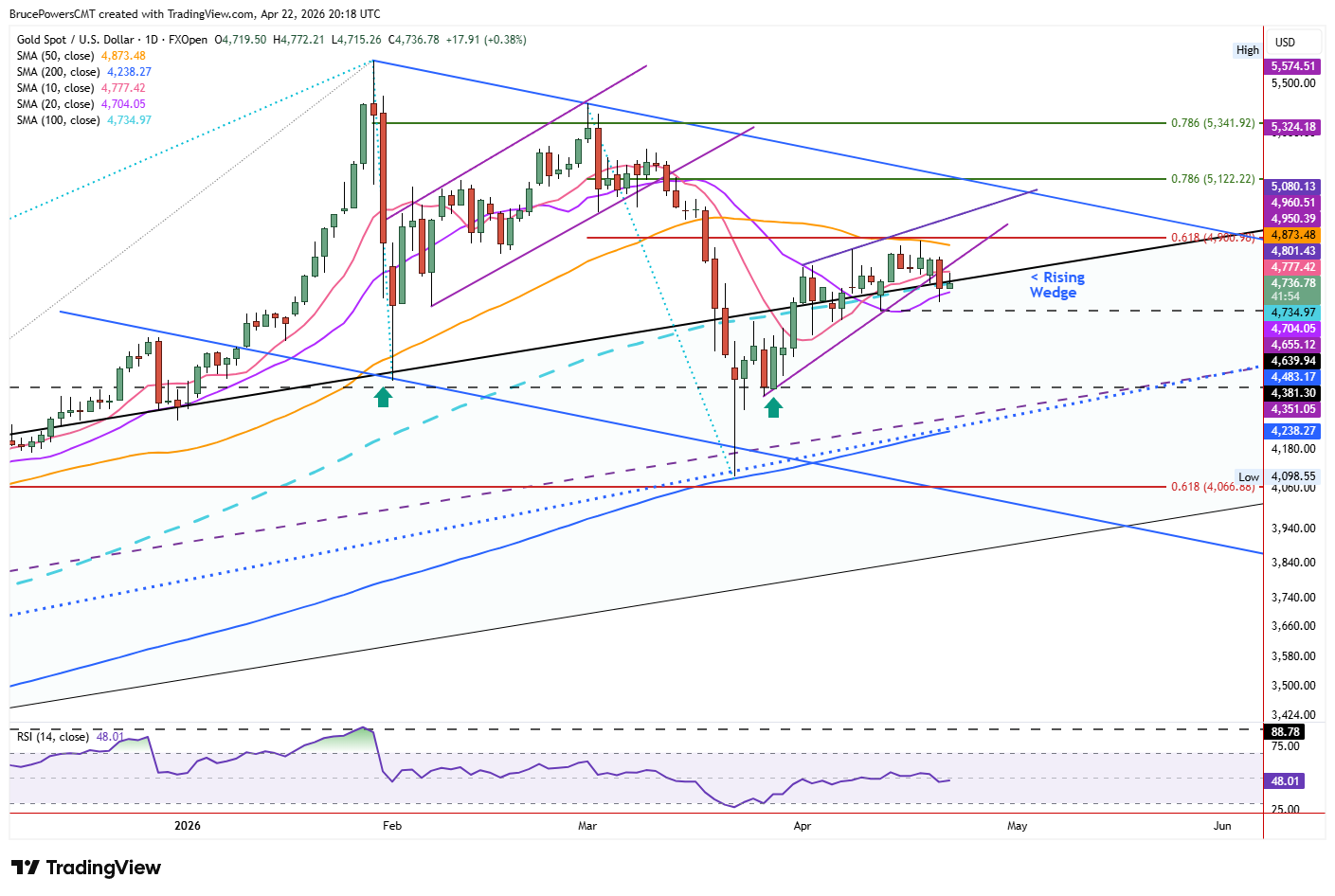
Support Confluence Defines Downside Risk Zone
If further bearish confirmation follows, an initial downside target is around $4,351 to $4,884. That range includes the February swing low of $4,402. That price zone could take on added significance, depending on when it is reached, given the confluence of a rising internal trendline, the midline of a large rising channel and the 200-day average, defines a lower potential support zone, as it was successfully tested during the establishment of the March swing low. Currently, it aligns with the internal trendline, reinforcing the importance of that support region.
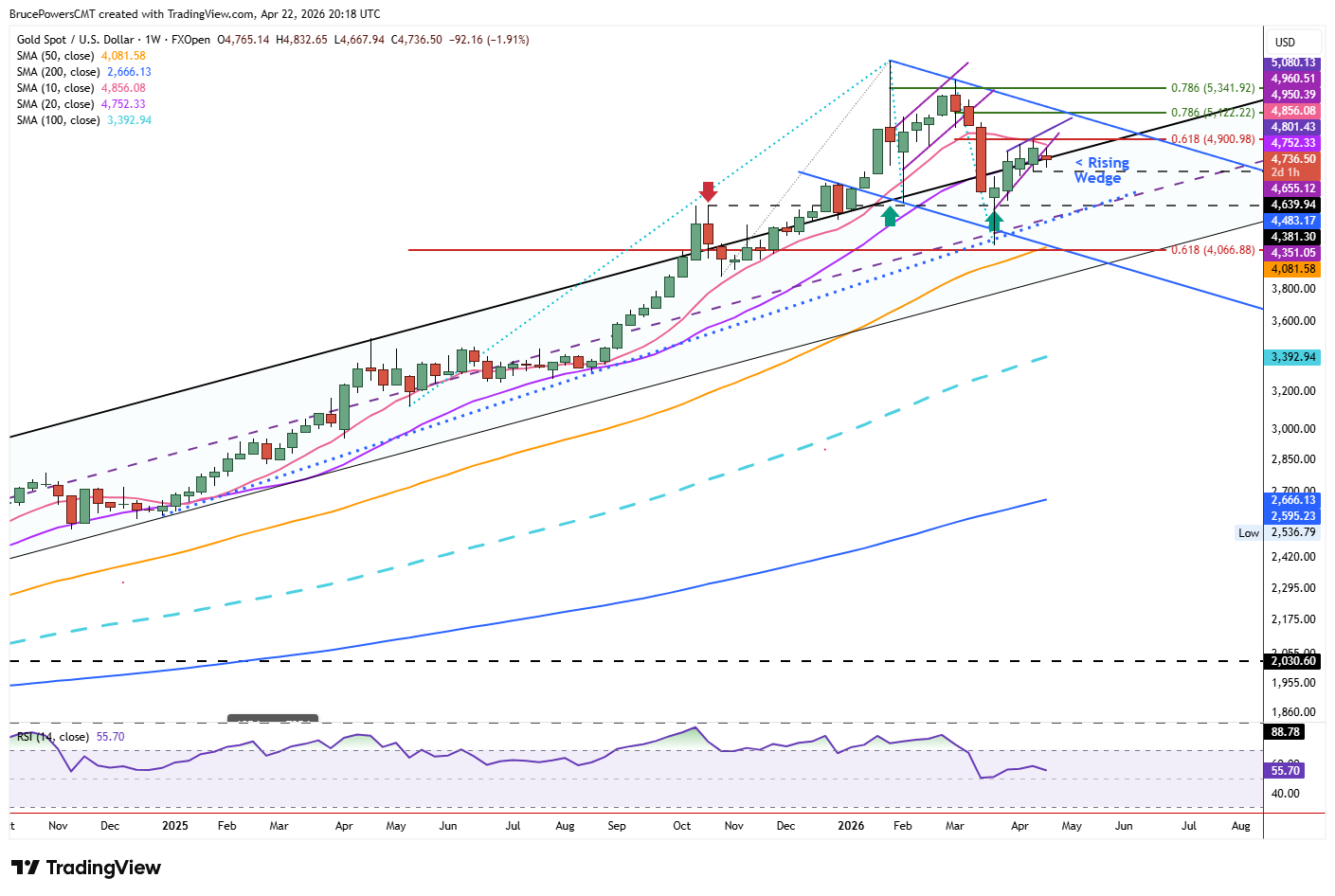
Channel Structure Signals Broader Pullback Risk
Downside continuation would confirm a failed breakout above the top of the rising channel and the 100-day moving average, now at $4,735. This confluence takes on added significance since the two indicators have been aligned recently. A rejection from one side of the channel indicates a possible decline to the lower boundary of the pattern, increasing the chance of a move toward at least the channel midpoint. Since the middle of the channel aligns near the 200-day average, it could act as a magnet, drawing price toward it.
Bullish Reclaim Would Invalidate Breakdown
Despite the potential for a decline, that possibility begins to fade on a rally above Tuesday’s lower high of $4,833. A sustained recovery of both the 100-day moving average and top channel boundary would be signs of renewed strength, shifting the outlook away from bearish continuation. In that case, the earlier breakdown may instead resolve as a failed bearish signal.
If you’d like to know more about how to trade gold and silver, please visit our educational area.